
The best way to plant grapes is to choose the right variety for your climate, prepare the soil properly, and plant them at the right time. I’ve learned that following these steps can lead to a thriving vineyard that produces delicious fruit.
Table of Contents
Understanding Grapes: Types and Varieties
When I first decided to plant grapes, the sheer variety of options was overwhelming. I quickly realized that understanding the different types of grapes is essential for anyone looking to start their own vineyard. Grapes are generally categorized into two main types: table grapes and wine grapes. Each serves a different purpose, and depending on your goals, your choice will impact everything from taste to care required.
Common Grape Varieties for Beginners
As a beginner, it’s crucial to select grape varieties that are not only delicious but also easy to grow. Some common varieties I found that fit this description include:
- Concord: These are sweet, dark blue grapes that are excellent for making jelly and juice. They thrive in colder climates, which is something I had to consider when planning my vineyard.
- Thompson Seedless: A popular choice for eating fresh, these grapes are also used in raisin production. I loved how versatile they are, making them a favorite in my garden.
- Cabernet Sauvignon: If you’re interested in wine making, this is one of the most popular red wine grapes. They require a bit more care, but the reward is worth it.
- Chardonnay: Another excellent choice for wine lovers, this white grape variety is adaptable and grows well in various climates.
When I chose my varieties, I made sure to think about what I wanted to achieve. Whether it was for eating fresh, making wine, or producing juice, the variety made all the difference.
Choosing the Right Grapes for Your Climate
Climate plays a crucial role in grape growing. I quickly learned that different varieties have unique temperature and moisture requirements. For instance, if you live in a warmer area, varieties like Zinfandel or Merlot might thrive. Conversely, if you’re in a cooler region, opting for varieties like Riesling or Pinot Noir could yield better results. It’s essential to understand your local climate, which can sometimes be as simple as checking USDA Hardiness Zone maps.
In my experience, I found it helpful to talk to local growers and extension services. They often have the best insights on which varieties perform well in specific conditions. I also made it a point to visit local vineyards, which was a great way to see what worked for others in my area. Read Interesting article: How to Plant Sugar Cane in Minecraft (Beginner Guide)
Essential Tools and Equipment for Planting Grapes
Before diving into planting, I realized that having the right tools is just as important as selecting the right grape varieties. It can make the process smoother and more enjoyable. Here’s what I found to be essential for planting grapes.
Basic Gardening Tools Needed
Starting with the basics, I gathered a few gardening tools that helped me tremendously:
- Shovel: A sturdy shovel is essential for digging holes for your grapevines. I quickly learned that having the right tool made a significant difference in the effort required.
- Pruning Shears: These are vital for maintaining healthy vines. I found myself using them often, especially when it came to shaping my plants.
- Rake: To prepare the soil and clear debris, a rake was invaluable. It ensured that my planting area was clean and ready to go.
- Watering Can or Hose: Grapes need moisture, especially after planting. I made sure to have a good watering setup to keep my vines hydrated.
Having these tools on hand made the process much easier and allowed me to focus on what I loved most: planting and nurturing my vines. Read Interesting article: How to Plant Sugar Cane in Minecraft (Fast & Easy)
Specialized Equipment for Vineyards
As I continued on my grape-growing journey, I discovered that specialized equipment could enhance my vineyard experience:
- Trellis System: Investing in a good trellis system was one of the best decisions I made. It helps support the vines, ensuring they grow upright and receive adequate sunlight.
- Soil Test Kit: This kit helped me understand my soil’s pH and nutrient levels. Armed with this info, I could amend my soil accordingly, which I found was crucial for the health of my vines.
- Mulching Equipment: Mulch can help retain moisture and suppress weeds. I utilized this to keep my vineyard looking tidy and healthy.
While some of these tools might seem like a luxury at first, I assure you that they can make a significant difference in your vineyard’s success and maintenance.
Site Selection for Your Vineyard
Choosing the right site for your vineyard is perhaps one of the most important steps. I learned that a well-selected site can set the foundation for healthy grapevines and a bountiful harvest.
Optimal Soil Conditions for Grapes
One of the first things I discovered about grapes is that they thrive in well-drained soil. Heavy, clay-heavy soils can hold too much water, which can lead to root rot. I made sure to test my soil and found that sandy loam works best for grapes. It drains well while still holding some moisture.
Additionally, I learned about the importance of soil fertility. Grapes need nutrients, so I considered organic matter and compost to enrich my soil. This was a game-changer for me as I began to see healthier vines and better growth!
Sunlight and Drainage Requirements
Grapes love the sun! I found that a location with at least six to eight hours of direct sunlight each day is ideal. I remember standing in my yard, observing how the sunlight moved throughout the day to find the best spot. Sun exposure directly impacts the flavor and sweetness of the grapes, so this step should not be overlooked.
Drainage is also a crucial factor. I made it a point to avoid low-lying areas where water tends to collect. Instead, I chose a gently sloping site where excess water could easily flow away. This made a big difference in the long-term health of my grapevines.
Assessing Climate and Weather Patterns
Understanding your local climate is vital. I spent time researching seasonal weather patterns, frost dates, and average rainfall. Grapes are sensitive to temperature changes, especially during flowering and ripening. I found that keeping a journal of weather patterns helped me make informed decisions about when to plant and how to care for my vines.
For example, I learned that some grape varieties are more susceptible to frost damage. Knowing my area’s last frost date allowed me to protect my young vines when needed. I believe that being proactive about climate conditions saved me a lot of headaches down the line.
Preparing the Soil for Planting Grapes
Once I had selected the perfect site for my vineyard, I knew that preparing the soil was the next critical step. I found that taking the time to get the soil ready can significantly impact the growth and health of my grapevines. Here’s what I learned during my journey.
Testing Soil pH and Nutrients
The first thing I did was test my soil. I remember feeling a bit intimidated at first, but it turned out to be a straightforward process. I purchased a soil test kit, which provided me with information about the pH level and nutrient content of my soil. Grapes generally prefer a pH range of 6.0 to 7.5. When I got my results, I was relieved to find that my soil was within the right range. If it hadn’t been, I would have needed to make adjustments.
Understanding nutrient levels was also essential. I learned that grapes need nitrogen, phosphorus, and potassium for healthy growth. If your soil lacks these nutrients, it can lead to weak vines and poor fruit production. I remember discovering that adding organic matter like compost not only improved my soil’s fertility but also its structure, making it easier for roots to grow. This was a game-changer for me!
Amending Soil for Optimal Growth
After testing my soil, I focused on amending it for optimal growth. I found that incorporating organic matter was a fantastic way to enrich the soil. I started adding well-rotted manure and compost, which helped to improve the nutrient content and structure of my soil. I even noticed how this improved water retention without creating soggy conditions.
I also learned about the importance of balancing nitrogen levels. Too much nitrogen can lead to lush foliage at the expense of grape production. I decided to use a balanced fertilizer that would support both vine growth and fruit development. It felt good to know I was setting my vines up for success right from the start.
As I worked the soil, I made sure to aerate it properly. This step is crucial because it promotes healthy root growth by allowing air to reach the soil. Turning the soil with a shovel or tiller helped to break up compacted areas, creating a welcoming environment for my grapevines. I remember feeling accomplished every time I turned over a patch of soil, knowing I was nurturing my future vineyard.
When to Plant Grapes: Timing Considerations
Timing your grape planting can make all the difference in the world. I quickly realized that understanding the right time to plant was essential for the best results. Here’s what I discovered about the seasonal factors involved.
Best Seasons for Planting Grapes
From my experience, the best time to plant grapevines is in the spring, after the last frost date in your area. I remember marking my calendar to ensure I was ready for this crucial time. Spring gives the vines a full growing season to establish themselves before facing the challenges of winter.
Some growers also plant in the fall, which can work well in milder climates. I learned that planting in the fall allows the roots to grow while the vines are dormant. However, I found this method requires a bit more care since the young plants must be protected from cold weather. In my case, I decided that spring planting was the right choice for my climate.
Climate-Specific Planting Windows
It’s important to consider your local climate when planning your planting window. I spent time researching average temperatures and frost dates to give my vines the best chance of thriving. In cooler regions, I found that waiting a bit longer into spring often led to better outcomes, as it ensured that the soil was warm enough for root growth.
I also learned that monitoring weather patterns can provide insights into when to plant. For instance, if I noticed a particularly warm spell in late March, I was tempted to plant early. However, I learned to hold off and wait for consistent warmth. This patience paid off as it helped to avoid frost damage to my young vines.
Overall, I believe that being mindful of the timing for planting is crucial for setting the stage for a successful vineyard. Each growing season offers unique opportunities, and I encourage others to pay attention to their local conditions to make the most of their grape-growing journey. Read Interesting article: How to Plant Sugar Cane in Minecraft (Quick Steps)
How to Plant Grapes: Step-by-Step Guide
Now that I had the timing down and the soil prepped, it was time to get my grapevines into the ground! This part was exciting for me because I knew it was the beginning of my grape-growing journey. I followed a step-by-step approach that I found helpful, and I believe it could benefit anyone looking to do the same.
Choosing Grape Seedlings or Cuttings
One of the first decisions I had to make was whether to buy seedlings or take cuttings from an existing vine. I found that purchasing seedlings from a reputable nursery was the easiest route for me as a beginner. They often come already rooted and ready for planting. I remember spending a lot of time looking through different varieties and selecting the healthiest ones. It was a joy to see the vibrant green leaves and healthy roots!
If you’re feeling adventurous, taking cuttings can be a rewarding experience. I had a friend who successfully propagated grapes from cuttings, and it inspired me to try it myself someday. But for now, I decided to stick with seedlings, as I wanted to ensure a solid start for my vineyard.
Spacing and Layout for Vineyard Rows
Proper spacing is crucial for allowing each vine to grow healthily without competing for resources. From my research, I learned that grapevines should be spaced about 6 to 10 feet apart, depending on the variety and whether you intend to train them on a trellis system. I remembered how I measured out the rows meticulously, marking spots with stakes to visualize the layout. This part was surprisingly enjoyable as it helped me imagine how my vineyard would look in the future!
I also considered the layout of my vineyard. I decided to plant in rows, allowing for easy maintenance and harvesting later on. I made sure to leave enough space between rows to walk through comfortably. This planning felt like laying the groundwork for a dream, and I couldn’t wait to see it come to life.
Planting Techniques for Best Results
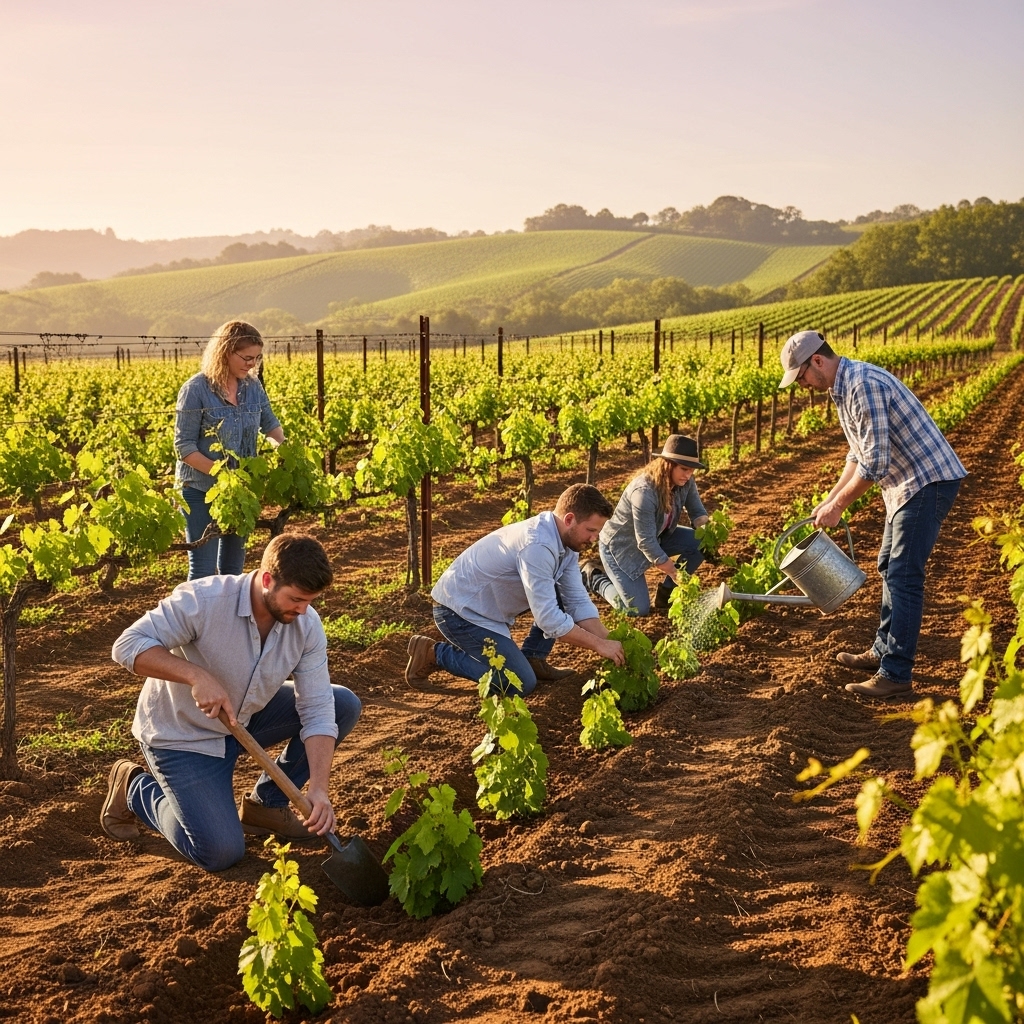
Once I had my seedlings and spacing figured out, it was time to plant! I dug holes that were about twice the width of the root ball and deep enough to accommodate the roots without bending them. I remember being extra careful during this step, as I wanted to give my vines the best chance to thrive.
When placing the seedlings in the holes, I made sure the top of the root ball was level with the soil surface. I’ve read that burying them too deep can hinder their growth, so this was an important detail to keep in mind. After positioning the seedlings, I gently backfilled the holes with soil and made sure to pack it down lightly to eliminate air pockets, which can be detrimental to root growth.
Next, I gave each newly planted vine a thorough watering to help settle the soil around the roots. I was relieved to see the first signs of life in my vineyard, knowing that my efforts were finally paying off. The sight of those little green shoots made my heart swell with anticipation for the future!
Watering and Irrigation Needs for New Vines
After planting, I quickly realized that keeping my new vines hydrated was vital. I learned that grapes need consistent moisture, especially in their early growth stages. However, I also discovered that overwatering could lead to root rot, so I had to find the right balance.
Understanding Grapes’ Water Requirements
Initially, I watered my young grapevines every few days, especially during hot weather. I paid attention to the soil, checking if it felt dry a couple of inches below the surface. This tactile approach helped me gauge their needs without overdoing it. I remember feeling the soil with my hands, connecting with my plants in a new way!
As the vines established themselves, I gradually reduced the frequency of watering. It was fascinating to witness how they adapted and began to develop a more robust root system. I learned that mature grapevines typically require less frequent watering, especially if the soil is well-drained and has good moisture retention.
Setting Up an Irrigation System
To make things easier, I eventually decided to set up a simple drip irrigation system. I found that this method efficiently delivered water directly to the roots, minimizing waste and preventing unnecessary moisture on the leaves. Installing the drip lines felt like another small victory; it made my vineyard feel more like a legitimate growing space. Plus, it gave me peace of mind during hot spells when I couldn’t be there to check on them daily.
Reflecting on this part of my journey, I felt a sense of accomplishment. From planting to watering, every step brought me closer to my vision of a flourishing vineyard. I was excited to see how my vines would grow in the coming months and couldn’t wait to share my experiences with others who might be on a similar path.
Frequently Asked Questions
What are the main types of grapes?
Grapes are generally categorized into two main types: table grapes and wine grapes. Each type serves a different purpose and impacts taste and care required.
What grape varieties are recommended for beginners?
Common grape varieties for beginners include Concord, Thompson Seedless, Cabernet Sauvignon, and Chardonnay. These varieties are not only delicious but also easier to grow.
How does climate affect grape growing?
Climate plays a crucial role in grape growing, as different varieties have unique temperature and moisture requirements. Warmer areas may suit varieties like Zinfandel or Merlot, while cooler regions might be better for Riesling or Pinot Noir.
What basic gardening tools are needed for planting grapes?
Essential gardening tools for planting grapes include a shovel, pruning shears, a rake, and a watering can or hose to keep the vines hydrated.
What specialized equipment can enhance vineyard maintenance?
Specialized equipment that can enhance vineyard maintenance includes a trellis system for supporting vines, a soil test kit for analyzing soil health, and mulching equipment to retain moisture and suppress weeds.
What are optimal soil conditions for growing grapes?
Grapes thrive in well-drained soil, preferably sandy loam. Heavy clay soils can lead to root rot, so it’s important to ensure proper drainage and soil fertility.
When is the best time to plant grapevines?
The best time to plant grapevines is in the spring, after the last frost date. Some growers also plant in the fall, but this requires more care to protect young plants from cold weather.
What are the steps for planting grapes?
The steps for planting grapes include choosing grape seedlings or cuttings, ensuring proper spacing (6 to 10 feet apart), digging holes, placing seedlings, backfilling with soil, and watering thoroughly after planting.
How should I water new grapevines?
New grapevines need consistent moisture, especially in their early growth stages. Initially, they should be watered every few days, and as they establish, the frequency can be reduced. A drip irrigation system can efficiently deliver water directly to the roots.
What should I consider when preparing soil for grapes?
When preparing soil for grapes, it’s important to test the soil pH and nutrient levels, amend the soil with organic matter like compost, and ensure it has good drainage and aeration for healthy root growth.