
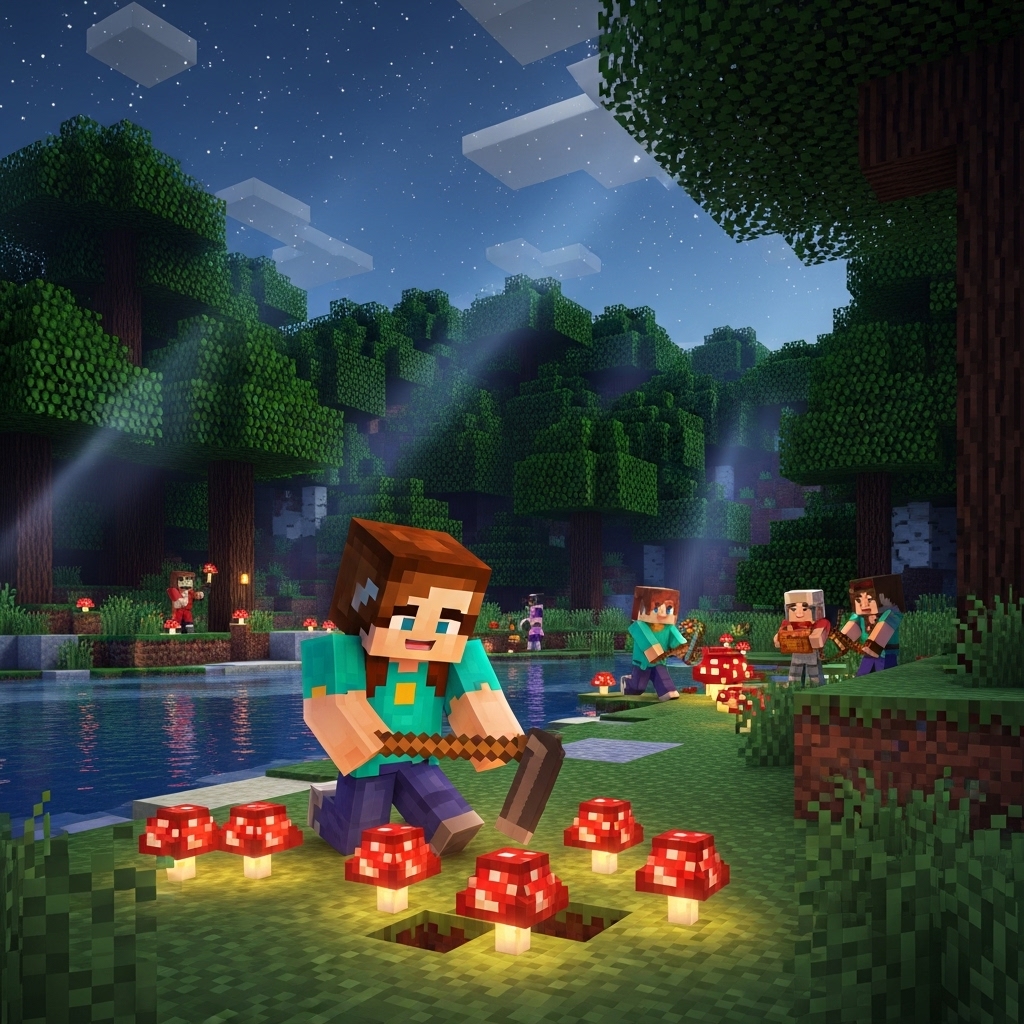
Mushrooms in Minecraft can be planted easily and quickly by using the right materials and techniques. With the right method, you can grow them in no time and enjoy their benefits in the game. For a more detailed approach, check out our guide on How to Plant Mushrooms in Minecraft (Beginner Guide).
Understanding Mushroom Types in Minecraft
Before we dive into planting mushrooms, let’s talk about the different types you can find in Minecraft. Each type has its own unique properties and uses, and knowing them will help you decide how to grow and utilize them in your gameplay.
Brown Mushrooms
Brown mushrooms are one of the most common types you’ll encounter in Minecraft. They can be found in dark areas, such as caves and forests. I remember the first time I stumbled upon a patch of these mushrooms while exploring a cave; it felt like a little treasure waiting to be discovered! Brown mushrooms can be used in various recipes, including mushroom stew, which is a great food source early in the game.
Red Mushrooms
Red mushrooms are equally popular and can also be found in similar locations as brown mushrooms. They have a bright red cap with white spots, making them really eye-catching. In my experience, these mushrooms are often used in crafting potions and are essential for making certain food items, like the infamous “mushroom stew.” They also have a unique property: when consumed, they can restore hunger points, but be careful, as they can also poison you if you consume too many!
Giant Mushrooms
If you’re looking for something more spectacular, giant mushrooms are the way to go. These massive fungi can be found in the Mushroom Fields biome, which is a rare and unique biome in the game. I once spent hours searching for this biome, and finding it was like uncovering a hidden gem! Giant mushrooms can be harvested for both brown and red mushrooms, so they’re a fantastic resource. Plus, they add a whimsical touch to your builds if you decide to use them as decoration.
Requirements for Planting Mushrooms
Now that we’ve covered the types of mushrooms, let’s focus on what you need to effectively plant and grow them. Understanding the requirements will save you time and frustration.
Necessary Materials
To plant mushrooms, you’ll need a few basic materials. First and foremost, gather the mushrooms you want to plant—either brown or red. It’s a good idea to collect a decent amount, as this makes your planting more efficient. You’ll also need a hoe if you want to prepare the ground, though it’s not strictly necessary. In my case, I often just use dirt blocks or grass blocks where I want to plant them, and it works just fine. For quick tips on planting, check out How to Plant a Mushroom in Minecraft (Quick Guide).
Table of Contents
Location and Environment
Choosing the right location is crucial for successful mushroom growth. Mushrooms prefer dark, damp areas. I’ve found that caves and shaded forest areas work best. If you’re planting outside, try to avoid direct sunlight, as mushrooms won’t grow in bright light. If you’re ever unsure about your location, take a moment to look around; if it feels dark and cozy, you’re likely in the right spot!
Light Levels
Speaking of light, mushrooms thrive in low light conditions. They require a light level of 12 or lower to grow. I’ve made the mistake of planting them in well-lit areas before, only to watch them wither away. To check the light level, you can use a simple method: place a torch nearby and notice how bright it gets. Keeping your planting area shaded will ensure your mushrooms get the best growth conditions.
Soil and Block Requirements
When it comes to the blocks where you plant mushrooms, they can be placed on dirt, grass, podzol, or mycelium blocks. Mycelium, which is a special block found in the Mushroom Fields biome, is particularly effective because it increases the growth rate of mushrooms. I once experimented with planting on different blocks and found that mycelium produced mushrooms faster than other types. So, if you can get your hands on mycelium, I highly recommend using it!
Fast Method for Planting Mushrooms
Now that we’ve covered the basics, let’s get into the fast method for planting mushrooms. Trust me, this will save you a lot of time and get you the mushrooms you need more efficiently.
Step-by-Step Guide to Planting
Here’s a simple step-by-step guide to plant mushrooms quickly:
- Gather your mushrooms. Make sure you have both brown and red mushrooms if you want to plant both.
- Choose a suitable spot that is dark and has the right blocks (soil or mycelium).
- Plant the mushrooms by right-clicking on the chosen block. Make sure you’re in the right light level!
- To speed up growth, consider using bone meal (we’ll talk more about that soon).
I’ve often followed these steps and found that it makes the planting process smooth and efficient.
Using Bone Meal for Quick Growth
If you want to accelerate the growth of your mushrooms, bone meal is your best friend. When you apply bone meal to a planted mushroom, it can instantly grow into a giant mushroom, saving you a lot of time. I remember the first time I tried this; it felt like magic watching the mushroom grow before my eyes! Just be sure not to use bone meal on giant mushrooms, as it won’t have any effect. It’s a small detail but one that can save you some frustration.
Best Practices for Spacing and Placement
Spacing is another important aspect to consider when planting mushrooms. If you plant them too close together, they may not grow at all. I’ve learned that keeping at least a two-block distance between each mushroom works well. This provides enough room for them to thrive without competing for space or resources. You can also experiment with patterns; I’ve found that a checkerboard pattern of placements often yields the best results, ensuring that each mushroom has its own little space.
Harvesting Mushrooms Efficiently
Once you’ve successfully planted and nurtured your mushrooms, the next exciting step is harvesting them. I’ve found that harvesting can be a rewarding experience, especially when you see your hard work pay off. Here’s how to do it right.
When to Harvest
Mushrooms can be harvested when they reach their full size, which usually takes a few in-game days. I remember the anticipation of checking my mushroom patch every day, waiting for them to grow. You’ll know they’re ready when they look plump and healthy. If you’ve used bone meal to grow giant mushrooms, they’ll be much larger and easy to spot. Timing is key; if you allow them to stay for too long without harvesting, they won’t die, but you might miss out on the optimal yield period.
Tools for Harvesting
Harvesting mushrooms is pretty straightforward. I’ve typically used my bare hands, and it works just fine for regular and giant mushrooms. However, if you have a tool like a sword or an axe, you can use those too. Just be mindful not to break them with a tool that’s too strong, as it might destroy the mushroom instead of just collecting it. In my experience, using your hands is gentler and ensures you don’t accidentally lose any mushrooms during the process. Plus, you’ll get the added satisfaction of picking each one yourself!
Maximizing Mushroom Yield
To get the most out of your mushroom harvest, I’ve found a few techniques really help. First, when harvesting giant mushrooms, make sure you’ve got enough space around them because they can drop multiple mushrooms when broken apart. I often break the stem first and watch as the smaller mushrooms drop from the cap. This way, I could maximize my haul. Also, remember to replant any mushrooms you gather to ensure a continuous supply. I like to keep a few in my inventory so I can replant them right away, which keeps my mushroom farm thriving!
Common Mistakes to Avoid
Even seasoned players can make mistakes when it comes to mushroom farming. I’ve definitely had my fair share of blunders, and learning from them has helped me become more efficient. Here are a few pitfalls to watch out for.
Incorrect Light Levels
As I mentioned earlier, mushrooms thrive in low-light conditions. I once planted a whole patch in a well-lit area, thinking they’d grow fine. Instead, they all withered away before my eyes! I learned the hard way that keeping your planting area dark is crucial. Always check your light levels before you plant and remember that if you see sunlight hitting your patch, it’s time to move them to a shadier spot.
Overcrowding Mushrooms
While it’s tempting to plant as many mushrooms as possible in a small area, overcrowding can lead to poor growth. I’ve tried cramming them together in the past, only to find that most of them didn’t grow at all. Giving each mushroom its space is vital for their health. I stick to the two-block rule I mentioned earlier, and it’s made a significant difference in my harvests. Trust me, letting them breathe will reward you with a better yield!
Neglecting Surrounding Blocks
Another mistake I’ve made is ignoring the surrounding blocks when planting mushrooms. If your planting area is cluttered or has other plants nearby, mushrooms might struggle to grow. I’ve learned that clearing the area of unwanted grass and other flora can create a better environment for mushrooms. Plus, it makes your mushroom patch look nice and tidy! I often take a few moments to clear the space before planting, and it’s been worth the effort.
Advanced Mushroom Farming Techniques
If you’re ready to take your mushroom farming to the next level, there are some advanced techniques I’d love to share. These methods can lead to greater yields and help streamline your farming experience.
Creating Mushroom Farms
Building a dedicated mushroom farm can be a game-changer. I’ve found that setting up a specific area just for mushrooms helps me manage my resources better. Start by designating a space that has good light levels and the right blocks. I often use fences to outline the area and keep it organized. You can create multiple tiers in your farm to maximize space; I’ve seen some players build vertical farms that allow mushrooms to thrive in different light areas. This gives you more control over your harvest!
Using Mycelium for Greater Yields
If you want to boost your mushroom production, consider using mycelium. As I mentioned before, this block significantly increases the growth rate of mushrooms. I’ve noticed that when I plant on mycelium, I get mushrooms much faster than on regular dirt or grass. To obtain mycelium, you can explore the Mushroom Fields biome or trade with villagers. It’s a worthwhile investment if you’re serious about mushroom farming.
Automating Mushroom Growth
For those who really want to push the boundaries, automating your mushroom farm is a fantastic idea. I’ve seen players use redstone mechanisms to create farms that automatically harvest and replant mushrooms for them. This might seem complex at first, but there are plenty of tutorials out there to help you set it up. Not only does this save time, but it also ensures you have a constant supply of mushrooms without needing to babysit your farm.
Applications of Mushrooms in Minecraft
Mushrooms are not only fun to grow, but they also play a significant role in various aspects of gameplay in Minecraft. I’ve discovered that understanding their applications can really enhance my experience and efficiency in the game. Let’s explore how we can use mushrooms in cooking, crafting, and even combat!
Cooking and Brewing Recipes
One of my favorite uses for mushrooms is in cooking. Both brown and red mushrooms can be combined with other ingredients to create delicious meals. For example, the classic mushroom stew is an excellent dish to have early in the game since it restores quite a bit of hunger. I can’t tell you how many times I’ve relied on this stew during my adventures—especially when I’m low on health!
Here’s a little tip: mushrooms can also be used in brewing recipes! While brown mushrooms are mainly for food, red mushrooms are essential for crafting a potion of weakness. I remember the thrill of brewing my first potion and realizing how versatile mushrooms can be in this aspect. I feel like they add an extra layer of strategy to the game, making for a more rewarding experience.
Crafting Uses
Mushrooms also have some interesting crafting uses that I’ve found to be quite handy. For starters, you can turn them into dye! Red mushrooms can be crafted into red dye, which is perfect for coloring wool or other materials. I’ve used this technique when decorating my builds, adding a splash of color that’s both vibrant and natural.
Additionally, if you want to create a more immersive environment in your Minecraft world, you can use mushrooms as decorative elements. I often create little whimsical mushroom gardens around my builds, and they bring such a charming vibe. Plus, they’re a great way to fill empty spaces without taking much effort!
Mushrooms in Combat and Potions
Beyond cooking and crafting, mushrooms can play a role in combat situations, especially with potions. The potion of weakness, which requires a red mushroom, can be incredibly useful when dealing with hostile mobs or even in multiplayer situations. I’ve found that using this potion can give me an edge in battles, allowing me to weaken opponents before going in for the attack. It’s a strategy that I often employ when I’m facing tougher enemies or preparing for a raid.
Moreover, if you’re looking to create a more diverse inventory, consider keeping a stock of mushrooms handy. I’ve had instances where I’ve needed to whip up a potion on the fly, and having those mushrooms ready made all the difference. It’s like having a secret weapon in my back pocket!
In my experience, these various applications of mushrooms keep the gameplay fresh and exciting. Whether I’m cooking up meals, crafting colorful items, or preparing for combat, mushrooms play a pivotal role in my Minecraft journey.
Frequently Asked Questions
What types of mushrooms can be found in Minecraft?
The main types of mushrooms in Minecraft are brown mushrooms, red mushrooms, and giant mushrooms. Brown and red mushrooms are common and found in dark areas, while giant mushrooms can be found in the rare Mushroom Fields biome.
How do I plant mushrooms in Minecraft?
To plant mushrooms, gather the mushrooms you want to plant, choose a suitable dark spot with the right blocks (dirt or mycelium), and right-click on the chosen block to plant them. Ensure the light level is 12 or lower for optimal growth.
What materials do I need to plant mushrooms?
You need brown or red mushrooms to plant, and while a hoe can be used to prepare the ground, it’s not strictly necessary. Using dirt blocks or grass blocks is sufficient for planting.
What is the best environment for growing mushrooms?
Mushrooms thrive in dark, damp areas with low light levels. Caves and shaded forest areas are ideal locations, as mushrooms will not grow in bright light.
How can I speed up the growth of my mushrooms?
You can use bone meal to accelerate the growth of planted mushrooms. Applying bone meal can instantly grow a mushroom into a giant mushroom, but it will not work on giant mushrooms that are already planted.
What spacing should I maintain when planting mushrooms?
It is recommended to keep at least a two-block distance between each mushroom to ensure they have enough space to grow without competing for resources.
When is the right time to harvest mushrooms?
Mushrooms can be harvested when they reach full size, which typically takes a few in-game days. They will appear plump and healthy when ready to be harvested.
What tools are best for harvesting mushrooms?
You can harvest mushrooms with your bare hands, which is often the safest option. Tools like swords or axes can also be used, but be careful not to use a tool that is too strong, as it may destroy the mushroom instead of collecting it.
How can I maximize my mushroom yield?
To maximize your yield, ensure there is enough space around giant mushrooms when harvesting, as they can drop multiple mushrooms. Also, replant any mushrooms you gather to maintain a continuous supply.
What are some common mistakes to avoid when farming mushrooms?
Common mistakes include planting in well-lit areas, overcrowding mushrooms, and neglecting the surrounding blocks, which can hinder their growth. Always check light levels and ensure adequate spacing for healthy mushroom farming.