
To plant onions the right way, start by choosing the correct type for your climate, preparing the soil, and ensuring you plant at the right time. I’ve found that with a little preparation and care, growing onions can be a rewarding experience. Read Interesting article: When to Plant Onions for Best Growth
Understanding Onions: Types and Varieties
When I first ventured into gardening, I had no idea just how many types of onions there were. I learned that understanding the different varieties can greatly impact the success of my onion-growing experience. Onions can be broadly categorized into three types: yellow, red, and white, each bringing its own flavor and culinary uses. Let’s dive deeper into these types and what you should consider when selecting the right variety for your garden.
Common Types of Onions
Yellow onions are perhaps the most common variety. They have a strong flavor that becomes sweeter when cooked, making them perfect for soups and stews. I remember my first time using yellow onions in a homemade French onion soup; the aroma that filled my kitchen was heavenly!
Red onions are another popular choice, known for their striking color and slightly milder flavor. They are great for salads and salsas. My friend once made a delicious summer salad with thinly sliced red onions, and it was refreshing and crunchy. White onions tend to have a sharper taste and are often used in Mexican cuisine. They add a nice kick to dishes like guacamole or tacos.
Choosing the Right Variety for Your Climate
Selecting the right onion variety for your specific climate can make all the difference in your success. I remember the first time I planted onions; I didn’t pay attention to whether they were suited for my local growing conditions. Some onions thrive in long-day length regions, while others do better in short-day conditions. Long-day onions require 14-16 hours of daylight to bulb properly, making them ideal for northern climates. Short-day onions, on the other hand, need about 10-12 hours of daylight and flourish in southern regions.
I’ve learned that it’s also essential to choose a variety that matches the length of your growing season. If you live in a place with a shorter growing season, opting for a quick-maturing variety can prevent frustration. I discovered this the hard way when I planted a variety that took too long to mature, and I was left with small, underdeveloped onions at harvest time. Read Interesting article: How to Plant Onions for Bigger Bulbs
Organically Grown vs. Conventionally Grown Onions
As I started to pay more attention to the food I was growing, I became curious about the difference between organically grown and conventionally grown onions. Organic onions are grown without synthetic fertilizers or pesticides, which can be a healthier option for both you and the environment. I decided to try growing organic onions last season, and I noticed a distinct difference in flavor and texture. The organic onions felt fresher and had a more robust taste in my dishes.
On the flip side, conventionally grown onions are often more readily available and can sometimes be cheaper. However, I learned that they might have been treated with chemicals that some gardeners prefer to avoid. In my opinion, choosing organic is worth the extra effort, especially if you’re aiming for a healthier garden and kitchen. Plus, there’s something fulfilling about growing your own organic produce!
Essential Tools and Supplies for Planting Onions
Before you dive into planting onions, it’s crucial to gather the right tools and supplies. I remember the first time I tried to plant without being fully prepared; it turned into a chaotic adventure. Having the right tools made my gardening experience much smoother and more enjoyable. Here’s a rundown of what you’ll need.
Gardening Tools You’ll Need
Basic gardening tools are essential for planting onions. You’ll need a spade or garden fork to prepare the soil, a rake for leveling the surface, and a trowel for planting. I found that a good pair of gardening gloves is a must too, as they protect my hands from dirt and any sharp edges in the soil.
If you plan to plant seeds, a seed starting tray can be very useful. I love using trays because they help me keep my seeds organized and allow for better germination. A watering can or hose with a gentle spray nozzle will help ensure you don’t wash away your seeds while watering. I learned that the right watering technique really matters when nurturing young plants.
Quality Onion Sets, Seeds, or Transplants
Deciding whether to use onion sets, seeds, or transplants can impact your gardening adventure. Onion sets are small bulbs that are easy to plant and often produce quicker results. I tried using sets for my first batch, and I was thrilled with how quickly they grew. Seeds, while more cost-effective, require more care and patience. I found that starting seeds indoors can give me a head start, but it does require more attention to detail.
Transplants are young onion plants that can be purchased from a nursery. I’ve had great success with transplants, especially when I was short on time and needed a faster solution. Each option has its pros and cons, so think about what works best for you and your gardening goals.
Soil Amendments and Fertilizers
The health of your onions starts with the soil. I quickly realized that preparing the soil properly is crucial for strong growth. Onions thrive in well-drained, fertile soil. I always mix in compost or well-rotted manure before planting to boost soil nutrients. This not only helps my onions but also improves the overall health of my garden.
When it comes to fertilizers, I’ve learned that a balanced fertilizer with equal parts nitrogen, phosphorus, and potassium works wonders for onions. However, too much nitrogen can lead to lush green tops and little bulb formation. I recommend applying fertilizer according to the instructions, and always keeping an eye on your plants to see how they respond. Knowing when to adjust is key.
Choosing the Right Time to Plant Onions
Timing is everything when it comes to planting onions. I remember the first year I attempted to grow them; I was so eager that I planted them too early, and the frosty nights took their toll. I discovered that understanding the right time to plant onions is crucial for a successful harvest, and I want to share some insights to help you avoid my mistakes. Read Interesting article: How to Plant Green Onions for Continuous Harvest
Understanding Planting Zones
One of the first things I learned was about planting zones. These zones are divided based on the average last frost date in spring and the first frost date in fall. I found a handy planting zone map online, which really helped me figure out the best time to plant in my area. In my case, being in a zone where the growing season is shorter meant I had to be particularly conscious of timing. I noted down the frost dates on my calendar, which made it easier to plan my planting schedule.
When to Plant Onions in Spring vs. Fall
Onions can be planted in both spring and fall, depending on your climate and the variety you choose. I typically plant in spring, as it aligns better with my local conditions. Spring planting gives onions a long growing season to develop before the heat of summer kicks in. I usually aim for a couple of weeks before the last expected frost. I’ll often wait until the soil temperature reaches around 50°F, and that’s when I start to get excited about planting!
For those in milder climates, fall planting can also be an option. I’ve seen friends successfully plant overwintering varieties in the fall, allowing them to establish roots before the cold sets in. In the spring, these onions begin to grow again, giving them a head start. However, I’ve always been a bit hesitant to try fall planting since I’m worried about the harsh winter conditions affecting my young plants.
Signs of Frost and Weather Considerations
Knowing when to plant also means being aware of local weather conditions. I keep a close eye on the forecast for any late frosts. A sudden dip in temperature can ruin young onion plants. I learned this the hard way when I planted too early one year and then had to cover my rows with frost cloth to protect them from an unexpected frost. This year, I’m going to take a more cautious approach. I’ll wait until I’m confident that the nights will stay warm enough for my little plants to thrive.
Another thing I’ve realized is that consistent weather plays a big role in onion growth. If we have a dry spell, I make sure to keep an eye on moisture levels in the soil. Onions need consistent watering, especially when they’re first establishing themselves. I often set reminders on my phone if I feel like life is getting too busy to forget about them!
Preparing Your Garden Bed for Onions
Once I’ve nailed down the timing, the next step is preparing my garden bed. I can’t stress enough how this part of the process sets the tone for the entire growing season. A well-prepared bed can lead to healthy, thriving onions, and I want to share my tips from experience.
Choosing the Right Location
Location matters! I’ve learned that onions thrive in full sun, so I always make sure to pick a spot in my garden that gets at least six hours of sunlight a day. I recall a time when I planted them in a partially shaded area, thinking it wouldn’t be a big deal. Unfortunately, the results were less than stellar, and I ended up with skinny onions. Now, I always scout out the sunniest patches in my garden before getting started.
Soil Preparation Techniques
Preparing the soil is an essential step I’ve come to appreciate. I usually start by clearing the area of any weeds, rocks, or debris. After that, I till the soil to a depth of about 10-12 inches. This loosens the soil, allowing for better root growth. I also mix in compost and some organic matter to add nutrients—this has made a noticeable difference in my onion growth. I remember the first year I skipped this part; my onions struggled more than I expected.
Testing Soil pH and Nutrients
Before planting, I always check the soil pH, as onions prefer slightly acidic to neutral soil, around 6.0 to 7.0. I’ve found that simple pH test kits are available at garden centers, and they’re easy to use. If my soil is too acidic or alkaline, I’ll amend it accordingly. This step may seem tedious, but I’ve noticed that taking the time to test my soil results in healthier plants. It might be a little extra work, but I truly believe it pays off in the long run.
How to Plant Onions: Step-by-Step Guide
Now that I’ve prepared my garden bed and gathered all my tools, it’s time to get my hands dirty and plant those onions! I remember feeling a mix of excitement and nervousness the first time I did this, but following a clear step-by-step approach made the whole process manageable. Here’s how I plant onions effectively.
Planting Onion Sets
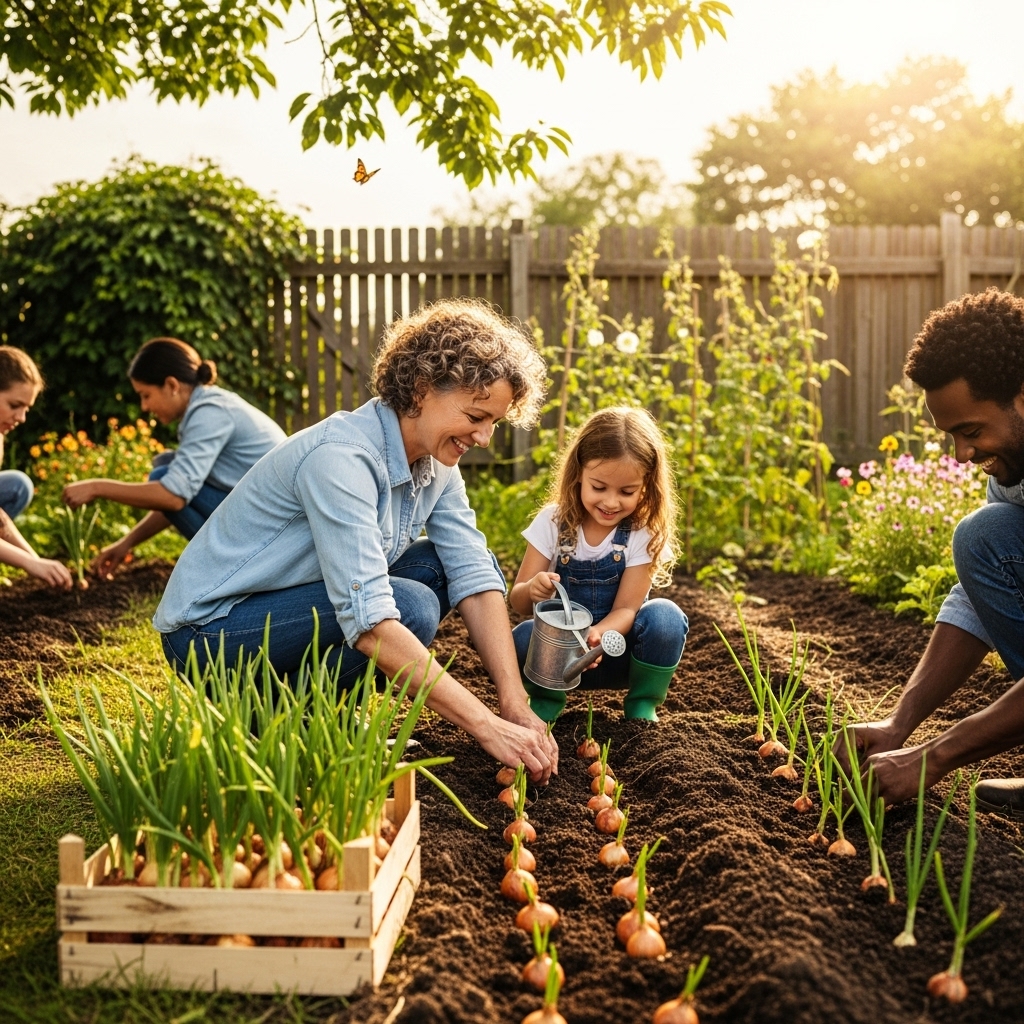
Planting onion sets is often the easiest and quickest way to start. When I choose to use sets, I typically pick healthy, firm bulbs without any signs of mold or shriveling. I start by spacing them about 4 to 6 inches apart in rows, as I’ve learned that giving them room to grow is essential. Each bulb should be planted with the pointed end facing up and buried about 1-2 inches deep. I remember feeling like a proud gardener when I saw those little sets nestled into the soil, ready to grow!
After planting, I give the area a gentle watering to settle the soil around the bulbs. It’s important not to overwater, as I’ve found that too much water can cause rot. I usually keep an eye on them for any signs of distress, like yellowing leaves, which could indicate they’re not getting enough water.
Sowing Onion Seeds Directly in the Ground
If I decide to sow seeds directly into the ground, I always make sure that the soil temperature is warm enough—ideally around 50°F. I use a seed drill to create shallow furrows, spacing them about 12-18 inches apart. I sprinkle the seeds thinly and cover them with about half an inch of soil. I’ve learned that planting seeds too deep can hinder germination, so I stay mindful of that!
After sowing the seeds, I lightly water the area. One technique I use is to cover the newly planted area with a light layer of mulch to help retain moisture. I’ve found that this keeps the soil temperature consistent and reduces the chances of weeds taking over. It’s always a thrill to see those little green shoots emerge a few weeks later!
Transplanting Onion Seedlings
Transplanting seedlings is another approach I’ve enjoyed. I usually start my seeds indoors about 6-8 weeks before the last expected frost. It’s like nurturing little baby onions! Once the seedlings have a couple of sets of true leaves and are about 4-6 inches tall, I harden them off by gradually exposing them to outdoor conditions for about a week.
When I’m ready to transplant, I prepare the garden bed as previously mentioned. I dig holes for each seedling, spacing them about 4-6 inches apart, just like I do with sets. When I place each seedling into the hole, I ensure that the roots are spread out gently and the soil covers the root zone without burying the leaves. After transplanting, I give them a good drink of water, which helps reduce transplant shock. I remember the first time I saw my seedlings take root; it felt so rewarding to see my hard work pay off!
Watering and Caring for Your Onion Plants
Once my onions are planted, I shift my focus to their care. I’ve found that watering and nurturing them properly can be the difference between a mediocre crop and a bountiful harvest.
Watering Requirements for Onions
Onions need consistent moisture, especially during their initial growth stages. I typically aim to keep the soil evenly moist but not soggy. In the first few weeks after planting, I water them every few days if it hasn’t rained, but as the onions mature, I cut back a bit. Too much water can lead to rot, which I’ve learned the hard way. I always check the soil moisture by sticking my finger about an inch into the ground—if it feels dry, it’s time to water!
Mulching for Moisture Retention
Speaking of watering, I’m a big fan of mulching. I’ve noticed that adding a layer of organic mulch around my onions helps retain soil moisture and suppresses weeds. Using straw or shredded leaves works well for me. I remember the last summer when I mulched my onions; it made such a difference in keeping the soil cool and damp, especially during those hot, dry spells.
Nutrient Management: Fertilizing Onions
As my onions grow, I keep an eye on their nutrient needs. I usually apply a balanced fertilizer about four weeks after planting. I’ve learned that a side-dressing of fertilizer can boost growth, especially if I see the leaves turning a bit yellow. I recommend following the fertilizer package instructions for the best results. It’s all about finding that balance—too much can lead to lush tops with little bulb development, while too little can stunt growth.
As I care for my onions, I stay attentive to their needs while also enjoying the process. Gardening has taught me patience and respect for nature, and I’m excited to share more about the challenges and joys of growing onions in the sections to come!
Frequently Asked Questions
What are the common types of onions?
The common types of onions are yellow, red, and white. Yellow onions have a strong flavor that sweetens when cooked, red onions are milder and great for salads, and white onions have a sharper taste often used in Mexican cuisine.
How do I choose the right onion variety for my climate?
Choosing the right onion variety depends on your climate. Long-day onions thrive in northern climates with 14-16 hours of daylight, while short-day onions do better in southern regions with 10-12 hours of daylight. It’s also important to match the onion variety to the length of your growing season.
What is the difference between organically grown and conventionally grown onions?
Organic onions are grown without synthetic fertilizers or pesticides, offering a healthier option. They often have a better flavor and texture. Conventionally grown onions may be more readily available and cheaper but could be treated with chemicals.
What tools do I need for planting onions?
Essential tools for planting onions include a spade or garden fork for soil preparation, a rake for leveling, a trowel for planting, gardening gloves for hand protection, and possibly a seed starting tray and watering can or hose with a gentle spray nozzle.
How should I prepare the soil for planting onions?
To prepare the soil for onions, clear the area of weeds and debris, till the soil to a depth of about 10-12 inches, and mix in compost or organic matter to enhance nutrients. Testing the soil pH is also recommended, as onions prefer a pH between 6.0 and 7.0.
When is the best time to plant onions?
The best time to plant onions is a few weeks before the last expected frost in spring, when the soil temperature reaches around 50°F. In milder climates, fall planting is also an option for overwintering varieties.
What are the signs of frost that I should watch out for?
Watch for late frosts and keep an eye on local weather conditions. A sudden drop in temperature can harm young onion plants, so it’s important to monitor the forecast and be cautious about planting too early.
How should I plant onion sets?
To plant onion sets, space them about 4-6 inches apart in rows, with the pointed end facing up and buried 1-2 inches deep. After planting, gently water the area to settle the soil but avoid overwatering to prevent rot.
What is the watering requirement for onion plants?
Onions need consistent moisture, especially in their initial growth stages. The soil should be kept evenly moist but not soggy. Watering every few days is recommended if it hasn’t rained, and it’s crucial to check soil moisture regularly.
How do I manage nutrients while growing onions?
Nutrient management involves applying a balanced fertilizer about four weeks after planting. Keep an eye on the plants; if the leaves turn yellow, a side-dressing of fertilizer may be needed. Always follow the fertilizer package instructions for best results.