
Planting potatoes in a bucket is a simple and effective way to grow your own potatoes, even in small spaces. I’ve found this method to be incredibly rewarding and fun, making it a great choice for both beginners and experienced gardeners. Read Interesting article: When to Plant Potatoes for Maximum Yield
Overview of Planting Potatoes in a Bucket
Growing potatoes in a bucket has become one of my favorite gardening hacks. Not only does it save space, but it also allows for a unique gardening experience that can be enjoyed right on your patio or balcony. I remember the first time I decided to try this method; I was amazed at how easy and productive it turned out to be.
Benefits of Container Gardening
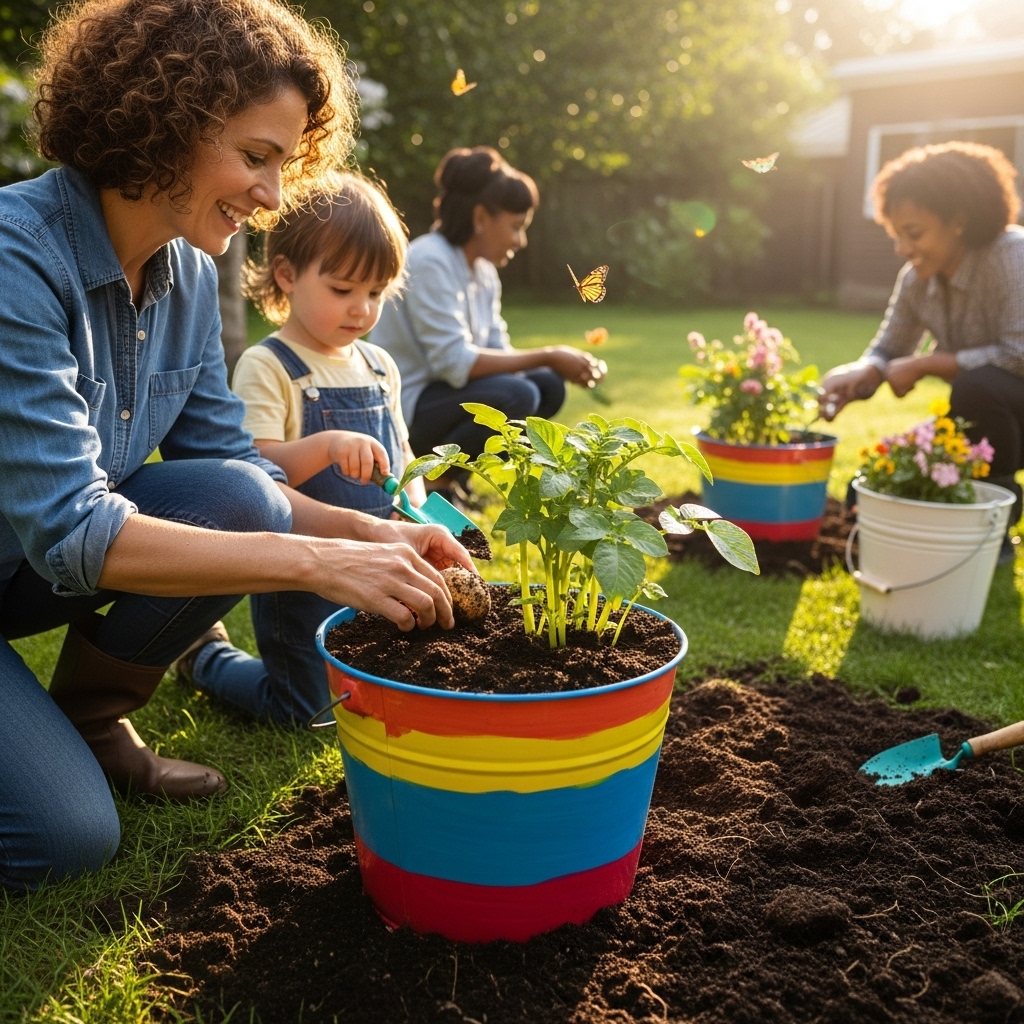
Container gardening, like growing potatoes in a bucket, offers numerous benefits. For one, it allows us to garden in limited spaces, such as balconies or small yards. I’ve realized it’s perfect for those of us who don’t have the luxury of a large garden or prefer to keep our gardening efforts contained. Additionally, container gardening provides better control over soil quality and moisture, which is crucial for growing healthy plants. I feel that it also makes it easier to manage pests, as I can simply move the container to a different location if I notice any issues.
Why Choose a Bucket for Potatoes?
Choosing a bucket specifically for potato planting offers several advantages. First, it’s lightweight and movable, allowing you to position your plants in the sunniest spots. I’ve found that this flexibility can significantly affect potato growth. Plus, buckets are affordable and come in various sizes, making them accessible for everyone. Another reason I enjoy using buckets is that they can be stacked or placed on top of one another, maximizing vertical space—ideal for urban gardeners like me who want to make every inch count. Finally, buckets allow for better drainage compared to traditional soil beds, which can help prevent rot and ensure healthy roots.
Choosing the Right Bucket
Now that we’ve established why planting potatoes in a bucket is a fantastic idea, let’s talk about how to choose the right bucket. The right bucket can make all the difference in your potato-growing journey.
Types of Buckets Suitable for Planting
When selecting a bucket for planting potatoes, I’ve noticed that not all buckets are created equal. Many gardeners, including myself, prefer using food-safe plastic buckets. These are typically made of high-density polyethylene (HDPE) and are often marked with the recycling symbol #2. This means they are safe for growing food. I also recommend avoiding buckets that have previously contained harmful chemicals or substances, as this can leach into the soil and affect your plants. Another option is using wooden or fabric pots. While these materials can be more visually appealing, they do require more attention to watering, as they can dry out more quickly.
Size and Depth Considerations
The size of the bucket is an essential factor in successfully growing potatoes. I usually opt for buckets that are at least 5 to 10 gallons in size. This gives the potatoes enough room to grow and develop a healthy root system. The depth of the bucket is particularly important, as potatoes grow underground. A depth of at least 12 to 16 inches is ideal, allowing for proper tuber development. I’ve found that deeper buckets not only accommodate the potatoes but also help retain moisture, which is critical for their growth.
Drainage: Importance and Solutions
One of the most crucial aspects of container gardening is proper drainage. Without it, your potatoes can easily rot, leading to disappointing results. I always make sure my buckets have adequate drainage holes at the bottom. If you’re using a solid bucket with no holes, you can easily drill a few holes yourself. I usually recommend at least four to six holes spaced evenly across the bottom. If you’re concerned about losing soil through these holes, consider placing a piece of landscape fabric or a coffee filter at the bottom to keep the soil in while allowing excess water to drain out. This simple step has saved my crops from overwatering several times!
Selecting the Right Potato Varieties
Choosing the right potato varieties for your bucket garden can enhance your growing success. Not all potatoes are created equal – some are better suited for container growing than others.
Best Potato Varieties for Container Growing
When I first started growing potatoes in buckets, I quickly discovered that some varieties thrive better in containers. I recommend trying early varieties like ‘Red Pontiac,’ ‘Yukon Gold,’ or ‘Fingerling’ potatoes. These tend to produce good yields in smaller spaces. I personally love the taste of ‘Yukon Gold’ for its creamy texture, and it has been a standout in my bucket garden. Early varieties have shorter growing seasons, allowing you to harvest sooner, which is always exciting!
Seed Potatoes vs. Store-Bought Potatoes
When it comes to starting your potato-growing adventure, I’ve learned that using seed potatoes is the best route. Seed potatoes are specifically grown to produce more tubers and are less likely to carry diseases compared to store-bought potatoes. Although I’ve occasionally used leftover potatoes from the grocery store, I noticed that they may sprout eyes but often yield less and are more susceptible to pests. Investing in certified seed potatoes can make a significant difference in your overall harvest.
Choosing Organic vs. Conventional Seed Potatoes
The choice between organic and conventional seed potatoes ultimately depends on your gardening preferences. Personally, I lean towards organic seed potatoes because they are grown without synthetic pesticides and fertilizers. This aligns with my desire to grow healthy, chemical-free vegetables. However, I’ve also seen great success with conventional seed potatoes. I think it’s essential to choose what feels right for you and your gardening philosophy. Whichever route you go, just ensure that your potatoes are certified disease-free for the best results.
Preparing the Bucket for Planting
Once you’ve selected the right bucket and potato variety, it’s time to prepare for planting. This step is crucial for ensuring that your potatoes thrive in their new home. I’ve learned that a little preparation goes a long way in maximizing your yield.
Soil Requirements for Potatoes
The type of soil you use can make all the difference in your potato-growing success. I always choose a well-draining, nutrient-rich potting mix for my buckets. Potatoes prefer slightly acidic soil with a pH between 5.5 and 6.5. I often mix some compost into my potting soil for added nutrients. Compost not only enriches the soil but also improves its drainage and moisture retention. If you don’t have compost on hand, a good quality potting mix should suffice. I’ve found that the right soil creates a healthy environment for the roots to grow and develop properly.
Fertilization: What to Use and When
Fertilization is another essential aspect of preparing your bucket. Potatoes are heavy feeders, so I recommend using a balanced fertilizer that is high in potassium, which promotes tuber growth. When I plant my potatoes, I usually mix a slow-release organic fertilizer into the soil. This ensures that my plants have a steady supply of nutrients as they grow. I also keep an eye on them, and if I notice any signs of nutrient deficiency, I supplement with a liquid fertilizer every few weeks. Timing is key, and I’ve learned that feeding them at the right stages can really boost my harvest.
Layering Soil and Seed Potatoes
Layering is a fun part of the planting process that allows me to maximize the space in my bucket and encourage healthy growth. I start by adding a few inches of soil at the bottom of the bucket, then I place my seed potatoes on top. I’ve found that spacing them about 6 inches apart works well. Once the potatoes are in place, I cover them with another 4 to 6 inches of soil. As the plants grow, I continue to add soil, a technique known as hilling. This helps ensure that the growing tubers stay covered and protected from sunlight, preventing them from turning green and becoming toxic. I typically hill my potatoes every few weeks, and it’s satisfying to see them flourish as I care for them.
Step-by-Step Guide to Planting Potatoes in a Bucket
Now that we’ve prepped everything, let’s dive into the actual planting process. I remember feeling both excited and nervous the first time I planted my potatoes. Following a straightforward step-by-step guide can ease those first-time jitters.
When to Plant Potatoes
Timing is essential when it comes to planting potatoes. I usually wait until the last frost date in my area has passed, which can vary depending on where you live. For me, that typically means I’m planting in late March to early April. I’ve learned that potatoes prefer cool weather, so planting them too early can subject them to frost damage, while planting too late can lead to poor yields in the heat of summer. Read Interesting article: When to Plant Tomatoes for the Best Harvest
How to Plant the Seed Potatoes
When planting my seed potatoes, I make sure they are cut into pieces, each with at least one eye. I’ve found that this helps to maximize the number of plants and tubers I can grow. After preparing the seed potatoes, I place them in the bucket, ensuring they are spaced well. Once they are in place, I cover them gently with soil, making sure not to compact it too much. I usually give them a light watering after planting to help settle the soil. Watching them emerge from the soil a few weeks later is one of my favorite gardening moments!
Watering Techniques and Frequency
Watering is a crucial aspect of potato care. I’ve noticed that potatoes prefer consistent moisture, so I try to keep the soil evenly moist but not soggy. Initially, I water my buckets every few days, especially during dry spells. As the plants grow, I adjust my watering schedule based on the weather and soil moisture. A good rule of thumb is to stick my finger in the soil up to the second knuckle; if it feels dry, it’s time to water. I’ve learned that overwatering can lead to rot, so I always err on the side of caution. Keeping a close eye on the moisture levels has really helped my potato plants thrive.
Care and Maintenance During the Growing Season
As my potatoes grow, I find that staying attentive to their needs is key. It’s a journey that requires ongoing care and maintenance, but I can assure you it’s worth the effort.
Sunlight Requirements
Potatoes thrive in full sun, so I usually place my buckets in an area that gets at least 6-8 hours of direct sunlight each day. I remember the first year I did this; my potatoes seemed to flourish, and the growth was impressive. If I notice that my plants are stretching too much, I might have to adjust their position to ensure they’re getting enough light.
Managing Watering and Soil Moisture
As I mentioned earlier, balancing soil moisture is essential. During hot summer days, I check my buckets daily. I sometimes use mulch on top of the soil to help retain moisture and regulate temperature. I’ve found that straw or grass clippings work well, and they also break down over time, adding nutrients back into the soil. This method has made a noticeable difference in how well my potatoes grow.
Fertilization Schedule
Throughout the growing season, I stick to my fertilization schedule, usually applying liquid fertilizer every few weeks. By keeping a consistent feed, I’ve noticed that my plants remain healthy and robust. I like to time my fertilization with my hilling, giving the plants a little boost as they grow taller. It feels gratifying to see my efforts pay off as my potato plants thrive.
Pest and Disease Management
Even with the best care, pests and diseases can sometimes sneak into our gardens. I’ve encountered aphids and Colorado potato beetles in my bucket gardens before. I always keep an eye out for any signs of trouble — like yellowing leaves or holes in the foliage. If I spot any issues, I usually handpick pests or use a gentle soap spray to manage them. Being proactive has saved my crops more times than I can count!
Frequently Asked Questions
What are the benefits of planting potatoes in a bucket?
Planting potatoes in a bucket allows for gardening in limited spaces, provides better control over soil quality and moisture, and makes it easier to manage pests by relocating the container if necessary.
Why should I choose a bucket specifically for growing potatoes?
Buckets are lightweight and movable, allowing you to position them in sunny spots. They are affordable, come in various sizes, can be stacked to maximize space, and offer better drainage compared to traditional soil beds.
What type of bucket is best for planting potatoes?
Food-safe plastic buckets made of high-density polyethylene (HDPE) are recommended. It’s important to avoid buckets that have previously contained harmful chemicals. Wooden or fabric pots are alternatives but require more attention to watering.
What size and depth should a bucket have for growing potatoes?
A bucket should be at least 5 to 10 gallons in size and 12 to 16 inches deep to allow for proper tuber development and moisture retention.
How important is drainage when planting potatoes in a bucket?
Proper drainage is crucial to prevent potato rot. Buckets should have at least four to six holes at the bottom, and adding landscape fabric or a coffee filter can help retain soil while allowing excess water to drain.
What potato varieties are best for container growing?
Early varieties such as ‘Red Pontiac,’ ‘Yukon Gold,’ and ‘Fingerling’ potatoes are recommended for container growing as they tend to produce good yields in smaller spaces.
Should I use seed potatoes or store-bought potatoes for planting?
Using seed potatoes is preferable as they are grown to produce more tubers and are less likely to carry diseases compared to store-bought potatoes, which may yield less and be more susceptible to pests.
What type of soil is best for growing potatoes in a bucket?
A well-draining, nutrient-rich potting mix is ideal for potatoes. Slightly acidic soil with a pH between 5.5 and 6.5 is preferred, and mixing compost into the potting soil can enhance its quality.
How often should I water potatoes grown in a bucket?
Watering should keep the soil evenly moist but not soggy. Initially, buckets may need watering every few days, and adjustments should be made based on weather conditions and soil moisture levels.
What common pests should I watch for when growing potatoes in a bucket?
Common pests include aphids and Colorado potato beetles. Regularly checking for signs of trouble, such as yellowing leaves or holes in foliage, allows for proactive management of these issues.