
The best way to plant rhubarb for optimal growth is to choose a sunny location with well-drained soil, plant during early spring, and ensure proper care throughout its growth cycle. I’ve found that with a little attention, rhubarb can flourish and provide a rewarding harvest. Read Interesting article: What Are Perennial Plants? List + Examples
Understanding Rhubarb
What is Rhubarb?
Rhubarb is a perennial vegetable, often mistaken for a fruit due to its sweet-tart flavor, commonly used in desserts like pies and crisps. It has thick, fleshy stalks that can be green or red, depending on the variety, and its large leaves are not edible. I remember the first time I tasted rhubarb pie—it was a unique blend of sweetness and tanginess that left a lasting impression on me.
Rhubarb Varieties
There are several varieties of rhubarb, each with its own characteristics. Some popular types include:
- Victoria: A classic English variety, known for its sweet flavor and bright red stalks. It’s a favorite for pies.
- Crimson Cherry: This variety has deep red stalks and is sweet enough to enjoy raw. I’ve found it particularly delicious in jams.
- Yorkshire Forced: Grown in the dark for a sweeter, more tender stalk, this rhubarb is often considered a delicacy.
- Green-Handled: This type has greenish stalks and a tart flavor, making it great for cooking.
When I first dabbled in growing rhubarb, I chose the Victoria variety because of its reputation for being hardy and productive. It quickly became a staple in my garden.
Benefits of Growing Rhubarb
Growing rhubarb comes with a variety of benefits. For one, it’s incredibly easy to care for and can thrive in a range of conditions. Once established, rhubarb requires minimal maintenance, making it a great choice for busy gardeners like myself. Additionally, rhubarb is a perennial plant, meaning it can return year after year, which saves time and effort in replanting. Rhubarb is not without its risks, however, so knowing which parts are toxic is essential.
There’s also the thrill of harvesting rhubarb in the spring, which feels like a delicious reward for our gardening efforts. I love being able to whip up rhubarb desserts or jams with my homegrown produce. Plus, rhubarb is rich in vitamins C and K, so I feel good knowing I’m growing something nutritious for my family.
Getting Started with Rhubarb Planting
When to Plant Rhubarb
The ideal time to plant rhubarb is in early spring, as soon as the ground is workable. I’ve found that planting it early allows the crowns to establish roots before the heat of summer hits. If you live in a warmer climate, you might even plant in the fall. Timing is crucial—I learned the hard way that delaying planting can result in weaker plants that struggle to thrive.
Choosing the Right Location
Rhubarb thrives in full sun, so selecting a location that receives at least 6 to 8 hours of sunlight daily is essential. I often look for a spot in my garden that has a combination of sun and some light afternoon shade, especially in hotter climates. Good air circulation is also important to reduce the risk of diseases. When I first planted my rhubarb, I chose a location close to my kitchen so I could easily access it for cooking.
Soil Requirements for Rhubarb
Soil is one of the most critical factors in successfully growing rhubarb. It prefers well-drained, loamy soil that retains some moisture but doesn’t become waterlogged. I like to enrich my soil with organic matter, such as compost or well-rotted manure, to provide nutrients and improve drainage. Testing the soil pH is also a good idea; rhubarb prefers a slightly acidic to neutral pH, around 6.0 to 7.0. I’ve learned that a little preparation goes a long way in ensuring my plants have a healthy start.
Rhubarb Companion Plants
When planning your garden, consider planting companion plants that can enhance the growth of rhubarb or help deter pests. Some good companions include:
- Strawberries: They thrive in similar conditions and can benefit from the shade provided by rhubarb’s large leaves.
- Asparagus: Another perennial, it can grow alongside rhubarb without competing for resources.
- Garlic and onions: These plants can help keep pests away from rhubarb.
I remember planting my rhubarb alongside strawberries, and the combination not only looked beautiful but also provided me with a delightful mix of flavors in the kitchen.
Preparing for Planting
How to Prepare the Soil
Preparing the soil for rhubarb is one of those crucial steps that can make all the difference in how well your plants grow. I usually start by removing any weeds and debris from the area where I plan to plant. Weeds can compete with your rhubarb for nutrients and water, so it’s best to get rid of them beforehand. After clearing the area, I like to till the soil to a depth of about 12 inches to improve aeration and drainage.
Once the soil is loosened up, I incorporate organic matter like compost or aged manure. This not only enriches the soil with nutrients but also helps with moisture retention, which is particularly important in the early stages of growth. I remember the first time I prepared my rhubarb bed—I could feel the difference in the soil texture after adding compost, and my plants thrived as a result!
Choosing Rhubarb Crowns vs. Seeds
When it comes to starting rhubarb, you have two main options: planting crowns or seeds. I’ve always preferred crowns because they give you a head start. Crowns are the established root sections of rhubarb plants, and they generally produce a harvest much sooner than seeds. I’ve found that planting crowns allows me to enjoy my rhubarb pie within the same growing season.
On the other hand, if you’re up for a little challenge and have the patience, growing rhubarb from seeds can be rewarding too. However, keep in mind that it may take a couple of years before you start seeing significant growth and can harvest any stalks. For those of us eager to enjoy that tart goodness, I can’t recommend crowns enough!
Where to Buy Rhubarb Plants
When it comes to sourcing rhubarb crowns, I usually prefer local nurseries or garden centers. Not only can you get advice from knowledgeable staff, but you can also see the health of the plants before you buy. I remember visiting my local nursery and chatting with the owner, who gave me tips on the best variety for my area. It felt great to support a local business while setting myself up for gardening success!
Alternatively, if local options are limited, many reputable online retailers offer rhubarb crowns. Just make sure to read reviews and choose a seller known for quality plants. I’ve ordered online before, and while it was convenient, it’s always nice to see and touch the plants in person first.
Steps to Plant Rhubarb
Planting Rhubarb Crowns
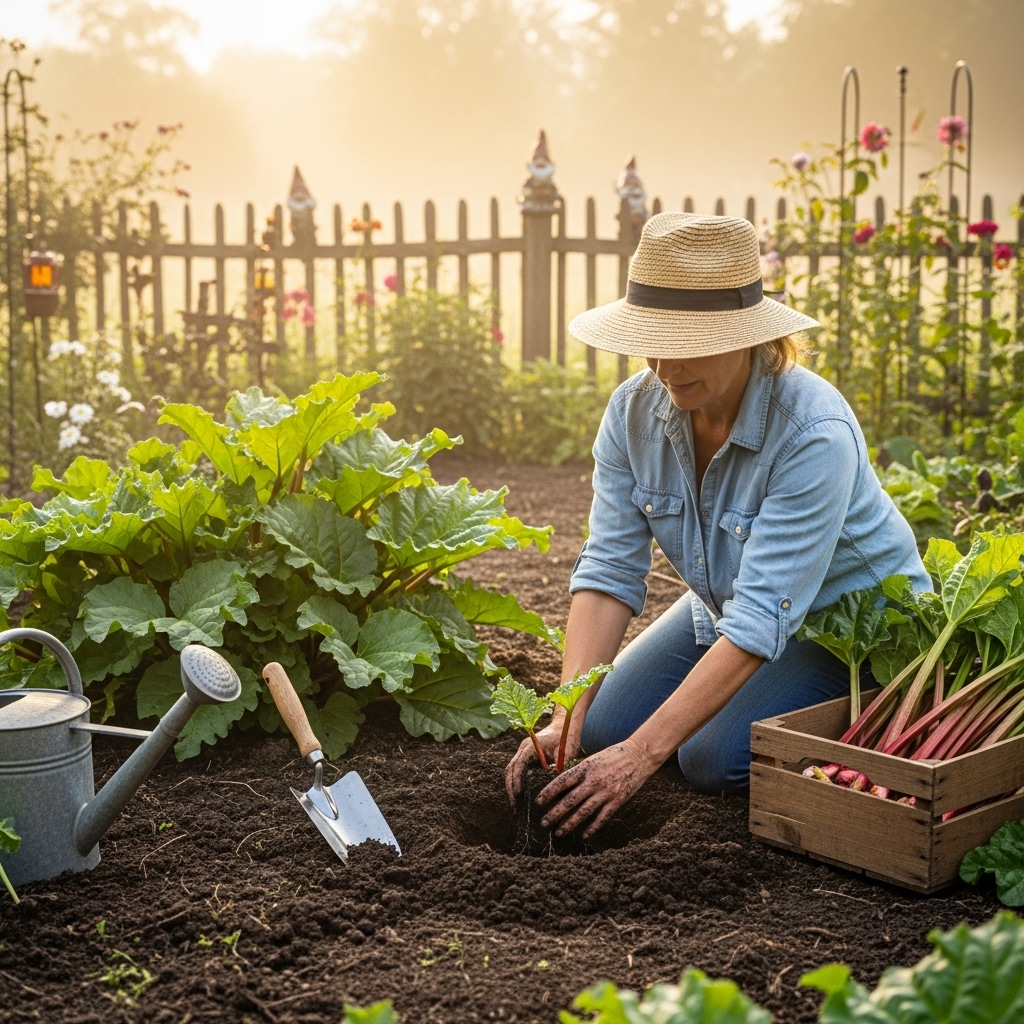
Once I have my crowns ready, it’s time to plant them! I typically dig a hole that is about 2-3 feet apart to give each crown enough space to grow. The hole should be deep enough to accommodate the crown without burying it too deeply. I’ve learned that the top of the crown should be just at the soil surface; burying it too deep can lead to rot. After placing the crown in the hole, I gently spread out the roots and cover it with soil, patting it down to remove any air pockets.
Planting Rhubarb Seeds
If you decide to go the seed route, I usually start them indoors about 8-10 weeks before the last frost date in my area. I fill seed trays with a light seed starting mix and plant the seeds about an inch apart, covering them lightly with soil. They need warmth to germinate, so I keep them in a warm spot and maintain moisture. Once the seedlings are a few inches tall and the weather is warm enough, I transplant them outside, following the same spacing guidelines as for crowns.
Spacing and Depth Guidelines
Spacing is essential for healthy rhubarb plants. When planting, I generally leave about 3-4 feet between each crown. This gives them ample room to spread out and grow without competing for resources. If you’re planting seeds, I recommend thinning them out once they’ve sprouted so that only the strongest seedlings remain. This ensures that each plant has enough space to develop fully. In my experience, I’ve found that giving them generous space leads to larger, healthier stalks come harvest time.
Care and Maintenance for Optimal Growth
Watering Rhubarb
One thing I’ve learned about watering rhubarb is that consistency is key. Rhubarb needs a good amount of moisture, especially in the early stages of growth. I usually try to keep the soil consistently moist but not soggy. Deep watering once a week usually does the trick, but I adjust based on the weather. I remember a particularly hot summer when I made sure to check my rhubarb daily; it really paid off with a bountiful harvest!
Fertilizing Rhubarb Plants
Fertilizing is another important aspect of rhubarb care. I typically apply a balanced fertilizer in the early spring when the plants start to show new growth. I love using organic options, like fish emulsion or compost, to give my plants a nutrient boost. I’ve noticed a significant difference in the vigor and size of the stalks when I stay on top of fertilization!
Pest and Disease Management
While rhubarb is generally resilient, it can still face challenges from pests and diseases. I often keep an eye out for common pests like aphids and slugs. I’ve found that handpicking slugs and using insecticidal soap for aphids can be effective. It’s also good to ensure proper air circulation around the plants to prevent mold and other diseases. In my garden, I’ve learned that staying observant and addressing issues early can save me a lot of trouble later on.
Mulching Techniques
Mulching is something I’ve embraced wholeheartedly in my rhubarb garden. I usually add a layer of organic mulch, like straw or shredded leaves, around the base of my plants. This helps retain moisture, suppress weeds, and regulate soil temperature. Plus, as the mulch breaks down, it adds more nutrients to the soil. It’s a win-win situation! I remember the first time I mulched my rhubarb; it felt like I was giving my plants a cozy blanket to thrive under.
Harvesting Rhubarb
When to Harvest Rhubarb
Harvesting rhubarb is one of the most exciting parts of growing this unique plant. I usually wait until the stalks reach a height of about 12 to 18 inches before I start my harvest. Typically, the best time to harvest is in late spring to early summer when the stalks are firm and vibrant. I’ve learned that harvesting too early can result in less flavorful stalks, while waiting too long can lead to tough, stringy stalks. After experiencing both ends of the spectrum, I now keep a close eye on them and pick when they look their best!
Another thing I’ve noticed is that the first harvest of the season is often the most flavorful. Some gardeners, including myself, choose to restrict harvesting in the first year to allow the plants to establish strong roots. In my case, waiting allowed my rhubarb to flourish in subsequent years, leading to larger stalks and better yields.
How to Harvest Rhubarb Safely
When it comes to harvesting rhubarb, I’ve found that the technique can make a big difference in the health of the plant. Instead of pulling the stalks straight up, which can damage the roots, I gently twist them at the base until they break off. This method seems to reduce stress on the plant, allowing it to continue producing throughout the growing season. I also make sure to cut the stalks with a sharp knife when necessary, especially if they’re particularly thick.
I’ve learned a valuable lesson about not harvesting all the stalks at once. Leaving some stalks on the plant encourages continued growth and allows for a longer harvest season. I typically pick a few stalks from several plants rather than stripping just one plant bare, which has kept my rhubarb patch flourishing year after year.
Storing and Using Fresh Rhubarb
After a successful harvest, I always want to make the most of my rhubarb. Freshly harvested rhubarb can be stored in the refrigerator for about a week. I usually wrap the stalks in a damp paper towel and place them in a plastic bag to keep them fresh. That way, I can have them ready for my favorite recipes without worrying about them wilting.
When it comes to using rhubarb, the possibilities are endless! One of my favorite ways to enjoy it is in a classic rhubarb pie, where the tartness pairs perfectly with a sweet crust. I also love making rhubarb compote to spoon over yogurt or oatmeal. It’s such a simple way to enjoy the fresh flavor, and it adds a delightful zing to breakfast. I remember one year making a batch of rhubarb jam that became a hit among my friends and family; it’s a great way to preserve that tangy flavor for later, too!
If I find that I have more rhubarb than I can use right away, I usually chop it into small pieces and freeze it. Freezing is a great option because it allows me to enjoy the taste of my garden throughout the year. I’ll just pack the chopped rhubarb into freezer bags, making sure to remove as much air as possible before sealing. This way, I can take out small portions whenever I want to whip up a quick dessert or add it to a smoothie.
Common Rhubarb Growing Issues
Diagnosing Growth Problems
Despite rhubarb being relatively easy to grow, I’ve faced my fair share of challenges. One common issue I’ve encountered is poor growth, which can be frustrating. I’ve learned that if the plants show stunted growth, it might be due to insufficient sunlight or poor soil quality. That’s when I take a closer look at their environment and make adjustments as needed.
Another thing I’ve noticed is that yellowing leaves often indicate nutrient deficiencies. In my experience, applying a balanced fertilizer usually helps perk them back up. I always keep an eye on the leaves and the overall vigor of the plants; it’s amazing how quickly I can spot when something feels off.
Dealing with Pests and Diseases
Pests can also pose a challenge when growing rhubarb. I’ve had to deal with aphids a few times, and I’ve found that regular inspections and prompt action are key. If I see any signs of these little pests, I usually blast them off with water or use insecticidal soap to keep them at bay.
Additionally, I’ve faced some issues with fungal diseases, especially if the weather is particularly wet. It’s essential to maintain good air circulation around the plants, so I try to space them adequately. I often remove any affected leaves promptly to prevent spreading the issue to other parts of the plant. Through careful observation and swift action, I’ve managed to keep my rhubarb healthy and productive.
Addressing Soil and Climate Challenges
The soil and climate can significantly impact rhubarb growth. I’ve learned that if my soil is too compacted, it can hinder root development. To combat this, I often amend my soil with organic matter and practice crop rotation when possible. This not only helps with drainage but also adds nutrients that keep my plants thriving.
As for climate, rhubarb prefers cooler temperatures, and I’ve had to be mindful of that in the warmer months. If I notice the weather getting excessively hot, I make sure to provide some afternoon shade or extra watering to help my plants cope. I’ve found that paying attention to these details can really make a difference in the success of my rhubarb patch.
Frequently Asked Questions
What is rhubarb?
Rhubarb is a perennial vegetable, often mistaken for a fruit due to its sweet-tart flavor. It is commonly used in desserts like pies and crisps, featuring thick, fleshy stalks that can be green or red, while its large leaves are not edible.
When is the best time to plant rhubarb?
The ideal time to plant rhubarb is in early spring, as soon as the ground is workable. In warmer climates, planting can also be done in the fall.
What type of soil does rhubarb prefer?
Rhubarb prefers well-drained, loamy soil that retains some moisture but does not become waterlogged. A slightly acidic to neutral pH, around 6.0 to 7.0, is ideal for rhubarb growth.
How far apart should rhubarb crowns be planted?
When planting rhubarb crowns, it is recommended to leave about 3-4 feet between each crown to ensure they have ample space to grow without competing for resources.
What are some good companion plants for rhubarb?
Good companion plants for rhubarb include strawberries, asparagus, garlic, and onions. These plants thrive in similar conditions and can help deter pests.
How should rhubarb be watered?
Rhubarb needs to be kept consistently moist, especially in the early stages of growth. Deep watering once a week is usually sufficient, but adjustments should be made based on weather conditions.
When is the best time to harvest rhubarb?
The best time to harvest rhubarb is when the stalks reach a height of about 12 to 18 inches, typically in late spring to early summer. Harvesting too early or too late can affect the quality of the stalks.
What is the best way to harvest rhubarb?
To harvest rhubarb safely, gently twist the stalks at the base until they break off, rather than pulling them straight up. This method helps reduce stress on the plant.
How should freshly harvested rhubarb be stored?
Freshly harvested rhubarb can be stored in the refrigerator for about a week by wrapping the stalks in a damp paper towel and placing them in a plastic bag to keep them fresh.
What are common issues faced when growing rhubarb?
Common issues when growing rhubarb include poor growth due to insufficient sunlight or poor soil quality, yellowing leaves indicating nutrient deficiencies, and pest problems such as aphids and fungal diseases.