
To plant rose cuttings successfully, start by taking healthy cuttings from a parent rose plant, preparing the cuttings properly, and providing them with the right environment to root. I’ve found that with the right techniques, you can enjoy beautiful roses in your garden in no time. Read Interesting article: Step-by-Step Guide to Planting Succulents Like a Pro!
Understanding Rose Cuttings
What Are Rose Cuttings?
Rose cuttings are segments of rose stems that are used to propagate new rose plants. Essentially, when you take a cutting, you’re taking a piece of the parent plant to encourage it to grow roots and become an entirely new plant. This method of propagation is popular among gardeners because it allows them to clone their favorite roses without needing to buy new plants. I remember my first attempt at taking cuttings; I was amazed to see how a simple clip could lead to a thriving rose bush.
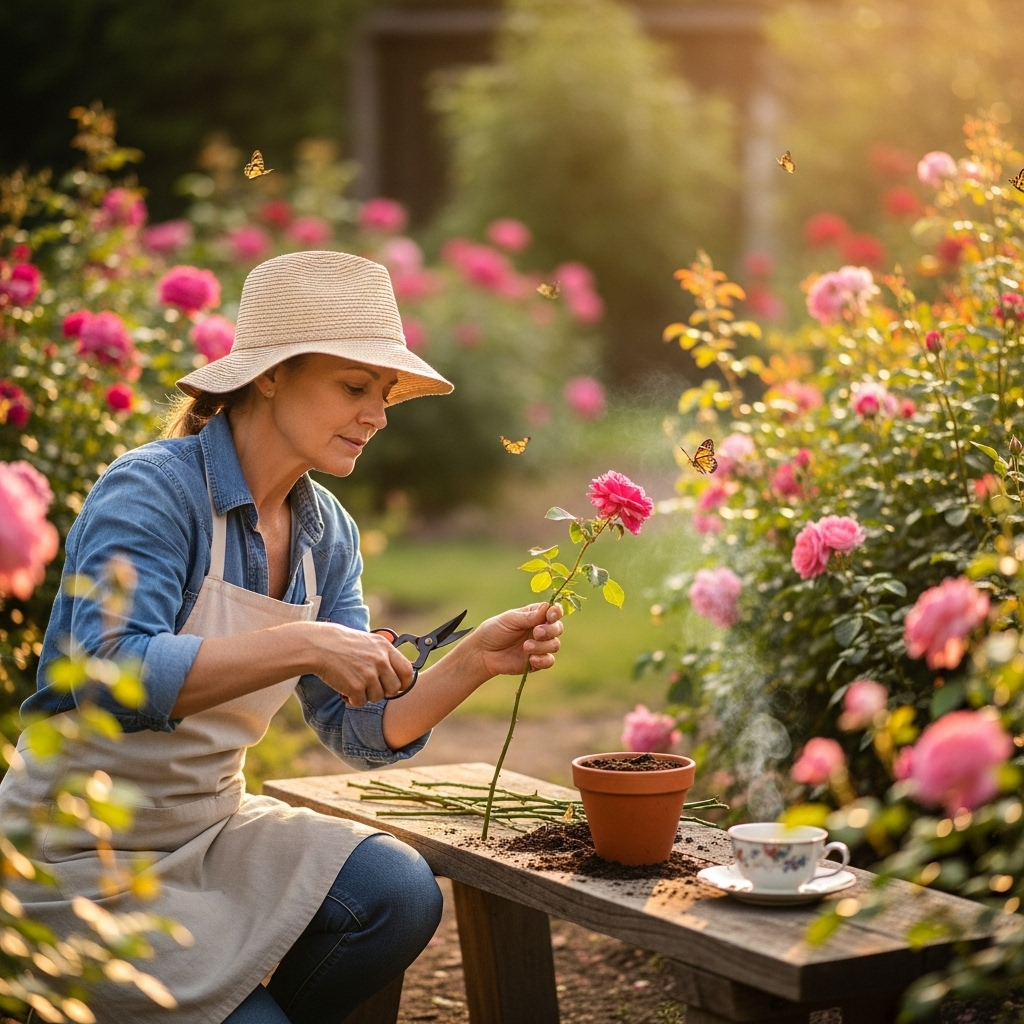
Types of Roses Suitable for Cuttings
Not all roses are created equal when it comes to propagation. Some types are more forgiving and easier to root than others. I’ve had great success with hybrid tea roses, floribunda roses, and climbing roses. On the other hand, some old garden roses can be a bit trickier, but it’s not impossible to root them with the right approach. It’s always worth trying different varieties if you’re adventurous! I’ve learned that experimenting has led me to discover some real gems in my garden.
Benefits of Propagating Roses from Cuttings
One of the best parts about propagating roses from cuttings is the cost savings. Instead of spending money on new plants, I’ve been able to create a whole rose garden just from a few cuttings. Additionally, it’s a great way to preserve specific rose varieties that you love. I’ve also found it incredibly rewarding to nurture a cutting and watch it grow into a beautiful flower. It’s like watching a little piece of your garden’s history come to life, and that connection is something I deeply cherish. Read Interesting article: Pruning Senecio Angel Wings Plant
Preparing for Planting Rose Cuttings
Essential Tools and Materials
Before diving into planting rose cuttings, it’s important to gather your tools and materials. For me, the essentials include sharp pruners, a clean pot or container, potting mix, and a watering can. I also make sure to have clear plastic bags or a cloche handy to create a humid environment for the cuttings. I remember the first time I forgot to gather everything beforehand; it made the process a bit chaotic! Having everything within reach makes the whole experience smoother and more enjoyable.
Choosing the Right Time for Planting
The timing of when to take rose cuttings can greatly influence your success. I’ve found that the best time to take cuttings is during the growing season, typically in late spring or early summer, when the plants are actively growing. I’ve noticed that cuttings taken during this period tend to root more quickly and robustly. If you’re in a cooler climate, early spring may also be a good time before the plants burst into full bloom. Watching the seasons change and knowing that I’m preparing for the next generation of roses adds a lovely rhythm to my gardening life.
Selecting Healthy Parent Plants
Choosing a healthy parent plant is crucial for successful propagation. I always look for plants that have vibrant leaves, are free of pests, and show no signs of disease. It’s like selecting the best ingredients before cooking; the better the quality, the better the results! I also make sure to choose stems that are semi-hardwood; they should be firm, not soft or too woody. This balance seems to give the cuttings the best chance of thriving. When I see those lush, green stems, I can’t help but feel excited about the possibilities ahead.
Steps to Take Rose Cuttings
How to Properly Cut Rose Stems
Taking cuttings from a rose plant is both an art and a science. I always start by finding a healthy stem that has just finished flowering. I find that stems with at least two sets of leaves are ideal. Using sharp pruners, I make a clean cut just below a leaf node – this is where the roots will emerge. I remember being nervous the first time I did this; it felt like I was potentially harming the plant. But I quickly learned that with a little care, I was setting the stage for new life.
Length and Angle of the Cut
The length and angle of the cut are also important factors. I usually cut the stem to about 6 to 8 inches long, angling the cut at about 45 degrees. This angle helps maximize the area for water uptake and rooting. I’ve found that taking my time during this step ensures that each cutting has the best chance of success. Plus, the clean angle looks much nicer when I display them in my workspace while waiting for them to root!
Removing Leaves and Thorns
Once I’ve made my cut, I gently remove the leaves from the lower half of the cutting, leaving a couple of leaves at the top. This not only helps to reduce water loss but also prevents any leaves from touching the soil, which could cause rot. I also make sure to trim off any thorns to make handling easier. It’s a small detail, but it makes the process much more enjoyable and less prickly! I remember my first time trying to handle cuttings with thorns – it definitely added an extra challenge!
Rooting Rose Cuttings
Choosing the Right Medium for Rooting
When it comes to rooting rose cuttings, the medium you choose can make a big difference. I’ve experimented with various options, and I find that a well-draining potting mix works best for me. A blend of peat moss, perlite, and vermiculite creates a light and airy environment that helps the cuttings establish roots without becoming waterlogged. I also like to use seed-starting mix for its fine texture, which can be gentle on new roots. In my experience, it’s essential to avoid heavy garden soil, as it can retain too much moisture and suffocate the cuttings. Remember, the goal is to create a cozy home where your cuttings can thrive!
Using Rooting Hormone: Is It Necessary?
There’s some debate in the gardening community about whether to use rooting hormone, but I personally think it can give your cuttings a real boost. Rooting hormones contain auxins, which help stimulate root development. I remember the first time I used it; I dipped the end of my cutting in the powder before planting it in the soil. To my delight, those cuttings rooted faster than my hormone-free ones! While it’s not strictly necessary, especially if you have healthy cuttings and the right environment, I recommend giving it a try if you want to increase your chances of success. Read Interesting article: Is Coleus an Annual, Perennial, or Biennial Plant?
How to Plant Cuttings in Soil
Planting the cuttings is where the excitement really begins! I start by making a small hole in the potting medium using a pencil or my finger; this helps to avoid damaging the cutting’s end when I place it in the soil. I gently insert the cutting into the hole, making sure to bury it about 2 to 3 inches deep. I then lightly pack the soil around the stem to provide support. It’s crucial not to pack too tightly, though, as roots need space to grow. After planting, I give each cutting a gentle but thorough watering, ensuring the soil is moist but not soggy. I find it thrilling to think about how each cutting is now on its journey to becoming a full-fledged rose bush!
Watering and Moisture Requirements
After planting, maintaining the right moisture level is essential for the success of the cuttings. I’ve learned that the soil needs to be consistently moist but not overly wet. I usually check the soil every few days, sticking my finger in to feel the moisture level. If it feels dry an inch down, I give it a good drink. To help maintain humidity, I sometimes mist the cuttings lightly, especially if the weather is warm and dry. I remember a time when I got a bit too enthusiastic with the watering and ended up with soggy cuttings, which can lead to rot. So, I’ve learned to strike a balance; it’s all about keeping that sweet spot!
Creating an Ideal Environment for Growth
Temperature and Light Conditions
Temperature and light play a significant role in the rooting process. I’ve found that rose cuttings do best in a warm environment, ideally between 70°F and 75°F. If you live in a cooler area, consider placing them in a greenhouse or a sunny windowsill. I remember once placing mine in direct sunlight, thinking they’d soak up all that energy, but instead, they wilted. Now, I choose a spot with bright, indirect light, which seems to promote healthy growth without overwhelming them. Keeping the environment consistent helps the cuttings focus on rooting rather than stressing about temperature changes.
Using Plastic Bags or Cloche for Humidity
To create a humid environment, I often cover my cuttings with a clear plastic bag or a cloche. This simple trick keeps moisture levels high and helps prevent the cuttings from drying out. I’ve had success using plastic bags by placing them over the pot and securing it with a rubber band. It’s like creating their own little greenhouse! Just remember to open them occasionally to allow for some air circulation; I learned the hard way that a lack of airflow can lead to mold. Regularly checking the moisture level under the cover is also a good practice to ensure they don’t get too wet.
Where to Place Your Cuttings
Choosing the right location for your cuttings can make a world of difference. I like to find a spot that’s warm and protected from drafts. A windowsill that gets a bit of morning sun but is shielded from harsh afternoon rays works well for me. It’s important to keep them out of direct sunlight, especially in the early stages, as too much light can scorch the delicate cuttings. I also keep them away from heating vents or air conditioners, which can cause temperature fluctuations. Watching the cuttings thrive in their chosen spot reminds me of the care and attention they need to grow into beautiful roses.
Aftercare for Rose Cuttings
When to Remove Humidity Covers
After planting my rose cuttings and providing that cozy, humid environment, I always keep an eye on them for signs of growth. Typically, I remove the humidity covers, like plastic bags or cloches, after about two to three weeks. This timing can vary, though, based on how the cuttings are doing. I’ve learned to be attentive; if I see new leaves sprouting, that’s my cue that it’s time for some fresh air. I remember a time I hesitated too long before removing the cover, and the cuttings became leggy and weak from lack of airflow. Now, I’m much more vigilant and make sure to gradually acclimate them to the outside environment to encourage stronger growth.
Signs of Successful Rooting
One of the most exciting parts of this whole process is when I start seeing signs that my cuttings are rooting successfully. I usually give them a gentle tug after a few weeks; if there’s resistance, that’s a good sign! Additionally, I look for new leaf growth, which indicates that the cutting is getting established. I remember the first time I tugged on a cutting, feeling that little bit of resistance—it made my heart race with excitement! Sometimes, I also check the bottoms of the pots for roots peeking out, which is always a thrilling discovery. Keeping track of these signs helps me know when to move on to the next phase of caring for my new plants.
Watering and Fertilization Tips
Once I confirm that my rose cuttings have rooted, I shift my focus to their watering and fertilization needs. I’ve found that keeping the soil consistently moist is crucial in this stage, but I’ve learned to be careful not to overwater. I typically water less frequently than I did during the initial rooting phase, allowing the top inch of soil to dry out before giving them a drink. This encourages the young roots to seek moisture deeper in the pot.
As for fertilization, I usually wait a month or so after rooting before introducing any nutrients. I prefer a diluted liquid fertilizer to avoid overwhelming the young plants. I remember the first time I fertilized too soon, thinking they needed all the help they could get. Instead, it caused some stress in the cuttings, which taught me the importance of timing. Now, I follow a more patient approach, giving them a chance to grow strong before adding any fertilizer to their routine.
Common Challenges in Planting Rose Cuttings
Pests and Diseases to Watch For
Pests and diseases can sneak up on us when we least expect it, especially with young cuttings. I’ve encountered aphids and spider mites that seem to love tender new growth. I find it helpful to regularly inspect my cuttings, looking closely at the leaves for any signs of trouble. If I spot pests, I usually give them a gentle blast of water to dislodge them or use a mild insecticidal soap. I remember the first time I ignored tiny aphids; before I knew it, they had multiplied, and I had to take more drastic measures. Now, I prioritize checking my plants frequently, and I feel empowered knowing I can tackle these little invaders promptly.
Dealing with Wilting or Rotting Cuttings
Wilting or rotting cuttings can be disheartening, but I’ve learned that it’s often a sign of environmental stress. If I notice wilting, I check the soil moisture first; too much water can lead to rot, while too little can cause wilting. Adjusting the watering routine is usually my first step. I also make sure the cuttings have adequate airflow and aren’t suffocating under covers. I recall a time when a few cuttings started to rot because I left the plastic cover on for too long. Since then, I’ve been cautious about balancing humidity and airflow, which has helped me avoid those pitfalls.
What to Do If Cuttings Fail to Root
Sometimes, despite our best efforts, cuttings just don’t root. It can be frustrating, but I’ve learned that it’s part of the gardening journey. If I find that my cuttings aren’t taking root after several weeks, I try to assess what might have gone wrong. Was the cutting too young or too old? Did I choose the right environment? If I’m unsure, I’ll often try again with fresh cuttings from the same plant, using the knowledge I’ve gained from the previous attempt. I remember feeling defeated after a failed batch, but I also realized it was a learning experience. Each setback is an opportunity to improve my technique for next time.
Transplanting Rose Cuttings
When to Transplant to Larger Pots or Garden
Once my cuttings have rooted and are showing signs of healthy growth, I start thinking about transplanting them to larger pots or even into the garden. Typically, I wait until they have several sets of leaves and a good root system. This usually takes about 6 to 8 weeks. I like to gently tip the pot to check for roots coming out of the bottom; if I see them, it’s time for a new home! I remember my first transplanting experience; I was both excited and nervous about disturbing the fragile roots. But I learned that with a little care, they can easily adapt to their new environment.
Best Practices for Transplanting
When it’s time to transplant, I always prepare by ensuring the new pots have drainage holes and are filled with fresh potting mix. I carefully remove the cutting from its original pot, being gentle with the roots. I usually dig a hole in the new potting mix and place the cutting inside, ensuring that the soil covers the roots adequately without burying the leaves. After transplanting, I give them a good watering to help settle the soil around the roots. I remember how rewarding it felt to see my cuttings thriving in their new pots, ready to grow into beautiful rose bushes. I’ve found that giving them a bit of time to acclimate before moving them to direct sunlight helps reduce transplant shock.
Frequently Asked Questions
What are rose cuttings?
Rose cuttings are segments of rose stems taken from a parent rose plant to propagate new rose plants. This method allows gardeners to clone their favorite roses without purchasing new plants.
Which types of roses are suitable for cuttings?
Hybrid tea roses, floribunda roses, and climbing roses are more forgiving and easier to root. Some old garden roses can be trickier, but it is still possible to root them with the right approach.
What tools and materials are essential for planting rose cuttings?
Essential tools include sharp pruners, a clean pot or container, potting mix, a watering can, and clear plastic bags or a cloche to create a humid environment for the cuttings.
When is the best time to take rose cuttings?
The best time to take rose cuttings is during the growing season, typically in late spring or early summer, when the plants are actively growing. In cooler climates, early spring can also work well.
How do you properly cut rose stems for cuttings?
To properly cut rose stems, find a healthy stem that has just finished flowering, make a clean cut just below a leaf node using sharp pruners, and ensure the stem is about 6 to 8 inches long with at least two sets of leaves.
Is rooting hormone necessary for rose cuttings?
Using rooting hormone can give cuttings a boost by stimulating root development, but it is not strictly necessary if you have healthy cuttings and the right environment.
What are the watering and moisture requirements for rose cuttings?
After planting, the soil should be consistently moist but not overly wet. It’s essential to check the soil moisture every few days and mist the cuttings lightly if the weather is warm and dry.
How can you create an ideal environment for rooting rose cuttings?
Rose cuttings thrive in a warm environment (ideally between 70°F and 75°F) with bright, indirect light. Covering them with a clear plastic bag or cloche can help maintain humidity, but airflow should be provided to prevent mold.
What signs indicate that rose cuttings have successfully rooted?
Signs of successful rooting include a gentle tug on the cutting, which should show resistance, new leaf growth, and roots peeking out from the bottom of the pot.
When should you transplant rose cuttings to larger pots or the garden?
Transplanting should occur once the cuttings have rooted and are showing healthy growth, typically after 6 to 8 weeks when they have several sets of leaves and a good root system.