
Planting strawberries is a rewarding experience that can yield delicious fruit with the right care and attention. Starting your strawberry garden involves choosing the right variety, preparing the soil, and knowing the best planting techniques. Read Interesting article: When to Plant Strawberries for Maximum Fruit
Understanding Strawberries
Strawberries are not just a delicious treat; they are also fascinating plants that can thrive in various conditions. I’ve always been amazed by how something so sweet and juicy can come from such a humble little plant. They belong to the genus Fragaria and are widely loved for their bright red color and unique flavor. As I learned more about them, I realized that there’s a lot to discover about strawberries, starting with their types and health benefits.
Types of Strawberries
There are several types of strawberries, each with unique characteristics that can influence your gardening experience. Over the years, I’ve grown a few different varieties, and I can say that each has its charm. The main types are:
- June-Bearing Strawberries: These produce a single, large harvest in early summer. They’re great if you want a big crop at once for canning or making jams.
- Ever-Bearing Strawberries: These give you smaller harvests throughout the growing season, typically in spring and fall. I love them for snacking because they keep producing.
- Day-Neutral Strawberries: These can produce fruit all summer long, regardless of the length of daylight. They’re perfect if you want fresh strawberries over an extended period.
Health Benefits of Strawberries
Beyond their delightful taste, strawberries pack a nutritional punch. I remember the first time I researched their health benefits; I was surprised to learn just how good they are for us. Strawberries are rich in vitamins C and A, antioxidants, and fiber. Eating strawberries can help boost your immune system, improve heart health, and support digestion. They’re also low in calories, making them a guilt-free snack. I often toss them into my smoothies or enjoy them fresh, knowing I’m doing something good for my body.
Choosing the Right Strawberry Varieties
With so many types of strawberries to choose from, it can feel overwhelming at first. I remember my own confusion when I started. Each variety has its ideal growing conditions and harvest times, so it’s essential to choose wisely.
June-Bearing Strawberries
June-bearing strawberries are a favorite among many gardeners, including myself. They typically produce a large crop in late spring to early summer. I appreciate their concentrated harvest because it allows me to plan for canning or freezing the fruits. They thrive best in areas with cold winters and warm summers, making them perfect for many regions. If you’re looking to make jams or enjoy a big strawberry feast, these are the ones I recommend.
Ever-Bearing Strawberries
Ever-bearing strawberries are ideal for gardeners like me who love to snack throughout the growing season. They typically produce a smaller yield per harvest but do so multiple times a year. I’ve enjoyed having fresh strawberries in my garden from spring until the first frost! They are a great option if you have limited space or want to maintain a steady supply of fresh fruit.
Day-Neutral Strawberries
Day-neutral strawberries have been a game-changer for me. I’ve found these varieties to be incredibly versatile, producing fruit continuously throughout the summer, regardless of the day length. This means I can enjoy strawberries for a more extended period, which is fantastic for summer desserts and snacks. They are particularly suitable for regions with mild summers and can be grown in containers, which is a bonus if you have limited garden space. Read Interesting article: Growing Strawberries in Pots: Essential Care Tips for Container Strawberries
When to Plant Strawberries
Timing is everything when it comes to planting strawberries, and through my experiences, I’ve learned that planting them at the right time can make all the difference in their growth and productivity.
Ideal Planting Seasons
The best time to plant strawberries is in the spring after the last frost, or in the fall, about six weeks before the first frost. I’ve tried both seasons, and each has its benefits. In spring, the soil is warming up, giving the plants a head start. In the fall, the cooler temperatures allow the plants to establish roots before winter. Depending on your climate, either option can work well; you just need to be prepared for the conditions they’ll face.
Climate Considerations
Strawberries thrive in a range of climates, but I’ve noticed that they prefer areas with well-defined seasons. They need cold winters to help them rest and prepare for the growing season. If you live in a warmer climate, I suggest planting ever-bearing or day-neutral varieties to ensure a good harvest. I’ve also learned that providing mulch in warmer areas can help protect the roots during hot summers and keep them hydrated.
Preparing the Soil for Strawberry Planting
One of the most crucial steps I’ve learned in successfully growing strawberries is preparing the soil. I used to underestimate the importance of the right soil conditions, but now I realize they can make or break my crop. The health and productivity of my strawberry plants depend heavily on the soil in which they’re planted.
Soil Type and pH Requirements
Strawberries thrive in well-draining soil rich in organic matter. I’ve found that sandy loam or loamy soil works best for them. These soil types provide the right balance of nutrients and drainage, which is essential since strawberries don’t like to sit in waterlogged soil. Testing the soil pH before planting has become a standard part of my preparation. Ideally, strawberries prefer a pH between 5.5 and 6.5. If my soil falls outside this range, I’ve learned to amend it accordingly. For instance, adding lime can help raise the pH, while sulfur can lower it.
Adding Nutrients and Organic Matter
To boost the health of my soil, I always add organic matter. Composted manure, leaf mold, or well-rotted compost are my go-to choices. Not only do they enrich the soil, but they also improve its structure and drainage. I remember the first time I mixed organic matter into my garden bed, and immediately, I noticed a difference in the soil texture. I like to work in about 2 to 4 inches of organic material into the top 12 inches of soil. This preparation enhances nutrient availability, which is vital for my strawberries as they start to grow.
Additionally, I often mix in a balanced fertilizer or a specific strawberry fertilizer according to the package instructions. This step helps ensure my plants have the nutrients they need right from the start. I find that a little preparation goes a long way in yielding a bountiful harvest!
How to Plant Strawberries
After preparing the soil, it’s time for the fun part: planting! I remember my excitement the first time I planted strawberries. There’s something so rewarding about putting seeds or young plants into the ground and imagining the sweet fruit they’ll produce.
Choosing the Right Location
Location is everything. I’ve discovered that strawberries love the sun! I always choose a spot in my garden that gets at least 6 to 8 hours of direct sunlight daily. This sunlight helps the plants produce more fruit and enhances sweetness. When picking a location, I also make sure it’s not prone to standing water. Good air circulation is essential too, as it helps prevent diseases that strawberries can be susceptible to.
Spacing and Layout Techniques
Spacing is another critical factor I’ve learned to consider. I usually space my June-bearing strawberries about 18 inches apart in rows that are 3 to 4 feet apart. This spacing allows each plant room to grow and spread. For ever-bearing or day-neutral varieties, I’ve had success with closer spacing, around 12 to 18 inches apart, since they don’t grow as large. I also like to use raised beds or mounded rows, which helps with drainage and can make tending to the plants easier.
Planting Depth and Technique
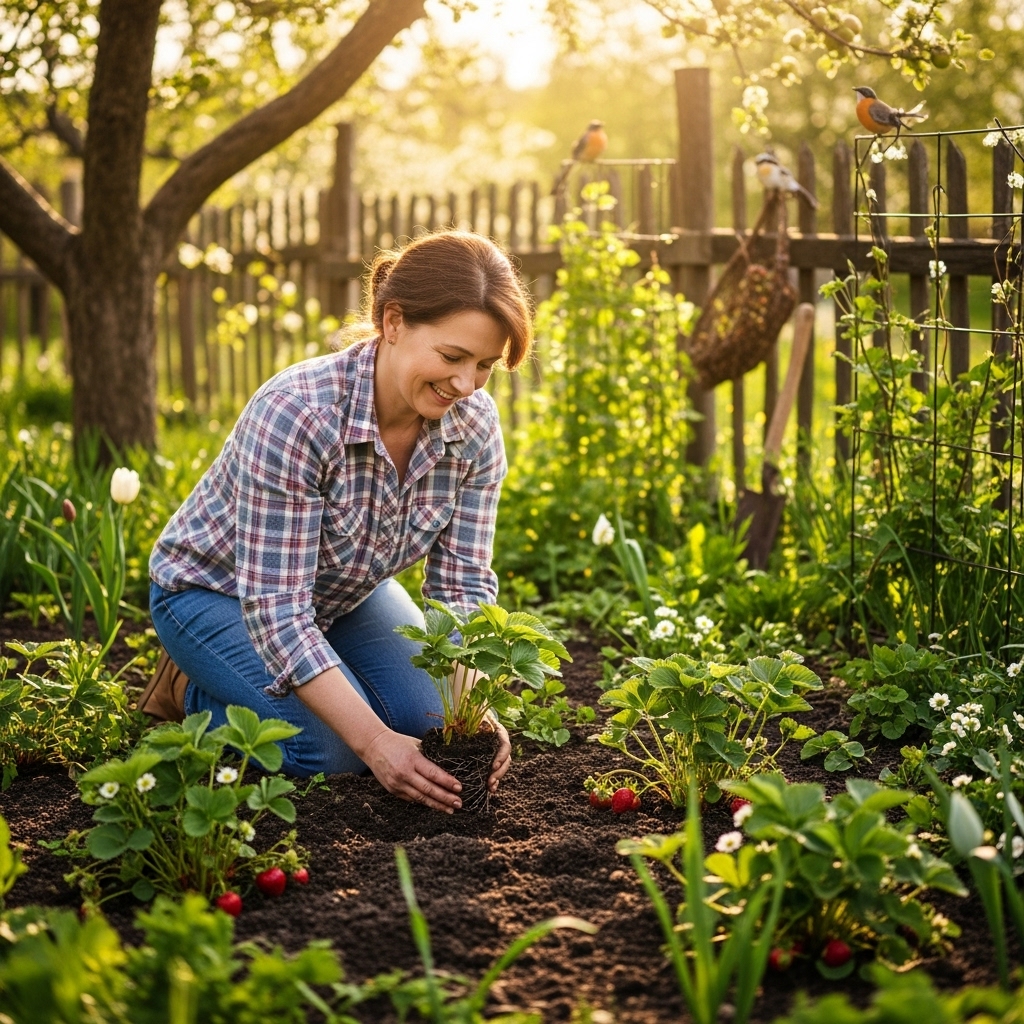
When it comes to planting, I take care to ensure that the crown of the strawberry plant is at soil level. If I plant it too deep, it can lead to rot; if too shallow, it may dry out. I usually dig a small hole, place the plant in, and gently spread out any roots before covering them with soil. Once planted, I give them a good watering to help settle the soil around the roots. It’s always exciting to see those little plants in the ground, knowing that in a few months, I’ll be enjoying fresh strawberries!
Caring for Strawberry Plants
After planting, my work isn’t done. Caring for my strawberry plants is essential to ensure that they thrive and produce fruit. I’ve learned that regular attention can lead to healthier plants and a more fruitful harvest.
Watering Requirements
Strawberries need consistent moisture, especially during flowering and fruiting. I try to keep the soil evenly moist but not soggy. I find that watering them deeply once or twice a week works best, depending on the weather. If it’s particularly hot and dry, I pay extra attention to their needs. Using a drip irrigation system has been a game-changer for me, as it delivers water directly to the roots without wetting the leaves, helping to prevent diseases.
Fertilization Schedule
I typically fertilize my strawberry plants several times during the growing season. After planting, I wait a few weeks and then apply a balanced fertilizer every four to six weeks. I’ve noticed that this routine keeps my plants healthy and productive. Toward the end of the season, I don’t fertilize as much since I want the plants to focus their energy on preparing for winter.
Weed Control Strategies
Weeds can be a real nuisance! I’ve learned to stay on top of them because they compete for nutrients and moisture. I often use mulch around my strawberry plants, which not only suppresses weeds but also helps retain moisture in the soil. Hand-pulling is also effective, and I make sure to tackle weeds early before they get out of hand. It’s a small effort that pays off, ensuring my strawberries have the best chance to thrive.
Pest and Disease Management
One of the challenges I faced while growing strawberries was dealing with pests and diseases. I realized that managing these issues is crucial to having a healthy crop and a fruitful harvest. Through trial and error, I’ve learned some effective strategies that I want to share.
Common Strawberry Pests
There are a few pests that tend to target strawberry plants. I remember the first time I noticed small holes in my leaves, and my heart sank. It turned out to be a case of strawberry slugs or aphids. Here are some common pests I keep an eye out for:
- Strawberry Weevils: These little beetles can cause significant damage by feeding on the leaves and flowers. I’ve found that handpicking them in the early morning helps reduce their numbers.
- Aphids: These tiny bugs suck the sap from the plants, stunting their growth. I’ve had success using insecticidal soap or neem oil to control their populations.
- Spider Mites: These pests thrive in hot, dry conditions and can cause leaves to turn yellow. I’ve learned that regular watering and maintaining humidity around my plants can help prevent infestations.
Using row covers can also help keep pests away while still allowing sunlight and moisture in. I’ve started doing this when I first plant my strawberries in the spring, and it’s made a noticeable difference.
Preventing Strawberry Diseases
Diseases can also pose a significant threat to strawberry plants. I’ve experienced frustration from various fungal infections. Here are some diseases I’ve encountered and tips on how to prevent them:
- Powdery Mildew: This white, powdery fungus can appear on leaves during humid conditions. I’ve learned that improving air circulation around my plants and avoiding overhead watering helps keep this disease at bay.
- Botrytis Blight: Also known as gray mold, this disease can ruin ripe berries. I try to pick any infected fruit immediately and ensure my plants have adequate space to minimize humidity around them.
- Root Rot: This usually occurs in waterlogged soil. I make sure my soil is well-draining and avoid overwatering to prevent this issue.
Regularly inspecting my plants for signs of disease has been key. If I spot any issues early, I can take action before it spreads. I also rotate my strawberry crops every few years to prevent soil-borne diseases.
Harvesting Strawberries
The moment I’ve been waiting for finally arrives when it’s time to harvest my strawberries. I can still remember my first harvest, the thrill of picking those red, juicy berries was unforgettable. Knowing how to properly harvest strawberries is just as important as growing them.
When to Harvest
Timing is everything when it comes to harvesting. I’ve learned that strawberries are best picked when they are fully ripe. This usually means they’re bright red and slightly soft to the touch. I often check my plants every couple of days, especially as they begin to ripen. If you pick them too early, you’ll miss out on that sweet, delicious flavor, while waiting too long can lead to overripeness and spoilage.
In my experience, it’s best to harvest strawberries in the morning when the temperatures are cooler. This helps preserve their freshness. I usually grab a basket and gently twist the berry to remove it from the stem, ensuring I don’t damage the plant.
How to Harvest Properly
When harvesting, I take care to handle the strawberries gently to avoid bruising. I’ve found that using scissors or garden shears can help make clean cuts if the stems are thick. I also try to leave a little green stem attached to each berry to help prolong its freshness.
After gathering my strawberries, I store them in a cool, dry place. I try to avoid washing them until I’m ready to eat them, as excess moisture can lead to mold. Sometimes, I can’t resist snacking on a few right in the garden, and let me tell you, nothing beats the taste of freshly picked strawberries!
Storing and Preserving Strawberries
After a successful harvest, it’s essential to know how to store and preserve your strawberries. I remember my first big haul; I had so many berries that I needed a plan to make the most of them!
Best Storage Practices
To keep my strawberries fresh for as long as possible, I store them in the refrigerator. I usually place them in a shallow container lined with paper towels to absorb any excess moisture. I’ve found that keeping them in the original packaging or a vented container helps with airflow, preventing spoilage.
If I notice any overripe or damaged strawberries, I remove them immediately, as they can cause the others to spoil faster. I’ve learned that strawberries are best enjoyed within a few days of being harvested, but they can last up to a week when stored properly.
Freezing and Canning Techniques
When I have more strawberries than I can eat fresh, I love to freeze or make jam with them. Freezing is super simple; I wash and hull the strawberries, then spread them in a single layer on a baking sheet to freeze. Once they’re frozen, I transfer them to freezer bags. This method helps prevent them from clumping together, making it easy to grab a handful for smoothies or desserts later.
As for canning, I enjoy making strawberry jam. I follow a basic recipe that calls for crushed strawberries, sugar, and pectin. After cooking it down and canning it in sterilized jars, I’m rewarded with delicious jam that reminds me of summer all year long!
Frequently Asked Questions
What are the main types of strawberries?
The main types of strawberries are June-Bearing, Ever-Bearing, and Day-Neutral strawberries. June-Bearing strawberries produce a single harvest in early summer, Ever-Bearing strawberries yield smaller harvests throughout the growing season, and Day-Neutral strawberries can produce fruit all summer long regardless of daylight length.
When is the best time to plant strawberries?
The best time to plant strawberries is in the spring after the last frost or in the fall, about six weeks before the first frost. Each season has its benefits depending on your climate.
What soil type is best for growing strawberries?
Strawberries thrive in well-draining soil that is rich in organic matter, such as sandy loam or loamy soil. The ideal soil pH for strawberries is between 5.5 and 6.5.
How should I space my strawberry plants when planting?
For June-bearing strawberries, it is recommended to space the plants about 18 inches apart in rows that are 3 to 4 feet apart. For Ever-Bearing or Day-Neutral varieties, closer spacing of around 12 to 18 inches apart is suitable.
What are some common pests that affect strawberry plants?
Common pests that target strawberry plants include strawberry weevils, aphids, and spider mites. Managing these pests involves handpicking, using insecticidal soap, and maintaining humidity around the plants.
How often should I water my strawberry plants?
Strawberries need consistent moisture, especially during flowering and fruiting. Watering them deeply once or twice a week is typically sufficient, depending on the weather conditions.
What should I do to prevent diseases in my strawberry plants?
To prevent diseases, improve air circulation around the plants, avoid overhead watering, and ensure the soil is well-draining. Regularly inspecting the plants for signs of disease is also crucial.
When is the best time to harvest strawberries?
Strawberries are best harvested when they are fully ripe, which means they should be bright red and slightly soft to the touch. It is ideal to harvest them in the morning when temperatures are cooler.
How should I store freshly picked strawberries?
To store strawberries, keep them in the refrigerator in a shallow container lined with paper towels to absorb moisture. It is best to remove any overripe or damaged strawberries immediately to prevent spoilage.
What are some methods for preserving strawberries?
Strawberries can be preserved by freezing or canning. For freezing, wash and hull the strawberries, freeze them in a single layer on a baking sheet, and then transfer them to freezer bags. For canning, make strawberry jam using crushed strawberries, sugar, and pectin.