
Prepare soil for roses by ensuring well-drained, loamy texture with a pH between 6.0 and 6.5. Amend with organic matter, proper drainage, and balanced nutrients for optimal growth.
This article explains how to assess soil conditions, improve fertility, adjust pH levels, and incorporate amendments to create the ideal environment for healthy roses.
Assessing Soil Conditions Before Planting Roses
Before planting roses, understanding your soil’s current condition is essential to ensure healthy growth and vibrant blooms. Soil testing provides concrete data about nutrient levels and pH balance, guiding appropriate amendments. Collecting samples from different areas of the garden helps account for variability, ensuring you address all spots where roses will be planted.

Disclosure: As an Amazon Associate I earn from qualifying purchases.
To ensure your soil is suitable for roses, consider using a reliable soil testing kit to analyze its conditions. Shop suitable soil testing kit on Amazon (affiliate link).
1. Choosing the Right Testing Method
| Entity | Attribute | Value |
|---|---|---|
| Soil pH level | Test method | Using pH meters or laboratory testing kits |
| Soil nutrient levels | Test method | Using commercial soil test kits or sending samples to a lab |
Testing can be performed with affordable home kits or through professional laboratory analysis. pH meters are quick and useful for on-the-spot readings, while lab tests provide detailed nutrient profiles, including nitrogen, phosphorus, and potassium levels. When testing, collect soil samples from several spots, ideally from the root zone, to get representative results.
2. Interpreting Test Results
Soil pH levels typically range from 4.5 to 8.0, with roses preferring slightly acidic to neutral soil (pH 6.0–7.0). If test results show pH outside this range, amendments are necessary. For example, adding sulfur or peat moss can lower pH, while lime can raise it. Nutrient levels indicate if the soil is deficient in essential nutrients. Low nitrogen might cause yellowing leaves, while insufficient phosphorus impacts root development. Interpreting these results helps determine precise amendments to optimize soil conditions for roses.
Table of Contents
3. Deciding on Necessary Amendments
| Entity | Attribute | Value |
|---|---|---|
| Soil pH level | Amendment | Lime to increase pH, sulfur to decrease pH |
| Soil nutrient levels | Amendment | Organic compost, balanced fertilizer, or mineral supplements as needed |
Depending on test outcomes, soil amendments should be incorporated thoroughly to improve pH and nutrient content. Organic materials, such as compost, enhance soil structure and provide a steady supply of nutrients. Use specific fertilizers to address deficiencies, and test soil periodically to monitor progress. Proper preparation based on accurate testing sets the foundation for healthy rose growth and abundant flowering.
Adjusting Soil pH for Healthy Rose Roots
Maintaining an optimal soil pH of around 6.5 is crucial for ensuring that roses can efficiently absorb essential nutrients. Soil pH influences nutrient availability; if the soil is too acidic or alkaline, roses may suffer from deficiencies, stunted growth, or poor flowering. Achieving and maintaining this pH level involves testing soil regularly and applying amendments tailored to the soil’s current condition. The goal is to adjust the pH gradually to avoid stressing the plants while creating a stable environment conducive to healthy root development.
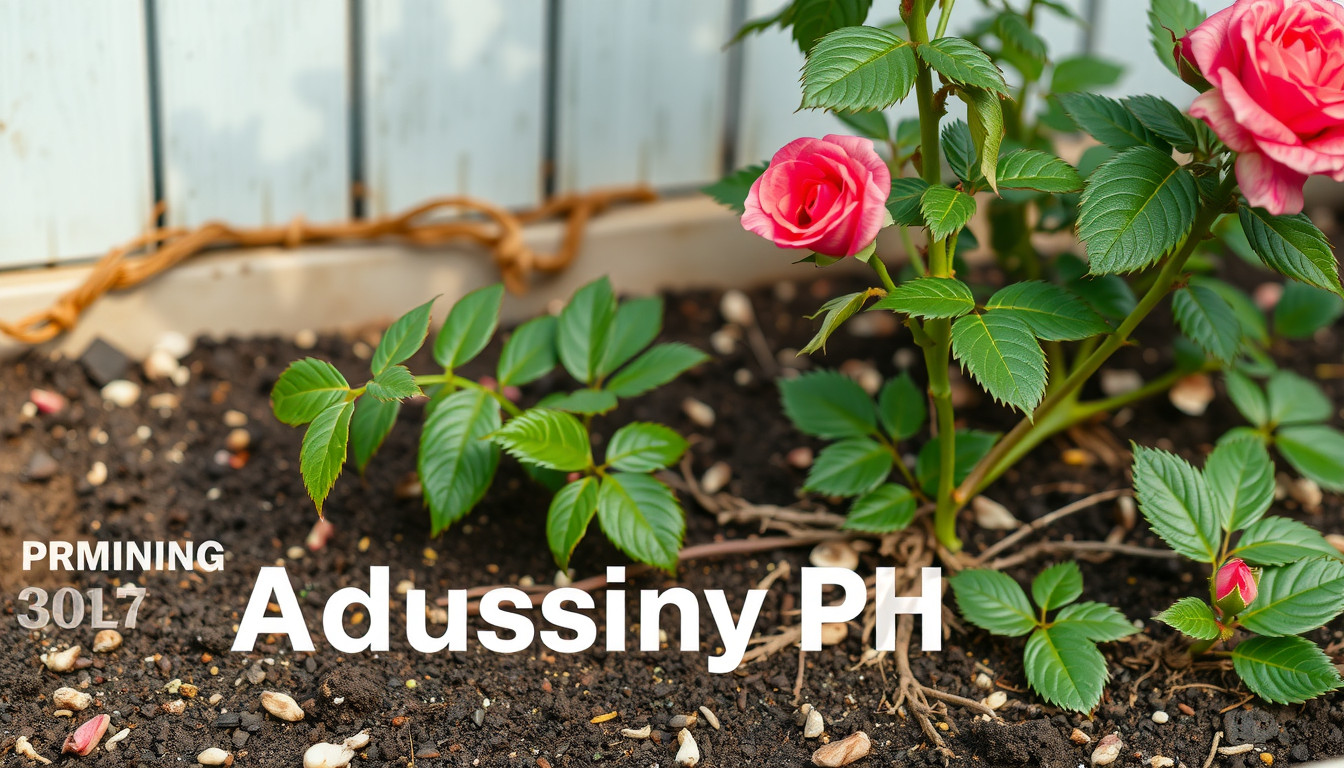
Maintaining a stable soil pH is crucial; a digital pH meter can help you monitor changes effectively. Shop suitable digital pH meter on Amazon (affiliate link).
1. Liming to Raise pH
- Initially, test soil pH using a reliable soil test kit or professional analysis. If pH measures below 6.0, adding limestone is recommended to increase alkalinity.
- Limestone, primarily composed of calcium carbonate, dissolves slowly and elevates soil pH over time—often several months. It’s best to apply the limestone evenly across the planting area and water thoroughly.
- For existing soils, use approximately 20 pounds of finely ground limestone per 100 square feet to raise pH by about 0.5 units, but always follow specific product instructions and environmental considerations.
2. Sulfur or Peat to Lower pH
- If soil pH exceeds 7.0, adding elemental sulfur, iron sulfate, or organic matter like peat moss can help lower alkalinity.
- Sulfur reacts with soil bacteria to produce sulfuric acid, gradually decreasing pH over several months. Carefully measure and distribute sulfur to prevent over-acidification.
- Organic amendments such as peat moss not only help acidify soil but also improve overall soil structure and moisture retention.
3. Monitoring pH Over Time
- Consistently testing soil pH before and after amendments is essential. pH can fluctuate with weather, amendments’ breakdown, and plant activity.
- Repeat testing every few months or after significant weather events to maintain the desired pH range.
- A stable pH around 6.5 facilitates nutrient uptake, root vigor, and vibrant blooms, contributing to healthy and flourishing roses.
Incorporating Organic Matter for Fertile Soil
Adding organic matter is a crucial step in preparing soil for roses because it enhances soil fertility and improves structure, leading to healthier, more resilient plants. Organic matter like compost and well-rotted manure supplies essential nutrients while fostering beneficial microbial activity, which is especially important for growing robust roses. Proper incorporation of these amendments ensures that nutrients are evenly distributed and readily available to the roots, promoting vigorous growth and abundant blooms.
1. Selecting the right organic matter
Choosing high-quality, well-rotted compost or aged manure is essential. These sources are rich in nutrients such as nitrogen, phosphorus, and potassium, which roses need to thrive. Fresh manure can sometimes burn plant roots due to high ammonia levels, so aging it or composting beforehand is recommended. The goal is to add enough organic matter to improve soil fertility without overwhelming the roots with excess nutrients.
Adding well-rotted compost can greatly enhance the nutrients available for your roses. Shop suitable compost or organic soil amendment on Amazon (affiliate link).
2. Mixing amendments into soil
For effective integration, amendments should be thoroughly mixed into the top 12 inches of soil. This even distribution prevents nutrient hotspots that could harm roots and ensures all parts of the planting area benefit from the organic matter. Using a garden fork or tiller allows for thorough mixing while avoiding compaction. This process helps improve soil aeration and drainage, which are critical for healthy rose roots.
3. Timing for incorporation
Incorporate organic matter at least a few weeks before planting roses. This window allows microbial activity to break down the amendments, releasing nutrients into a form the plants can absorb. If planting in the spring, add compost or manure in the fall or early spring, giving ample time for decomposition. Six to eight weeks is ideal, but even a few weeks can yield benefits, provided the amendments are well-integrated and have begun to decompose.
Ensuring Good Drainage and Soil Structure
Proper soil preparation for roses begins with evaluating and enhancing drainage and soil structure. Roses are susceptible to root rot if their roots sit in waterlogged soil, so understanding how water moves through your planting area is crucial. A simple water infiltration test can help determine if your soil drains well. To perform this, dig a hole about 12 inches deep and fill it with water, then watch how quickly the water drains. If it takes longer than a few hours for the water to be absorbed or drain away, the soil may need amending to improve drainage. Poor drainage often occurs in heavy clay soils, which tend to retain water and restrict root growth.
1. Checking soil drainage
Start by performing the infiltration test described above. If the water drains slowly or ponds after watering, the soil likely needs modifications. In such cases, incorporating coarse sand or grit into the soil can significantly improve water movement. These amendments create larger pore spaces, allowing excess water to escape more readily. When amending clay soil, mix in 2-3 inches of coarse sand or grit per foot of soil to break up the dense clay and facilitate better drainage.
2. Amending heavy clay soils
Heavy clay soils tend to compact, impeding water flow and root development. To improve their structure, mix organic matter such as compost or well-rotted manure thoroughly into the existing soil. Organic matter not only enhances drainage but also improves nutrient content and soil aeration. Be cautious not to add too much organic matter at once, as this can temporarily increase soil moisture retention. A consistent addition over time results in a more friable, well-draining soil suitable for roses.
3. Using raised beds and organic matter
In areas where drainage remains problematic despite amendments, constructing raised beds provides a reliable solution. Raised beds elevate roses above poorly draining soil, preventing water accumulation around roots. Fill these beds with a high-quality mix of garden soil, compost, and coarse materials like gravel or grit for optimal drainage. Additionally, applying organic mulches around roses can help regulate soil moisture levels, reducing water stress during dry periods and preventing excessive wetness during rainy seasons. Combining these strategies ensures that soil conditions support healthy root systems and vigorous growth without the risk of waterlogging.
To improve drainage and prevent root issues, building a raised bed might be a beneficial step. Shop suitable raised garden bed kit on Amazon (affiliate link).
Preparing the Soil for Planting Roses
Before planting roses, creating an ideal soil environment is essential for healthy growth and abundant blooms. Proper soil preparation involves removing weeds, debris, and compacted soil, then deeply loosening the earth to ensure roots can establish easily. Setting up an effective irrigation system beforehand provides consistent moisture, which is critical during the initial growth phase. This process combines careful bed shaping, deep soil loosening, and irrigation setup, all aimed at providing a nutrient-rich, well-draining foundation for your roses.
1. Clearing and shaping the bed
Start by clearing the planting area of weeds, grass, and old plant debris to eliminate competition for nutrients and water. Level and shape the bed to prevent water pooling, which can lead to root rot. Incorporate organic matter such as compost or well-rotted manure into the top layer of soil to enhance fertility. Shaping the bed also helps with proper water runoff and aeration, creating an optimal environment for rose roots to thrive.
2. Double-digging or loosening soil
Deeply loosening the soil to a depth of 12 to 18 inches encourages robust root development. The most effective method is double-digging: first, loosen the soil with a garden fork, then remove it in manageable sections. Mix in organic amendments during this process to improve soil structure and nutrient content. This effort enhances drainage while promoting better aeration and microbial activity, which are vital for healthy rose growth. Soil that remains compacted limits root expansion and increases the risk of disease.
3. Setting irrigation and planting
Before planting, establish a reliable irrigation system—drip line or soaker hoses—along the bed. This setup ensures consistent moisture delivery, especially during hot or dry periods. Lay the irrigation lines deep enough to avoid damage during planting and maintenance. Once the bed is prepared and irrigation is in place, position the rose bushes according to their specific spacing requirements. This comprehensive preparation minimizes transplant shock and promotes vigorous growth from the outset.
Frequently Asked Questions
1. How often should I test my soil before planting roses?
Test soil at least once annually before planting, and consider testing again every 2-3 years or after significant weather changes to monitor pH and nutrients.
2. What amendments are best for clay soils when preparing for roses?
Incorporate organic matter such as compost and well-rotted manure, along with coarse sand or gypsum to improve drainage and reduce compaction.
3. How do I correct soil pH if it's too acidic or alkaline?
Adjust pH gradually using lime to raise it or sulfur to lower it, applying amendments evenly and testing pH periodically to prevent overcorrection.
4. Can I prepare soil in the fall for next spring planting?
Yes, preparing soil in fall allows amendments like lime or organic matter to break down and settle, creating ideal conditions by spring.
5. What are the signs of poor soil drainage for roses?
Signs include water pooling after rain, soggy soil, and yellowing leaves or root rot, indicating the need for improved drainage solutions.
6. How deep should I loosen the soil for rose planting?
Loosen soil to a depth of at least 12 inches to ensure roots can penetrate easily and establish a strong, healthy foundation for growth.
7. Are there specific organic amendments recommended for roses?
Yes, high-quality compost, aged manure, and organic fertilizers like fish emulsions support healthy growth and vibrant blooms in roses.