
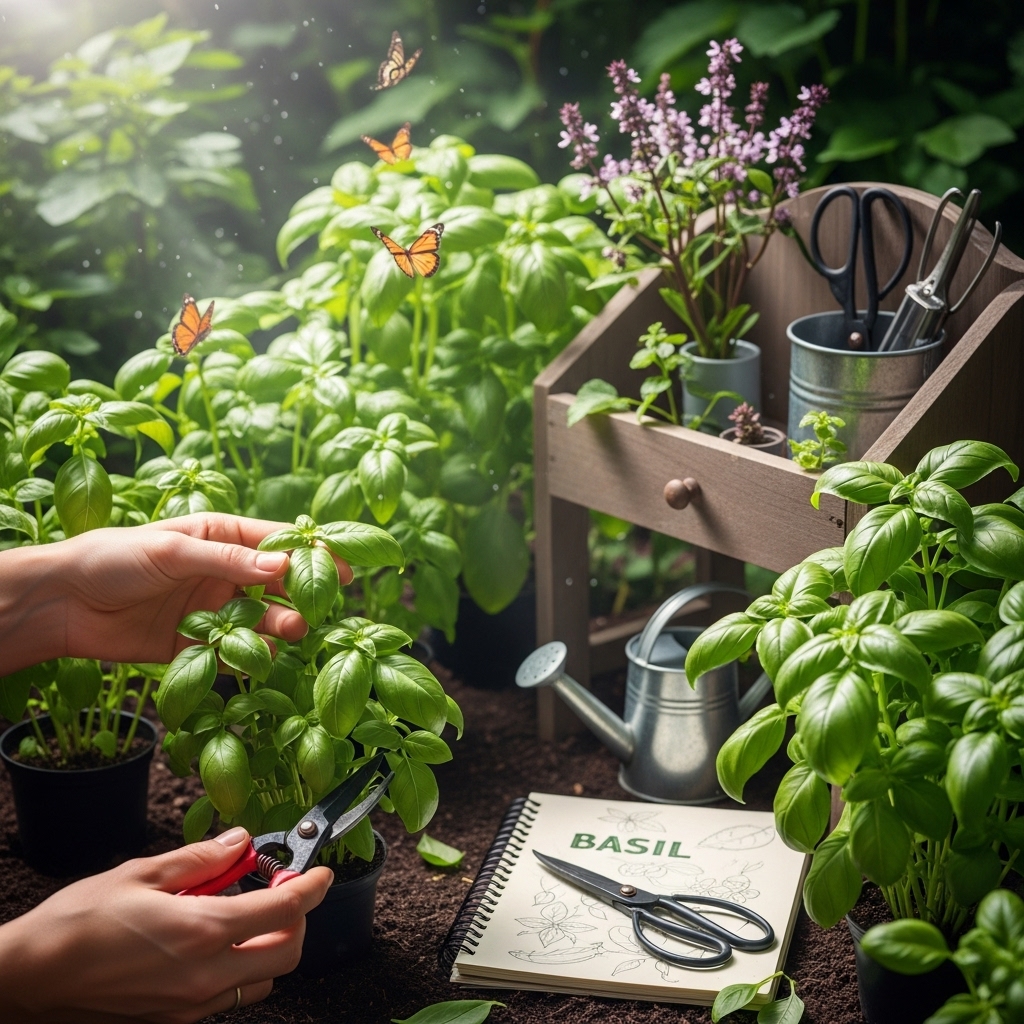
To prune a basil plant for more growth, trim back the stems just above a leaf node to encourage bushiness and prevent the plant from becoming leggy. Regular pruning not only boosts growth but also enhances flavor and leaf production. Learn more about trimming techniques to maximize your yield.
I’ve found that with the right pruning techniques, my basil plants flourish, providing plenty of fresh leaves for my culinary adventures.
Understanding Basil Plants
Botanical Characteristics of Basil
Basil, scientifically known as Ocimum basilicum, is a fragrant herb belonging to the mint family. This aromatic plant stands out not just for its culinary uses but also for its vibrant green leaves and bushy appearance. Typically growing between 12 to 24 inches tall, basil has a soft stem that is easily pruned. The leaves are broad, oval-shaped, and can vary in color from bright green to purple, depending on the variety. When I first started growing basil, I was captivated by the way the leaves release a sweet, peppery aroma when touched, making it a favorite among herb enthusiasts.
Common Varieties of Basil
There are several varieties of basil that I’ve tried in my garden, each with unique flavors and characteristics. Some of the most common include:
- Sweet Basil: The most popular type, often used in Italian cuisine.
- Thai Basil: This variety has a spicy flavor and is commonly used in Southeast Asian dishes.
- Genovese Basil: Renowned for its rich flavor, it’s a must-have for making pesto.
- Purple Basil: Known for its striking color, it has a milder taste and is great for garnishing.
Each type has its growing requirements and flavor profile, so exploring different varieties can be a delightful experience as you find the perfect fit for your palate.
The Importance of Pruning Basil
Benefits of Pruning for Growth
Pruning basil is essential for several reasons. When I first began growing basil, I noticed that the plants would often become tall and leggy if I didn’t prune them regularly. This is because basil tends to prioritize vertical growth, which can lead to fewer leaves. By trimming the plant, I discovered that it encourages a bushier growth habit, allowing for more branches and leaves to flourish. Pruning also helps prevent flowering, which can make the leaves taste bitter. I always feel satisfied when I see my basil plants thriving after a good trim.
Additionally, pruning can boost air circulation around the plant, reducing the risk of diseases. With good airflow, the leaves remain healthy, and I’ve found that my plants are more resilient to pests. When I prune, I also enjoy harvesting the leaves, which I use in various dishes, adding another layer of benefit to this simple yet effective gardening practice. Read Interesting article: What Do Plants Need to Grow and Thrive? Full Guide
Pruning vs. Topping: What’s the Difference?
It’s important to understand the difference between pruning and topping, as both techniques play a role in maintaining healthy basil plants. Pruning typically involves trimming back the stems to promote a fuller, bushier plant. In contrast, topping is a specific form of pruning where you cut off the top of the plant, which can encourage side shoots to grow. I remember when I first learned about topping; I was amazed to see how quickly my basil responded by producing more leaves. Both methods have their place in basil care, and I often use them together depending on my plant’s growth stage.
When to Prune Your Basil Plant
Optimal Timing for Pruning
Timing is everything when it comes to pruning basil. The best time to prune is during the growing season, which typically runs from spring through early fall. I usually start pruning when my basil plants are about six inches tall and have developed several sets of leaves. This gives them enough strength to bounce back quickly from the cut. I’ve found that pruning every few weeks encourages continuous growth and prevents the plant from becoming too woody or sparse.
It’s also a good idea to prune in the morning or late afternoon when the temperatures are cooler. This way, the plant is less stressed, and I’ve noticed that the cuts heal better when the sun isn’t at its peak.
Signs Your Basil Needs Pruning
Recognizing when your basil needs pruning is key to maintaining its health. One of the first signs I look for is if the plant starts to look leggy or sparse, with long stems and fewer leaves. Another indicator is the presence of flowers. While basil flowers can be pretty, they signal that the plant is about to shift its energy from leaf growth to seed production. I always make it a point to prune at the first sign of flowering to keep the flavor intact and encourage bushier growth. Additionally, if I notice any yellowing leaves or signs of disease, I prune those parts away to keep the plant healthy.
Tools Needed for Pruning Basil
Essential Pruning Tools
When it comes to pruning my basil plants, having the right tools makes all the difference. I remember the first time I used a proper pair of pruning shears; it felt like a game-changer. Sharp, clean tools ensure that the cuts are precise and minimize damage to the plant. Here are the tools I recommend for anyone looking to prune their basil effectively:
- Pruning Shears: A good pair of pruning shears is a must-have. Look for ones that are sharp and comfortable to hold. I often use my shears for various plants, so investing in a quality pair is worth it.
- Scissors: If you’re dealing with smaller plants or delicate stems, a pair of sharp scissors can work just as well. I’ve used them when I’m in a pinch, and they do the job nicely.
- Gloves: While not strictly necessary, wearing gardening gloves can protect your hands from sap and any prickly stems. I tend to wear them when pruning plants with a more aggressive nature.
- Bucket or Basket: Having something to collect the cut stems and leaves can keep your workspace tidy. I usually have a small bucket nearby to toss the pruned bits as I work.
Sanitizing Your Tools
One tip I learned early on is the importance of sanitizing my pruning tools. It’s so easy to overlook, but it can save a lot of trouble down the line. I always wipe down my shears with rubbing alcohol before I start pruning. This practice helps prevent the spread of diseases between plants. I’ve seen firsthand how quickly pests and diseases can take hold, and a little precaution goes a long way. Keeping my tools clean gives me peace of mind that I’m doing everything I can to care for my basil.
Step-by-Step Guide to Pruning Basil
Preparing the Plant for Pruning
Before I dive into pruning, I always take a moment to observe my basil plants. I like to assess their overall health and check for any signs of stress or disease. Once I feel confident about their condition, I prepare by ensuring the area around the plant is clear. I find that having a clean workspace allows me to focus better on the task at hand. I also make sure to have my tools at the ready so I can work efficiently.
How to Cut Basil Stems
When I begin cutting, I like to start with the larger stems first. I position my shears at a slight angle, just above a leaf node. This technique encourages new growth, which I find really rewarding. I remember the first time I did it; I was amazed at how quickly new shoots appeared. I try to avoid cutting too close to the leaf node, as I’ve learned that this can hinder growth. Instead, I leave just a little bit of stem to ensure the plant can thrive.
Where to Cut: Nodes and Leaves
Understanding where to cut is crucial for effective pruning. Each time I prune, I search for nodes—those little bumps on the stem where leaves connect. Cutting just above a node promotes the growth of new branches, which is what I want for a bushier plant. If I see any yellow or damaged leaves, I prune those away, too. I find that making these cuts not only helps the plant but also makes the overall appearance more appealing.
How Much to Prune at Once
One question I often get asked is how much to prune at once. My experience has taught me that it’s best to be gentle and not take too much off in one go. I generally trim about one-third of the plant at a time. This method allows the plant to recover quickly without causing too much shock. I’ve also noticed that smaller, more regular trims lead to healthier growth over time. It’s like giving my basil plants a little haircut rather than a drastic change.
Post-Pruning Care for Basil Plants
Watering After Pruning
After I finish pruning, I always give my basil a good drink of water. I’ve learned that watering helps the plant bounce back from the cuts. It replenishes their moisture and aids in recovery. However, I make sure not to overwater, as too much can lead to root rot. I check the soil moisture with my fingers and water only if needed. It’s a simple step, but it makes a big difference in how well my plants thrive.
Fertilizing Your Basil After Pruning
Once I’ve pruned and watered, I like to apply a light dose of fertilizer. I prefer using organic options because I feel it’s better for the environment and my health. Fertilizing after pruning gives my basil a nutrient boost it needs to recover and grow strong. I’ve found that a balanced fertilizer works wonders, and I usually apply it every few weeks during the growing season. This practice not only supports new growth but also enhances the overall flavor of the leaves, which is what I’m after when cooking.
Common Mistakes to Avoid When Pruning Basil
Over-Pruning and Its Consequences
One mistake I’ve made in the past—and I’m sure others have as well—is over-pruning. It’s easy to get carried away when you’re excited about promoting growth, but I quickly learned that taking off too much can stress the plant. When I pruned my basil too heavily, I noticed that instead of thriving, the plants looked weak and struggled to recover. They became susceptible to diseases and pests, which made me realize that moderation is key. It’s important to leave enough foliage to sustain the plant’s health. I now aim to trim only about one-third of the plant at a time, which seems to strike the perfect balance between encouraging growth and maintaining plant vitality.
Ignoring Plant Health Signs
Another common pitfall is ignoring the signs of stress in the basil plant. I remember when I was new to gardening, I would prune without paying much attention to how the plant was responding. If my basil was droopy or had yellowing leaves, I often overlooked these signs, thinking pruning would solve the issue. However, I soon discovered that these symptoms could indicate problems such as overwatering, nutrient deficiencies, or disease. Now, I always assess my plants before I prune, making adjustments to their care based on their appearance. By being attentive, I can provide the right environment for my basil to flourish.
Frequently Asked Questions About Pruning Basil
How often should I prune my basil?
From my experience, I find that pruning every 2 to 4 weeks during the growing season works best for my basil plants. This regular maintenance keeps the plants healthy and productive. I’ve noticed that frequent, light trims encourage fuller growth, while allowing me to enjoy a continuous supply of fresh leaves for cooking. If you see your basil getting leggy or if the stems are growing too tall, it’s a good indication that it’s time for a trim.
Can I use the pruned leaves?
Absolutely! One of the best parts about pruning my basil is that I get to enjoy the leaves I cut. I’ve found that freshly pruned leaves are perfect for adding flavor to a variety of dishes, from pasta sauces to salads. In fact, I often set aside a portion of the pruned leaves to make pesto or even freeze them for later use. It feels great to know that I’m not just trimming for the plant’s health, but also harvesting delicious ingredients for my meals.
What if my basil plant is leggy?
If I notice my basil plant looking leggy, I don’t panic anymore. I understand it’s a sign that the plant needs some attention. First, I assess the light conditions; basil thrives in bright, indirect sunlight. If it’s not getting enough light, I either move it to a sunnier spot or consider using grow lights if it’s indoors. Then, I go ahead and prune the leggy stems back to a leaf node to encourage bushier growth. It’s amazing how quickly the plant responds, and within a few weeks, I often see new shoots developing, which brings me a sense of accomplishment.
Additional Tips for Growing Healthy Basil
Ideal Growing Conditions for Basil
To ensure my basil grows strong and healthy, I’ve learned that providing the right growing conditions is crucial. Basil loves warmth and thrives in temperatures between 70-90°F (21-32°C). I usually plant my basil outdoors after the last frost, as it’s sensitive to cold. I also ensure it gets plenty of sunlight, ideally around 6 to 8 hours a day. If I’m growing basil indoors, I place it near a sunny window or under grow lights to help it flourish. Good soil is also vital; I prefer using well-draining potting mix enriched with organic matter, as it provides the nutrients basil needs to thrive. Read Interesting article: How to Grow a Basil Plant Indoors or Outdoors
Pest Management Strategies for Basil
Lastly, keeping pests at bay is essential for maintaining healthy basil plants. I’ve encountered aphids and spider mites in my garden, and they can wreak havoc if not addressed promptly. When I notice any pests, I usually rinse the leaves with water to dislodge them. If the problem persists, I might use insecticidal soap or neem oil, which are both safe options for my plants. I also try to encourage beneficial insects, like ladybugs, which help keep pest populations under control. By monitoring my plants regularly and taking preventive measures, I’ve been able to enjoy healthy, pest-free basil.
Frequently Asked Questions
How often should I prune my basil?
From my experience, I find that pruning every 2 to 4 weeks during the growing season works best for my basil plants. This regular maintenance keeps the plants healthy and productive.
Can I use the pruned leaves?
Absolutely! One of the best parts about pruning my basil is that I get to enjoy the leaves I cut. Freshly pruned leaves are perfect for adding flavor to a variety of dishes.
What if my basil plant is leggy?
If I notice my basil plant looking leggy, I assess the light conditions and prune the leggy stems back to a leaf node to encourage bushier growth. It’s amazing how quickly the plant responds.
What are the benefits of pruning basil?
Pruning basil encourages bushier growth, increases leaf production, prevents flowering (which can make leaves taste bitter), and boosts air circulation around the plant, reducing disease risk.
What tools do I need for pruning basil?
Essential tools for pruning basil include sharp pruning shears, scissors for delicate stems, gloves for protection, and a bucket or basket to collect cuttings.
When is the best time to prune basil?
The best time to prune basil is during the growing season, typically from spring through early fall, and preferably in the morning or late afternoon when temperatures are cooler.
How much should I prune at once?
It’s best to trim about one-third of the plant at a time. This gentle approach allows the plant to recover quickly without causing too much shock.
How can I recognize when my basil needs pruning?
Signs that your basil needs pruning include a leggy appearance with long stems, the presence of flowers, yellowing leaves, or any signs of disease.
What should I do after pruning my basil?
After pruning, it’s important to water the basil to help it bounce back and consider applying a light dose of fertilizer to give it a nutrient boost for recovery and growth.
What are common mistakes to avoid when pruning basil?
Common mistakes include over-pruning, which can stress the plant, and ignoring signs of stress like droopy or yellowing leaves, which may indicate other care issues.