
Raising Monarch butterflies at home is a rewarding experience that allows you to observe their fascinating life cycle. From eggs to caterpillars and finally to beautiful butterflies, this guide outlines 22 essential steps to successfully raise Monarchs while contributing to their conservation [1].
Table of Contents
Understanding the Monarch Butterfly Life Cycle

The life cycle of Monarch butterflies comprises four distinct stages: egg, larva (caterpillar), pupa (chrysalis), and adult butterfly. Each stage presents unique characteristics and requires specific care to ensure successful development.
The Egg Stage
Monarch eggs are small, round, and typically laid on the underside of milkweed leaves. A female can lay 300-400 eggs during her lifetime. The duration of this stage is about 3-5 days, depending on environmental conditions.
- Egg Characteristics:
- Size: Approximately 1 mm in diameter.
- Color: Pale yellow or white.
- Location: Usually found on milkweed, the sole host plant for Monarch larvae.
The Caterpillar Stage
Once the egg hatches, the caterpillar emerges as a first instar larva. This stage lasts about 10 days and includes five instars, during which the caterpillar grows significantly.
- Caterpillar Characteristics:
- Color: Bright green with black and yellow bands.
- Diet: Exclusively feeds on milkweed, which provides necessary toxins for defense against predators.
- Growth Rate: Can increase in size 2,000 times from its original hatchling size.
The Chrysalis Stage
After the caterpillar has completed its last molt, it forms a chrysalis, or pupa. This stage lasts about 10 days, during which metamorphosis occurs.
- Chrysalis Characteristics:
- Color: Typically green with gold spots.
- Development: Internal transformation into a butterfly occurs during this time.
- Duration: The chrysalis stage can vary, lasting from 7 to 14 days depending on factors like temperature.
Understanding these stages is crucial for successfully raising Monarch butterflies at home. Proper care during each phase ensures the butterflies reach adulthood and contributes to their conservation. For a comprehensive setup, consider using a Monarch Butterfly Habitat Kit to provide the ideal environment for their development.
Essential Supplies for Raising Monarch Butterflies

To successfully raise Monarch butterflies at home, you need specific supplies that cater to their unique life cycle and habitat needs. Here are the key items you’ll require.
Choosing the Right Cage
Selecting a proper cage is crucial for the health and safety of your Monarchs. Opt for a well-ventilated container with ample space. A large cage measuring 2ft x 2ft can accommodate up to 20 caterpillars without overcrowding. Using multiple containers can help manage different life stages effectively. Ensure that the cage is free from harmful chemicals and has a secure lid to prevent escapes.
Sourcing Milkweed
Milkweed is the primary food source for Monarch caterpillars, making it essential for their development. You can source milkweed from:
- Local nurseries: Many offer native milkweed species.
- Online retailers: Websites like Check Price on Amazon provide milkweed plants and seeds.
- Community gardens: Connect with local gardeners who may have extra plants.
Choose organic milkweed to avoid pesticides that can harm caterpillars.
Monitoring Tools
Monitoring the health of your Monarchs is vital. Utilize these tools:
- Thermometers: Ensure the habitat maintains an ideal temperature, typically between 70°F and 85°F.
- Humidity gauges: Caterpillars thrive in a humid environment; aim for 60-70% humidity.
- Observation journals: Document growth stages and behaviors to track their development effectively.
These tools help maintain optimal conditions, ensuring the Monarchs thrive throughout their life cycle.
Creating a Safe Habitat for Monarchs

Establishing a proper habitat is crucial for raising healthy Monarch butterflies. This environment must mimic their natural conditions, ensuring their safety and well-being throughout their life cycle.
Indoor vs Outdoor Habitats
Choosing between an indoor or outdoor habitat depends on your resources and goals.
Indoor Habitats:
- Controlled Environment: Easier to monitor temperature and humidity.
- Protection from Predators: Shields caterpillars from birds and other threats.
- Maintenance: Requires regular cleaning and monitoring to prevent diseases.
Outdoor Habitats:
- Natural Conditions: Offers a more authentic setting with natural weather patterns.
- Access to Wild Plants: Monarchs can feed on native milkweed and nectar plants.
- Potential Risks: Exposed to predators, diseases, and environmental changes.
For those new to butterfly rearing, an indoor habitat may be more manageable while gaining experience.
Environmental Conditions Needed
Creating a suitable environment requires careful attention to several factors:
- Temperature: Maintain between 70°F and 85°F. Use a thermometer to monitor this closely.
- Humidity: Aim for 60-70% humidity. Humidity gauges can help achieve this balance.
- Ventilation: Ensure proper airflow to prevent mold and disease. Use breathable mesh cages or containers.
- Light: Provide indirect sunlight. Direct exposure can lead to overheating.
Pest and Predator Management
Protecting your Monarchs from pests is essential to ensure their survival. Implement these strategies:
- Regular Inspections: Check for signs of pests or disease daily. Remove any affected caterpillars immediately.
- Separate Stages: Keep caterpillars of different instar stages in separate containers. This minimizes the risk of disease transfer.
- Clean Environment: Regularly clean cages and containers with a mild soap solution. This reduces parasite loads and promotes health.
By carefully crafting your Monarch butterfly habitat, you set the foundation for a successful rearing experience. Consider using a Monarch Butterfly Habitat Kit to streamline your setup. Check Price on Amazon.
Feeding Your Monarch Caterpillars

Feeding Monarch caterpillars properly is vital for their growth and development. A diet rich in milkweed ensures that they receive the necessary nutrients and toxins that make them unpalatable to predators.
Types of Milkweed to Use
Choosing the right milkweed is crucial. Different species thrive in various regions, providing optimal nutrition for your caterpillars. Here are some recommended milkweed species:
- Common Milkweed (Asclepias Syriaca): Widely distributed across North America. It’s easy to grow and highly nutritious for caterpillars.
- Swamp Milkweed (Asclepias Incarnata): Prefers wet areas. It’s particularly beneficial in humid climates.
- Butterfly Milkweed (Asclepias Tuberosa): Thrives in well-drained soils and attracts adult butterflies, making it a dual-purpose plant.
- Showy Milkweed (Asclepias Speciosa): Known for its beautiful flowers. It’s suitable for gardens and provides excellent caterpillar nutrition.
Each species offers unique benefits, so choose based on your local environment and caterpillar needs [7].
Feeding Frequency and Quantity
Establishing a consistent feeding schedule is essential. Monarch caterpillars have voracious appetites, especially during their later instar stages. Here are key feeding guidelines:
- Daily Freshness: Provide fresh milkweed leaves every day. Caterpillars can consume a significant amount—up to 200 times their body weight during their larval stage.
- Check for Wilting: Remove any wilted or spoiled leaves immediately to prevent health issues.
- Monitor Growth Stages: Younger, first instar caterpillars need smaller leaves, while larger, later instars require more substantial portions.
Regularly assess their consumption to ensure they are receiving enough food without any hindrances [8].
Recognizing Healthy Eating Habits
Monitoring your caterpillars’ eating habits is key to ensuring their health. Healthy Monarch caterpillars exhibit the following characteristics:
- Active Feeding: They should actively consume leaves, often seen munching throughout the day.
- Consistent Growth: Noticeable size increases each day indicate proper nutrition.
- Vibrant Color: Healthy caterpillars display bright colors. Fading or darkening can signal potential health issues.
If you observe any deviations from these signs, reassess their diet and habitat conditions to ensure optimal growth. Implementing these feeding practices will significantly enhance your success in raising Monarch butterflies at home.
Monitoring Caterpillar Health
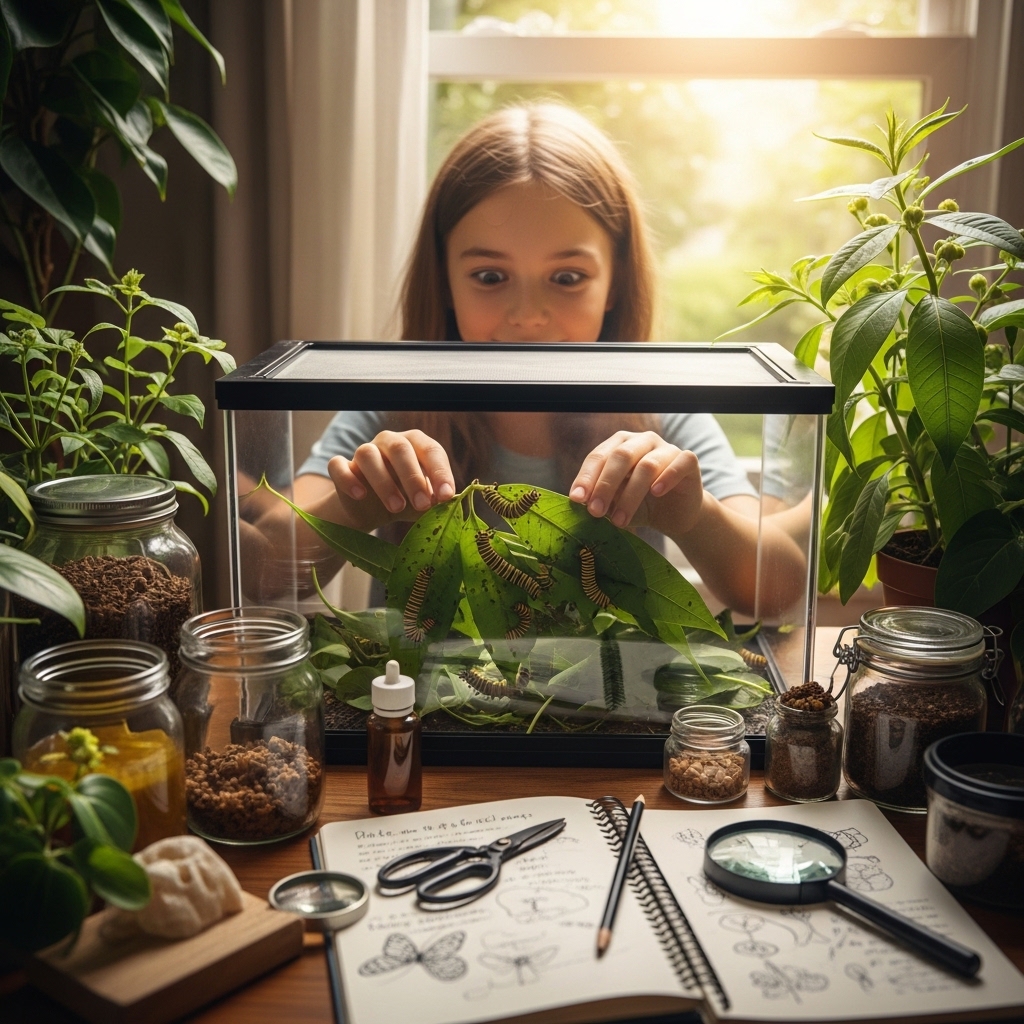
Maintaining the health of your Monarch caterpillars is crucial for their successful transformation. Regular observation and timely interventions can prevent serious health issues that may jeopardize their development.
Signs of Healthy Caterpillars
Recognizing the indicators of a healthy caterpillar is your first line of defense. Look for these signs:
- Active Movement: Healthy caterpillars actively crawl and feed. They should not remain motionless for prolonged periods.
- Bright Coloration: A vivid green or yellow coloration is a positive sign. Discoloration may indicate stress or illness.
- Consistent Growth: Regular size increases every few days signify that your caterpillars are receiving adequate nutrition.
- Normal Feeding Behavior: They should exhibit voracious eating habits, frequently munching on milkweed leaves.
Common Health Issues and Solutions
Caterpillars can face various health challenges. Understanding common issues and their remedies is essential for effective care.
- Discoloration and Lethargy: If you notice a caterpillar that appears dull or lethargic, check for overcrowding or insufficient food. Providing ample space and fresh milkweed can resolve this issue.
- Tachinid Fly Infestation: Tachinid flies can be deadly. If you suspect an infestation, immediately isolate the affected caterpillar to prevent further spread. Opt for younger caterpillars or eggs when starting your raising journey to minimize risk [3].
- Mold and Fungal Growth: Excess humidity can lead to mold on milkweed. Ensure adequate ventilation in your enclosure to combat this issue. Remove any moldy leaves promptly.
When to Seek Help
If problems persist or worsen, it may be time to consult experts or resources. Consider the following:
- Persistent Illness: If a caterpillar shows signs of illness after environmental adjustments, seek guidance from entomologists or local butterfly conservation organizations.
- Unusual Behavior: Any drastic changes in behavior or appearance could signal a serious health issue. Document these changes for professional assessment.
Monitoring the health of your Monarch caterpillars is an ongoing process. By recognizing signs of health and potential issues, you can ensure a successful rearing experience. Regular assessments and proactive measures will lead to vibrant butterflies ready for release.
Transitioning to the Chrysalis Stage
The transition from caterpillar to chrysalis is a critical phase in the Monarch butterfly’s life cycle. Understanding how to recognize the signs of pupation and preparing an appropriate environment can greatly enhance the success of your rearing efforts.
Recognizing Signs of Pupation
As Monarch caterpillars approach the end of their fifth instar stage, they exhibit specific behaviors indicative of readiness to pupate. Look for the following signs:
- Increased Restlessness: The caterpillars become less active and may wander away from their primary feeding area.
- J-Shape Formation: Once ready, they will hang upside down in a characteristic “J” shape. This position is crucial for the formation of the chrysalis.
- Silken Cremaster Production: They will excrete a silken cremaster, which anchors them securely to their chosen pupation spot [12].
These behaviors are vital indicators that your caterpillar is preparing for the next stage of its life cycle.
Creating a Suitable Pupation Environment
A secure and suitable environment is essential for the successful formation of the chrysalis. Here are key considerations:
- Location: Choose a space that mimics natural conditions. Monarchs prefer shaded areas away from direct sunlight.
- Sturdy Attachment Points: Ensure there are multiple surfaces for the caterpillars to attach themselves. Use branches, cloth, or mesh that allows for airflow.
- Cleanliness: Regularly clean the enclosure to prevent mold and ensure a healthy environment.
Care During the Chrysalis Stage
Once the caterpillar has formed a chrysalis, minimal interference is recommended. However, monitoring is crucial:
- Temperature and Humidity: Maintain a stable environment, ideally between 70-85°F (21-29°C) with moderate humidity.
- Visual Monitoring: Check the chrysalis for any signs of discoloration or abnormality, which may indicate disease.
- Avoid Disturbance: Do not touch or move the chrysalis. This can cause stress and disrupt the metamorphosis process.
By recognizing the signs of pupation and ensuring a suitable environment, you set the stage for a successful chrysalis formation. The fascinating transformation from caterpillar to butterfly is just around the corner.
Releasing Adult Monarch Butterflies
Releasing your adult monarch butterflies is a critical step in their lifecycle. Timing and conditions are vital to ensure their survival and successful integration into the wild.
Timing Your Release
The ideal time to release adult monarch butterflies is during warm, sunny days. Aim for temperatures above 70°F (21°C) and ensure no rain is forecasted. Early afternoon is often the best time, as the sun will help them dry their wings after emerging from the chrysalis. Monitor local weather patterns to choose the optimal day for release.
- Best Conditions: Look for clear skies and gentle breezes.
- Avoid: Windy or rainy days, as these can endanger the butterflies.
Conditions for Safe Release
Before releasing your monarchs, ensure they have had adequate time to dry and strengthen their wings. Adult butterflies should be allowed to rest for several hours post-emergence to facilitate this process.
- Habitat Awareness: Release them near milkweed plants, as this will help them locate food and establish their territory.
- Safety Measures: Ensure the area is free from predators, such as birds or wasps, that may threaten the newly released butterflies.
Aftercare Post-Release
Once you release the butterflies, monitor their behavior. It’s crucial to observe them for signs of adaptation.
- Feeding: Ensure nearby nectar sources are plentiful. Common options include flowers like asters and zinnias.
- Local Environment: Ensure the area has adequate shelter from harsh weather conditions and access to additional milkweed plants for future generations.
By adhering to these guidelines, you can significantly enhance the chances of your monarch butterflies thriving in the wild, contributing to their population and the ecosystem at large.
Ethical Considerations in Raising Monarchs
Raising Monarch butterflies at home offers a unique opportunity to connect with nature. However, this practice comes with ethical responsibilities. It’s essential to consider the impact on wild populations and local ecosystems.
Understanding Local Ecosystems
When raising Monarchs, it’s crucial to grasp their role in local ecosystems. Monarchs are not just beautiful creatures; they are vital pollinators. Over-raising these butterflies can disrupt natural populations. Captive-bred Monarchs often lack the resilience of their wild counterparts. Studies indicate that these butterflies can be weaker and less adaptable, posing risks when they are released back into the wild [16].
Key Considerations:
- Assess your local Monarch population before starting.
- Limit the number of butterflies you raise to prevent overpopulation.
- Monitor local environmental conditions to ensure they are suitable for both captive and wild Monarchs.
Ethical Sourcing of Milkweed
Milkweed is the primary food source for Monarch caterpillars. Sourcing it ethically is crucial. Use native species of milkweed that naturally grow in your area. This practice supports local ecosystems and minimizes the risk of introducing non-native plants.
Sourcing Checklist:
- Identify local milkweed varieties.
- Avoid purchasing milkweed from large-scale commercial sources that may use pesticides.
- Consider growing your own milkweed to maintain a sustainable supply.
Managing Wild Populations
Balancing captive breeding with the health of wild populations is essential. Raising Monarchs should not become a substitute for conservation efforts. Be aware that captive-rearing can lead to genetic bottlenecks if too many Monarchs are removed from the wild.
Best Practices:
- Limit the number of eggs or caterpillars you collect.
- Release only healthy, matured butterflies back into the wild.
- Engage in community conservation initiatives to support wild populations.
By following these ethical guidelines, you can ensure that your efforts contribute positively to Monarch conservation. The goal is to foster healthy Monarch populations both in captivity and in their natural habitats.
Common Challenges and Solutions When Raising Monarchs
Raising Monarch butterflies at home presents unique challenges. Understanding these issues and implementing effective solutions is crucial for successful rearing.
Identifying Common Problems
Several issues can arise during the raising process:
- Disease: Monarch caterpillars are susceptible to various diseases, impacting their survival rates. Common ailments include infections from parasites that lead to high mortality rates among caterpillars and chrysalises alike. [18]
- Predation: Eggs and early-stage larvae are often targeted by predators. Damage to the chrysalis can occur if not properly protected. [19]
- Dietary Needs: A proper diet is essential for healthy development. Inadequate nutrition can stunt growth or lead to developmental issues. [20]
Preventative Measures
To mitigate these challenges, consider the following strategies:
- Maintain Hygiene: Regularly clean containers and remove waste. This prevents disease spread and ensures a healthier environment.
- Monitor Health: Inspect caterpillars daily for signs of illness. Early detection can prevent widespread issues.
- Secure Enclosures: Use mesh or fine netting to protect against predators while ensuring adequate ventilation.
Effective Solutions
When problems arise, here are actionable solutions:
- Disease Management: If you notice signs of disease, isolate affected individuals immediately. Research specific treatments or consult experts for advice.
- Feeding Practices: Always provide fresh, pesticide-free milkweed. Rotate food sources to prevent overconsumption and ensure a balanced diet.
- Document Progress: Keeping a journal can help track growth stages, dietary changes, and health issues. This reflective practice can aid in identifying patterns and solutions over time.
By proactively addressing these common challenges, you can enhance the success of raising Monarch butterflies at home.
Benefits of Raising Monarch Butterflies
Raising Monarch butterflies at home offers significant ecological and personal rewards. Engaging with these remarkable creatures fosters a deeper appreciation for nature and contributes to vital conservation efforts.
Educational Value for Children and Adults
Raising Monarchs serves as an exceptional educational tool. It provides hands-on learning about biology, ecology, and the life cycles of insects. Children and adults alike can observe:
- Lifecycle Stages: Witness the transformation from egg to caterpillar, to chrysalis, and finally to butterfly.
- Ecological Interactions: Learn about the importance of milkweed and other native plants in supporting Monarch populations. This knowledge encourages environmental stewardship.
For example, many schools incorporate Monarch raising into their curriculum, allowing students to engage directly with nature and understand the delicate balance of ecosystems [22].
Contribution to Conservation Efforts
By raising Monarch butterflies, individuals play a crucial role in conservation. Monarch populations are declining due to habitat destruction, climate change, and pesticide use. Home rearing helps combat these issues by:
- Creating Habitats: Participants often plant native milkweed and nectar-rich flowers, thereby enhancing local biodiversity.
- Spreading Awareness: As individuals share their experiences, they inspire others to take similar action, amplifying conservation efforts across communities.
Even small efforts can have a substantial impact. Each butterfly raised contributes to the overall population, aiding in recovery and stability [21].
Personal Satisfaction and Connection to Nature
The act of raising Monarch butterflies fosters a profound connection to the natural world. Witnessing the delicate process of metamorphosis offers a unique sense of achievement and joy. Many enthusiasts report:
- Stress Reduction: Engaging with nature has been shown to alleviate stress and promote mental well-being.
- Community Engagement: Joining local butterfly clubs or participating in citizen science projects fosters a sense of community and shared purpose.
Raising Monarchs brings individuals closer to nature, creating lasting memories and connections that enrich their lives. This hands-on experience deepens one’s understanding of ecological dynamics and enhances appreciation for these vital pollinators.
Comparing Indoor vs Outdoor Raising of Monarchs
Raising Monarch butterflies can be done indoors or outdoors, each method offering unique advantages and challenges. Understanding these pros and cons is essential for maximizing success.
Pros of Indoor Raising
- Controlled Environment: Indoor raising allows for precise control over temperature, humidity, and light, creating an optimal habitat for Monarchs.
- Reduced Predation: Keeping Monarchs indoors protects them from predators such as birds and insects, increasing survival rates.
- Health Monitoring: Observing caterpillars closely helps you quickly identify health issues and implement solutions [3].
- Consistent Feeding: You can ensure a steady supply of fresh milkweed, which is crucial for proper growth [1].
Cons of Indoor Raising
- Space Limitations: Indoor environments may restrict the number of Monarchs you can raise. For example, a small cage should ideally house no more than 10 caterpillars [5].
- Risk of Disease: High density can lead to the spread of diseases. It’s advised to raise one batch of Monarchs at a time and clean the cage thoroughly before introducing new ones [4].
- Limited Natural Behaviors: Indoor settings can restrict natural behaviors such as flying and foraging, which may impact their development [8].
Pros and Cons of Outdoor Raising
Pros:
- Natural Habitat: Outdoor raising mimics natural conditions, allowing Monarchs to express natural behaviors like flight and foraging.
- Ecosystem Support: Raising Monarchs outside contributes to local ecosystems, providing food for predators and participating in the natural food chain [2].
- Lower Maintenance: Less need for constant monitoring and cleaning compared to indoor setups.
Cons:
- Vulnerability to Predators: Outdoor Monarchs are exposed to a range of predators, which can significantly reduce survival rates.
- Weather Dependency: Sudden weather changes can harm caterpillars or chrysalises, making it a less predictable option.
- Pest Infestation: Outdoor environments can attract pests that may harm the caterpillars or their food source [1].
Decision Matrix for Choosing Indoor vs Outdoor Raising
| Criteria | Indoor Raising | Outdoor Raising |
|---|---|---|
| Control over Environment | High | Low |
| Predator Protection | High | Low |
| Space for Raising | Limited | Ample |
| Natural Behavior | Restricted | Unrestricted |
| Maintenance | High | Moderate |
When deciding on your approach, consider your space, resources, and commitment level. Tailor your method to align with your goals for raising Monarch butterflies at home.
Finding and Collecting Monarch Eggs and Caterpillars
Locating and collecting Monarch eggs and caterpillars is the first step in your butterfly-raising journey. This process requires observation, patience, and sustainable practices to ensure healthy Monarchs and protect wild populations.
Identifying Monarch Eggs
Monarch eggs are small, oval-shaped, and typically found on the underside of milkweed leaves. They measure about the size of a pinhead. Their pale yellow color makes them somewhat camouflaged against the green leaves.
Checklist for Identifying Monarch Eggs:
- Look under milkweed leaves, as females prefer these locations.
- Observe for clusters; a female can lay 300-400 eggs at once, but only a few will survive to adulthood [7].
- Ensure the eggs are firm and not discolored, indicating they are healthy.
Locating Caterpillars
Finding caterpillars involves searching actively on milkweed plants. Newly hatched caterpillars are tiny and often consume the eggshell after emerging, while larger ones are more conspicuous.
Tips for Locating Caterpillars:
- Look for caterpillars actively feeding during daylight hours. They are recognizable by their distinctive black, white, and yellow stripes.
- Check the milkweed plants thoroughly, as they may be hidden among leaves or flower clusters [6].
- Note that caterpillars may vary in size and color as they grow through instars.
Sustainable Collection Practices
Collecting Monarch eggs and caterpillars must be done responsibly to avoid depleting local populations.
Best Practices for Sustainable Collection:
- Only take a few eggs or caterpillars from each milkweed plant. This helps maintain the ecological balance [5].
- Monitor the health of the local population; if you notice a decline, reconsider your collection efforts.
- Use a soft brush or your fingers to gently transfer eggs and caterpillars to your raising habitat.
By following these guidelines, you set a strong foundation for raising Monarch butterflies at home.
Documenting Your Raising Journey
Keeping a detailed journal or blog is essential for anyone raising Monarch butterflies at home. This practice not only enhances your understanding of their lifecycle but also contributes to conservation efforts.
Benefits of Keeping a Journal
- Health Monitoring: Regularly documenting your observations helps identify health issues early. You can track patterns in behavior, feeding habits, and overall vitality.
- Learning Tool: Reflection on past experiences aids in refining your techniques. It becomes easier to replicate successful strategies or avoid previous mistakes.
- Conservation Contribution: By documenting your releases, you contribute valuable data that can assist in conservation efforts and track population health [25].
What to Include in Your Documentation
Effective documentation should encompass various aspects of the raising process:
- Lifecycle Stages: Record the dates of each stage—egg, larva, pupa, and adult. This helps in understanding the timing of your Monarchs.
- Health Observations: Note any signs of disease or distress. This may include changes in behavior, feeding, or physical appearance.
- Feeding Records: Document the types and amounts of milkweed provided. Different species of milkweed can impact caterpillar health and growth rates.
- Environmental Conditions: Maintain records of temperature, humidity, and light conditions. These factors significantly affect butterfly development.
Sharing Your Journey with Others
Sharing your experiences can inspire and educate fellow butterfly enthusiasts. Consider these methods:
- Blogging: Create a dedicated blog to chronicle your journey. This platform allows you to share detailed accounts and photographs.
- Social Media: Use platforms like Instagram or Facebook to post updates, engage with the community, and seek advice.
- Join Forums: Participate in online forums or local butterfly clubs. These communities provide support and allow for the exchange of ideas and experiences.
By systematically documenting your raising journey, you not only improve your techniques but also contribute to the broader understanding of Monarch butterflies.
Understanding the Role of Milkweed in Monarch Survival
Milkweed is not just a plant; it is the lifeblood of Monarch caterpillars. Without it, they simply cannot survive. This section delves into why milkweed is essential for these butterflies and how to grow it effectively at home.
The Importance of Milkweed
Monarch caterpillars feed exclusively on milkweed (genus Asclepias). This plant contains toxic compounds that make the caterpillars distasteful to predators. The caterpillars ingest these toxins, which provide them with a defense mechanism against birds and other threats. Thus, milkweed is vital for their growth and survival.
In the wild, a female Monarch can lay up to 400 eggs, but most will not survive due to predation and habitat loss. Ensuring a steady supply of milkweed improves the chances of survival for these vulnerable insects [26][27].
How to Grow Milkweed at Home
Growing milkweed is a straightforward process, but it requires attention to detail. Here’s a step-by-step guide:
- Choose the Right Seeds: Select native milkweed species that thrive in your region. Common options include Common Milkweed (Asclepias Syriaca) and Butterfly Weed (Asclepias tuberosa).
- Seed Preparation: Stratify seeds by placing them in the refrigerator for about 30 days. This process mimics winter conditions and helps with germination.
- Planting: Sow seeds in well-drained soil after the last frost. Space seeds about 12 inches apart to allow for growth.
- Watering: Keep the soil consistently moist but not waterlogged. Once established, milkweed is drought-resistant.
- Sunlight: Ensure the plants receive at least 6 hours of sunlight daily. This is crucial for healthy growth.
- Maintenance: Remove weeds and monitor for pests. Encourage beneficial insects to control any harmful pests naturally.
Choosing the Right Milkweed Species
Selecting the appropriate milkweed species is crucial for successful Monarch rearing. Different species have varying levels of toxicity and adaptability:
- Common Milkweed: Highly nutritious and widely found. It attracts a variety of pollinators.
- Swamp Milkweed (Asclepias incarnata): Thrives in wet soil conditions, excellent for gardens with poor drainage.
- Butterfly Weed: Features bright orange flowers and requires well-drained soil. It is drought-tolerant and attracts many pollinators.
Consider local conditions and the needs of your Monarchs when choosing a milkweed species. This strategic selection will bolster their chances of thriving as they transition through their life cycle stages.
The Impact of Climate Change on Monarch Butterflies
Climate change poses a significant threat to Monarch butterfly populations. Rising temperatures and altered weather patterns disrupt their migration and breeding cycles. Understanding these impacts is essential for effective conservation and raising efforts.
Understanding Climate Challenges
Monarchs rely on specific habitats for feeding and breeding. Climate change affects these habitats in several ways:
- Temperature Fluctuations: Increased temperatures can lead to mismatched breeding timings. Monarchs may emerge too early or too late, impacting their survival rates.
- Milkweed Availability: Climate change diminishes milkweed growth, the sole food source for Monarch caterpillars. As milkweed habitats decline, so do the chances of Monarch survival [29].
- Migration Patterns: Monarchs undertake long migrations. Any disruption in their migratory route due to climate events can hinder their journey and reproductive success [28].
Actions to Mitigate Climate Impact
As a butterfly enthusiast, you can take direct action to support Monarch conservation:
- Create a Diverse Habitat: Plant a variety of native plants alongside milkweed. This ensures a continuous nectar supply and enhances local biodiversity.
- Minimize Pesticide Use: Pesticides threaten Monarchs and their food sources. Opt for organic gardening practices to protect these vital pollinators.
- Document Local Conditions: Keep track of temperature and weather patterns in your area. This data can help you adjust your care practices accordingly.
Supporting Monarch Conservation Initiatives
Engage actively in local conservation efforts:
- Join Citizen Science Projects: Participate in initiatives that monitor Monarch populations and their habitats. This data is crucial for understanding and mitigating climate impacts.
- Educate Your Community: Share knowledge about the importance of Monarch butterflies and the threats they face. Awareness can lead to collective action for conservation.
- Advocate for Policy Changes: Support policies aimed at protecting Monarch habitats and addressing climate change. Stronger regulations can help reverse the current decline in populations.
By taking these steps, you contribute to the survival of Monarch butterflies in an era of climate change, ensuring these iconic pollinators thrive for generations to come.
Using Technology to Aid in Raising Monarchs
In the digital age, technology serves as an invaluable ally in raising Monarch butterflies. From monitoring caterpillar health to managing habitats, various tools and apps can enhance your butterfly-rearing experience.
Apps for Caterpillar Health Monitoring
Utilizing apps designed for monitoring caterpillar health can significantly improve your success rate. These applications often allow you to track growth stages, feeding habits, and even potential health issues. For example:
- Caterpillar Tracker: This app helps you log daily observations, including size, behavior, and feeding patterns.
- Butterfly Life Cycle: Offers visual guides and reminders for critical growth milestones, ensuring optimal care throughout each stage.
These tools enable you to make data-driven decisions that foster the health of your Monarchs.
Tools for Habitat Management
Creating and maintaining a suitable habitat is crucial for the well-being of your Monarch butterflies. Several tools can aid in this process:
- Soil Test Kits: Assess soil quality for planting milkweed and nectar-rich plants.
- Watering Timers: Automate irrigation to maintain optimal moisture levels without overwatering.
- Garden Apps: Provide insights into local flora, helping you select the best plants to attract beneficial insects alongside your Monarchs.
These tools ensure your habitat remains conducive to both caterpillar and adult butterfly survival.
Online Communities for Support
Engaging with online communities can be a great resource for both novice and experienced butterfly raisers. Platforms like Facebook groups or dedicated forums provide:
- Expert Advice: Connect with seasoned Monarch enthusiasts who can share their experiences and troubleshooting tips.
- Resource Sharing: Access local resources for sourcing milkweed and other essential plants.
- Documentation Tips: Learn effective methods for documenting your raising process, which can be beneficial for educational purposes and conservation efforts.
Participating in these communities fosters a supportive environment where you can share successes and challenges, enriching your Monarch-raising journey.
Engaging the Community in Monarch Conservation
Involving family and friends in raising Monarch butterflies not only enriches the experience but also amplifies conservation efforts. Together, you can create a supportive network that fosters a deeper appreciation for these vital pollinators.
Organizing Community Events
Host local events to educate and engage the community. Here are some actionable ideas:
- Butterfly Workshops: Teach others about the lifecycle of Monarchs, emphasizing the importance of milkweed as a food source. Invite local experts to share their knowledge.
- Milkweed Planting Days: Organize group efforts to plant milkweed in local parks or community gardens. This directly supports Monarchs and creates habitats for them to thrive.
- Art Contests: Encourage children and adults to create art inspired by Monarchs. Display the results at community centers to raise awareness about their plight.
Educating Others about Monarchs
Education is crucial for conservation. Here are effective strategies:
- Create Informative Brochures: Develop materials that outline the lifecycle of Monarchs, their needs, and how to raise them at home. Distribute these at schools or local events.
- Social Media Campaigns: Use platforms like Instagram and Facebook to share tips, success stories, and the importance of Monarch conservation. Visual storytelling can engage and inspire more people.
- School Presentations: Offer to speak at local schools about Monarch butterflies. Children are often passionate about nature and can drive conservation efforts at home.
Collaborating with Local Organizations
Partnerships can enhance your impact. Consider these approaches:
- Team Up with Environmental Groups: Connect with local conservation organizations to share resources and knowledge. Collaborating can lead to larger initiatives, such as habitat restoration projects.
- Participate in Citizen Science: Join forces with local research groups to monitor Monarch populations. This can provide valuable data and enhance your community’s engagement.
- Host Fundraisers: Organize events to raise funds for Monarch conservation projects. This could include butterfly gardening kits or educational materials to promote awareness and involvement.
By actively engaging your community, you foster a culture of conservation that benefits Monarch butterflies and promotes biodiversity in your local ecosystem.
Final Thoughts on Raising Monarch Butterflies
Raising Monarch butterflies at home is not just a rewarding experience; it also contributes significantly to their conservation. By understanding their lifecycle, habitat needs, and care requirements, you can become an effective steward for these beautiful creatures.
Key Lifecycle Stages
Understanding the Monarch lifecycle is crucial. Here’s a brief overview:
- Egg: Monarchs lay eggs on the underside of milkweed leaves.
- Caterpillar (Larva): After hatching, they feed exclusively on milkweed, which is vital for their growth.
- Chrysalis (Pupa): The caterpillar forms a chrysalis where it metamorphoses into a butterfly.
- Adult Butterfly: Once emerged, they require nectar for sustenance and a safe environment for mating and laying eggs.
Essential Habitat Setup
Creating a suitable habitat is imperative for success:
- Use a ventilated enclosure to prevent overcrowding and ensure airflow.
- Provide a steady supply of organic milkweed, as it is the only food source for caterpillars.
- Ensure the enclosure is clean and free from contaminants to minimize disease risk.
Health Monitoring and Issues
Maintaining the health of your Monarchs involves regular checks:
- Monitor for signs of disease, such as discoloration or lethargy.
- Keep caterpillars separate from adult butterflies to prevent disease transmission.
- If you observe issues, consult reliable resources or local experts for solutions.
Ethical Considerations
While raising Monarchs, consider the broader impact:
- Aim to raise a manageable number of butterflies to avoid overwhelming local ecosystems.
- Be aware that captive-raised Monarchs may have lower fitness levels than wild ones, potentially affecting migration success [7].
- Participate in conservation efforts by sharing your knowledge and encouraging others to plant milkweed and create butterfly-friendly habitats.
By engaging in these practices, you contribute to the health of Monarch populations and help preserve their habitats. Join the journey of raising Monarchs and become a vital part of their conservation story.
Frequently Asked Questions
These quick answers cover the most common questions about this topic, including key details, practical tips, and common concerns.
What is the best way to find Monarch eggs?
The best way to find Monarch eggs is to inspect the underside of milkweed leaves regularly, especially in the late spring and summer. Look for tiny, pale yellow or white oval-shaped eggs attached to the leaf surface. Gently check multiple plants, as females prefer to lay eggs on healthy, undisturbed milkweed. Using a magnifying glass can help spot these small eggs more easily.
How can I ensure the health of my caterpillars?
Monitor your caterpillars daily for signs of illness, such as discoloration, lethargy, or abnormal behavior. Keep their environment clean and well-ventilated to prevent mold and disease. Provide fresh, pesticide-free milkweed and separate any caterpillars showing signs of disease or parasitism. Regularly check for pests like tachinid flies, which can harm caterpillars. If issues persist, consult local conservation resources or entomologists for guidance.
What should I do if my caterpillars stop eating?
If your caterpillars stop eating, first verify that the milkweed is fresh and free of pesticides or mold. Ensure they are in a suitable environment with proper temperature and humidity. Sometimes, caterpillars naturally reduce feeding before pupation. If they remain inactive for several days or show signs of illness, consider isolating affected individuals and seeking expert advice. Maintaining optimal conditions usually encourages resumed feeding.
How do I release Monarch butterflies safely?
Releasing Monarchs is best on a warm, sunny day when temperatures are above 70°F (21°C). Allow butterflies several hours after emergence to dry and strengthen their wings. Release them near abundant milkweed and nectar plants to support their transition into the wild. Choose a safe, predator-free location, and avoid releasing during strong winds or rain. Observe them as they take flight to ensure they are healthy and ready.
Why is raising Monarch butterflies important?
Raising Monarchs helps support their declining populations caused by habitat loss and pesticides. It raises awareness about their critical role as pollinators and their need for milkweed. Your efforts contribute to conservation by creating habitats, educating others, and inspiring community action. Additionally, it provides a meaningful way to connect with nature and learn about insect life cycles.
When is the best time to collect eggs for raising?
The optimal time to collect Monarch eggs is during peak breeding season, typically late spring to early summer, when females are actively laying eggs on milkweed. Collect eggs early in their development to give caterpillars enough time to grow and pupate before migration begins. Always collect responsibly, ensuring you do not deplete local wild populations.
What diseases affect Monarch caterpillars, and how can I treat them?
Common diseases include infections from parasites like tachinid flies and bacterial or fungal infections, which can cause deformities or death. To prevent disease, keep enclosures clean, avoid overcrowding, and use pesticide-free milkweed. If you notice symptoms like discolored or deformed caterpillars, isolate affected individuals. While some infections are unavoidable, consulting with conservation experts can help you manage outbreaks effectively.
Can I raise Monarchs indoors instead of outside?
Yes, raising Monarchs indoors offers better control over temperature, humidity, and predators. It allows you to monitor each stage closely and reduces risks from predators and weather. However, indoor environments require more maintenance, such as cleaning and providing adequate light and ventilation. Outdoor raising mimics natural conditions but exposes caterpillars to predators and environmental risks. Choose based on your space and experience level.
References
2. Monarch Butterfly and Milkweed Conservation Resources
5. Monarch Butterfly Habitat Needs
6. Monarch Butterflies | Natural Resources Conservation Service
7. Milkweed | Home and Garden Education Center
8. Monarch Butterflies: Rearing Methodologies and the Impact of …
9. Caterpillar Venom: A Health Hazard of the 21st Century – PMC
10. Caterpillars: MedlinePlus Medical Encyclopedia
11. Butterfly Life Cycle – Florida Museum of Natural History
12. From Chrysalis to Taking Flight, the Metamorphosis of … – PMC
13. Conservation and Management of Monarch Butterflies
14. WHEN SHOULD YOU RELEASE A MONARCH BUTTERFLY
15. Monarch Butterflies in Western North America – PMC – NIH
16. captive-reared monarch butterflies are weaker, paler … – PMC
17. Impact of climate change on the habitat range of monarch …
18. Monarch butterflies increasingly plagued by parasites, study …
19. Predators of monarch butterfly eggs and neonate larvae are …
20. Microbiome analysis of monarch butterflies reveals effects of …
21. Small efforts can make a big difference for monarchs
22. School Education Dashboard
23. Butterfly (Order: Lepidoptera) species Richness, diversity and …
24. At-Home Science for Kids: Raising butterflies and more!
25. Butterflies for Release | Animal and Plant Health Inspection …
26. Milkweed and Monarchs (U.S. National Park Service)
27. Milkweed Matters: Monarch Butterfly (Lepidoptera … – PMC
28. The impact of temperature on the reproductive development …
29. Climate Change May Alter Breeding Ground Distributions of …
30. Multi-Cat Monitoring System Based on Concept Drift Adaptive …
31. Habitat Management Tools & Techniques
32. Monarch Butterfly Conservation in North America
33. Monarch Butterfly Species Status Assessment (SSA) Report