
To take care of strawberry plants for more fruit, ensure they have well-draining soil, receive plenty of sunlight, and are watered consistently without being overwatered. From my experience, paying attention to their needs and regular maintenance can lead to a bountiful harvest. Read Interesting article: How to Care for Strawberry Plants for More Fruit
Understanding Strawberry Plants
Types of Strawberry Plants
When I first started growing strawberries, I was surprised at how many types there were. Generally, strawberries fall into three main categories: June-bearing, everbearing, and day-neutral. Each type has its own unique characteristics and growing requirements. June-bearing strawberries produce a large crop all at once in late spring or early summer. I remember being overwhelmed by the sheer amount of berries I harvested in that short period. Everbearing strawberries, on the other hand, give us smaller yields throughout the growing season, typically in spring and fall. I found these to be perfect for those who want fresh strawberries over a longer period. Lastly, day-neutral varieties can produce fruit continuously throughout the summer, which is great if you want a steady supply of berries. Understanding these types can help you choose the right one for your garden. Are Strawberry Plants Perennials? Do They Come Back?
Growth Habits and Lifecycles
Strawberries have a fascinating lifecycle that I’ve come to appreciate. They are perennial plants, meaning they can live for several years if cared for properly. Typically, they establish roots in the first year, focus on fruit production in the second year, and can remain productive for up to five years or more. I remember when I first planted my strawberries; I was so eager to see fruit the next day! But I learned that patience is key. In the first year, the plants devote energy to growing their root systems and foliage. It’s essential not to rush the process by expecting fruit too soon. I found that giving them time to establish themselves results in stronger plants that yield better fruit in subsequent years.
Essential Care Requirements
Soil Requirements
One of the most important lessons I’ve learned about growing strawberries is the significance of soil. They thrive in well-draining, loamy soil rich in organic matter. I often mix compost or well-rotted manure into the soil before planting. This not only improves drainage but also provides essential nutrients. It’s critical to maintain a pH level between 5.5 and 6.8, which is slightly acidic. I frequently test my soil using simple pH test kits available at garden centers. If your soil is too alkaline, you can amend it with sulfur to bring down the pH. Trust me, investing the time to prepare the soil properly pays off in the long run with healthier plants and more fruit.
Sunlight Needs
Strawberry plants are sun lovers! They require full sun for at least 6-8 hours a day. I’ve noticed that when my plants are in a sunny spot, they produce much more fruit compared to those in partial shade. If you’re like me and have limited garden space, try to find the sunniest spot in your yard. I often rotate my strawberry plants to different locations to ensure they get optimal sunlight each season. You might even want to consider planting them in raised beds or containers that can be repositioned to capture more light throughout the day.
Watering Guidelines
Watering is another crucial aspect of strawberry care. I learned the hard way that consistency is key. Strawberries need about an inch of water per week, especially during fruiting. I prefer to water early in the morning to prevent fungal diseases, as this allows the leaves to dry out during the day. I also use a soaker hose or drip irrigation to deliver moisture directly to the roots, minimizing water waste and keeping the foliage dry. Overwatering can lead to root rot, which I’ve unfortunately experienced. So, I always check the soil moisture before watering. If the top inch is dry, it’s time to give them a drink.
Fertilization Techniques for Strawberry Plants
Types of Fertilizers
When I first started fertilizing my strawberry plants, I was unsure of what type to use. Over time, I discovered a few different options that work well. There are organic fertilizers, which are made from natural sources and can be great for anyone looking to grow their strawberries in a more eco-friendly way. I’ve used compost, fish emulsion, and bone meal with great success. They not only nourish the plants but also improve soil health. Then there are synthetic fertilizers that are chemically manufactured and often provide a quick nutrient boost. I’ve tried these too, especially when I needed to see immediate results. It’s important to choose a balanced fertilizer with equal parts nitrogen, phosphorus, and potassium, such as a 10-10-10 formula. Knowing the differences helped me tailor my approach based on what my plants needed at various stages of their growth.
Best Timing for Fertilization
Timing is everything when it comes to fertilizing strawberries. I’ve learned that the best time to fertilize is in early spring, just as the plants start to break dormancy. I like to apply a slow-release fertilizer at this time to give my plants a steady supply of nutrients as they grow. If you notice that your plants are not growing as vigorously as expected, a mid-summer boost can also be beneficial, especially if you’re growing everbearing varieties. I usually do a light side-dressing of fertilizer around the plants, being careful not to let it touch the leaves. This way, the nutrients get right to the roots where they’re needed most.
Organic vs. Synthetic Fertilizers
The debate between organic and synthetic fertilizers is something I pondered quite a bit. I initially leaned towards organic options because I wanted to keep my garden as natural as possible. Organic fertilizers improve soil structure and support beneficial microorganisms, which is a huge plus. However, I found that synthetic fertilizers can provide immediate results, which can be tempting when your plants seem to need a quick pick-me-up. Ultimately, I chose to mix both in my gardening practice. By using organic methods as my foundation and occasional synthetic boosts, I’ve found a balance that works well for my strawberry plants while keeping my conscience clear about sustainability.
Pest and Disease Management
Common Pests Affecting Strawberry Plants
Dealing with pests can be one of the most frustrating parts of growing strawberries. I remember the first time I found aphids on my plants. It was heart-wrenching to see those tiny pests sucking the life out of my beautiful strawberries. Other common pests include spider mites, slugs, and the dreaded strawberry weevil. I’ve learned that keeping an eye out for signs of these pests is crucial. Regularly checking the undersides of leaves and around the fruit has helped me catch infestations early. If you spot pests, don’t panic. There are ways to manage them effectively.
Diseases That Impact Strawberry Yields
Diseases can be just as troublesome as pests. I’ve encountered gray mold, which is notorious for attacking ripe strawberries, and powdery mildew, which can affect the leaves. I’ve seen firsthand how these diseases can diminish not only the yield but also the quality of the fruit. To combat these issues, I’ve learned the importance of good air circulation and proper spacing between plants. I also ensure to avoid overhead watering to keep the foliage dry. If I spot any signs of disease, I act quickly, either by removing infected parts or using organic fungicides when necessary. Staying vigilant has been key to maintaining a healthy strawberry patch.
Organic Pest Control Options
When it comes to pest control, I prefer organic methods whenever possible. I’ve tried using neem oil, which is a natural pesticide that works wonders against many common pests. Another option I’ve found effective is introducing beneficial insects, like ladybugs, which feast on aphids. I also use insecticidal soap, which is gentle on the environment yet tough on pests. I’ve discovered that maintaining healthy plants through proper care and nutrition makes them less susceptible to pest issues in the first place. It’s all about creating a balanced ecosystem in my garden.
Pruning and Maintenance Practices
When and How to Prune Strawberry Plants
Pruning might seem daunting, but I’ve found it to be one of the most rewarding tasks. I typically prune my strawberry plants in early spring, just before they start to bloom. This involves removing any dead, damaged, or yellowing leaves. I also trim off any runners that are not needed. It helps the plant focus its energy on producing fruit instead of spreading out too much. I remember the first time I pruned, I was nervous about cutting away healthy leaves, but afterward, I noticed a significant increase in fruit quality. It’s amazing how a little trim can lead to healthier plants!
Removing Runners for Better Yield
Speaking of runners, I’ve learned that while they can be great for propagation, they can also take away energy from fruit production. I usually allow a few to grow but make it a point to remove the excess. This strategy has helped my plants focus on producing bigger and juicier strawberries. If I decide to propagate, I make sure to select the healthiest runners with the best potential. It’s a balancing act, and I’ve found that paying attention to my plants’ needs has resulted in thriving strawberry patches.
Seasonal Care Tips
Spring Care for Strawberry Plants
Spring is such an exciting time for strawberry growers! As the temperatures begin to rise and the days get longer, my plants start to wake up from their winter slumber. One of the first things I do in spring is to remove any protective mulch I placed over the plants during the winter. This helps the soil warm up faster and encourages new growth. I also take the time to inspect my plants for any signs of disease or pests that might have crept in during the colder months. Ensuring that my plants are healthy at this stage sets the tone for the entire growing season.
I typically apply a layer of fresh mulch around my plants. This not only helps retain moisture but also suppresses weeds, which can compete with my strawberries for nutrients. I remember the first spring after I mulched, I was amazed at how much easier it was to keep my garden tidy. Plus, it kept my strawberries clean and off the ground, reducing the risk of rot. Spring is also when I start my fertilization routine, giving my plants the nutrients they need to thrive as they begin to bloom.
Summer Care Tips for Bountiful Harvests
Once summer rolls around, it’s all about keeping my strawberry plants happy and productive. I focus on watering regularly, especially during hot spells. I’ve found that maintaining consistent moisture is crucial for fruit development. If I notice my plants wilting, I know it’s time for a good soak. Summer can be busy, but I try to schedule time each week to check on my plants, ensuring they’re getting the care they need.
During this time, I also monitor for pests and diseases closely. With the heat, pests can multiply quickly, and I’ve learned that it’s easier to manage small infestations before they become a bigger problem. Harvesting tends to ramp up in summer, and I can’t help but feel a sense of joy as I gather fresh strawberries. I usually make it a point to share my bounty with family and friends, which makes all the hard work worth it!
Fall Preparation for Winter Protection
As summer transitions to fall, it’s time to start thinking about protecting my strawberry plants for the winter. I typically begin by continuing to harvest until the first frost. However, once the frost hits, I know it’s important to prepare my plants for the cold months ahead. One of the first things I do is to cut back any dead or yellowing leaves, which prevents any diseases from lingering over the winter.
I also apply a thicker layer of mulch, usually straw or shredded leaves, around the base of my plants. This acts as insulation against the cold and helps maintain soil moisture. I remember one year when I didn’t mulch as heavily as I should have, and I lost a few plants to the extreme cold. It was a hard lesson learned! To ensure I don’t face the same fate again, I also make sure that the soil is well-watered before winter sets in. Moist soil retains heat better than dry soil, which can be crucial for the health of my strawberries come spring.
Harvesting Techniques for Maximum Yield
When to Harvest Strawberries
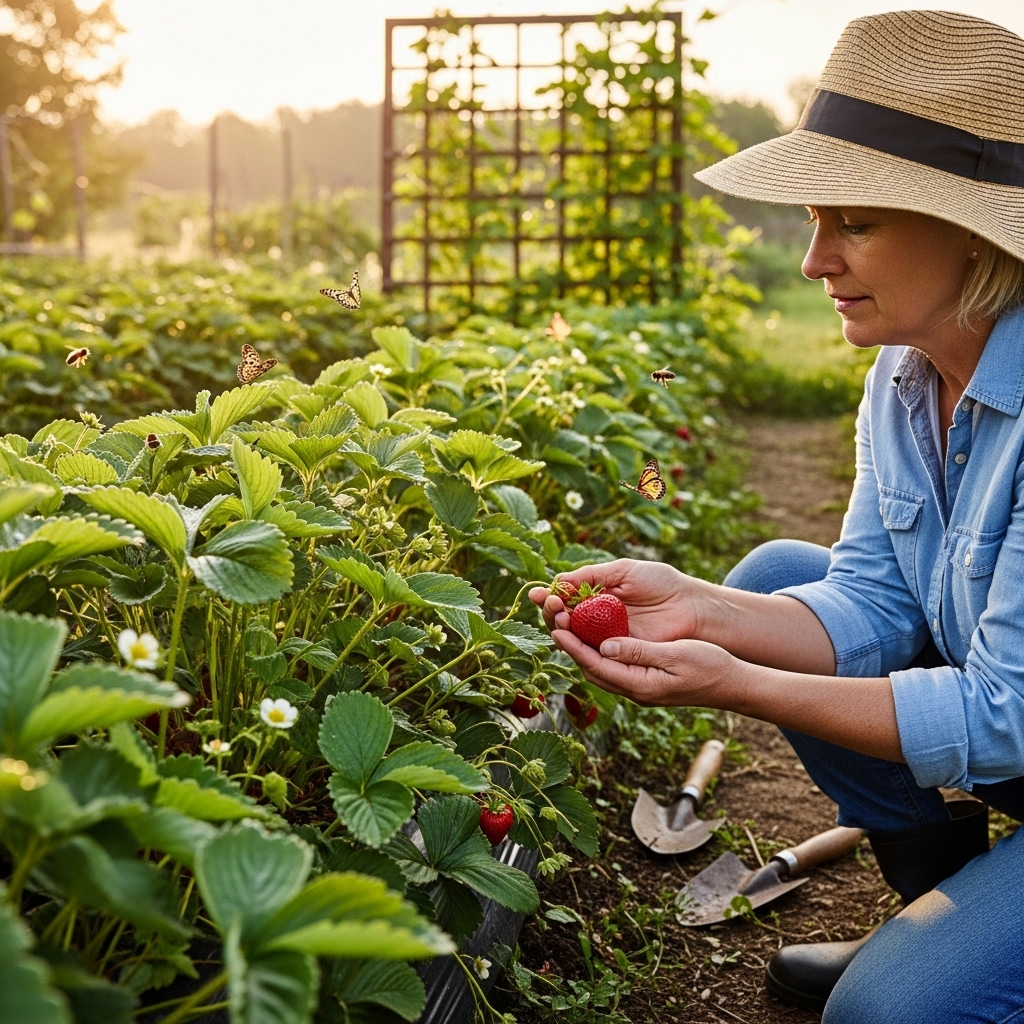
Harvesting strawberries is one of the most rewarding parts of growing them! I’ve learned that timing is everything when it comes to picking ripe strawberries. The best time to harvest is in the morning after the dew has dried but before the heat of the day sets in. I find that strawberries picked during this time are sweeter and less likely to spoil quickly. I usually wait until the berries are fully colored and slightly firm to the touch. They should have a vibrant red color with no green or white patches. I remember my first season of harvesting when I picked berries too early, thinking they looked good, only to be disappointed by the taste!
How to Properly Harvest Strawberries
When I harvest strawberries, I take care to avoid damaging the plants. I gently twist or cut the stem just above the berry, using scissors or pruners if needed. This method ensures that I don’t pull or disturb the foliage, allowing the plant to continue producing fruit. I place the harvested berries in a shallow container to prevent bruising, as strawberries are quite delicate. If I’m planning to store my strawberries, I try to refrigerate them as soon as possible, but I also make sure not to wash them until I’m ready to eat or use them. This helps maintain their freshness. I love having fresh strawberries for breakfast, in salads, or even as a dessert, and proper harvesting really increases the enjoyment of my homegrown goodies!
Frequently Asked Questions
What are the main types of strawberry plants?
The main types of strawberry plants are June-bearing, everbearing, and day-neutral. June-bearing strawberries produce a large crop all at once in late spring or early summer, everbearing strawberries yield smaller amounts throughout the growing season, and day-neutral varieties can produce fruit continuously during the summer.
What are the essential soil requirements for growing strawberries?
Strawberries thrive in well-draining, loamy soil rich in organic matter. The ideal pH level for the soil is between 5.5 and 6.8, which is slightly acidic. It is beneficial to mix compost or well-rotted manure into the soil before planting to improve drainage and provide nutrients.
How much sunlight do strawberry plants need?
Strawberry plants require full sun for at least 6-8 hours a day. Placing them in a sunny spot significantly boosts fruit production compared to those in partial shade.
What is the recommended watering schedule for strawberries?
Strawberries need about an inch of water per week, especially during fruiting. It is advisable to water early in the morning to prevent fungal diseases and to check the soil moisture before watering to avoid overwatering.
When is the best time to fertilize strawberry plants?
The best time to fertilize strawberry plants is in early spring, just as they start to break dormancy. A slow-release fertilizer can be applied at this time, and a mid-summer boost may also be beneficial for everbearing varieties.
What are common pests that affect strawberry plants?
Common pests affecting strawberry plants include aphids, spider mites, slugs, and strawberry weevils. Regular monitoring for signs of these pests is crucial for effective management.
How can diseases impact strawberry yields?
Diseases such as gray mold and powdery mildew can diminish both the yield and quality of strawberries. Good air circulation and proper spacing between plants, along with avoiding overhead watering, can help combat these issues.
What are some organic pest control options for strawberries?
Organic pest control options include using neem oil, introducing beneficial insects like ladybugs, and applying insecticidal soap. Maintaining healthy plants through proper care also helps reduce susceptibility to pests.
When should strawberry plants be pruned?
Strawberry plants should be pruned in early spring, just before they start to bloom. This involves removing dead, damaged, or yellowing leaves and trimming off unnecessary runners to help the plant focus on fruit production.
What is the best time to harvest strawberries?
The best time to harvest strawberries is in the morning after the dew has dried but before the heat of the day. The berries should be fully colored, slightly firm, and vibrant red with no green or white patches.