
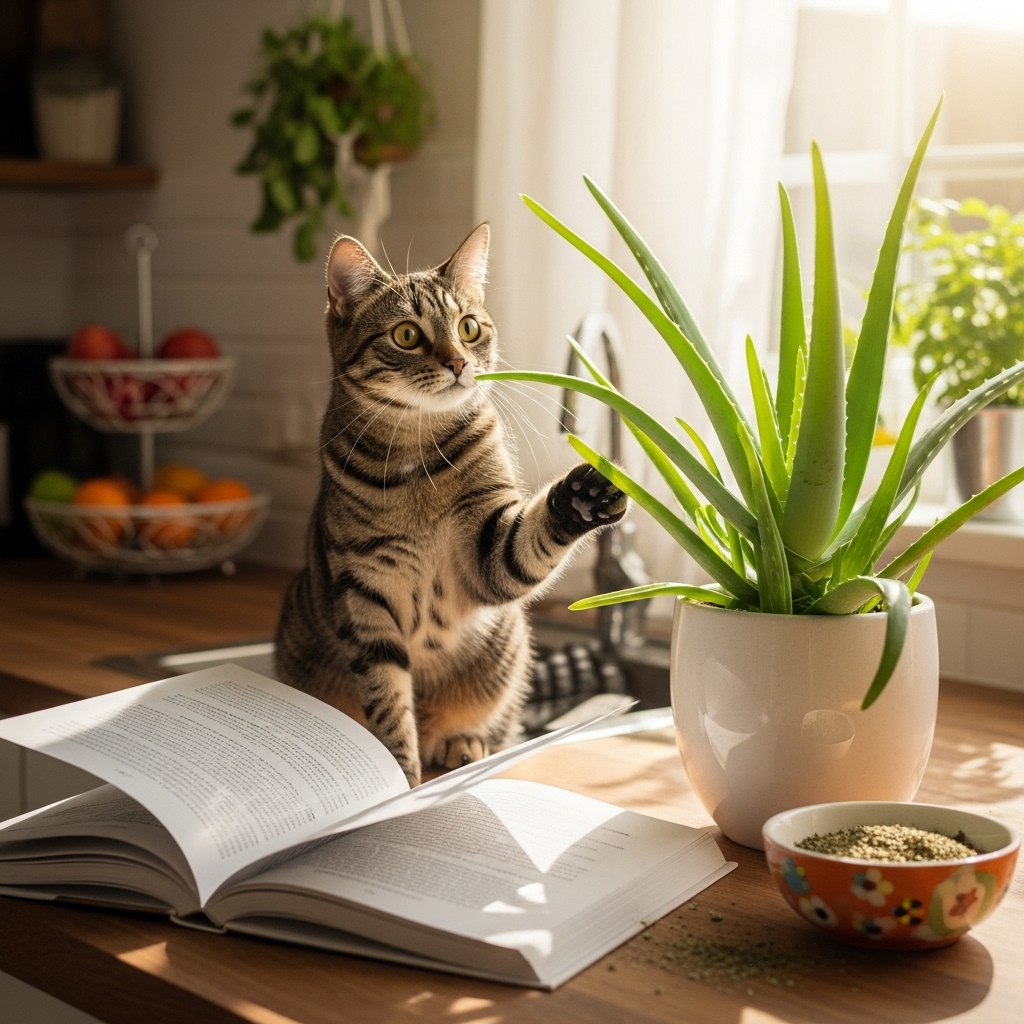
No, Aloe Vera is considered toxic to cats. While it has many benefits for humans, it can cause adverse reactions in our feline friends. As a cat owner, it’s important to know which plants are safe and which can harm our pets. For a comprehensive overview, check out What Plants Are Toxic to Cats? Full List + Symptoms.
As a cat owner, it’s important to know which plants are safe and which can harm our pets.
Understanding Aloe Vera
What is Aloe Vera?
Aloe Vera is a succulent plant that belongs to the Asphodelaceae family. It is famous for its thick, fleshy leaves that contain a clear gel-like substance. This gel is often used in various products, from skincare to beverages, due to its soothing properties. I remember the first time I used Aloe Vera gel on a sunburn; the cooling effect was instant and incredibly relieving. Many people cultivate Aloe Vera for its aesthetic appeal, as it’s relatively easy to care for and can thrive in indoor and outdoor settings.
Common Uses of Aloe Vera
Aloe Vera has a wide range of uses that many of us might not even realize. It’s commonly found in lotions, creams, and ointments, often marketed as a natural remedy for skin irritations and burns. Beyond topical applications, some people consume Aloe Vera juice for its purported digestive benefits. I’ve tried it in smoothies, and while the taste is quite unique, many swear by its health benefits. It’s fascinating how a single plant can serve so many purposes, but this versatility also raises questions about its safety around pets.
Potential Health Benefits for Humans
For humans, Aloe Vera is often lauded for its potential health benefits. The gel is known to hydrate and soothe the skin, making it a popular choice for treating minor burns, cuts, and even acne. Some studies suggest that Aloe Vera juice may help with digestive issues and boost hydration. I’ve found that after a long day in the sun, a simple application of Aloe Vera gel can make a world of difference. However, while we enjoy these benefits, we should be cautious about how they affect our furry companions.
Cat Health and Toxicity
Understanding Cat Toxicity
When it comes to our pets, understanding toxicity is crucial. Cats can be particularly sensitive to certain plants and substances that may not be harmful to us. Their unique physiology means that they metabolize compounds differently, which can lead to adverse reactions. I’ve learned that just because a plant is safe for humans doesn’t mean it’s safe for our feline friends. This is why being informed about what plants to keep out of reach is vital for any cat owner.
Common Toxic Plants for Cats
There are several common plants that are known to be toxic to cats. For instance, lilies are famous for being extremely dangerous; even small amounts can lead to kidney failure. Other plants like azaleas, oleander, and philodendron can also cause serious health issues. I’ve had to remove some beautiful houseplants from my home after learning they were harmful to my cat. It can be disheartening, but the safety of our pets should always come first. To learn more about toxic plants, visit What Plants Are Toxic to Cats? Full List + Symptoms.
Signs of Poisoning in Cats
Recognizing the signs of poisoning in cats is essential. Symptoms can vary depending on the toxin involved, but common indicators include vomiting, diarrhea, lethargy, and changes in appetite or behavior. I once had a scare when my cat seemed unusually sleepy; my heart raced as I considered what she might have gotten into. It’s always better to err on the side of caution and consult a veterinarian if you suspect your cat has ingested something harmful.
Is Aloe Vera Poisonous to Cats?
Research on Aloe Vera Toxicity
Research indicates that Aloe Vera contains compounds that can be toxic to cats, particularly anthraquinones, which can lead to gastrointestinal upset when ingested. The ASPCA has classified Aloe Vera as toxic to cats, and many veterinarians advise against having it in homes with pets. I remember when I first heard about this; it was a wake-up call. I had an Aloe Vera plant sitting right next to my cat’s favorite lounging spot!
Active Compounds in Aloe Vera
The active compounds in Aloe Vera responsible for its toxicity include anthraquinones and saponins. These compounds can cause various symptoms when ingested by cats, including vomiting, diarrhea, and abdominal pain. I was surprised to learn how these natural compounds, which are beneficial for humans, could have the opposite effect on our pets. It’s a reminder of the complexity of nature and how essential it is to be aware of what we bring into our homes.
What the ASPCA Says About Aloe Vera
The ASPCA firmly lists Aloe Vera as a toxic plant for cats. According to their database, ingestion can lead to symptoms like vomiting, diarrhea, and other gastrointestinal issues. I found this information crucial when I was considering adding more plants to my home. I realized that while Aloe Vera is celebrated for its health perks for us, its effects on cats are dangerous and potentially life-threatening. It’s a tough pill to swallow, especially for someone who loves plants, but knowing the risks allows us to make better choices for our pets.
Symptoms of Aloe Vera Poisoning in Cats
Gastrointestinal Symptoms
When cats ingest Aloe Vera, they often experience gastrointestinal distress. I’ve seen firsthand how quickly this can escalate. Common symptoms include vomiting and diarrhea, which can be alarming to witness. One day, I noticed my cat had been unusually quiet and then suddenly threw up right in front of me. It hit me that she might have gotten into something she shouldn’t have. This kind of response can stem from toxins irritating the digestive tract. It’s not just uncomfortable; it can lead to dehydration if not addressed promptly. Keeping an eye on their litter box habits and eating patterns can be incredibly revealing. If your cat shows signs like these, it’s important to act quickly.
Neurological Symptoms
In more severe cases, Aloe Vera can cause neurological symptoms in cats. This might include tremors, disorientation, or even lethargy. When I learned about these symptoms, I was taken aback. It made me realize that something as seemingly harmless as a plant could have such drastic effects. If a cat seems unusually wobbly or confused, it could be a sign of poisoning. I remember a time when my friend’s cat exhibited strange behavior after eating a new type of plant. It was a scary reminder of how vital it is to recognize these symptoms early on.
When to Seek Veterinary Help
Knowing when to seek veterinary help can be crucial in a poisoning situation. I’ve always believed that if in doubt, it’s better to be safe than sorry. If your cat shows any signs of distress after potentially ingesting Aloe Vera, contacting your vet should be your first step. They might recommend bringing your cat in for an examination or may provide advice over the phone. One time, when my own cat had an episode, the vet was incredibly helpful and reassured me about what to look out for. They can guide you on the next steps and may suggest treatments to alleviate the symptoms. Remember, early intervention can make a significant difference in outcomes.
Safe Alternatives to Aloe Vera for Cats
Cat-Safe Plants and Herbs
As a cat owner, I’ve always wanted to have plants in my home without worrying about my furry friend’s safety. There are plenty of beautiful, cat-safe plants that I’ve discovered over the years. For example, catnip is a favorite among many felines, providing both enjoyment and stimulation. I’ve watched my cat roll around in catnip with pure delight! Another safe option is spider plants, which are not only attractive but also easy to care for. I also learned that certain herbs like basil and parsley are safe for cats, and they can even provide some health benefits. I often keep a few pots of these herbs in my kitchen, which adds a lovely touch while ensuring my cat stays safe. For more information on pet-safe options, consider checking out Pet-Friendly Flowers: Safe and Beautiful Options for Cats and Dogs.
How to Care for Cats with Plant Sensitivities
Understanding how to care for cats with plant sensitivities is essential. My approach has been to create a dedicated area for my plants, ensuring that my cat cannot access them. I’ve found this not only protects my plants but also keeps my cat safe from any potential hazards. Additionally, I try to educate myself about each plant I bring into my home. I’ve created a list of safe plants and make sure to double-check whenever I consider adding something new. If you have a cat prone to chewing on plants, it might be worth investing in deterrents or even placing the plants in hanging pots to keep them out of reach.
How to Keep Your Cat Safe at Home
Creating a Pet-Friendly Environment
Creating a pet-friendly environment has been a rewarding journey for me. I’ve learned that being proactive about my cat’s safety can prevent many potential issues. I’ve rearranged my home to limit access to potentially harmful plants, and I’ve also researched safe alternatives for décor. Keeping toxic plants and potential hazards out of reach is a priority. I’ve also made use of bookshelves and high surfaces where my cat cannot jump. It gives me peace of mind knowing I’ve taken steps to protect her. Regularly checking my plants and even considering pet-safe cleaning products have also helped in maintaining a safe environment.
Common Household Plants to Avoid
Aside from Aloe Vera, there are several common household plants to avoid. Some of these include philodendrons, pothos, and peace lilies. I used to have a beautiful peace lily that I later learned was harmful to cats. I had to find it a new home, which was tough since it was one of my favorite plants. Knowing which plants to steer clear of has helped me narrow down my selections to safer options. Keeping a list of toxic plants handy can be beneficial when shopping. It’s surprising how many plants we may not realize are harmful.
Resources for Pet Owners
For anyone looking to deepen their understanding of pet safety, I recommend checking out resources like the ASPCA’s website. They have comprehensive lists of toxic and non-toxic plants, which I refer to frequently. I’ve also found local veterinarians to be an incredible resource. They often have pamphlets or advice on keeping pets safe at home. Engaging with online communities or local pet groups can provide additional insights and shared experiences from other pet owners. The more informed we are, the better we can protect our furry friends. If you’re interested in more pet safety guides, you can read about the Money Tree Safe: For Cats? Complete Pet Safety Guide.
Frequently Asked Questions
Is Aloe Vera toxic to cats?
Yes, Aloe Vera is considered toxic to cats and can cause adverse reactions, particularly gastrointestinal issues, when ingested.
What compounds in Aloe Vera are harmful to cats?
The active compounds in Aloe Vera that are toxic to cats include anthraquinones and saponins, which can lead to symptoms like vomiting and diarrhea.
What are the common symptoms of Aloe Vera poisoning in cats?
Common symptoms of Aloe Vera poisoning in cats include vomiting, diarrhea, abdominal pain, and in more severe cases, neurological symptoms like tremors and disorientation.
How can I recognize signs of poisoning in my cat?
Signs of poisoning in cats can include vomiting, diarrhea, lethargy, and changes in appetite or behavior. If you notice any of these symptoms, it’s important to consult a veterinarian.
What should I do if I suspect my cat has ingested Aloe Vera?
If you suspect your cat has ingested Aloe Vera, it’s crucial to contact your veterinarian immediately for advice and possible treatment options.
Are there any safe alternatives to Aloe Vera for cats?
Yes, there are many cat-safe plants and herbs, such as catnip, spider plants, cat grass, and certain herbs like basil and parsley, which can be safely kept in homes with cats.
How can I create a pet-friendly environment at home?
To create a pet-friendly environment, you can rearrange your home to limit access to potentially harmful plants and use shelves or high surfaces to keep plants out of reach of your cat.
What common household plants should I avoid for my cat’s safety?
Common household plants to avoid include philodendrons, pothos, peace lilies, azaleas, and oleander, as they are known to be toxic to cats.
Where can I find more information on pet safety regarding plants?
The ASPCA’s website is a valuable resource for pet owners, as it provides comprehensive lists of toxic and non-toxic plants. Local veterinarians can also offer helpful advice.
How should I care for a cat with plant sensitivities?
To care for a cat with plant sensitivities, keep potential hazards out of reach, designate plant areas that are inaccessible to your cat, and research any new plants before introducing them to your home.