
When it comes to apple trees, the location of the branches may have a big effect on the tree’s ability to produce fruit and expand vegetatively. In contrast to branches extending straight out from the tree, which bear a lot of fruit but little new vegetative growth, straight up branches, for instance, often generate largely vegetative growth and very little fruit. In this article, we will discuss why Apple Tree Branches Growing Straight Up, how to train your apple tree branches to optimize fruiting and sunlight penetration.
枝の位置がリンゴの木に与える影響を理解する
As previously discussed, the location of your apple tree’s branches may have a big effect on the fruiting and vegetative development of your tree. For instance, vertically rising branches get less sunlight than those that are horizontal or looking downward. They thus tend to generate more vegetative growth than fruit. On the other hand, branches that shoot straight out get more sunshine, which promotes greater fruiting and less vegetative development.
なぜ真っ直ぐ上に伸びる枝は果実をあまり生産しないのか
真っ直ぐ上に伸びるリンゴの木の枝は、主に vegetative growth を生み出し、果実はほとんど生産しません。その理由は、適切な剪定が行われていないこと、不十分な日光、遺伝的要因、または水芽の影響によるものです。木の剪定が不適切であると、木は葉の損失を補おうとして垂直に成長することがあります。また、日光が不足していると、木は垂直の枝を出すこともあります。
According to UW-Madison, it’s far recommended to encourage branches that develop immediately out from the tree because they may be pretty effective in terms of fruit production, although they may now not promote plenty new vegetative increase. The perfect limb position for apple timber is at about a 30-diploma angle from the vertical.
According to the discussion on Houzz approximately secondary apple branches, it’s far recommended to tie or crush vertical branches to sell fruiting in the future if they’re growing too upright.
According to Michigan State University‘s guide on pruning and training outdoor apple and pear bushes, horizontal branches are regarded to supply a tremendous amount of fruit however make a contribution little or no to vegetative boom. The manual emphasizes the significance of accomplishing an excellent branch angle for ideal fruit manufacturing.
According to a Reddit put up discussing apple tree branches, branches that grow directly up are regularly known as “suckers” or “water sprouts.” The post mentions an apple tree in a outdoor that famous this boom pattern.
Given that certain types of apple trees tend to have greater vertical growth than others, genetic factors may also be at play in the development of apple tree branches. Lastly, when the tree tries to repair the damage caused by the pruning cut, water sprouts may also induce lateral branches to develop upward.
Pruning is required to regulate the development of apple tree branches. Any branches that are growing straight up or down should be cut off since they are unproductive and might harm the tree’s general health. Although this is the best position for fruit development, pruning should instead concentrate on stimulating lateral growth that is at a 30° angle above horizontal.
To prevent the tree from being harmed, pruning should also be done during the dormant season. Care should be made to avoid removing too much foliage since this might promote excessive vegetative growth.
リンゴの木を最大限に果実生産するために訓練する方法
To train your apple tree start with the strongest lateral branches that emerge at a 30° angle from the trunk, you may educate it to produce the most fruit. These branches should be cut to a length of around 18 inches, equally scattered throughout the tree. Remove entirely any branches that develop straight up or down, or at a severe angle. This will motivate the tree to focus its energy on the lateral branches, which are home to the fruit buds.
The remaining vertical branches may then be tied or weighted down so they can begin bearing fruit in subsequent years. Also, it will prevent the top branches from obscuring the lower ones. But, you may simply trim them off if there are too many vertical branches or if they will shade the lower branches excessively. If you want to increase fruiting wood and sunshine penetration into the lowest areas of the tree, keep in mind that you will need to do this every year.
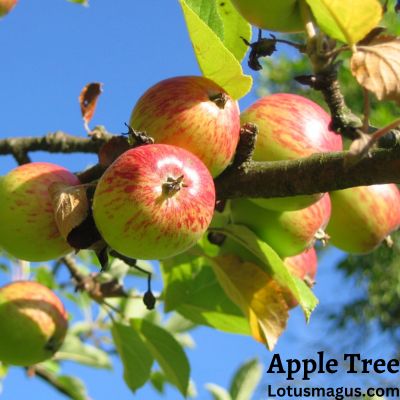
リンゴの木の剪定のヒント
Pruning is a crucial component of apple tree maintenance and may assist to guarantee that your tree bears fruit that is both healthy and tasty. Here are a few tips for pruning your apple tree:
- Before the buds emerge in the early spring or late winter, prune.
- Take out any branches that are infected, dead, or damaged.
- Any branches that are touching or crossing one another should be thinned off.
- To promote new development, trim any branches that are too long.
As previously stated, trim the lateral branches to a length of around 18 inches.
垂直の枝を結ぶか重しをする
You may bind or weigh down any branches that are straight up and out of alignment with the structure you want to create in order to encourage fruiting. The energy of the tree may then be directed onto its fruiting buds, resulting in enhanced fruit output in subsequent years. But, if there are too many vertical branches, you may simply cut them off so that they don’t overly shadow the lower branches.
リンゴの木が高く成長しすぎないようにするには?
To stop or lower the apple tree from growing too tall is by cutting down tall, upright branches to strategically positioned, strong lateral branches that stretch horizontally below the height of 18 feet. Since it promotes the establishment of shorter, fruit-bearing branches rather than towering branches that yield fewer apples, this method is beneficial.
Since these cuts often include the removal of limbs 6 inches in diameter or more, you will need a high-quality pruning instrument, such a chain saw, to perform them. Clean cuts must be made as closely to the trunk as you can without injuring the branch collar or the bark. The cells in the branch collar, which is the elevated ring of bark at the base of the branch, aid in the tree’s wound healing and sealing.
Cutting down the central leader, which is the tree’s main upright stem, to a lower branch is another method for lowering an apple tree’s height. To prevent straining the tree, this may be done over a number of years by making modest cuts every year.
It’s vital to remember that although pruning is a terrific technique to keep your apple tree healthy and productive, going overboard may be detrimental. A tree may experience stress, have a decreased capacity to produce fruit, and become more vulnerable to disease and pests if more than 25% of its canopy is pruned in a single season.
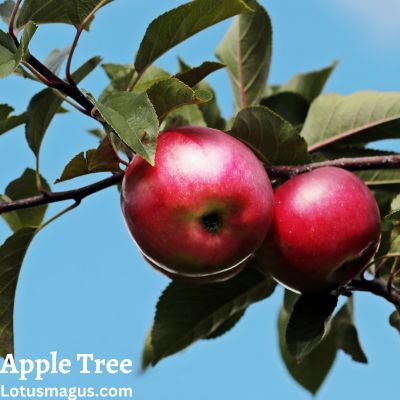
古いリンゴの木は果実を生産しなくなるか?
A old apple tree that has stopped producing fruit might due to Neglecting. It is one of the most frequent reasons because it results in overgrowth and improper maintenance. Trees that are overgrown may form dense canopies that block sunlight from reaching the fruiting branches. Fruit quality and yield may suffer from the absence of sunshine.
The improper pollination of apple trees is another frequent reason why they fail to yield fruit. If there are no other apple trees nearby, the tree could not produce any fruit at all. Apple plants need the cross-pollination of other apple trees to produce fruit.
A tree’s capacity to bear fruit may also be impacted by illness and pests. Although pests may harm the tree’s branches and leaves, lowering the health of the tree as a whole, certain illnesses can cause fruit to fall from the tree prematurely.
Pruning and maintenance must be done correctly to revive an old apple tree and encourage it to start bearing fruit once again. Pruning may assist to remove dead or broken branches, increase airflow, and let more sunshine reach the fruiting branches of the tree. The health and production of an apple tree may be harmed by over-pruning, thus it’s crucial to trim the tree gently and strategically.
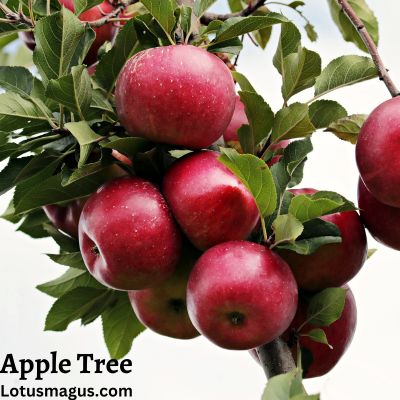
過剰に剪定されたリンゴの木を修正する方法
Do not give up if you overpruned your apple tree. You may take a number of actions to aid in the tree’s recovery and fruit production. This is how:
- Evaluate the damage before making any repairs to a over pruned apple tree. To spot stress and damage, keep an eye out for dead branches, splits and fractures in the trunk, as well as yellow or wilted foliage. You may need to seek help from an arborist or horticulture if the damage is severe.
- Correct tree pruning is necessary to restore an apple tree that has been over-pruned. Start by removing any broken or diseased branches, then any branches that are crossing or rubbing. Remove any suckers or water sprouts that are emerging from the main branches or the trunk as well. Be careful to leave the tree with enough strong branches to sustain its development.
- Feed the tree: An apple tree that has been over-pruned may be under stress and in need of nutrients. Early spring and early summer are the best times to feed the tree with a balanced fertilizer to provide it the nutrients it needs for development and fruit production. As an alternative, you might spread organic material around the tree’s base, such manure or compost.
- Proper tree watering is essential for the recovery of an over-pruned apple tree. Once a week, give the tree a thorough watering, particularly during hot, dry weather. A young tree may need to be watered more often as it forms its roots.
- Provide assistance: An apple tree that has been over-pruned can need assistance to develop properly. To support the tree and keep it from bending or breaking under its weight, use a stake or a trellis.
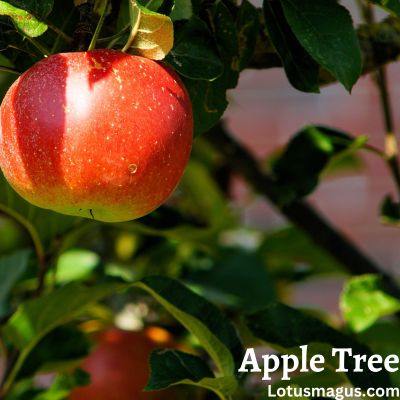
どのリンゴの木が真っ直ぐに成長するのか?
Columnar apple trees are a great option because these tree grows straight up, with a height of 8 to 10 feet and often only spreading out to a width of less than 2 feet. Crossbreeding apple types with a narrow, upright growth habit results in columnar apple trees.
This results in a tree with a single, central stem and fruiting branches that grow vertically, as opposed to at an angle, on top. As a consequence, the tree is significantly smaller than a typical apple tree, which makes it perfect for tiny gardens, patios, or balconies.
Columnar apple trees are not only small but also simple to care for and maintain. They just need little pruning, which may be carried out during the tree’s dormant season in the winter. The narrow, single-stemmed, regular-sized apples of columnar apple trees may be cultivated in pots or directly in the ground.
It’s crucial to provide a columnar apple tree healthy soil, enough water, and enough of sunshine if you want it to thrive. Although though these trees are usually resistant to disease, it’s still crucial to keep an eye out for pests and illnesses, particularly in the first few years after planting.
Columnar apple trees often provide fruit that is ready to be picked in late summer or early autumn. When the fruit is totally ripe but before it falls from the tree, it must be picked. Gently twist the apple to check whether it readily comes off before doing this. Wait a few more days before attempting it again if it doesn’t.
リンゴの木はどれくらいの高さに成長させるべきか?
Knowing the mature height of an apple tree is crucial while growing them so you can place them correctly and give them room to expand. Dwarf, semi-dwarf, and regular apple tree varieties all have different maturity heights.
Dwarf apple trees are the perfect size for tiny gardens or containers since they grow to reach between 8 and 10 feet tall. They often bear fruit 2 to 3 years after planting, which is sooner than bigger trees, although they typically have less fruit.
Semi-dwarf apple trees are somewhat higher than dwarf trees, reaching heights of 12 to 15 fee tall. They may begin bearing fruit three to four years after planting and yield more fruit than dwarf trees.
The biggest of the three varieties, standard apple trees may reach heights of 18 to 20 feet tall. They often take between 5 and 8 years after planting to begin bearing fruit, although they typically do so with bigger fruit than the other two varieties.
Nevertheless, normal apple trees may be trimmed to maintain a more manageable height. This is crucial to bear in mind as these trees can grow to be very enormous. Therefore, it is not advised to reduce a standard-sized apple tree to a miniature one by pruning.
Be careful you plant the appropriate apple tree for your yard and intended fruit production. Your apple tree may continue to produce excellent fruit for many years with the right upkeep and care.
リンゴの木を剪定しないとどうなるか?
You can trim an apple tree 1/3rd in a single year is a decent general rule of thumb without killing it. A fruit tree may die if you trim too many of its branches. The tree will still generate water sprouts, which are straight up and down branches devoid of fruit, even if it does not die. Never cut more than 20% of an elderly apple tree each year, according to advice.
It’s crucial to remove any branches that are plainly dead, damaged, or infected when pruning an old apple tree. Dead branches may have canker marks or other sorts of damage, and the dead wood will often be black or brittle with peeling bark. In addition to improving the tree’s general health, removing these branches will also make it simpler to identify additional branches that need pruning.
It’s crucial to get rid of any suckers that the tree’s base may be producing. These are branches that grow from the tree’s base and may sap energy from branches that bear fruit. Any low-hanging branches that don’t get enough sunshine to bear fruit should also be cut off.
It is advisable to use pruning shears for tiny cuts and a garden saw for wider cuts when trimming an apple tree. Use hand pruners for limbs with a diameter of less than 1 inch; lopping shears or a saw are ideal for thicker branches. Younger trees should be pruned to shape them, while older trees should be pruned to promote fruiting. Trees under three years old should be pruned more intensively to help shape them as they are not yet in their peak fruiting days.
どのようにして自分のリンゴの木の種類を知るか?
The kind of apple tree you have, you need some kind of proof, such a plant label, receipt, letter, or journal entry from the gardener who planted the tree, to know for sure what kind of apple you have.
There are a few ways to identify your apple tree, however, if you don’t have any paperwork. Examining the fruit is one of the most reliable methods to determine which tree it is. The fruit’s size, shape, color, and texture might provide you crucial hints about the kind of apple you have. Another option is to cut open the apple and examine the seeds, which might provide more details.
Examining the leaves is another method for determining which apple tree you have. Apple trees come in several types, each with its own unique leaf pattern and color. For instance, Golden Delicious apple tree leaves are lighter in color and have a more matte texture than Granny Smith apple tree leaves, which are dark green and lustrous.
Apple tree bark may also be a helpful identifying aid. An apple tree’s youthful, smooth, gray bark eventually becomes rough and develops deep furrows as the tree ages. It may be possible to distinguish apple tree varieties by their slightly different bark colors and textures.
There are several internet tools and applications that might be useful if you’re still having problems recognizing your apple tree. These sites often provide images and descriptions of several apple kinds, which might assist you in reducing the options.
リンゴの木を剪定するのに最適な時期はいつか?
While apple trees may be trimmed at any time of the year without causing damage, late winter is often the ideal time for pruning. The best month to trim apple trees is generally in March or April, when the coldest temperatures are beyond their peak and new cuts won’t be subject to dangerous ice.
The quality and amount of fruit produced in the next season will depend on the spring development of apple trees, which may be influenced by pruning them in the late winter. The tree is still dormant in the late winter, and its leaves have not yet emerged. Also, when there are no leaves obscuring your vision, it is simpler to determine which branches need pruning.
Pruning should always include the removal of any crossing branches, water sprouts, suckers, and dead, damaged, or diseased branches. The health of the tree might be hampered by these branches, which could also reduce fruit yield. Furthermore, reducing the tree’s height and thinning its canopy would encourage appropriate airflow and sunshine,