
The live oak tree, scientifically known as Quercus virginiana, is an evergreen oak notable for its sprawling branches, leathery leaves, and ecological importance, thriving in warm climates across the southeastern United States.
Table of Contents
Live oak trees are a striking feature of the southeastern United States, known for their majestic size and evergreen nature. This guide will explore their identification, care, and the ecological significance of Quercus virginiana in various landscapes.
Understanding the Live Oak Tree
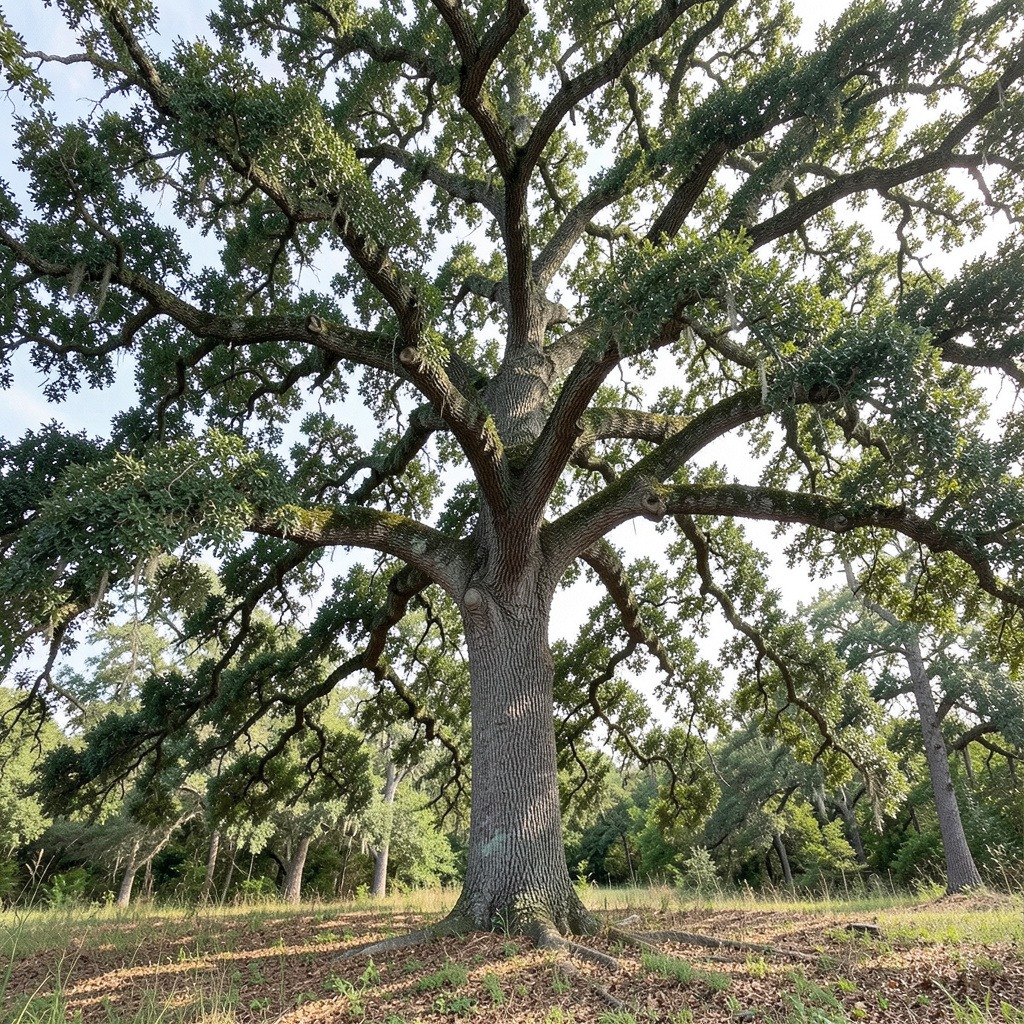
The live oak tree, scientifically known as Quercus virginiana, is a prominent evergreen species valued for its resilience and aesthetic appeal. This section delves into its scientific classification, distinctive characteristics, and the importance of its evergreen nature.
Scientific Classification of Live Oak
Quercus virginiana belongs to the Fagaceae family, which includes all oak species. Here’s a brief overview of its classification:
- Kingdom: Plantae
- Class: Eudicots
- Order: Fagales
- Family: Fagaceae
- Genus: Quercus
- Species: Q. virginiana
This classification situates the live oak within a broader context of oak trees, highlighting its unique traits as an evergreen species.
Characteristics of Quercus virginiana
Live oaks are distinguished by several key features:
- Leaves: They possess leathery, lance-shaped leaves with smooth edges, contrasting the lobed leaves found on many deciduous oaks.
- Bark: The bark is initially reddish-brown, becoming dark gray with deep furrows as the tree matures.
- Acorns: Live oaks produce dark brown to black acorns, typically 1 inch long, which grow in clusters.
- Growth Habit: The tree has a broad, spreading crown with gnarled branches, making it visually striking.
These characteristics not only aid in identification but also contribute to the tree’s ecological role.
Evergreen Nature and Its Importance
The evergreen nature of the live oak offers several advantages:
- Year-Round Foliage: Unlike deciduous trees, live oaks retain their leaves throughout the year, providing consistent shade and aesthetic value.
- Habitat: The dense foliage supports various wildlife, including birds and insects, fostering biodiversity.
- Drought Resistance: Live oaks are well-adapted to withstand drought conditions due to their extensive root systems.
These adaptations enable live oaks to thrive in diverse environments, from coastal regions to urban landscapes. Their resilience makes them a preferred choice for landscaping and conservation efforts.
Identification of Live Oak Trees
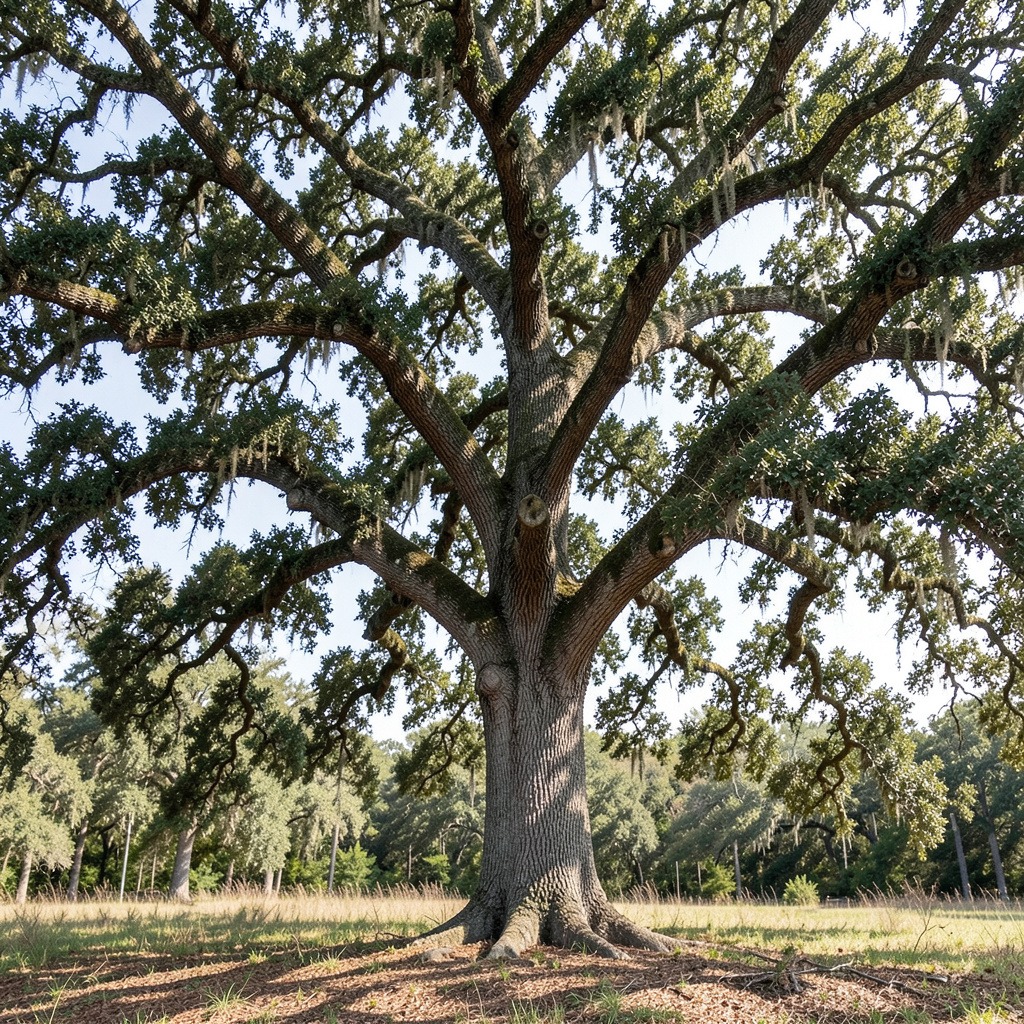
Identifying live oak trees (Quercus virginiana) involves observing their unique physical characteristics. This guide will help you discern their leaves, bark, acorns, and growth habits.
Distinctive Features of Leaves and Bark
Live oak leaves are distinctive and can be identified by their:
- Shape: Oblong to elliptical with smooth edges.
- Texture: Glossy green and leathery.
- Size: Ranging from 2” to 5” (5 – 13 cm) long and up to 1.5” (4 cm) wide.
- Color: Dark green on the upper surface; fine, grayish hairs on the underside.
The bark of a live oak tree also has unique features:
- Young Bark: Reddish-brown with narrow vertical furrows.
- Mature Bark: Dark gray, thick, and scaly with deep grooves.
These characteristics create a visual contrast that helps distinguish live oaks from other tree species.
Acorn Characteristics
Live oak acorns are critical for identification. They are:
- Shape: Egg-shaped and dark brown to black.
- Size: Approximately 1” (2.5 cm) long.
- Cap: Bowl-shaped, covering about one-third of the nut, with tiny, pointed scales.
- Clusters: Typically found in groups of one to five.
The acorns mature in clusters and are essential for wildlife, serving as a food source for various animals.
Growth Habits and Common Sizes
The growth habits of live oak trees are distinct:
- Form: Spreading, gnarled branches that grow horizontally.
- Crown Shape: Rounded, creating a broad canopy.
- Height: Generally range from 40 to 80 feet (12 to 24 meters) tall.
- Width: Can spread 60 to 100 feet (18 to 30 meters) wide.
These trees are often used in landscaping due to their impressive size and shape. When choosing a live oak for your yard, consider its growth habits to ensure adequate space and light.
Using these identifying features, you can confidently recognize live oak trees in various settings, enhancing your understanding of this significant species.
Care and Maintenance of Live Oak Trees
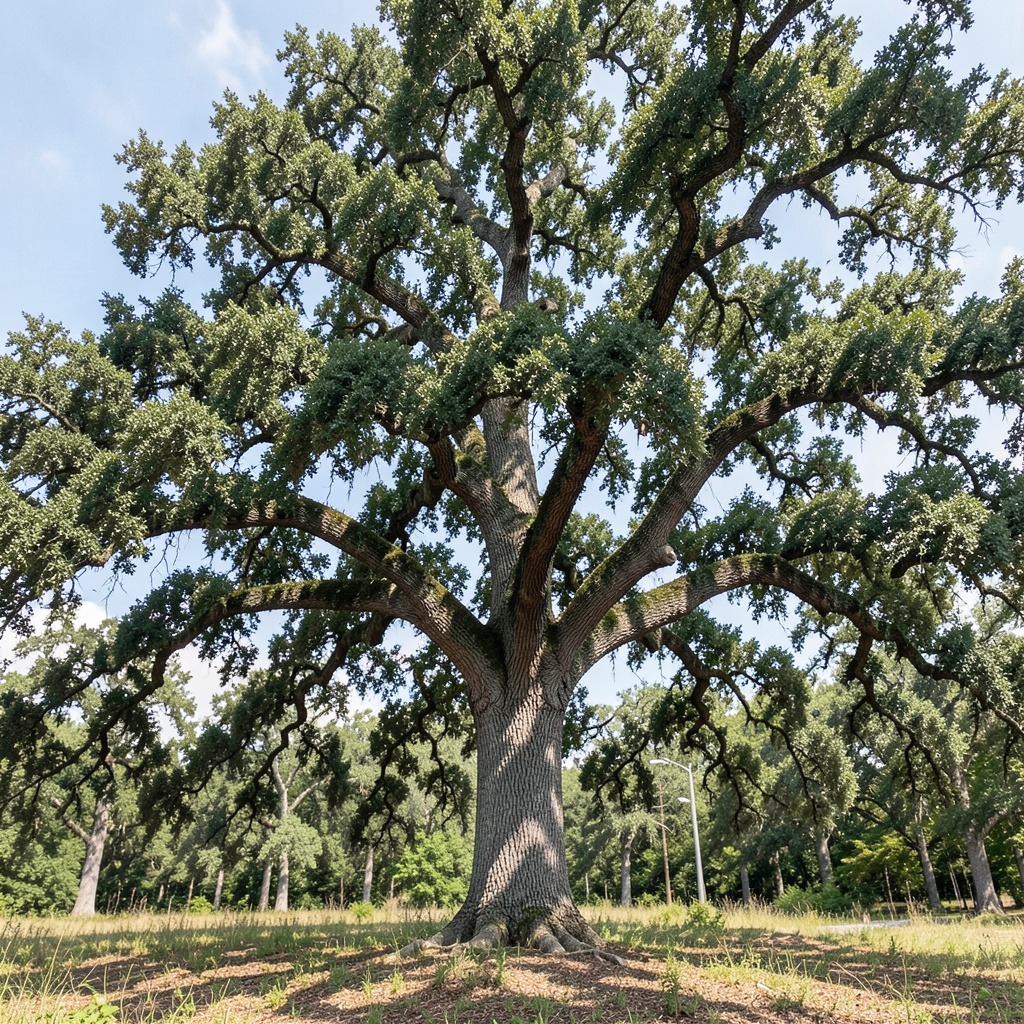
Caring for live oak trees is essential to maintain their health and longevity. Proper planting, watering, and pruning techniques will ensure robust growth and resilience against pests and diseases.
Best Practices for Planting Live Oaks
When planting live oak trees, consider the following steps:
- Select the Right Location: Choose a sunny area with well-drained soil. Live oaks thrive in full sunlight and adapt to various soil types.
- Planting Depth: Dig a hole twice the width of the root ball and slightly shallower than the root ball height. This promotes root expansion.
- Spacing: Ensure adequate space for growth. Live oaks can spread 60 to 100 feet wide, so plan accordingly.
Planting Checklist:
- Location: Sunny, well-drained area
- Hole: Twice the width of the root ball
- Watering: Maintain moisture during establishment
Watering and Soil Requirements
Watering live oaks requires specific attention, especially in their early years:
- Establishment Phase: Water newly planted saplings daily for the first two weeks. After that, water weekly for the first three years if rainfall is insufficient.
- Mature Trees: Established live oaks are drought-resistant. They typically do not require additional watering, except during prolonged dry spells.
Soil Conditions:
- Well-drained soil is preferred.
- They can tolerate a variety of soil types, but avoid waterlogged areas.
Pruning Techniques for Healthy Growth
Pruning live oaks is vital to promote healthy structure and growth. Follow these techniques:
- Timing: Prune during late winter or early spring before new growth starts. This minimizes stress on the tree.
- Technique: Remove dead, damaged, or crossing branches to maintain an open canopy. This encourages airflow and reduces disease risk.
- Avoid Over-Pruning: Limit pruning to 25% of the tree’s canopy in one season to prevent shock.
Pruning Tips:
- Assess the tree’s structure before cutting.
- Use clean, sharp tools to make precise cuts.
- Always remove branches at their base, not through the middle.
Pest and Disease Management
Live oaks can be susceptible to certain pests and diseases. Monitor for the following:
- Oakworms: These caterpillars can defoliate trees. Healthy mature oaks usually withstand infestations, but young trees may need protection.
- Scale Insects: Look for brown bumps on twigs. These sap-sucking pests can stunt growth and cause yellowing leaves. Treatment may involve insecticidal soap or horticultural oil.
- Fungal Diseases: Diseases like oakleaf blister can be mitigated by removing infected leaves and maintaining healthy tree conditions.
Management Checklist:
- Regularly inspect trees for signs of pests.
- Remove fallen leaves to reduce disease spread.
- Use appropriate treatments as necessary.
Incorporating these care and maintenance practices can significantly enhance the health and beauty of live oak trees in any landscape.
Ecological and Cultural Significance of Live Oaks

Live oak trees, known scientifically as Quercus virginiana, play a crucial role in their ecosystems and hold significant cultural importance. Their vast canopies and unique characteristics provide numerous benefits, making them a valuable addition to landscapes and local histories.
Role in Local Ecosystems
Live oaks serve as keystone species in various ecosystems. Their dense foliage provides habitat and food for numerous wildlife species, including:
- Birds: Many birds depend on live oaks for nesting sites and food sources, such as acorns.
- Insects: Live oaks support a diverse range of insects, which in turn attract insectivorous birds and other wildlife.
- Mammals: Squirrels, deer, and other mammals rely on live oak acorns as a primary food source, particularly in the fall and winter.
The trees also contribute to soil health. Their deep root systems help prevent erosion and improve water infiltration, benefiting surrounding plant life. Moreover, the fallen leaves decompose, enriching the soil with organic matter.
Historical and Cultural Importance
Live oaks have woven themselves into the fabric of American history. Their wood was vital for naval construction, especially during the early years of the United States. The USS Constitution, famously known as “Old Ironsides,” was primarily built from live oak, showcasing its durability and strength.
Additionally, live oaks are often associated with various cultural narratives and folklore. Many Southern towns celebrate their historic live oaks, featuring them in local festivals and community events. Their majestic presence often symbolizes strength and resilience in these communities.
Live Oak in Landscaping Design
In landscaping, live oaks are prized for their aesthetic appeal and environmental benefits. Their broad, sprawling branches provide ample shade, making them ideal for parks and residential areas. When considering live oaks for landscaping, keep the following in mind:
- Growth Rate: Live oaks grow rapidly and can reach significant heights, making them suitable for larger spaces.
- Maintenance Needs: Once established, live oaks require minimal care, thriving in various soil types and conditions.
- Cultural Fit: Choose live oaks to enhance the historical and cultural narrative of your landscape, especially in regions with a strong connection to these trees.
By incorporating live oaks into both ecological planning and cultural storytelling, communities can foster a deeper appreciation for these remarkable trees.
Common Issues with Live Oak Trees
Live oak trees face several challenges, including pests, diseases, and maintenance difficulties. Understanding these issues is crucial for effective care.
Common Pests and How to Manage Them
Live oaks attract various pests that can impact their health. Here are some common pests and management strategies:
- Oakworms: These caterpillars can skeletonize leaves, leading to defoliation. Monitor trees for signs of larvae and remove them by hand if necessary.
- Aphids: Small, sap-sucking insects that can weaken trees. Use insecticidal soap or neem oil to control infestations.
- Acorn Weevils: These pests can damage acorns, impacting the tree’s reproductive success. Regularly check for signs of weevil activity in the acorns.
Diseases Affecting Live Oaks
Live oaks are susceptible to several diseases that can threaten their vitality:
- Powdery Mildew: A fungal disease that affects leaves, reducing photosynthesis. Increase air circulation around trees and apply fungicide if necessary.
- Sudden Oak Death: Caused by a pathogen, this disease leads to rapid decline. Preventative measures include maintaining tree health and avoiding overwatering.
- Acute Oak Decline: This poorly understood disease can significantly weaken trees. Consult an arborist for diagnosis and management options.
Maintenance Challenges and Solutions
While live oaks are generally low maintenance, some challenges may arise:
- Watering Needs: Although established live oaks are drought-resistant, prolonged dry spells may require supplemental watering. Use a deep watering technique to encourage deep root growth.
- Foliage Care: Regularly inspect for dead or damaged branches. Prune them to promote healthy growth and improve airflow.
- Soil Health: Live oaks thrive in well-drained soil. Conduct a soil test to assess nutrient levels and amend as necessary.
By implementing these strategies, you can successfully manage the common issues associated with live oak trees, ensuring their health and longevity.
Comparisons with Other Oak Species
Understanding how live oaks compare to other oak species helps in making informed decisions about planting and care. Here, we focus on two common oak species: the Southern Red Oak and the White Oak.
Live Oak vs. Southern Red Oak
- Growth Habit: Live oaks (Quercus virginiana) are broad and sprawling, often reaching heights of 40 to 60 feet with a wide canopy. Southern Red Oaks (Quercus falcata) tend to be taller, growing up to 80 feet, with a more upright form.
- Leaf Characteristics: Live oaks have leathery, evergreen leaves, while Southern Red Oaks have deciduous, lobed leaves that turn vibrant red in the fall.
- Acorns: Live oaks produce larger acorns that mature in a single season. In contrast, Southern Red Oaks produce smaller acorns that take two years to mature.
- Ecological Role: Live oaks provide year-round cover and food for wildlife. Southern Red Oaks support a diverse insect population, particularly when their acorns fall.
Live Oak vs. White Oak
- Growth Rate: Live oaks grow moderately, averaging about 1 to 2 feet per year. White Oaks (Quercus alba), however, can grow faster, reaching up to 24 inches annually under optimal conditions.
- Soil Preference: Live oaks thrive in well-drained soils but adapt to various conditions. White Oaks prefer slightly more acidic soils and are often found in moister environments.
- Wood Characteristics: The wood of White Oaks is more prized for its strength and durability, often used in furniture making and flooring. Live Oak wood is dense and resistant to decay, making it suitable for shipbuilding.
- Wildlife Support: Both species are vital for wildlife, but White Oaks are especially favored by squirrels and birds for their acorns, which are sweeter and more nutritious.
Unique Features of Live Oak
Live oaks are distinguished by their evergreen foliage, making them unique among many oak species. They also exhibit a characteristic horizontal branching pattern, creating a picturesque landscape feature.
| Feature | Live Oak (Quercus virginiana) | Southern Red Oak (Quercus falcata) | White Oak (Quercus alba) |
|---|---|---|---|
| Height | 40-60 feet | Up to 80 feet | 50-80 feet |
| Leaf Type | Evergreen, leathery | Deciduous, lobed | Deciduous, rounded |
| Acorn Maturity | 1 year | 2 years | 1 year |
| Soil Preference | Well-drained | Slightly acidic | Moist, acidic |
| Growth Rate | Moderate (1-2 ft/year) | Fast (up to 2 ft/year) | Moderate (up to 24 in/year) |
This comparison aids in understanding the distinct roles and care requirements of live oaks versus other oak species.
Frequently Asked Questions
These quick answers cover the most common questions about this topic, including key details, practical tips, and common concerns.
Is there a difference between an oak tree and a live oak tree?
Yes, there is a difference. Live oak trees, scientifically known as Quercus virginiana, are a specific type of oak tree that is evergreen. Unlike many other oak species that lose their leaves in the fall, live oaks retain their leathery leaves year-round. They also have a distinctive growth habit with sprawling branches and a broad canopy, making them visually unique compared to other oak varieties.
What are the disadvantages of having a live oak tree?
While live oaks offer many benefits, they do have some disadvantages. Their extensive root systems can invade nearby structures or sidewalks, leading to potential damage. Additionally, live oaks can drop acorns in large quantities, which may create a mess in yards and driveways. They are also susceptible to specific pests and diseases, which may require management efforts to maintain their health.
What is special about a live oak tree?
Live oaks are special for their majestic appearance and ecological importance. They provide year-round shade and habitat for various wildlife, including birds and insects. Their dense foliage supports biodiversity and helps prevent soil erosion. Historically, live oaks have been valued for their strong, durable wood, which was used in shipbuilding and construction.
Do live oak trees grow fast?
Live oaks have a moderate growth rate. They typically grow about 1 to 2 feet per year once established. While they may not be the fastest-growing trees, their longevity and strength make them a worthwhile addition to landscapes. They can reach heights of 40 to 80 feet, creating a significant presence over time.
What are the best growing conditions for live oak trees?
Live oaks thrive in full sunlight and well-drained soil. They can adapt to various soil types, including sandy and clay soils, but avoid waterlogged areas. These trees are drought-resistant once established, making them suitable for warmer climates. Proper spacing is also crucial, as live oaks can spread 60 to 100 feet wide, requiring ample room to grow.
How do I prune a live oak tree effectively?
To prune a live oak, aim for late winter or early spring before new growth begins. Focus on removing dead or damaged branches and any that cross or crowd the canopy. Use clean, sharp tools to make precise cuts and avoid removing more than 25% of the canopy in a single season to prevent stress on the tree. This method promotes healthy growth and improves airflow.
What wildlife benefits do live oaks provide?
Live oaks are vital for local wildlife. Their acorns serve as a food source for birds, squirrels, and other mammals, especially during fall and winter. The dense foliage offers nesting sites and shelter for various species, fostering biodiversity in the area. By planting live oaks, you can support a thriving ecosystem right in your backyard.
How can live oak trees be used in landscaping?
Live oaks are excellent for landscaping due to their impressive size and shade-providing capabilities. They are ideal for parks, residential areas, and large gardens where their broad canopy can be appreciated. Additionally, their evergreen nature ensures year-round beauty and habitat for wildlife. Consider using live oaks to create focal points or shaded areas in your landscape design.