
To identify a Norway maple, look for its milky sap in leaf stalks, broad five-lobed leaves, and distinctive paired samaras with nearly horizontal wings.
Norway maple (Acer platanoides) is a distinctive and invasive tree species known for its broad leaves and unique sap characteristics. This guide will help you accurately identify this tree and differentiate it from similar species in your area.
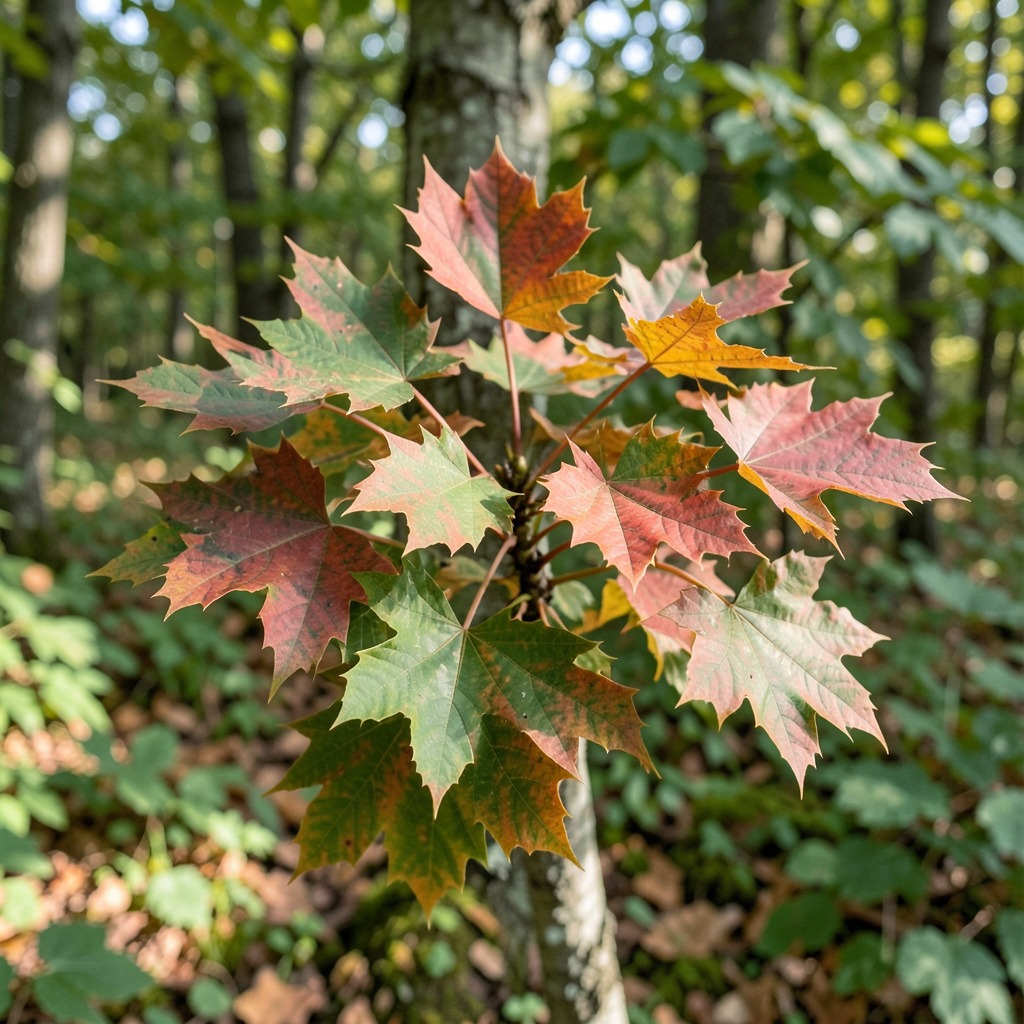
Key Identifying Features of Norway Maple
Norway maple (Acer platanoides) exhibits distinct characteristics that aid in its identification. Recognizing these features will help differentiate it from similar maple species.
Leaf Characteristics
The leaves of Norway maple are a primary identification feature. They are broad, with a width greater than their height, and have sharply pointed tips. Key points include:
- Shape: The leaves are lobed, typically with five lobes that narrow toward the base.
- Sap: When broken, the petiole excretes a milky white sap, a definitive characteristic of Norway maple.
- Color: The upper surface is dark green, while the underside is a lighter green.
To visually identify Norway maple leaves, compare them with sugar maple leaves. Sugar maples have more rounded lobe tips and produce clear sap.
Bark and Sap Description
Bark texture provides additional clues for identification. The bark of mature Norway maples is characterized by:
- Texture: It has small, criss-crossing grooves that are relatively smooth compared to the shaggy bark of sugar maples.
- Color: The bark is grayish-brown and becomes more pronounced as the tree matures.
The milky white sap is a notable feature. This sap not only confirms identification but also aids in differentiating Norway maples from other species.
Table of Contents
Flower and Seed Identification
Norway maples produce distinct flowers and seeds, which further assist in identification:
- Flowers: The tree blooms with yellow-green flowers in spring, before the leaves fully emerge.
- Seeds: The seeds have wings that extend horizontally, often spreading widely from the tree. Each seed is attached to a long, slender stalk.
When observing a Norway maple, note the timing of these flowers and the shape of the seeds to confirm its identification.
Quick Identification Checklist
- Leaf: Broad, sharply lobed, milky white sap upon breaking.
- Bark: Smooth with criss-crossing grooves, grayish-brown.
- Flowers: Yellow-green blooms in early spring.
- Seeds: Wings that spread horizontally.
By using these characteristics and comparing them with similar species, you can effectively identify Norway maple in various growth stages.
Comparing Norway Maple with Other Maple Species
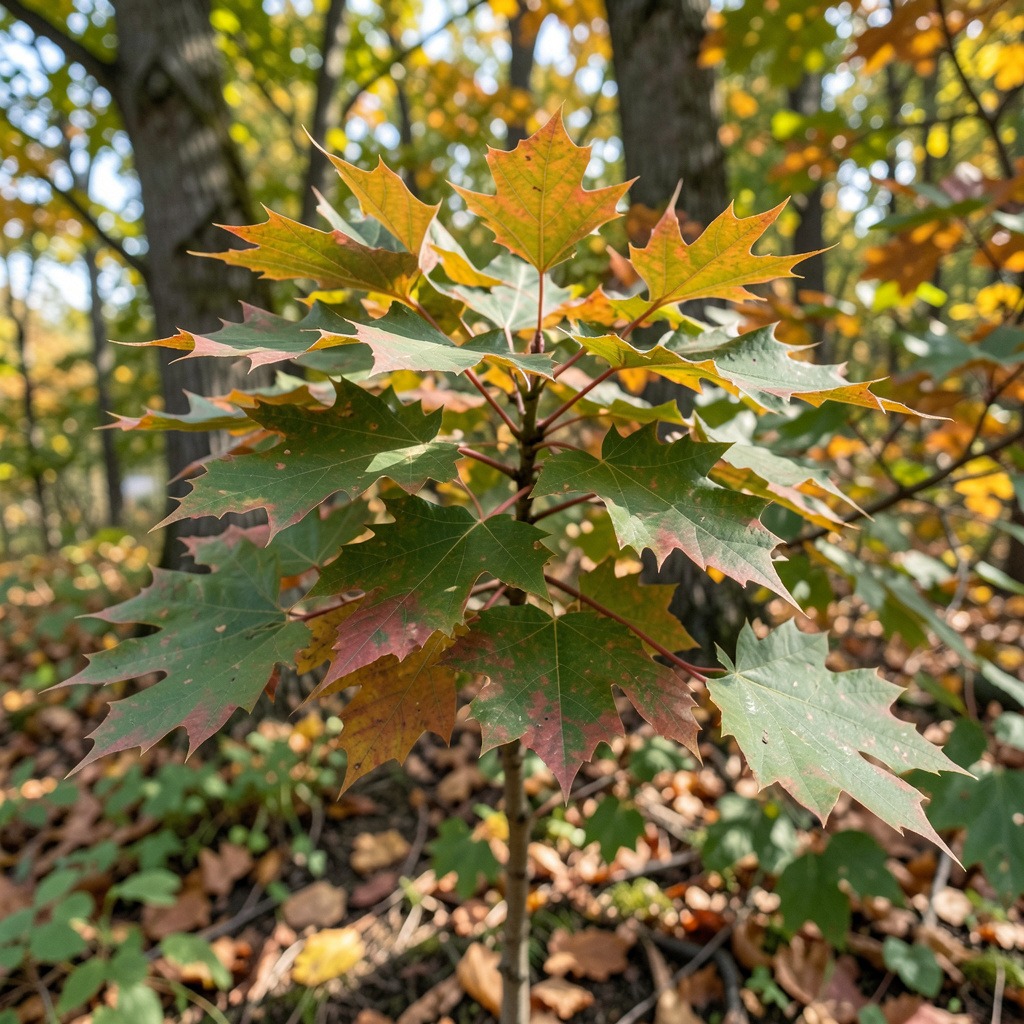
Norway maple can often be confused with other maple species, particularly sugar maple and silver maple. Understanding their differences can facilitate accurate identification.
Differences from Sugar Maple
Norway maple (Acer platanoides) and sugar maple (Acer saccharum) share some similarities, but key features help distinguish them:
| Feature | Norway Maple | Sugar Maple |
|---|---|---|
| Leaf Shape | Broad, sharply lobed, more triangular | Broad, rounded lobes with finer teeth |
| Sap Color | Milky white sap upon breaking | Clear sap in petiole |
| Bark Characteristics | Smooth with criss-crossing grooves | Shaggy, more ridged bark |
| Lobe Tips | Fine “hair” tips | Rounded tips |
Differences from Silver Maple
Silver maple (Acer saccharinum) has its own distinct features that set it apart from Norway maple:
| Feature | Norway Maple | Silver Maple |
|---|---|---|
| Leaf Underside | Green or light green | Silver or whitish underside |
| Leaf Lobes | Fewer, broader lobes | Deeply lobed leaves |
| Growth Habit | Sturdier, more upright | Often has a more weeping form |
| Ecological Impact | Considered invasive | Less aggressive in some areas |
Ecological Impacts and Invasiveness
Norway maple’s adaptability allows it to thrive in various environments, often outcompeting native species. Its dense canopy can inhibit the growth of understory plants, which may lead to reduced biodiversity. In contrast, sugar and silver maples typically coexist more harmoniously within their ecosystems.
By comparing these features, you can more confidently identify Norway maple and understand its role in local habitats.
Habitat and Distribution of Norway Maple
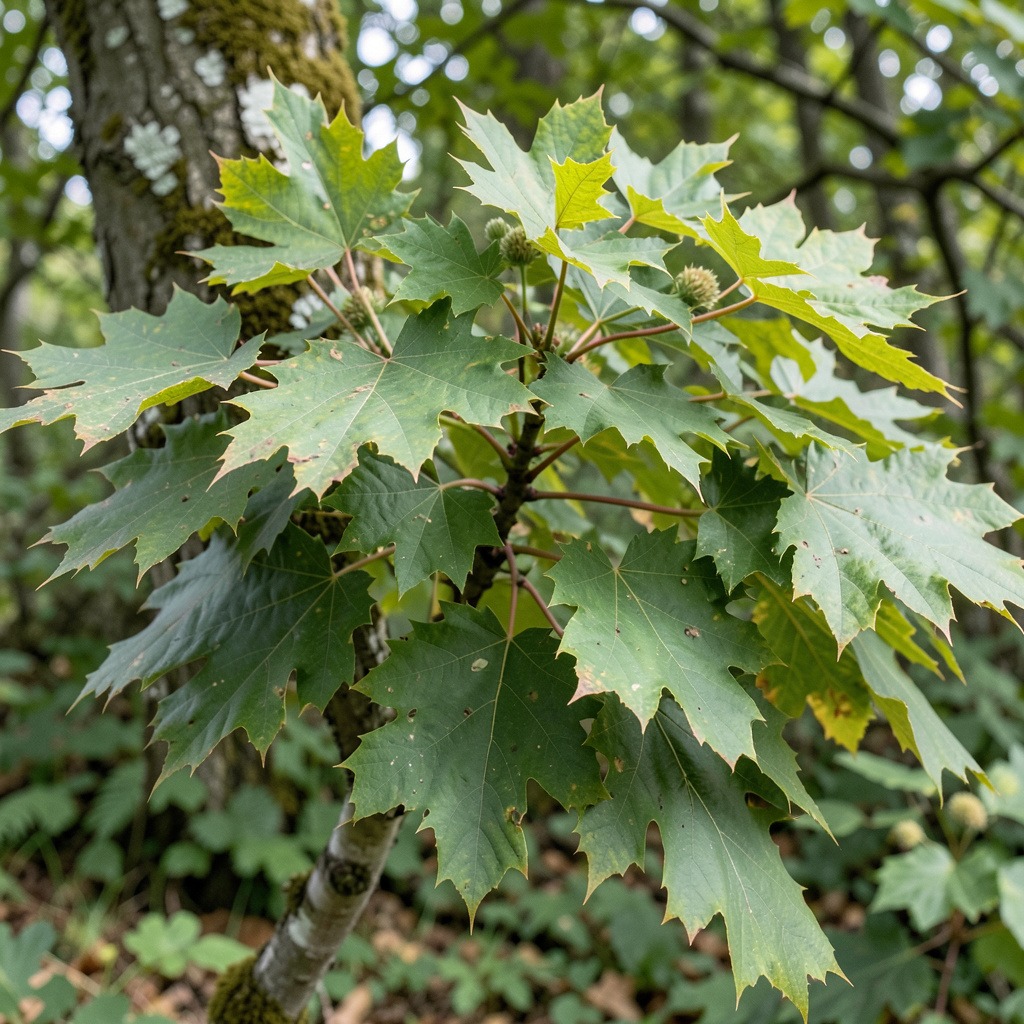
Norway maple (Acer platanoides) has a distinct habitat and geographic distribution, which contributes to its identification. Understanding its origins and current spread in North America is crucial for recognizing this species.
Native Range and Growth Conditions
Originally native to Europe and parts of western Asia, Norway maple thrives in a variety of conditions. It prefers well-drained soils and can tolerate urban environments. Its adaptability allows it to grow in both full sun and partial shade.
Key growth conditions include:
- Soil: Prefers moist, well-drained soils.
- Sunlight: Thrives in full sun to partial shade.
- Temperature: Best suited for temperate climates but can withstand colder conditions.
Current Distribution in North America
Norway maple was introduced to North America in the mid-18th century as an ornamental tree. Since then, its spread has been significant, particularly in the northeastern and northwestern United States.
- Regions of Spread:
- Most common in the Pacific Northwest.
- Found extensively in southern Ontario.
- Present along the Kennebec River in southern Maine.
The tree’s prolific seed production and ability to grow in low light contribute to its invasive status. Norway maple can form dense stands that outcompete native vegetation, posing challenges to local ecosystems.
Decision Framework for Identification
When identifying Norway maple in various growth stages, consider the following features:
- Leaves: Large, lobed leaves with milky sap.
- Bark: Smooth when young, developing small grooves as it matures.
- Seeds: Distinctive, flattened, disc-shaped seeds.
By recognizing these characteristics, you can confidently identify Norway maple and understand its ecological implications.
Ecological Impact of Norway Maple
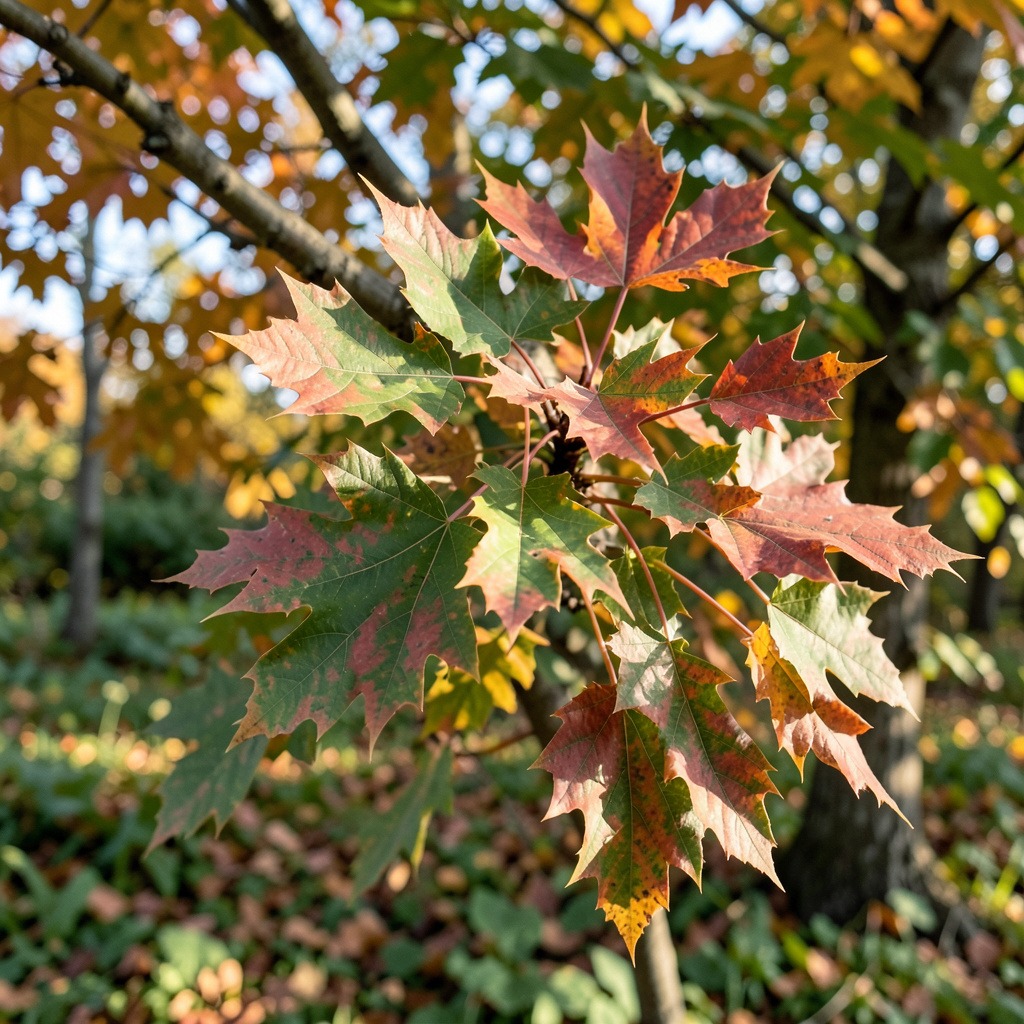
Norway maple (Acer platanoides) poses significant challenges to local ecosystems due to its invasive nature. This species can outcompete native plants, altering habitat structures and affecting biodiversity.
Negative Environmental Effects
Norway maple’s invasive characteristics lead to several ecological consequences:
- Competition for Resources: Its dense canopy shades out understory vegetation. Native plants struggle to grow under its cover.
- Altered Soil Chemistry: Norway maple may change soil nutrient content, impacting the growth of surrounding flora.
- Seed Production: This species produces large quantities of seeds, which germinate quickly. Its ability to thrive in low-light conditions allows it to establish dominance in various environments.
Local ecosystems suffer as Norway maple establishes monotypic stands. These stands can choke out native plant species, leading to reduced biodiversity.
Management Strategies for Invasive Species
Several management strategies can mitigate the ecological impact of Norway maple:
- Physical Removal: Hand-pulling or cutting down small trees can prevent their spread. Ensure to remove the roots to prevent regrowth.
- Chemical Control: Herbicides may be used, but only with caution and in compliance with local regulations.
- Community Awareness: Educating local communities about identification and impacts can help control the spread.
Case Study Example
In Massachusetts, efforts to manage Norway maple have included community outreach programs. Volunteers are engaged to identify and remove Norway maples in local parks. Monitoring the effects of these removals has shown improved growth of native species, such as oak and hickory, highlighting the positive outcomes of targeted management.
By understanding Norway maple’s ecological impact, communities can take informed actions to preserve local biodiversity.
Frequently Asked Questions
These quick answers cover the most common questions about this topic, including key details, practical tips, and common concerns.
Why are Norway maples undesirable?
Norway maples are considered undesirable primarily because they are invasive. They grow rapidly and can overshadow native plants, disrupting local ecosystems. Their dense canopies block sunlight, preventing the growth of understory vegetation and reducing biodiversity. Additionally, they alter soil chemistry, which can negatively affect other plant species.
How to tell how old a Norway maple tree is?
To determine the age of a Norway maple, count the growth rings in a cross-section of the trunk. Each ring typically represents one year of growth. Alternatively, you can measure the tree’s circumference at chest height and use growth rate averages for Norway maples in your area to estimate its age.
How can I tell the difference between a sugar maple tree and a Norway maple tree?
The key differences between sugar maple and Norway maple include leaf shape and sap color. Sugar maple leaves are more rounded with finer teeth, while Norway maple leaves are broader and sharply lobed. Additionally, Norway maple produces milky white sap, whereas sugar maple sap is clear.
What’s the difference between a silver maple and a Norway maple?
Silver maples have deeply lobed leaves with a distinctive silvery underside, while Norway maples have broader, less lobed leaves. Norway maples also have smoother bark with criss-crossing grooves, while silver maples typically have shaggy, ridged bark. Ecologically, Norway maples are more aggressive and invasive than silver maples.
What are the best management practices for controlling Norway maple invasions?
Effective management practices include physical removal through cutting or pulling, ensuring roots are removed to prevent regrowth. Chemical control using herbicides can also be effective but should be applied carefully and in accordance with local regulations. Community education about identification and impacts is crucial for preventing further spread.
What are the identifying features of Norway maple?
Norway maple can be identified by its broad, five-lobed leaves that exude milky sap when broken. The bark is smooth with criss-crossing grooves, and the tree produces yellow-green flowers in early spring. Its seeds have nearly horizontal wings, making them distinctive.
How can I differentiate Norway maple from other maples?
To differentiate Norway maple from other maples, focus on the leaf shape, sap color, and bark texture. Norway maple leaves are broad and sharply lobed with milky sap, while sugar maple leaves are rounded with clear sap. Silver maples have deeply lobed leaves with a silvery underside, setting them apart from Norway maples.
What are the best practices for managing Norway maple in gardens?
In gardens, it’s best to avoid planting Norway maple due to its invasive nature. If you have existing Norway maples, consider regular monitoring and removal of seedlings. Promote the growth of native species around your garden to enhance biodiversity and minimize competition from Norway maples.