
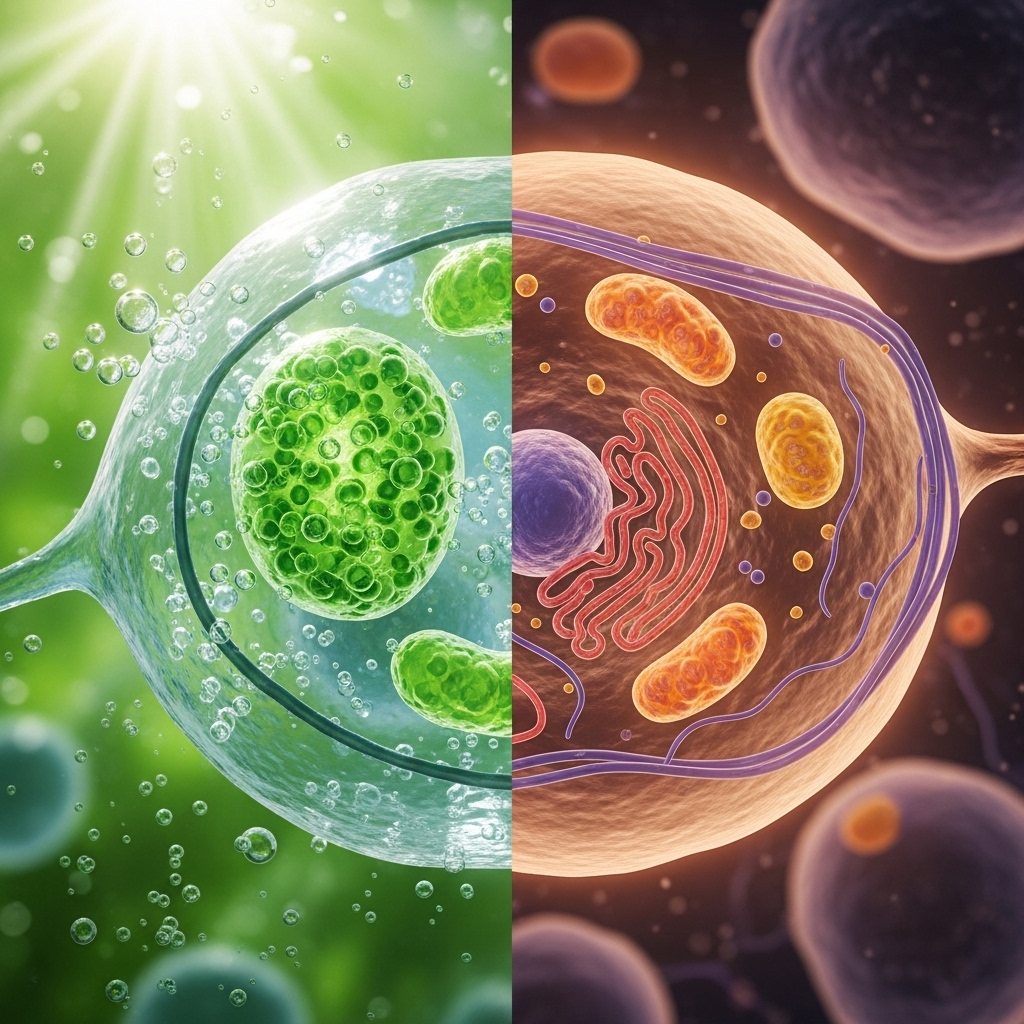
The primary difference between plant cells and animal cells lies in their structure and specific organelles. Plant cells have a rigid cell wall, chloroplasts for photosynthesis, and a large central vacuole, while animal cells possess a flexible cell membrane, mitochondria for energy production, and lysosomes for waste processing. Animal Cell vs Plant Cell: Key Differences
Understanding Cells: The Basics
What are Cells?
Cells are the fundamental building blocks of all living organisms. They are the smallest units of life that can function independently and perform all the necessary processes for survival. I remember learning this in school, and it amazed me how something so tiny could carry out so many vital functions.
Importance of Cells in Living Organisms
The importance of cells can’t be overstated. They serve as the basic units that compose tissues and organs, allowing complex organisms, including plants and animals, to thrive. Without cells, we wouldn’t have the diverse range of life forms we see on Earth. I find it fascinating how each cell type has a unique role, contributing to the overall health and functionality of an organism.
Overview of Plant Cells
Definition and Structure of Plant Cells
Plant cells are a specific type of eukaryotic cell characterized by their unique structures. Unlike animal cells, they have a rigid cell wall made primarily of cellulose, which provides strength and support. I remember being surprised the first time I looked at a plant cell under a microscope; the defined shape and structure were so different from the more amorphous animal cells I had seen! This structure is crucial because it allows plants to stand upright and grow towards the sun.
Key Components of Plant Cells
Cell Wall
The cell wall is one of the most distinctive features of plant cells. This outer layer not only gives the cell its shape but also protects it from physical damage and pathogens. I often think about how tough and resilient plants are, and it’s all thanks to this sturdy structure holding their cells together.
Chloroplasts
Chloroplasts are the powerhouse of plant cells, enabling them to perform photosynthesis. These organelles contain chlorophyll, the pigment that gives plants their green color and absorbs sunlight. I’ve always found it intriguing how plants can convert sunlight into energy, a process that fundamentally supports life on Earth by providing oxygen and food.
Central Vacuole
The central vacuole is another crucial component of plant cells, usually taking up most of the cell’s interior space. It serves multiple purposes, including storing nutrients and waste products, maintaining turgor pressure to keep the plant rigid, and even contributing to cell growth. I’ve seen how when a plant doesn’t get enough water, the vacuoles shrink, causing the plant to wilt—a clear reminder of how essential hydration is for plant health.
Plasmodesmata
Plasmodesmata are tiny channels that connect adjacent plant cells, allowing for communication and the transport of materials between them. I found it fascinating to learn about these connections because they show how plant cells work together as a community, unlike animal cells which are more isolated. This interconnectivity helps plants coordinate responses to environmental changes.
Overview of Animal Cells
Definition and Structure of Animal Cells
Animal cells, also eukaryotic, are typically smaller than plant cells and lack a rigid cell wall. Instead, they have a flexible cell membrane that allows for more varied shapes and movements. I remember comparing images of animal cells to plant cells and being struck by how much more fluid and less defined the animal cells appeared. This flexibility allows for the diverse functions they perform in different animal tissues.
Key Components of Animal Cells
Cell Membrane
The cell membrane is crucial for maintaining the integrity of animal cells. It regulates what enters and exits the cell, helping to maintain homeostasis. I often think of the cell membrane as a protective gate that allows nutrients in while keeping harmful substances out, a vital function for the survival of the cell.
Mitochondria
Mitochondria, often referred to as the “powerhouses” of the cell, are responsible for producing energy through cellular respiration. This process converts nutrients into ATP, the energy currency of the cell. It’s remarkable how these tiny organelles manage to generate the energy needed for all cellular activities—I’ve always been in awe of how life’s processes are so intricately connected to energy production.
Lysosomes
Lysosomes are the waste disposal system of animal cells, containing enzymes that break down waste materials and cellular debris. I think about how without these little organelles, cells would quickly become cluttered, unable to function properly. Their role in recycling materials is essential for cellular health.
Centrioles
Centrioles are cylindrical structures involved in cell division. They help organize the microtubules that separate chromosomes during mitosis. I remember being fascinated by how these tiny structures play such a pivotal role in ensuring that cells divide correctly, highlighting the precision of biological processes.
Key Differences Between Plant and Animal Cells
Cell Structure
Cell Wall vs. Cell Membrane
One of the most noticeable differences is that plant cells have a rigid cell wall, while animal cells only have a flexible cell membrane. This difference affects how each type of cell maintains its shape and responds to environmental stress. I find it interesting how this structural variation significantly impacts the overall function of the two cell types.
Shape and Size Differences
Plant cells tend to be rectangular or box-like due to their rigid walls, while animal cells are often round or irregular because of their flexible membranes. This difference can be fascinating to observe under a microscope, as it reflects the distinct roles each cell type plays in its respective organism.
Organelles
Chloroplasts vs. Mitochondria
Chloroplasts are unique to plant cells and are essential for photosynthesis, while animal cells have mitochondria to generate energy through respiration. This difference highlights the fundamental ways in which plants and animals obtain energy from their environments. Animal Cell vs Plant Cell: What? the Difference? I often think about how this difference shapes our ecosystems, with plants serving as primary producers and animals as consumers.
Vacuoles: Size and Function
Plant cells typically have one large central vacuole, whereas animal cells have smaller vacuoles. The large vacuole in plant cells is critical for maintaining turgor pressure, whereas smaller vacuoles in animal cells are more involved in storage and transport of substances. This functional variation has always intrigued me, as it demonstrates how each cell type adapts to its needs.
Centrioles: Presence in Animal Cells
Centrioles are present in animal cells but absent in most plant cells. They play a vital role in cell division, organizing the microtubules that separate chromosomes. Learning about this distinction made me appreciate how different cellular components can lead to varied reproductive strategies between plant and animal cells.
Functionality
Photosynthesis in Plant Cells
Photosynthesis is a process unique to plant cells, allowing them to convert sunlight into chemical energy. This ability is fundamental for sustaining life on Earth, as it produces oxygen and organic compounds. I find it inspiring how plants harness sunlight, a resource that is abundant and free, to fuel their growth and contribute to the ecosystem.
Respiration in Animal Cells
Animal cells rely on cellular respiration to convert glucose and oxygen into ATP, which fuels their activities. This process is crucial for animal survival, as it provides the energy necessary for movement, growth, and all life processes. It’s interesting to see how both plant and animal cells have adapted their functions to optimize energy use in different ways.
Similarities Between Plant and Animal Cells
Common Organelles
Even with their differences, plant and animal cells share a number of common organelles that perform essential functions. I find it interesting how, despite their unique adaptations, both cell types have managed to evolve similar structures to carry out vital life processes. This similarity highlights the fact that all living organisms share a common ancestry, and it’s a beautiful reminder of the interconnectedness of life.
Nucleus
The nucleus is often referred to as the control center of the cell. It houses the cell’s genetic material, DNA, which is critical for growth, development, and reproduction. I remember being amazed by the idea that the nucleus not only stores genetic information but also regulates gene expression, essentially determining what proteins the cell produces. This is true for both plant and animal cells, making the nucleus a fundamental organelle in all eukaryotic life.
Cytoplasm
Cytoplasm is the jelly-like substance that fills the space between the cell membrane and the nucleus. It contains various organelles and is the site where many cellular processes occur. I often think of it as the bustling city within the cell, where different structures work together to keep everything running smoothly. Both plant and animal cells rely on cytoplasm to facilitate these processes, proving that they have more in common than we might initially think.
Endoplasmic Reticulum
The endoplasmic reticulum (ER) comes in two forms: rough and smooth. The rough ER is studded with ribosomes and is involved in protein synthesis, while the smooth ER is responsible for lipid synthesis and detoxification. I find it fascinating that both types of cells utilize the ER to produce the molecules they need to function properly. It’s like they have different departments working in tandem to meet the cell’s demands.
Golgi Apparatus
The Golgi apparatus acts as the cell’s post office, modifying and packaging proteins and lipids for transport to their final destinations. In both plant and animal cells, the Golgi apparatus is crucial for ensuring that the right substances reach the right places. I’ve often marveled at how this organelle contributes to the overall efficiency of cellular operations, emphasizing the importance of organization at the cellular level.
Cell Functionality
While plant and animal cells have distinct functions, they also share some common functionalities that are vital for their survival. From my experience, it’s enlightening to see how both types of cells manage to perform similar tasks, albeit in different ways.
Protein Synthesis
Protein synthesis is essential for all living organisms, and both plant and animal cells have the machinery to create proteins. This process involves transcription and translation, where the information in DNA is converted into functional proteins. I recall learning about this process and being struck by its complexity; it’s incredible how cells can build proteins that perform a myriad of functions, from structural support to enzymes that drive chemical reactions. The collaboration between ribosomes, the ER, and the Golgi apparatus in this process showcases the intricate design of cellular machinery.
Cell Division
Cell division is a fundamental process for growth, repair, and reproduction in both plant and animal cells. While the mechanisms may differ—animal cells undergo mitosis and cytokinesis, whereas plant cells form a new cell wall during division—they both aim to produce two daughter cells. I remember being fascinated by how these processes ensure that life continues and evolves, reflecting the resilience and adaptability of living organisms. It’s a reminder that, despite our differences, we all share the same fundamental biological processes that keep life going.
Visual Comparison: Plant Cell vs Animal Cell
Diagrams and Illustrations
Visual aids can be incredibly helpful when trying to understand the differences and similarities between plant and animal cells. I’ve found that diagrams often clarify concepts that words alone can struggle to convey. For instance, looking at a labeled diagram comparing the two cell types can highlight the unique features of each while also showing the shared structures. When I first encountered these visuals, it helped me grasp the concepts much more clearly and retain the information better.
Labeling Key Components
Being able to label the key components of both plant and animal cells solidified my understanding of their structures. I recommend taking the time to practice labeling diagrams, as it reinforces the information. From the nucleus and mitochondria to chloroplasts and lysosomes, each organelle has a specific function that contributes to the overall health of the cell. This hands-on approach made my learning experience more engaging and memorable, helping me to appreciate the beauty of cellular biology.
Frequently Asked Questions
What is the primary difference between plant cells and animal cells?
The primary difference lies in their structure and specific organelles. Plant cells have a rigid cell wall, chloroplasts for photosynthesis, and a large central vacuole, while animal cells possess a flexible cell membrane, mitochondria for energy production, and lysosomes for waste processing.
What are cells?
Cells are the fundamental building blocks of all living organisms. They are the smallest units of life that can function independently and perform all the necessary processes for survival.
What are chloroplasts and their function in plant cells?
Chloroplasts are organelles in plant cells that enable them to perform photosynthesis. They contain chlorophyll, the pigment that absorbs sunlight and converts it into energy, supporting life on Earth by providing oxygen and food.
What is the function of the central vacuole in plant cells?
The central vacuole serves multiple purposes, including storing nutrients and waste products, maintaining turgor pressure to keep the plant rigid, and contributing to cell growth.
How do animal cells differ in structure from plant cells?
Animal cells are typically smaller than plant cells and lack a rigid cell wall. Instead, they have a flexible cell membrane that allows for varied shapes and movements.
What role do mitochondria play in animal cells?
Mitochondria are known as the “powerhouses” of the cell, responsible for producing energy through cellular respiration, which converts nutrients into ATP, the energy currency of the cell.
What are lysosomes and their importance in animal cells?
Lysosomes act as the waste disposal system of animal cells, containing enzymes that break down waste materials and cellular debris, which is essential for maintaining cellular health.
What is the significance of plasmodesmata in plant cells?
Plasmodesmata are tiny channels that connect adjacent plant cells, allowing for communication and the transport of materials between them, helping plants coordinate responses to environmental changes.
What is the role of the nucleus in both plant and animal cells?
The nucleus is referred to as the control center of the cell, housing the cell’s genetic material, DNA, which is critical for growth, development, and reproduction.
How do plant and animal cells perform protein synthesis?
Both plant and animal cells have the machinery to create proteins through a process involving transcription and translation, where information in DNA is converted into functional proteins.
Read Interesting article: Animal Cell vs Plant Cell: Differences Explained