
The main differences between plant and animal cells lie in their structure, function, and the organelles they contain. While both types of cells are essential for life, their unique features reflect their different roles in nature. For a deeper understanding, you can read more in our article on What Is the Difference Between Plant and Animal Cells?
Table of Contents
Understanding Cells: The Basic Unit of Life
Definition of Plant Cells
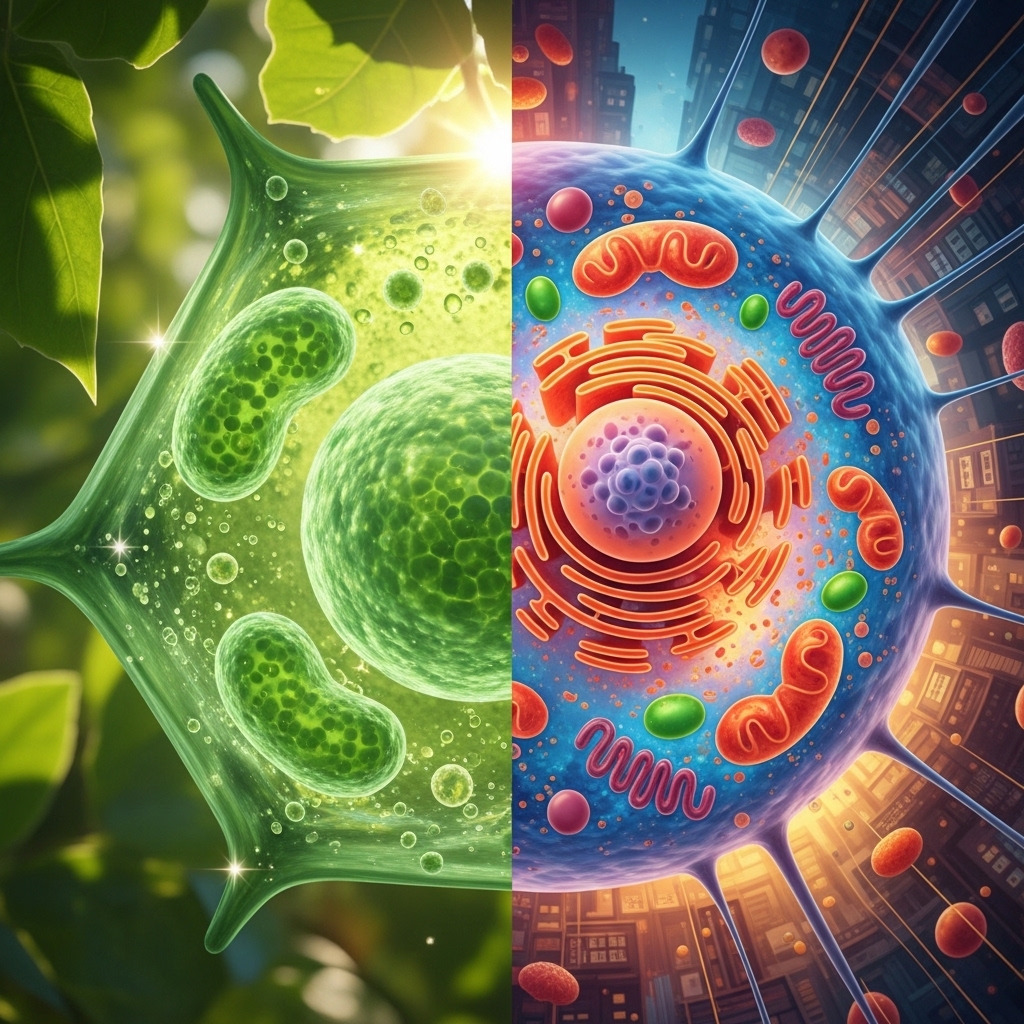
Plant cells are the building blocks of plants, characterized by a rigid cell wall made of cellulose, which provides structural support. They contain unique organelles, such as chloroplasts, that enable plants to perform photosynthesis, converting sunlight into energy. This ability to harness solar energy is one of the key distinctions of plant cells. For a visual comparison, check out our article on Plant Cell vs Animal Cell: Key Differences Explained.
Definition of Animal Cells
Animal cells, on the other hand, lack a cell wall and have a more flexible structure defined by a cell membrane. They are more varied in shape and size compared to plant cells. Unlike plant cells, animal cells do not have chloroplasts, as they obtain energy primarily through the consumption of organic materials. This fundamental difference reflects their respective roles in ecosystems, where plants act as producers, and animals serve as consumers.
The Importance of Cells in Living Organisms
Cells are often referred to as the basic unit of life, and for good reason. They are the smallest units capable of performing all life processes. In my experience, understanding cells has helped me appreciate the complexity of living organisms. Each cell type plays a vital role in the overall functioning of multicellular organisms. For instance, plant cells are crucial for photosynthesis and oxygen production, while animal cells are essential for movement, response to stimuli, and growth. Together, they create the incredible diversity of life we see around us.
Main Differences Between Plant and Animal Cells
Cell Structure
When we look at the structure of plant and animal cells, the differences become evident. Plant cells have a rigid cell wall that supports their structure, while animal cells have a more flexible membrane. This distinction is crucial, as it influences how each cell interacts with its environment and maintains its shape.
Cell Wall in Plant Cells
The cell wall in plant cells is made up of cellulose, a carbohydrate that provides strength and rigidity. I remember studying this in biology class and being amazed by how this structure allows plants to grow tall and withstand various environmental pressures. The cell wall also plays a role in protecting against pathogens and helps to maintain turgor pressure, which is crucial for keeping plants upright.
Cell Membrane in Animal Cells
In contrast, animal cells are enclosed by a flexible cell membrane composed of a lipid bilayer. This membrane allows for greater variation in cell shape, which is essential for the diverse functions of animal cells. I’ve noticed that this flexibility enables animal cells to move and change shape, like when white blood cells chase down bacteria. The cell membrane also regulates what enters and exits the cell, maintaining a healthy environment within.
Shape and Size
Another noteworthy difference between plant and animal cells is their shape and size. Plant cells tend to be more uniform in shape, often appearing rectangular or box-like due to their rigid walls. I find this fascinating, as it gives plants a structured appearance that supports their upright growth.
Typical Shapes of Plant Cells
Plant cells can be quite large compared to animal cells, and their uniformity in shape allows them to pack closely together, forming tissues like leaves and stems. It’s interesting to see how this arrangement maximizes light absorption for photosynthesis. I remember being in awe of how a leaf is essentially a collection of these cells working together harmoniously.
Typical Shapes of Animal Cells
On the flip side, animal cells come in a variety of shapes and sizes, reflecting their specialized functions. For example, muscle cells are long and thin, allowing for contraction, while nerve cells can be quite elongated to send signals over long distances. This diversity in shape is something I’ve always found intriguing, as it highlights how form follows function in biology.
Organelles
Organelles are like tiny organs within a cell, each with specific roles that contribute to the cell’s overall function. The presence or absence of certain organelles is a significant difference between plant and animal cells.
Chloroplasts in Plant Cells
One of the most well-known organelles in plant cells is the chloroplast, responsible for photosynthesis. I often think about how chloroplasts allow plants to convert sunlight into energy, which is then stored in the form of glucose. This process not only sustains the plants but also produces oxygen, which is essential for our survival. It’s like having a built-in solar panel!
Mitochondria in Animal Cells
In contrast, animal cells rely heavily on mitochondria for energy production through cellular respiration. These organelles convert the energy stored in food into ATP, which fuels cellular activities. I’ve learned that without mitochondria, animal cells would struggle to perform their functions, making them vital for our survival.
Vacuoles in Plant vs. Animal Cells
Vacuoles serve different purposes in plant and animal cells as well. Plant cells typically contain a large central vacuole that stores water, nutrients, and waste products. This vacuole also helps maintain turgor pressure, which I find fascinating. In animal cells, vacuoles are smaller and more numerous, primarily involved in storage and transport. Understanding these differences helps illustrate how each cell type is adapted to its unique functions.
Energy Storage
How cells store energy is another key difference. Plants and animals have evolved distinct methods to manage their energy resources.
Starch in Plant Cells
Plants primarily store energy in the form of starch, which is a polysaccharide made up of glucose units. I find it interesting that when we eat foods like potatoes or rice, we’re actually consuming the stored energy of plants. It’s a reminder of the interconnectedness of life and how we rely on plants for sustenance.
Glycogen in Animal Cells
Animal cells, however, store energy as glycogen, which is a more readily accessible form of glucose. This storage form allows animals to respond quickly to energy demands, especially during physical activity. I know from personal experience that when I need a quick burst of energy, my body taps into glycogen reserves. It’s amazing how our bodies are designed for efficiency!
Cell Functions: How Plant and Animal Cells Differ
Photosynthesis in Plant Cells
Photosynthesis is one of the most fascinating processes that occur in plant cells. It’s like a magical transformation where plants take sunlight, carbon dioxide, and water, and turn them into glucose and oxygen. I remember the first time I learned about this process in school; it felt like discovering a superpower that plants have! The chloroplasts are the main players in this show, full of pigments like chlorophyll that capture light energy. This energy is then used to convert carbon dioxide and water into glucose during the light-dependent and light-independent reactions. I’ve always been amazed at how something as simple as sunlight can fuel life on Earth!
Cellular Respiration in Animal Cells
On the flip side, animal cells rely on cellular respiration to produce energy. This process converts glucose, which we obtain from the foods we eat, into ATP (adenosine triphosphate) through a series of metabolic pathways. When I think about all the delicious meals I enjoy, it’s incredible to realize that my body is constantly breaking down those nutrients to power my daily activities. Mitochondria, often called the “powerhouses” of the cell, play a crucial role in this process. They take the energy stored in food and convert it into a form that our cells can use for everything from muscle contractions to nerve impulses. It’s like having tiny energy factories running within us!
Growth and Division
Growth and division are essential functions for both plant and animal cells, but they occur differently due to their unique structures. This aspect has always intrigued me, especially when I think about how living organisms grow and reproduce.
Cell Division in Plant Cells (Cytokinesis)
In plant cells, when it’s time to divide, the process called cytokinesis is quite interesting. Since plant cells have a rigid cell wall, they can’t simply pinch in two like animal cells. Instead, they form a structure called the cell plate in the center of the dividing cell. This cell plate eventually develops into a new cell wall that separates the two daughter cells. I recall watching a time-lapse video of plant cells dividing under a microscope, and it was fascinating to see how they built new structures from scratch. It made me appreciate the intricate processes happening at the microscopic level!
Cell Division in Animal Cells (Cleavage Furrow)
In contrast, animal cells undergo division through a process where the cell membrane pinches inward, forming what’s called a cleavage furrow. This furrow deepens until the cell is split into two new cells. I’ve seen how this process allows for flexibility and quick responses during cell division, especially in rapidly dividing tissues like skin and blood cells. I often think about how this mechanism allows animals to heal and grow, and it emphasizes the efficiency of our cells in managing growth and repair.
Common Misconceptions About Plant and Animal Cells
Do All Cells Have a Nucleus?
A common misconception is that all cells have a nucleus. While it’s true that most eukaryotic cells, including plant and animal cells, contain a nucleus, prokaryotic cells, like bacteria, do not. I remember being surprised to learn that these simpler cells manage to survive and thrive without a nucleus. It opened my eyes to the diversity of life and how different organisms have adapted to their environments.
Are Plant Cells Always Larger Than Animal Cells?
Another misconception is that plant cells are always larger than animal cells. While it’s true that many plant cells can be larger, especially those with large vacuoles, there are plenty of exceptions. For example, some animal cells, like those in muscle tissue, can be quite large. I’ve seen samples under the microscope that really challenge this generalization, highlighting the variety of sizes and shapes among cells.
Do Animal Cells Lack Organelles?
Some people might think that animal cells lack organelles compared to plant cells, but that’s not the case. Animal cells have many organelles, including mitochondria, ribosomes, and the endoplasmic reticulum, all of which perform vital functions. I learned that while plant cells have unique organelles like chloroplasts, animal cells have their own set of essential organelles that allow them to carry out their tasks effectively. It’s a beautiful reminder that both cell types are equipped with what they need to thrive in their respective environments.
Visual Comparison: Plant Cells vs. Animal Cells
Microscopic Images of Plant Cells
When I first laid eyes on images of plant cells under a microscope, I was struck by their vibrant colors and distinct structures. The chloroplasts, often appearing as small green dots, really stood out against the backdrop of the more rigid cell wall. I remember looking at a cross-section of a leaf and seeing tightly packed plant cells, each one working in harmony to capture sunlight. This visual aspect brought the concept of cells to life for me. The clarity of their shapes and the way they formed layers made it easy to appreciate how they contribute to the plant’s overall function. It’s like a well-organized city working together for a common goal—growing and thriving in the sunlight!
Microscopic Images of Animal Cells
Animal cells, on the other hand, presented a different kind of beauty. When I viewed images of animal cells, I was fascinated by how varied their shapes were. They looked almost like a collection of different puzzles. Some were round, while others were elongated, like the nerve cells I mentioned earlier. Seeing these cells in action, like red blood cells flowing through a capillary, made me realize how dynamic and adaptable animal cells are. I can still recall a particular image of a muscle cell contracting, showcasing the intricate details of its fibers. It amazed me how these microscopic entities were constantly working to maintain life, responding to the needs of the body with such precision.
Annotated Diagrams of Both Cell Types
One of the most helpful ways I learned about the differences between plant and animal cells was through annotated diagrams. I found drawings that clearly labeled the different organelles, which were invaluable in understanding their functions. For example, I loved seeing how diagrams highlighted the cell wall in plant cells, showing its thickness compared to the more flexible cell membrane of animal cells. It was like having a cheat sheet that visually summarized everything I learned. The diagrams also made it clear how organelles like chloroplasts and mitochondria serve different purposes in energy production and storage. I believe these visual aids really bridge the gap between theoretical knowledge and practical understanding, making the learning experience much richer.
Applications and Implications of Understanding Cell Differences
Importance in Biology and Medicine
Understanding the differences between plant and animal cells goes beyond just academic curiosity; it has significant implications in biology and medicine. I’ve realized that this knowledge can help us grasp how various diseases affect cells differently. For instance, knowing that plant cells can develop resistance to certain pathogens while animal cells may be more susceptible can inform research in developing treatments. I remember reading about how scientists manipulate certain plant cell characteristics to create resilient crops, which is fascinating! This understanding can lead to breakthroughs in treatments and therapies that target specific cell types effectively.
Role in Biotechnology
Biotechnology is another field where the differences in cell types play a crucial role. I’ve learned that scientists often use plant cells for genetic engineering, taking advantage of their ability to transform and regenerate. For example, creating genetically modified organisms (GMOs) often relies on plant cells because of their sturdy cell walls and ability to undergo transformation. On the flip side, animal cells are frequently used in developing vaccines and therapies. I find it incredible how both cell types contribute to advancements in medicine and agriculture, each bringing their unique strengths to the table.
Impacts on Agriculture and Horticulture
The implications of understanding cell differences also extend to agriculture and horticulture. I’ve seen firsthand how knowledge about plant cells has led to the development of crops that can withstand drought or pests. By understanding the structure and function of plant cells, agricultural scientists can enhance food security and sustainability. I remember hearing about a project that aimed to increase the starch content in potatoes by manipulating their cellular processes—now that’s a tasty application of cell biology! In horticulture, growers can optimize conditions for plant health by recognizing how different cell types respond to environmental factors. This knowledge empowers us to cultivate plants more effectively, ensuring lush gardens and bountiful harvests.
Frequently Asked Questions
What is the main difference between plant and animal cells?
The main differences between plant and animal cells lie in their structure, function, and the organelles they contain. Plant cells have a rigid cell wall and contain chloroplasts for photosynthesis, while animal cells have a flexible membrane and do not have chloroplasts.
What is the role of chloroplasts in plant cells?
Chloroplasts are organelles in plant cells responsible for photosynthesis, which enables plants to convert sunlight into energy stored in glucose. This process also produces oxygen, essential for survival.
How do animal cells obtain energy?
Animal cells obtain energy primarily through cellular respiration, where mitochondria convert glucose obtained from food into ATP, the energy currency of the cell.
What is the function of the cell wall in plant cells?
The cell wall in plant cells, made of cellulose, provides structural support, protects against pathogens, and helps maintain turgor pressure, which is crucial for keeping plants upright.
How do plant and animal cells differ in shape and size?
Plant cells tend to be more uniform in shape, often rectangular due to their rigid walls, while animal cells come in a variety of shapes and sizes, reflecting their specialized functions.
What are the differences in energy storage between plant and animal cells?
Plants primarily store energy in the form of starch, while animal cells store energy as glycogen, which is more readily accessible for quick energy demands.
What is cytokinesis in plant cells?
Cytokinesis in plant cells is the process of cell division where a cell plate forms in the center of the dividing cell, which eventually develops into a new cell wall separating the daughter cells.
What is the significance of understanding the differences between plant and animal cells in biology and medicine?
Understanding the differences between plant and animal cells has significant implications in biology and medicine, as it helps in grasping how diseases affect cells differently and can inform research in developing targeted treatments.
How do the functions of vacuoles differ in plant and animal cells?
Plant cells typically contain a large central vacuole that stores water, nutrients, and waste products while maintaining turgor pressure. In contrast, animal cells have smaller and more numerous vacuoles primarily involved in storage and transport.
What are some common misconceptions about plant and animal cells?
Common misconceptions include the belief that all cells have a nucleus (not true for prokaryotic cells), that plant cells are always larger than animal cells, and that animal cells lack organelles compared to plant cells. In reality, both cell types have unique organelles suited to their functions.
Read Interesting article: Is Algae a Plant? Simple Answer Explained