
To identify a red maple (Acer rubrum), look for three-lobed, serrated leaves with whitish undersides, slender red twigs, and bright red autumn foliage.
Table of Contents
Identifying a red maple (Acer rubrum) can enhance your understanding of North America’s diverse tree species. This guide outlines eight distinct features to help you recognize this tree across its various habitats and seasonal changes.
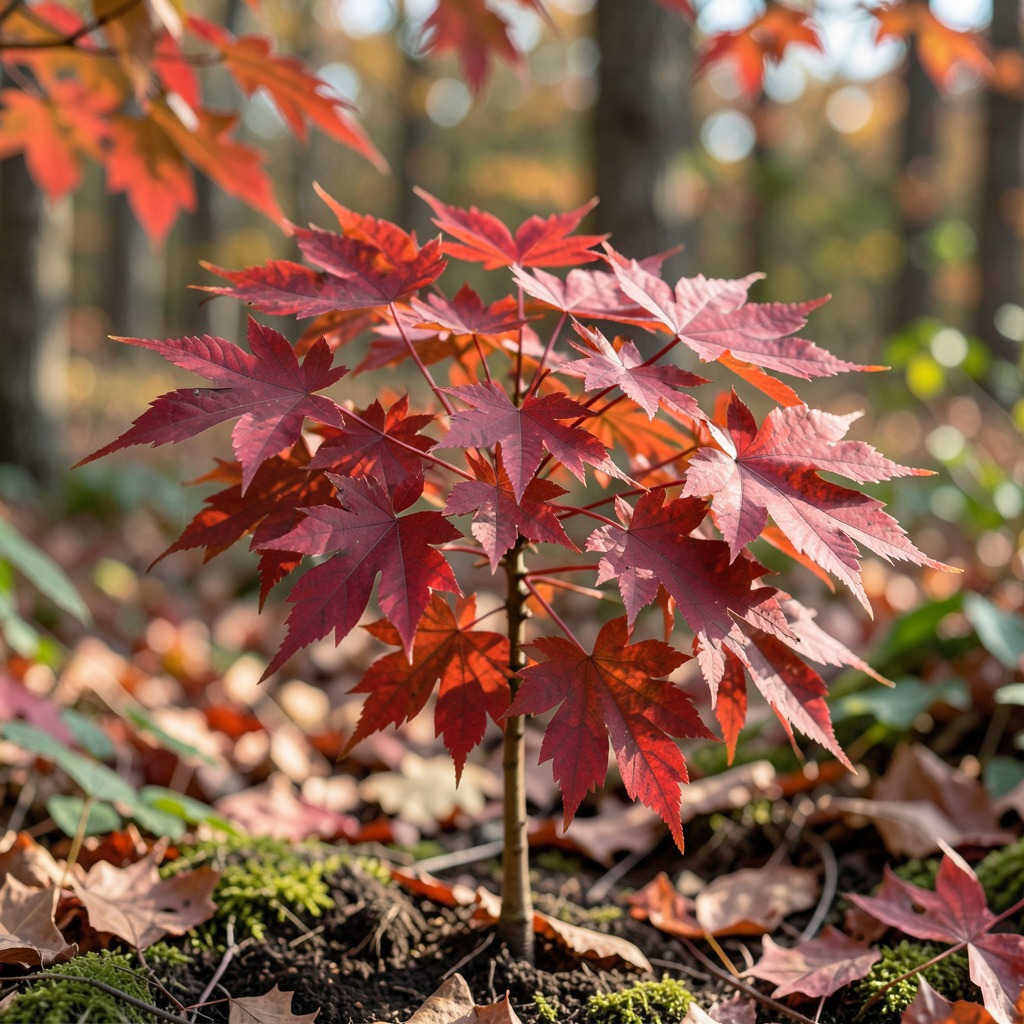
Overview of Red Maple (Acer rubrum)
The red maple, known scientifically as Acer rubrum, is a prominent tree species in North America. It is valued for its ecological role, ornamental beauty, and adaptability across various environments.
Distribution and Habitat
Red maples are widespread, thriving in diverse habitats. They are commonly found in:
- Swamps
- Floodplains
- Upland forests
Their range extends from Newfoundland to Florida, covering much of the eastern United States. This adaptability allows them to occupy both wet and dry soils, making them resilient to environmental changes.
Ecological Importance
Red maples play a crucial role in their ecosystems. They serve as:
- Pollen Sources: Early-spring flowers provide vital resources for bees and other pollinators.
- Habitat: They offer shelter and food for various wildlife species.
Their presence enhances biodiversity, contributing to healthier forest dynamics.
Key Identification Features
When identifying a red maple, focus on these distinctive characteristics:
- Leaves: Palmately lobed with sharp teeth. The upper surface is green, while the underside is lighter.
- Bark: Smooth and gray when young, turning darker and fissured with age.
- Flowers: Bright red clusters appear in early spring before the leaves emerge.
- Samaras: Winged seeds that mature in late spring.
Common Identification Mistakes
Many confuse red maples with sugar maples (Acer saccharum). Key differences include:
- Leaf Edges: Red maple leaves have more pronounced teeth compared to the smooth edges of sugar maple leaves.
- Fall Color: Red maples exhibit brilliant red foliage, while sugar maples typically turn yellow or orange.
Understanding these nuances aids accurate identification.
1. Identifying Leaf Characteristics
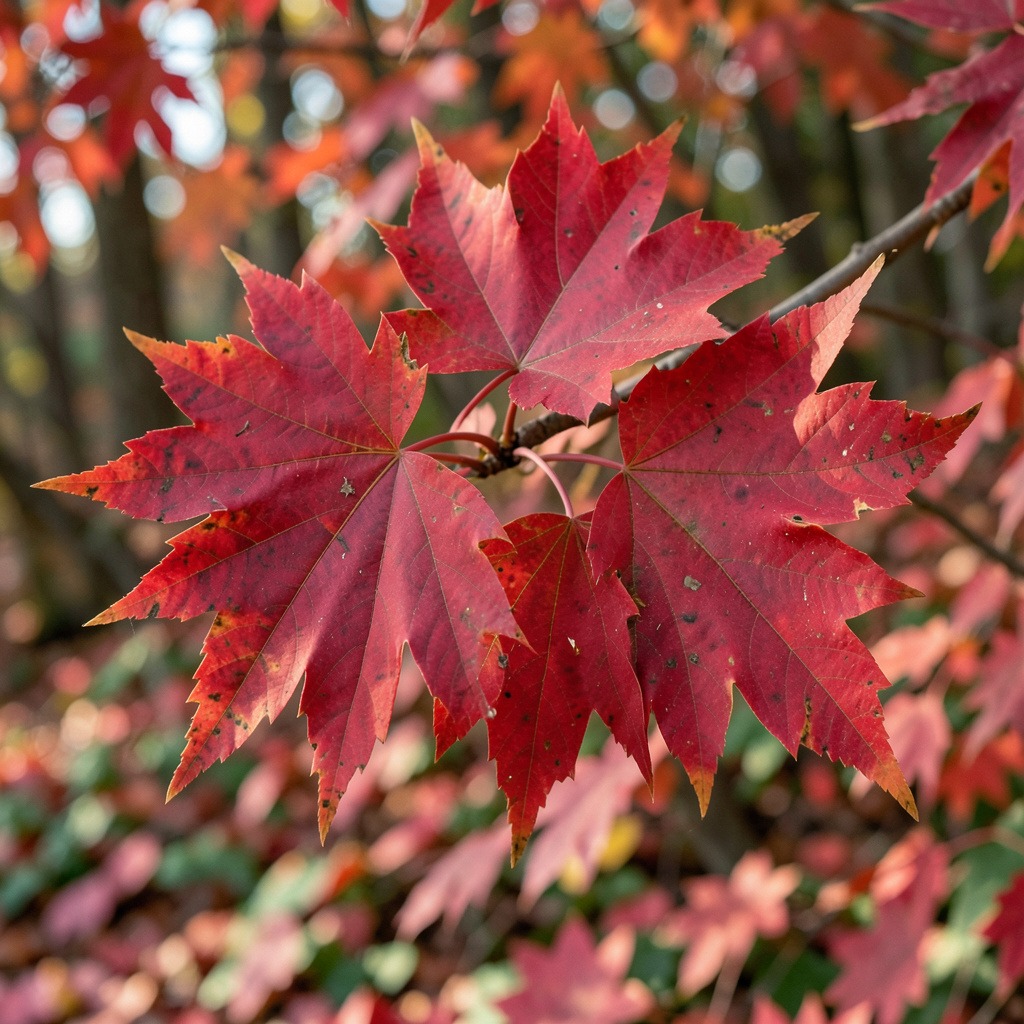
Red maple leaves are distinctive and play a crucial role in identifying this species. Understanding their shape, color, and texture can help differentiate them from similar trees.
Leaf Shape and Lobes
Red maple leaves typically have a palmately lobed shape, resembling an open hand with three to five lobes. The lobes are pointed and serrated, giving the leaf edges a toothed appearance. This contrasts with the smoother edges of sugar maple leaves, which also have a similar lobed structure but with deeper indentations.
- Lobes: Red maples have shallower lobes compared to sugar maples.
- Edges: Look for serrated edges on red maple leaves, while sugar maple leaves are smooth.
- Arrangement: Leaves grow opposite each other on the stem, a characteristic of the maple family.
Leaf Color Through the Seasons
The color of red maple leaves changes significantly throughout the year. In spring, the leaves emerge light green and smooth. As summer approaches, they deepen to a rich green. However, the most striking transformation occurs in autumn, when the leaves turn vibrant red, making red maples easily recognizable in fall landscapes.
- Spring: Light green, smooth texture.
- Summer: Darker green, lush appearance.
- Autumn: Brilliant red, a key identification feature.
Comparison with Sugar Maple Leaves
When distinguishing red maple from sugar maple, focus on the following characteristics:
| Feature | Red Maple | Sugar Maple |
|---|---|---|
| Leaf Edges | Serrated | Smooth |
| Lobe Depth | Shallow | Deep |
| Fall Color | Bright red | Yellow to orange |
| Bark Texture | Thinner, smoother | Thicker, fissured |
Understanding these differences is essential for accurate identification. For instance, if you observe a maple leaf that is serrated and shows red hues in autumn, it is likely a red maple.
2. Bark Texture and Color
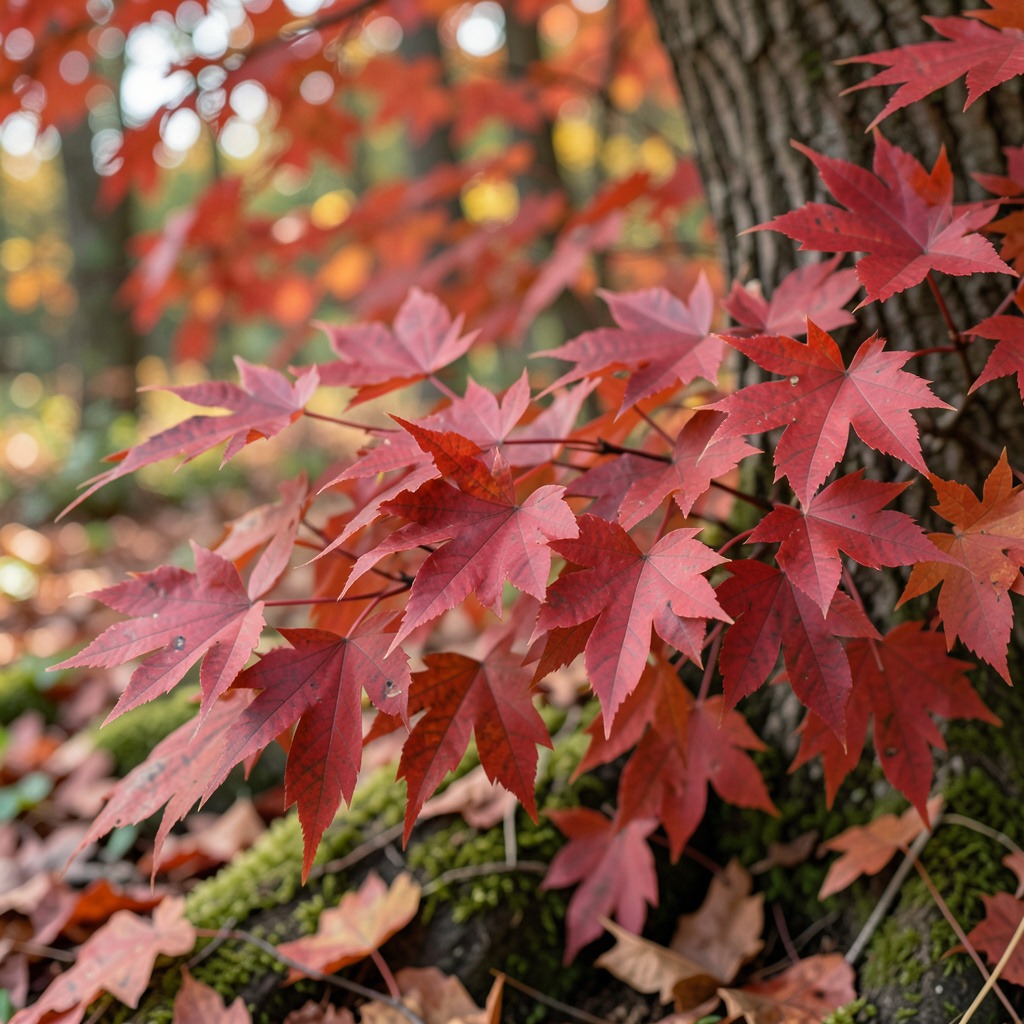
The bark of the red maple (Acer rubrum) varies significantly between young and mature trees. Understanding this variation is crucial for accurate identification.
Young vs. Mature Bark
- Young Bark:
- Smooth and light gray.
- May exhibit a reddish tint, especially on twigs.
- Provides a distinct appearance that can be easily recognized in younger specimens.
- Mature Bark:
- Becomes darker and develops a more rugged texture.
- Features shallow fissures and plates that can peel away.
- Generally appears more brownish-gray compared to younger bark.
Identifying a red maple by its bark requires keen observation. For instance, if you encounter a tree with light gray, smooth bark, it likely indicates a younger red maple. In contrast, a tree with darker, more textured bark suggests maturity.
Bark Characteristics in Different Environments
Bark texture and color can change based on environmental conditions. Here are some factors influencing these characteristics:
- Moisture Levels: Trees in wetter areas may develop thicker, smoother bark due to reduced stress.
- Sun Exposure: Sunlight can cause bark to become thicker and rougher, particularly on exposed sides.
- Soil Quality: Nutrient-rich soils often lead to healthier bark development, resulting in more vibrant coloration.
When assessing bark for identification, consider the tree’s surroundings. A red maple in a dry, sunny location may exhibit a more rugged bark compared to one in a shaded, moist environment.
Keep a checklist in mind when identifying red maple bark:
1. Look for light gray, smooth bark on younger trees.
2. Note darker, fissured bark on mature specimens.
3. Consider environmental factors affecting bark characteristics.
This attention to detail will enhance your identification skills and ensure accurate recognition of the red maple.
3. Flowering Characteristics
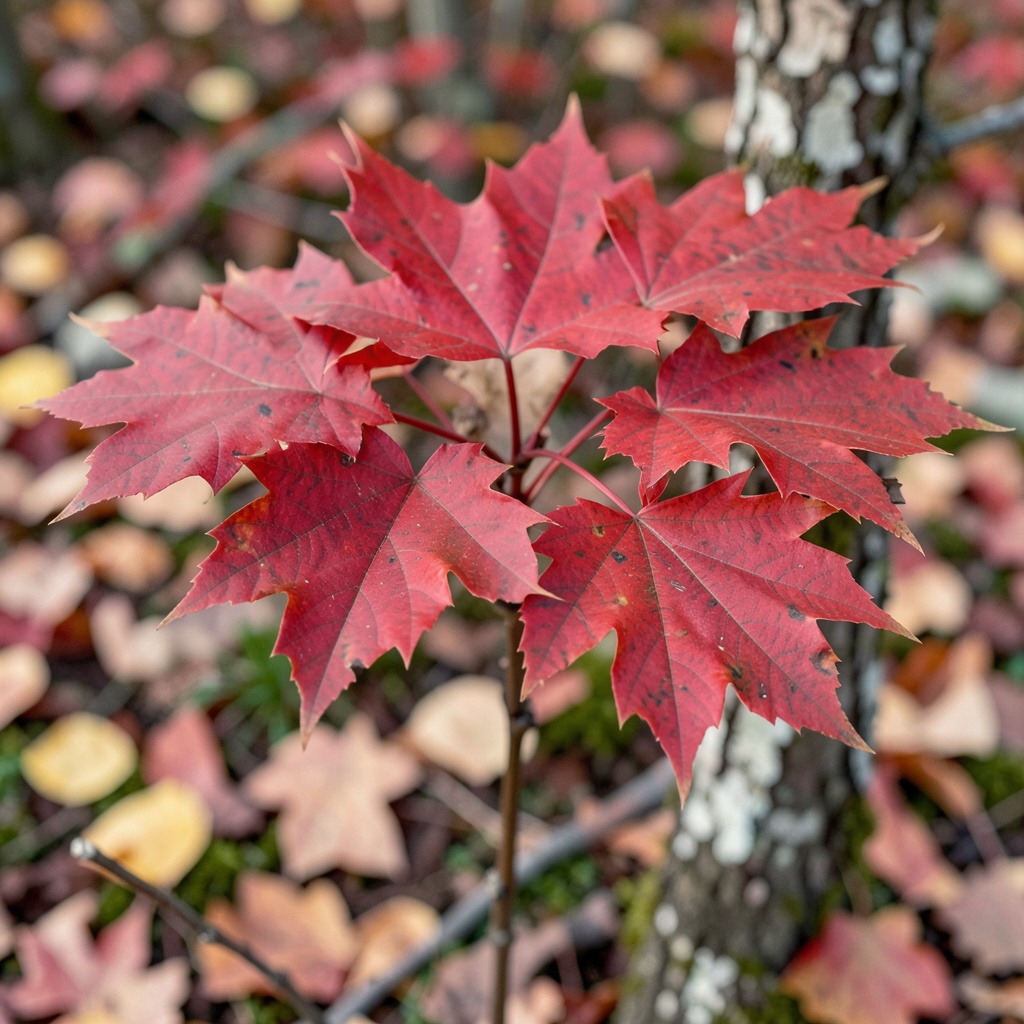
The flowering characteristics of the red maple (Acer rubrum) are essential for accurate identification. These features include the bloom time, structure, and color of the flowers, all of which can serve as key identifiers.
Blooming Season
Red maples typically bloom in early spring, often before the leaves fully emerge. This timing is crucial for identification. The flowers appear in clusters, providing a striking display against the still-bare branches.
- Blooming Period: Late March to early April, depending on the climate.
- Identification Tip: Look for flowers emerging when temperatures begin to rise, usually before most other trees begin to leaf out.
Flower Structure and Color
The flowers of the red maple are distinctive and can be identified by their structure and color.
- Color: The flowers are generally reddish, giving the tree its name.
- Structure: They are small, with a tubular shape, and appear in clusters. Each flower has five petals, which can easily be distinguished from other maple species.
Identification Checklist:
- Look for reddish flowers in early spring.
- Observe the cluster formation of flowers.
- Ensure the flowers appear before leafing to confirm it is a red maple.
Recognizing these flowering characteristics can significantly enhance your ability to identify the red maple accurately in various habitats.
4. Fruit and Seed Characteristics
Red maple samaras, the tree’s unique winged seeds, play a crucial role in its identification. Their appearance and dispersal behavior are key features that distinguish the red maple from other species.
Samara Structure
Red maple samaras have distinct characteristics:
- Shape: They are flat, winged seeds that resemble small helicopters.
- Color: The samaras are typically red, which is a defining feature.
- Size: Each samara measures about 1-2 inches in length.
- Pairing: They grow in pairs, attached at the base, allowing for efficient wind dispersal.
These features make red maple samaras easily recognizable. When spotting them, look for the reddish coloration, especially in the spring before the leaves fully develop.
Dispersal Mechanism
Red maple samaras utilize a natural wind dispersal strategy:
- Timing: Samaras fall in early spring, shortly after blooming.
- Wind Assistance: Their winged structure allows them to be carried away by the wind, facilitating widespread distribution.
- Observation Tip: To effectively spot these samaras in the wild, look for them fluttering down from the tree during breezy days.
Understanding the structure and dispersal of red maple samaras enhances your ability to identify this species accurately, especially in comparison to similar maple trees, such as the sugar maple, which has green samaras.
5. Seasonal Color Changes
The red maple (Acer rubrum) exhibits distinct seasonal changes in its foliage, particularly vivid during autumn. These changes are crucial for accurate identification throughout the year.
Autumn Foliage Colors
In autumn, red maples transform into brilliant shades of red, orange, and yellow. This vibrant display makes them one of the most recognizable trees in North America. The intensity of the autumn colors can vary depending on environmental factors such as soil moisture and temperature.
- Brilliant Red: The most iconic color of the red maple, especially in well-drained soils.
- Vibrant Orange: Common in trees with higher moisture levels.
- Golden Yellow: Occasionally seen in certain specimens.
Seasonal Changes in Leaf Appearance
Throughout the year, the leaves of the red maple change in appearance, providing essential clues for identification.
- Spring: New leaves emerge as bright green with a slightly reddish tint.
- Summer: Leaves mature to a deep green color, often with a glossy finish.
- Autumn: Leaves shift to striking red or orange, with clearly defined lobes and serrated edges.
Seasonal Checklist for Identification
To effectively identify red maples throughout the year, consider the following checklist:
- Spring: Look for reddish buds and new leaves with a greenish-red hue.
- Summer: Observe the deep green leaves with three lobes and whitish undersides.
- Autumn: Identify the fall color—bright red or orange—and note the sharp serrations on leaf edges.
- Winter: Examine the twigs and buds, which remain red, and look for the characteristic gray-brown bark.
This seasonal observation guide enhances your ability to recognize red maples and distinguishes them from similar species, such as the sugar maple.
6. Identifying Red Maple vs. Other Maples
Understanding the key differences between red maple and other maple species, such as sugar maple and silver maple, is essential for accurate identification. Each species has distinct features that can help enthusiasts and experts alike in recognizing them.
Sugar Maple vs. Red Maple
Sugar maple (Acer saccharum) and red maple (Acer rubrum) share some similarities, but they can be differentiated by several characteristics:
| Feature | Red Maple (Acer rubrum) | Sugar Maple (Acer saccharum) |
|---|---|---|
| Leaf Shape | 3-5 lobes with serrated edges | 5 lobes, smoother edges |
| Leaf Color | Green above, silvery-white below | Dark green above, turns vibrant in fall |
| Fall Color | Bright red or orange | Yellow, orange, or red |
| Bark | Pale gray, thinner | Dark gray, thicker |
| Twigs | Reddish color | Brownish color |
Identifying Tips:
- Examine the leaf margins: Red maple’s serrated edges are a clear indicator.
- Observe the leaf undersides: The silvery hue can help distinguish red maple from its counterparts.
Silver Maple vs. Red Maple
Silver maple (Acer saccharinum) also presents a challenge for identification. Key differences include:
| Feature | Red Maple (Acer rubrum) | Silver Maple (Acer saccharinum) |
|---|---|---|
| Leaf Shape | 3-5 lobes with serrated edges | 5 lobes, deeply lobed |
| Leaf Color | Green above, silvery-white below | Green above, silvery-white below |
| Fall Color | Bright red or orange | Yellow to brown |
| Bark | Pale gray | Silvery gray, often shaggy |
| Growth Habit | Tolerates wet conditions, smaller size | Grows taller, often found near water |
Identifying Tips:
- Look for deeply lobed leaves in silver maples, which differ from the shallower lobes of red maples.
- Assess the growth habit: Silver maples typically grow taller and near water sources.
Common Mistakes in Identification
1. Misidentifying Leaf Shape: Pay attention to the lobes and edges. Red maples have serrated edges, while sugar and silver maples often do not.
2. Overlooking Fall Colors: Red maples display vibrant reds and oranges that stand out, whereas sugar and silver maples may exhibit more muted tones.
3. Ignoring Bark Texture: The bark of red maple is generally thinner and paler compared to the thicker, darker bark of sugar maple.
By focusing on these distinguishing features, you can confidently identify red maples and avoid common pitfalls in recognizing similar species.
7. Common Mistakes in Identification
Identifying red maples can be tricky, especially when distinguishing them from similar species. Understanding common mistakes can greatly improve your identification skills.
Misidentifying Other Trees
1. Confusing Leaf Shape: Red maple leaves typically have three to five lobes with serrated edges. In contrast, sugar maples have smoother edges and deeper indentations. Pay close attention to the leaf’s profile.
2. Ignoring Flower Characteristics: Red maples produce small, bright red flowers in early spring. Observing the timing and color of the flowers can be a key indicator. Sugar maples, on the other hand, have yellowish flowers.
3. Overlooking Bark Differences: The bark of red maples is thinner and pale gray compared to the thicker, darker bark of sugar maples. A tactile approach can help confirm identification.
Seasonal Confusion
1. Misinterpreting Fall Colors: Red maples exhibit vibrant red to orange foliage in autumn. This feature is striking. In contrast, sugar maples may display yellows and deep oranges. When identifying in the fall, focus on the intensity of the color.
2. Leaf Color Variation: During the growing season, red maples have light green leaves with a silvery underside. Ensure you check both sides of the leaf for accurate identification.
3. Timing for Identification: Red maples can be identified year-round, but certain features are more prominent in specific seasons. For example, spring flowers and fall colors are excellent indicators.
Quick Identification Checklist
- Leaf Shape: Three to five lobes, serrated edges.
- Flower Color: Bright red in early spring.
- Bark Texture: Thinner and pale gray.
- Fall Color: Vibrant red to orange.
- Leaf Underside: Silvery hue.
By adhering to these guidelines, you can confidently avoid common pitfalls in identifying red maples and enhance your tree recognition skills.
8. Practical Tips for Amateur Botanists
Identifying red maples (Acer rubrum) can be straightforward with the right tools and techniques. Use these practical tips to enhance your observation skills in various environments.
Tools for Identification
Equipping yourself with the right tools can significantly improve your identification accuracy. Consider the following items:
- Field Glasses: Use binoculars to observe flowers and leaves high in the tree canopy.
- Identification Guides: Carry a field guide specific to North American trees for reference.
- Smartphone Apps: Utilize apps like Leafsnap or PlantSnap to identify trees through photos.
- Notebook: Document your observations, including leaf shapes and colors, for future reference.
Community Resources for Maple Identification
Engaging with local and online communities can deepen your understanding of red maples. Here are some valuable resources:
- Forums: Join botanical forums or groups on social media platforms where fellow enthusiasts share identification tips and experiences.
- Local Nature Walks: Participate in guided tree identification walks organized by local botanical gardens or nature centers.
- Citizen Science Projects: Contribute to projects that involve tree mapping and identification. This not only helps you learn but also aids researchers.
Seasonal Observation Guide
Recognizing red maples throughout the year can enhance your skills. Here’s a simple checklist for seasonal identification:
- Spring: Look for bright red flowers before the leaves emerge.
- Summer: Identify the distinctive three to five lobed leaves with serrated edges.
- Autumn: Watch for vibrant red to orange foliage.
- Winter: Note the pale gray bark and reddish twigs.
By following these tips and utilizing available resources, you can confidently identify red maples and enrich your botanical knowledge.
Frequently Asked Questions
These quick answers cover the most common questions about this topic, including key details, practical tips, and common concerns.
How do I identify which type of maple tree I have?
To identify the type of maple tree, start by examining the leaves. Red maples have three to five lobes with serrated edges and a lighter underside. Compare the leaf shape and edge texture with other species like sugar maple, which has smoother edges and deeper lobes. Additionally, consider the bark texture and color, as red maples have thinner, pale gray bark compared to the thicker bark of sugar maples.
What tree is mistaken for a maple tree?
Trees often mistaken for maples include the sweetgum and sycamore. Sweetgums have star-shaped leaves, while sycamores feature large, lobed leaves and distinctive peeling bark. Both can be confused with maples due to their similar habitats and leaf shapes. Always check the leaf edges and bark characteristics for accurate identification.
What is the difference between a red maple tree and a regular maple tree?
The term “regular maple tree” can refer to various species, but commonly it refers to sugar maple. Key differences include leaf shape, fall color, and bark texture. Red maples have serrated leaf edges and display vibrant red or orange foliage in autumn, while sugar maples typically turn yellow or orange. Additionally, red maples have thinner, smoother bark compared to the thicker, fissured bark of sugar maples.
What are the downsides of red maple trees?
Red maples can have some downsides. They are known for their rapid growth, which can lead to weaker wood that is more susceptible to damage from storms. Additionally, their extensive root systems can interfere with nearby plants and structures. In some areas, red maples may also be prone to pests like aphids and diseases such as verticillium wilt.
How fast do red maple trees grow?
Red maples are considered fast-growing trees, typically adding 1 to 2 feet in height each year under optimal conditions. They can reach a mature height of 40 to 60 feet. This rapid growth makes them popular for landscaping, but it’s essential to consider their space requirements and potential for root spread.
Can red maple trees be grown in pots?
While it is possible to grow red maple trees in pots, it requires careful management. Choose a large enough container to accommodate their root system and ensure proper drainage. Regular watering and fertilization are crucial, as potted trees may dry out quickly. However, keep in mind that their growth may be stunted compared to those planted in the ground.
How can I tell if my maple tree is a red maple?
To determine if your maple tree is a red maple, examine its leaves, bark, and flowers. Look for three to five lobed leaves with serrated edges and a lighter underside. The bark should be smooth and gray on younger trees, becoming darker and fissured with age. In early spring, check for bright red flowers, which bloom before the leaves emerge, as this is a distinctive feature of red maples.