
Sampaguita, the national flower of the Philippines, holds a special place in both cultural and religious practices. Its delicate beauty and sweet fragrance have made it a cherished symbol of devotion and purity. For those interested in its cultivation, you can explore more about the plant in our article on Sampaguita Plant: Care, Uses & Botanical Profile.
Overview of Sampaguita
What is Sampaguita?
Sampaguita, scientifically known as Jasmine sambac, is a small, white flower renowned for its enchanting scent. Growing on a perennial shrub, this flower blooms year-round in warm climates. I remember the first time I encountered Sampaguita; its fragrance lingered in the air, evoking memories of my childhood in the Philippines. The small, star-shaped blossoms are often used in garlands and wreaths, symbolizing love and purity. The name “Sampaguita” is derived from the Spanish word “sampaguita” or “sampaguit,” which means “to be bound” or “to be tied,” reflecting its cultural significance in various traditions, especially in religious contexts. If you’re curious about its meaning, you can read more about it in our article on Sampaguita Meaning & Symbolism: Purity, Love & Devotion.
Botanical Characteristics of Sampaguita
Sampaguita is a hardy plant that thrives in tropical climates. It typically reaches about 1 to 3 feet in height, with dark green, glossy leaves that provide a beautiful contrast to the pure white flowers. I’ve often noticed how the flowers open in the morning and close at night, a cycle that seems to mirror our own devotion and prayers. The plant prefers well-drained soil and plenty of sunlight, making it relatively easy to cultivate. In my experience, growing Sampaguita in my garden has been a rewarding endeavor; it requires minimal care yet rewards me with heavenly scents and beautiful blooms. You can learn more about its characteristics in our article on Sampaguita in English: Name, Origin & Translation.
Cultural Significance of Sampaguita in the Philippines
The cultural significance of Sampaguita in the Philippines cannot be overstated. It is often associated with various rituals, celebrations, and even daily offerings at home altars. I remember my grandmother would create beautiful garlands from Sampaguita to adorn our home, especially during special occasions. This flower embodies the Filipino spirit of hospitality and love, making it a popular choice for weddings, festivals, and religious events. Sampaguita is also used in traditional Filipino practices, such as in the preparation of amulets and offerings for protection and blessings.
Sampaguita in Religious Context
Role of Sampaguita in Catholicism
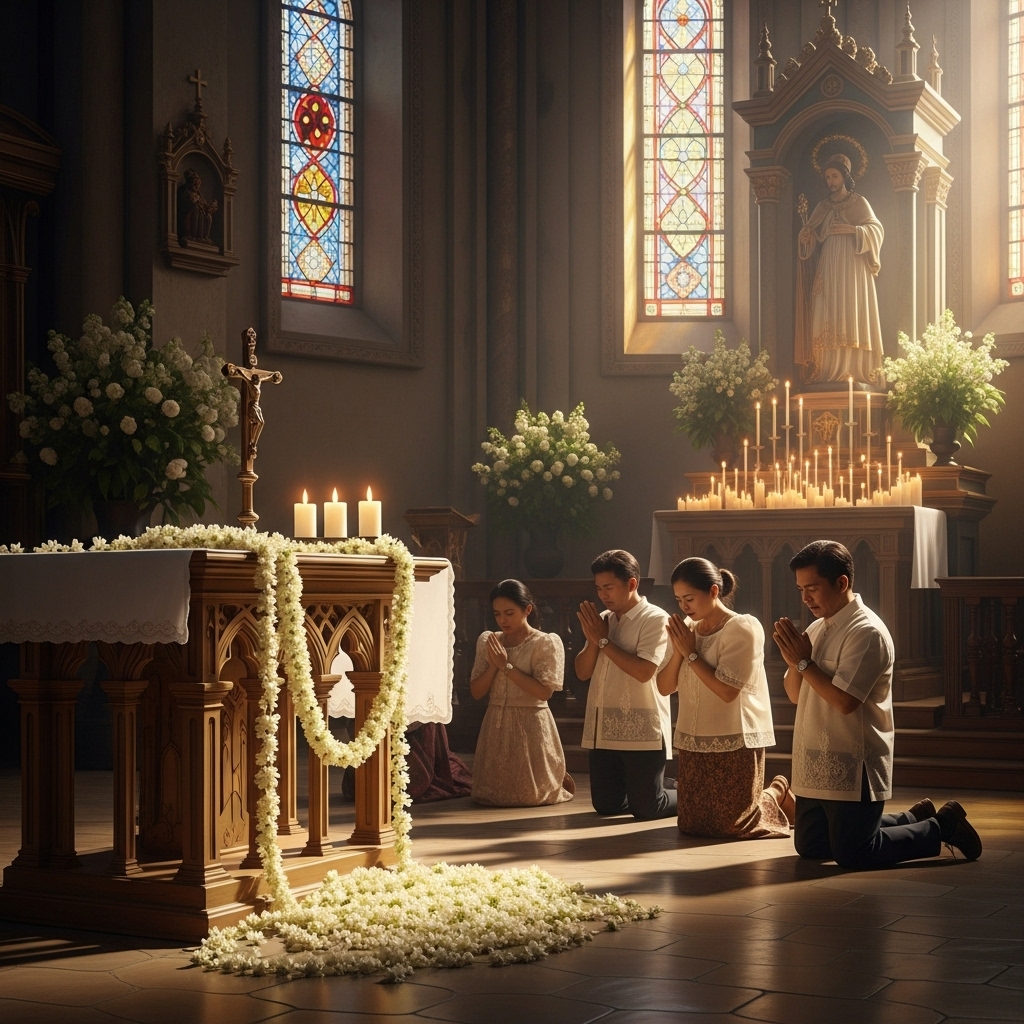
As a predominantly Catholic nation, the Philippines incorporates Sampaguita into various religious practices. In church settings, it is common to see Sampaguita offered during Mass or at shrines dedicated to the Virgin Mary. I’ve witnessed firsthand how parishioners bring garlands of Sampaguita to the church, placing them at the feet of statues or altars. This act of offering symbolizes their devotion and prayers, making the flower an integral part of worship. I believe that the act of giving Sampaguita is more than just a tradition; it’s a heartfelt expression of faith and reverence.
Sampaguita as a Symbol of Purity and Devotion
In the context of Catholicism, Sampaguita is often seen as a symbol of purity and devotion, complementing the deep faith of Filipino Catholics. Its pristine white color represents innocence, while its sweet scent evokes feelings of peace and serenity. I often find solace in the fragrance of Sampaguita during my own moments of prayer. The flower’s delicate nature reminds us of the fragility of life and the importance of nurturing our spiritual relationships, both with God and with others.
Use of Sampaguita in Religious Ceremonies
Sampaguita plays a vital role in various religious ceremonies, from baptisms to funerals. I recall attending a friend’s wedding where Sampaguita garlands adorned the altar, creating a beautiful atmosphere filled with love and devotion. During the Feast of the Assumption, churches often see an influx of Sampaguita offerings, as devotees honor the Virgin Mary. These ceremonies not only highlight the flower’s beauty but also its significance as a medium through which the faithful express their hopes and prayers. From my experience, each petal carries the weight of a prayer and a promise, making it a powerful addition to any religious gathering.
Traditions Surrounding Sampaguita in Church
Common Practices Involving Sampaguita
Throughout the Philippines, Sampaguita is deeply woven into the fabric of church traditions. One of the practices I find most touching is the offering of Sampaguita garlands during liturgical celebrations. I remember seeing parishioners come together, their hands full of these fragrant flowers as they lined up to place them at the foot of altars. It’s a communal act that not only beautifies the church but also fosters a sense of togetherness among the congregation. I’ve often participated in these offerings, and it’s a moment filled with reverence and gratitude, as each flower represents a prayer or wish brought forth to God.
Feast Days and Special Occasions
Feast days in the Catholic calendar are particularly vibrant with the presence of Sampaguita. For example, during the Feast of the Immaculate Conception, I’ve seen churches adorned with Sampaguita, transforming them into fragrant sanctuaries. It’s a sight that stays with you—the beautiful floral arrangements alongside candles and religious icons create an atmosphere of solemnity and joy. I recall one such feast when our parish organized a procession, and the air was filled with the sweet scent of Sampaguita. It was an experience that truly highlighted the flower’s role in celebrating faith and community.
Forms of Offerings and Their Meanings
The offerings of Sampaguita come in various forms, each carrying its own significance. Garlands are often chosen for their beauty and the way they symbolize interconnectedness within the community. I learned that while offering a garland, parishioners often pray for unity and harmony. Single flowers, on the other hand, are more personal; they can represent individual prayers or intentions. I’ve noticed that when someone offers a single Sampaguita at the church, it’s often accompanied by a moment of quiet reflection, making it a deeply personal experience. Each form of offering, whether a garland or a single bloom, serves as a vessel for devotion, connecting us to something greater than ourselves.
Types of Offerings Made with Sampaguita
Wreaths and Garlands
Wreaths and garlands are perhaps the most recognizable forms of offering involving Sampaguita. I’ve always admired the way these floral creations add beauty and fragrance to any religious occasion. During weddings, it’s common for the bride and groom to wear Sampaguita garlands, symbolizing their love and commitment. I remember attending a wedding where the couple walked down the aisle wearing their garlands, the sweet aroma filling the church and enhancing the emotional atmosphere. The act of exchanging these garlands has a dual purpose; not only do they beautify the ceremony, but they also serve as a reminder of the couple’s vows and shared faith.
Single Flower Offerings
Single Sampaguita flowers hold a special charm of their own. I often witness individuals, particularly children, offering a single flower to a statue of the Virgin Mary or another saint. This simple act of devotion is profound; it’s a way to express gratitude or seek guidance. I remember when my younger cousin offered a single Sampaguita at a church service, and the reverence on her face was heartwarming. It reminded me that even the smallest offerings can carry immense significance. The delicacy of the flower mirrors the purity of intentions behind these gestures, making them uniquely powerful.
Use in Altars and Shrines
In many Filipino homes, Sampaguita finds its way into altars and shrines, enhancing the spiritual ambiance. I’ve seen families create beautiful displays with Sampaguita alongside candles, images of saints, and other offerings. It’s a common practice to refresh these offerings regularly, which reflects a commitment to maintaining their spiritual space. I think this habit fosters a deeper connection to one’s faith. When I visit my relatives, I often help refresh the flowers on their altars, and it brings me a sense of peace knowing that we are honoring our beliefs together. Each flower placed is a reminder of the love and reverence we have for our faith and the divine.
Religious Use of Sampaguita
Sampaguita in Prayers and Devotions
Sampaguita is not just a pretty flower; it often plays a significant role in prayers and personal devotions. I’ve experienced moments where I would hold a Sampaguita flower while praying, and it added a layer of connection to my spiritual practice. The fragrance seems to elevate the atmosphere, creating a sense of calm and focus. Many people use Sampaguita as a focal point during their prayers, a tangible reminder of their faith and intentions. I believe that there’s something truly special about intertwining nature with spirituality, and Sampaguita provides that link in such a beautiful way.
Significance During Mass and Liturgical Services
During Mass and other liturgical services, Sampaguita often graces the altar, enhancing the sacredness of the occasion. I’ve been part of services where the altar was decorated with lush arrangements of Sampaguita, and it brought a sense of tranquility to the entire experience. The flower’s presence during these moments serves as a symbol of purity and devotion, reminding the congregation of the importance of their faith. It’s amazing how something as simple as a flower can elevate the spiritual experience and create a more profound connection to the divine.
Connection to Marian Devotion
The connection between Sampaguita and Marian devotion is particularly noteworthy. I’ve often seen Sampaguita offered at shrines dedicated to the Virgin Mary, especially during special feast days. The act of placing these flowers at her feet is a gesture of love and reverence. I remember participating in a Marian procession where we carried Sampaguita garlands, singing hymns dedicated to her. It was a beautiful expression of our devotion, and the collective offering of these flowers created an atmosphere filled with grace and spirituality. This connection to Mary highlights how Sampaguita transcends mere decoration; it becomes a medium through which we express our deepest feelings and faith.
Regional Variations and Practices
How Different Regions in the Philippines Use Sampaguita
As I traveled across the Philippines, I discovered that the use of Sampaguita varies significantly from region to region, each adding its own unique touch to this beloved flower. For instance, in the Visayas, I noticed that Sampaguita is frequently used during the Sinulog Festival, where vibrant floral floats are paraded in honor of the Santo Niño. The garlands of Sampaguita, woven with other local flowers, create an aromatic display that captivates both locals and tourists alike. I found it heartwarming to see how the fragrance of Sampaguita mingles with the sounds of celebration, embodying the spirit of joy and devotion.
In Mindanao, the tradition takes on a different form. Sampaguita is often incorporated into the Maranao culture, especially during weddings and other significant events, where it’s believed to bring blessings and prosperity. I remember attending a wedding where Sampaguita garlands were intricately designed, showcasing the artistry of the local community. The emphasis on craftsmanship in these floral arrangements added a layer of cultural pride that made the celebration even more meaningful.
Even within Luzon, there are regional differences. In places like Pampanga, Sampaguita is often used in the preparation of traditional delicacies and during the Feast of the Black Nazarene. I recall being part of a procession where devotees carried Sampaguita, and the sweet scent added to the solemnity of the event. It seems that no matter where I went, Sampaguita served as a bridge, connecting people through shared beliefs and practices.
Influence of Local Customs on Sampaguita Traditions
Local customs and traditions play a significant role in shaping how Sampaguita is appreciated and utilized. In the northern regions, for example, I noticed that Sampaguita is often included in offerings during the harvest season as a way to give thanks for a bountiful crop. It’s fascinating to see how this flower transcends its beauty, becoming an integral part of agricultural rituals. I remember visiting a small farming community where Sampaguita was used not just for prayers but also to bless the fields, symbolizing hope and gratitude.
In contrast, urban areas like Manila have adapted the traditional use of Sampaguita to fit a fast-paced lifestyle. I’ve seen vendors selling Sampaguita flowers in small bouquets on street corners, providing a quick yet meaningful way for busy individuals to connect with their faith. It’s a reminder that even in the hustle and bustle of city life, the essence of Sampaguita and its spiritual significance remain alive.
The interplay of local customs and the significance of Sampaguita creates a rich tapestry of traditions. For me, it’s a beautiful example of how culture can shape our relationship with nature and spirituality. Each region adds its own flavor to the use of this flower, contributing to the collective identity of the Filipino people.
Caring for Sampaguita in Religious Settings
Best Practices for Maintaining Freshness
Caring for Sampaguita is essential, especially when used in religious settings where they symbolize love and devotion. I’ve learned that keeping these delicate flowers fresh requires a bit of attention. First, it’s crucial to trim the stems at an angle before placing them in water. This simple act allows for better water absorption, ensuring the flowers stay vibrant for longer. I remember the first time I arranged Sampaguita for an altar display; I underestimated how quickly they could wilt. Since then, I always make it a point to refresh the water daily and remove any wilting petals, keeping the arrangements looking their best.
Another tip I’ve found helpful is to keep Sampaguita away from direct sunlight, as too much heat can cause them to fade quickly. Instead, placing them in a cooler part of the church or home altar can help prolong their beauty. I often find joy in tending to these flowers, knowing that my efforts contribute to creating a serene and inviting atmosphere for worship.
Seasonal Availability and Sourcing
Seasonal availability can significantly impact the sourcing of Sampaguita. I’ve noticed that during the peak blooming season, which is typically from late spring to early summer, Sampaguita is abundant and relatively inexpensive. This is when I stock up on them for various religious events and personal devotions. However, during the off-season, it can be a challenge to find fresh flowers. I’ve learned to connect with local growers or markets that specialize in Sampaguita to ensure I have access to quality blooms year-round.
It’s heartening to see how communities come together to support local farmers and vendors. I remember visiting a market where Sampaguita was sold in colorful bundles, and the vendors shared stories about the flowers’ significance. This personal touch made the purchase feel even more meaningful, reminding me that Sampaguita is not just a flower; it’s a part of our culture and spirituality. Being mindful of sourcing not only helps us maintain freshness but also fosters a deeper appreciation for the traditions it represents.
Modern Interpretations and Adaptations
Contemporary Uses of Sampaguita in Churches
As I reflect on the evolving role of Sampaguita in contemporary church practices, I can’t help but notice how this flower continues to adapt and thrive. In many parishes, Sampaguita is incorporated into modern liturgical events, blending traditional customs with contemporary expressions of faith. I’ve seen churches using Sampaguita not just for offerings but also in liturgical decorations that enhance the overall worship experience. For instance, during special services or community gatherings, Sampaguita arrangements are often used alongside modern floral designs, creating a bridge between the past and present.
One of my favorite memories involves a youth group from my church organizing a special event themed around Sampaguita. They crafted beautiful installations using the flowers, pairing them with art and music that spoke to our generation. This fusion of tradition and modernity not only engaged younger parishioners but also highlighted the enduring significance of Sampaguita in our spiritual lives. It’s a reminder that while traditions are deeply rooted, they can still evolve to resonate with new generations.
Impact of Urbanization on Sampaguita Traditions
Urbanization has undoubtedly influenced how Sampaguita is perceived and used in religious settings. As cities grow and lifestyles become busier, I’ve noticed that many individuals seek quick ways to maintain their spiritual practices. In Manila, for instance, vendors sell Sampaguita in easily accessible locations, allowing city dwellers to incorporate these flowers into their daily routines. I remember rushing to buy a bundle of Sampaguita before a church service, appreciating how something so traditional can fit seamlessly into a modern, fast-paced life.
This accessibility has also led to an increase in the symbolic use of Sampaguita. More people are now using them in personal devotions at home, creating small altars adorned with these flowers to maintain a sense of spirituality amidst their busy lives. I think it’s fascinating how, even in a rapidly changing world, Sampaguita remains a constant, connecting us back to our roots and traditions.
Final Thoughts
Looking back at my experiences with Sampaguita, I feel a deep sense of gratitude for this beautiful flower and all it represents. From its enchanting fragrance to its role in religious practices, Sampaguita has woven itself into the very fabric of Filipino culture and spirituality. I appreciate how it serves as a reminder of love, devotion, and community, whether in joyous celebrations or solemn moments of reflection. I believe that as we continue to adapt and modernize our practices, the essence of Sampaguita will remain a cherished symbol of our faith and identity. It’s a flower that not only holds memories of the past but also promises a vibrant future, bridging generations through shared beliefs and traditions.
Frequently Asked Questions
What is Sampaguita?
Sampaguita, scientifically known as Jasmine sambac, is a small, white flower renowned for its enchanting scent. It blooms year-round on a perennial shrub in warm climates and is often used in garlands and wreaths, symbolizing love and purity.
What are the botanical characteristics of Sampaguita?
Sampaguita is a hardy plant that typically reaches about 1 to 3 feet in height, featuring dark green, glossy leaves that contrast beautifully with its pure white flowers. It thrives in tropical climates and prefers well-drained soil and plenty of sunlight.
What is the cultural significance of Sampaguita in the Philippines?
Sampaguita holds immense cultural significance in the Philippines, often associated with rituals, celebrations, and daily offerings at home altars. It embodies the Filipino spirit of hospitality and love, making it a popular choice for weddings, festivals, and religious events.
How is Sampaguita used in Catholic religious practices?
In Catholicism, Sampaguita is offered during Mass and at shrines dedicated to the Virgin Mary. It symbolizes devotion and prayers, making it an integral part of worship and a heartfelt expression of faith.
What are some common practices involving Sampaguita in church traditions?
Common practices include offering Sampaguita garlands during liturgical celebrations, where parishioners come together to beautify the church and express reverence. These offerings often occur during feast days, enhancing the atmosphere of solemnity and joy.
What types of offerings are made with Sampaguita?
Wreaths and garlands are popular forms of offering, often used in weddings and religious ceremonies. Single flower offerings are also significant, representing personal prayers or intentions, especially when offered to statues of saints.
How is Sampaguita cared for in religious settings?
To maintain the freshness of Sampaguita, it’s important to trim the stems at an angle before placing them in water and to refresh the water daily. They should also be kept away from direct sunlight to prolong their beauty.
How does urbanization affect the use of Sampaguita?
Urbanization has made Sampaguita more accessible, with vendors selling the flowers in busy areas. This allows individuals to incorporate Sampaguita into their daily routines and maintain their spiritual practices even amidst a fast-paced lifestyle.
What regional variations exist in the use of Sampaguita across the Philippines?
Regional variations in the use of Sampaguita include its incorporation into local festivals like the Sinulog in the Visayas, wedding customs in Mindanao, and even its role in traditional delicacies in Pampanga, showcasing the flower’s cultural significance across different areas.
What modern interpretations of Sampaguita can be seen in churches today?
Modern interpretations of Sampaguita in churches include its incorporation into contemporary liturgical events and decorations. Youth groups have also engaged with the flower through creative installations, emphasizing the blend of tradition and modern expressions of faith.