
Sugar maples can be identified by their distinct five-lobed leaves with smooth edges, gray furrowed bark, reddish-brown twigs, and paired winged seeds known as samaras, particularly during fall when they display vibrant colors.
Table of Contents
Identifying sugar maples (Acer saccharum) is essential for nature enthusiasts and those interested in maple syrup production. This guide highlights the four key features that distinguish sugar maples from other tree species and enhances your identification skills.
Key Identification Features of Sugar Maple
Identifying sugar maples (Acer saccharum) relies on specific characteristics. Key features include the distinct leaf shape, bark texture, twig color, and seasonal variations. Recognizing these traits ensures accurate identification throughout the year.
Distinctive Leaves: Five Lobes and Smooth Edges
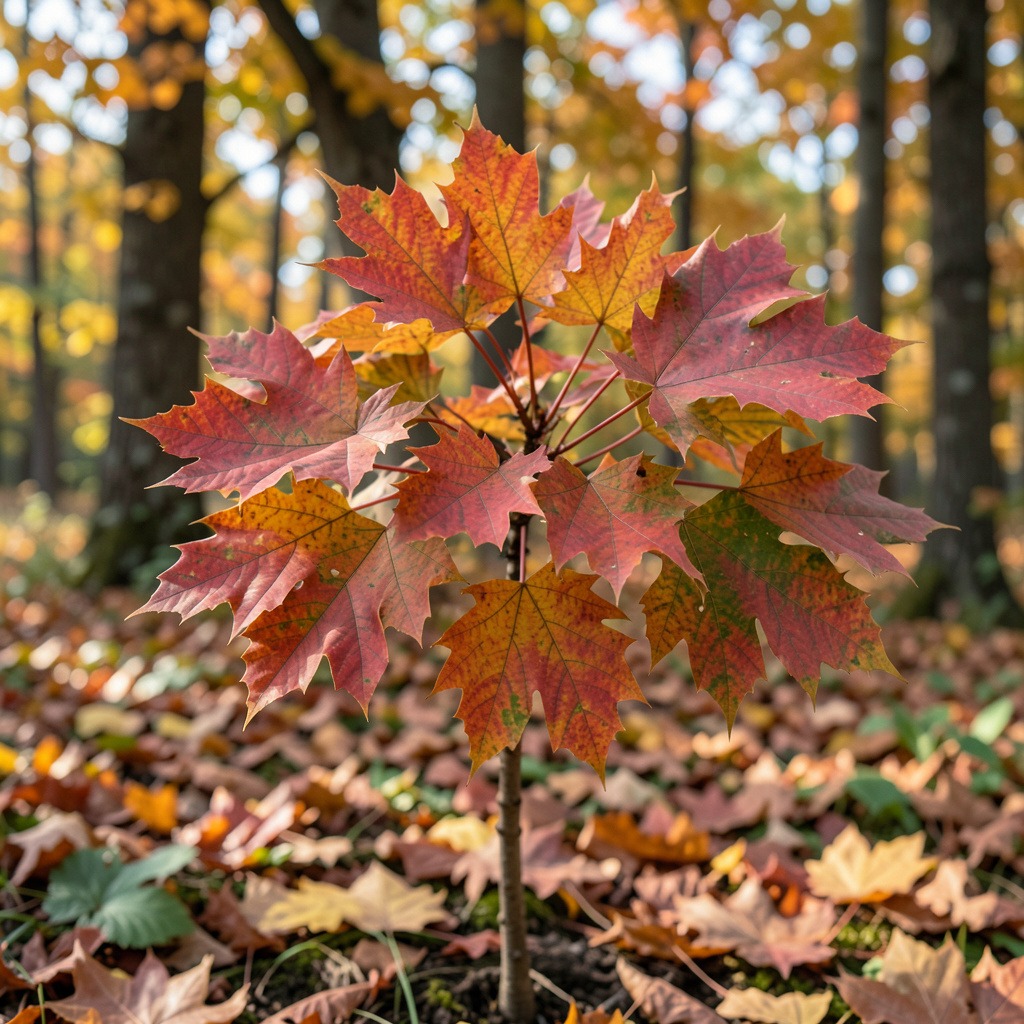
Sugar maple leaves stand out due to their simple, opposite arrangement and five lobes. The lobes are separated by smooth, U-shaped sinuses, unlike the V-shaped sinuses of red maple leaves. Each leaf measures 3 to 6 inches long and has a dark green upper surface with a paler, slightly hairy underside.
- Key Leaf Features:
- Five lobes with smooth edges
- Dark green above, lighter below
- Clear, milky sap exudes from broken petioles
In autumn, the sugar maple leaves transform into a vibrant display of yellow, orange, and red hues, further aiding in identification.
Bark Characteristics: Gray and Furrowed
The bark of the sugar maple evolves as the tree matures. Young trees feature smooth, gray bark, similar to American Beech. As it ages, the bark develops thick, platy ridges and deep furrows.
- Key Bark Features:
- Young bark: smooth and gray
- Mature bark: thick, platy strips with furrows
- Old bark: dark gray to brown with shaggy texture
This bark pattern is essential for distinguishing sugar maple from other species, such as red and silver maples.
Reddish-Brown Twigs and Buds
Twigs of sugar maple are slender and smooth, typically reddish-brown to gray-brown. The buds are pointed, arranged oppositely on the twigs, and covered in tiny brown scales.
- Key Twig and Bud Features:
- Twigs: slender, smooth, reddish-brown
- Buds: sharply pointed, larger terminal buds
- Leaf scars: small and opposite
These characteristics remain visible even in winter, making identification possible year-round.
Visual Comparison for Accurate Identification
To enhance your identification skills, consider using visual aids. A visual comparison chart of sugar maple leaves alongside those of red and silver maples can help clarify distinctions.
For a comprehensive guide, consider the Sugar Maple Identification Field Guide to assist in recognizing these features accurately. Check Price on Amazon.
Comparing Sugar Maples with Other Maple Species
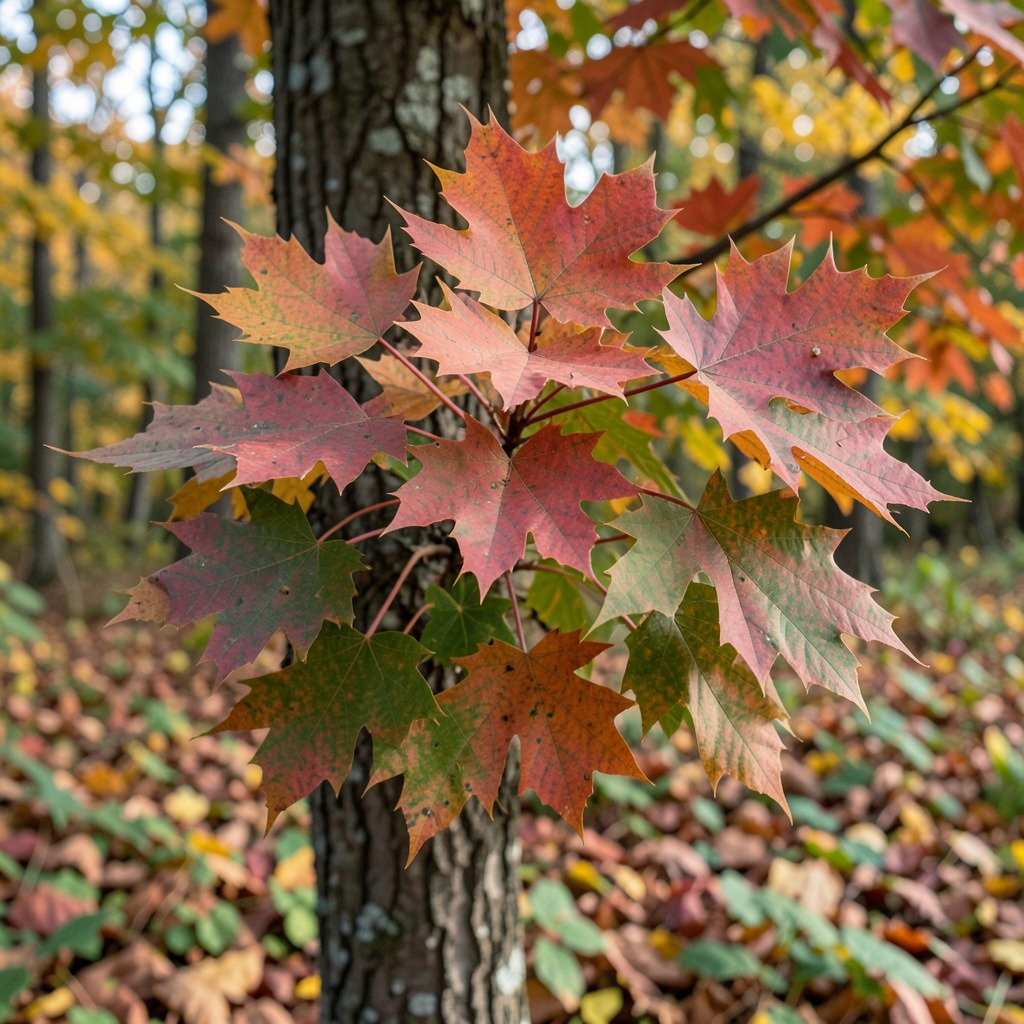
Differentiating sugar maples from similar species is crucial for accurate identification. Key traits such as leaf shape, bark texture, and sap characteristics can help you distinguish sugar maples from red, silver, and Norway maples.
Sugar Maple vs. Red Maple: Key Differences
- Leaves: Sugar maple leaves have five lobes with smooth, U-shaped sinuses, while red maple leaves feature three to five lobes with V-shaped, serrated sinuses.
- Bark: The bark of sugar maples becomes thick and platy with age. In contrast, red maple bark remains smoother and develops flat plates that form tracks.
- Sap: Sugar maple sap contains 2-3% sugar, making it ideal for syrup production. Red maple sap has only 1-2% sugar content.
Sugar Maple vs. Silver Maple: Identification Tips
- Leaves: Sugar maple leaves are dark green on top, with a pale green underside. Silver maple leaves have deeply indented lobes and a silvery underside.
- Bark: The bark of silver maples is often smoother, with long, shaggy strips compared to the rough, platy bark of sugar maples.
- Growth Habit: Silver maples tend to grow faster and can tolerate wetter soils than sugar maples, which prefer well-drained, rich soils.
Sugar Maple vs. Norway Maple: What to Avoid
- Identification: Norway maple leaves are similar in shape to sugar maple leaves, but they are larger and have milky sap when cut. Sugar maple leaves do not exude milky sap.
- Invasiveness: Norway maples are invasive in many regions and are less desirable for syrup production. Avoid tapping Norway maples for syrup.
Quick Comparison Table
| Feature | Sugar Maple | Red Maple | Silver Maple | Norway Maple |
|---|---|---|---|---|
| Leaf Shape | 5 lobes, U-shaped | 3-5 lobes, V-shaped | Deeply lobed | Larger, similar to sugar |
| Bark Texture | Thick, platy | Smooth, flat plates | Smooth, shaggy strips | Smooth, dark gray |
| Sap Sugar Content | 2-3% | 1-2% | Lower sugar content | Lower quality sap |
| Habitat Preference | Well-drained soils | Adaptable to various | Prefers wet soil | Invasive, adaptable |
Use this comparison as a guide to enhance your identification skills. For a more comprehensive understanding, consider the Sugar Maple Identification Field Guide to assist in recognizing these features accurately. Check Price on Amazon.
The Importance of Sugar Maples in Culture and Economy
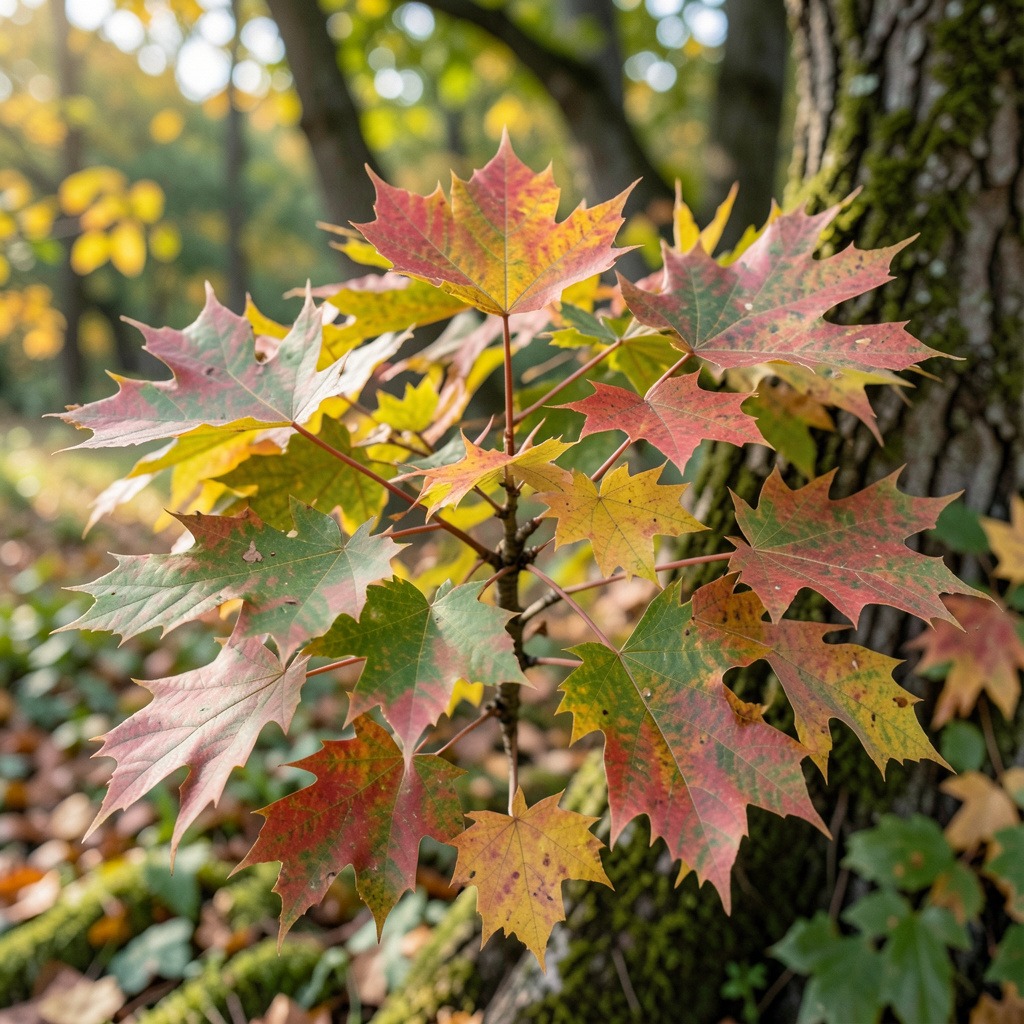
Sugar maples are not only valued for their distinctive identification features but also for their significant cultural and economic roles. Their sap is transformed into maple syrup, a beloved product that has deep roots in North American traditions.
Cultural Traditions Surrounding Sugar Maples
The practice of maple sugaring dates back to Indigenous peoples, who first tapped sugar maples for their sap. European settlers adopted and expanded these methods, leading to a rich cultural tradition that is celebrated annually during maple syrup festivals. These festivals often include community gatherings, where families participate in tapping trees and boiling sap to create syrup.
- Example: In Vermont, the Maple Festival showcases the state’s heritage, attracting thousands who enjoy tastings and learn about the syrup-making process.
Economic Benefits of Maple Syrup Production
Sugar maples contribute significantly to local economies. The maple syrup industry generates millions of dollars annually. Vermont, for instance, leads U.S. production and is synonymous with high-quality maple syrup. The economic impact extends beyond syrup sales, as tourism related to maple sugaring boosts local businesses.
- Key Points:
- Vermont produces over 2 million gallons of syrup annually.
- Quebec supplies about 70% of the world’s maple syrup.
- The economic influence includes jobs in sugaring, tourism, and related agriculture.
Ecological Role of Sugar Maples
Sugar maples play a crucial role in their ecosystems. They provide habitat and food for various wildlife species. Their extensive root systems help prevent soil erosion, while their leaves contribute nutrients to the soil as they decompose. Additionally, the trees are vital in maintaining forest biodiversity.
- Decision Rule: When identifying sugar maples, remember that healthy trees contribute to a balanced ecosystem, which is essential for local wildlife.
Understanding the cultural significance and economic benefits of sugar maples enhances the appreciation of these trees beyond their identification features. For those interested in deeper exploration, consider the Sugar Maple Identification Field Guide for detailed insights. Check Price on Amazon.
Seasonal Changes in Sugar Maple Identification
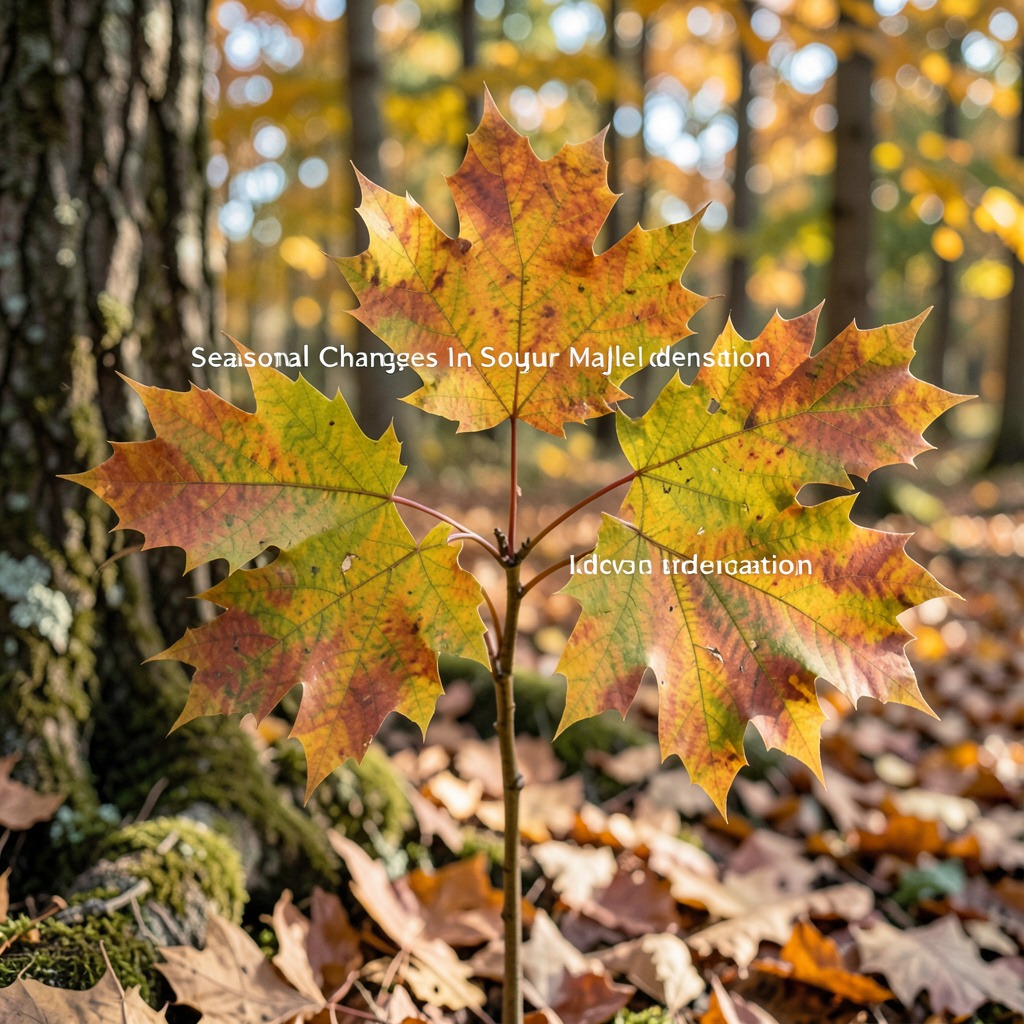
Identifying sugar maples involves understanding their distinct features, which can vary significantly across seasons. Each season presents unique characteristics that can aid in accurate recognition.
Identifying Sugar Maples in Spring and Summer
In spring and summer, sugar maples showcase vibrant green leaves that are essential for identification.
- Leaf Shape: Look for simple, opposite leaves with five lobes and smooth, U-shaped sinuses.
- Leaf Size: Each leaf typically measures 3 to 6 inches long and wide.
- Leaf Color: The upper surface is dark green and smooth, while the underside is paler green, often slightly hairy.
- Petiole Identification: When broken, the petiole exudes a clear, milky sap, a key distinguishing feature from other maples.
The Vibrant Fall Colors: Best Time for Identification
Autumn is the most spectacular season for identifying sugar maples. During this time, their leaves transform into brilliant shades of yellow, orange, and red.
- Color Changes: Look for a mix of colors, with some trees displaying multiple shades simultaneously.
- Leaf Dropping: As leaves begin to fall, the color can help confirm identification.
This vibrancy not only assists in visual identification but also highlights the tree’s seasonal importance in the ecosystem.
Winter Identification Tips: Buds and Bark
Winter presents unique challenges for tree identification, but sugar maples can still be recognized by their buds and bark.
- Bark Characteristics: The bark of mature sugar maples develops thick, platy ridges, distinguishing them from other species like the Red Maple.
- Buds: Sugar maple buds are typically sharp and pointy, while the twigs are slender and brownish.
Seasonal Identification Checklist
| Season | Key Identification Features |
|---|---|
| Spring/Summer | Green leaves, U-shaped sinuses, milky sap |
| Fall | Bright yellow, orange, and red leaves |
| Winter | Thick, platy bark, sharp buds |
This seasonal checklist can enhance your identification skills and ensure accurate recognition of sugar maples throughout the year.
Frequently Asked Questions
These quick answers cover the most common questions about this topic, including key details, practical tips, and common concerns.
Are there different types of sugar maple trees?
Yes, there are variations within the sugar maple species, primarily based on regional adaptations. While the standard sugar maple (Acer saccharum) is the most recognized, subspecies may exhibit slight differences in leaf shape, bark texture, and growth habits depending on their native range. However, they all share the key characteristics that make sugar maples valuable for syrup production.
What tree is commonly mistaken for a sugar maple?
The red maple (Acer rubrum) is often confused with the sugar maple. While both trees have similar leaf shapes, red maple leaves typically have serrated edges and a more pronounced V-shaped sinus between lobes. Additionally, red maples have a smoother bark texture compared to the thick, platy bark of sugar maples.
What are the downsides of sugar maples?
One downside of sugar maples is their susceptibility to certain pests and diseases, such as the Asian longhorned beetle and tar spot fungus. These issues can weaken the tree and affect sap production. Additionally, sugar maples prefer well-drained soils and may struggle in compacted or poorly drained areas, impacting their growth and health.
Are sugar maples valuable for timber?
Yes, sugar maples are highly valued for their timber. The wood is dense, strong, and has a fine grain, making it ideal for furniture, cabinetry, and flooring. The economic value of sugar maple timber, combined with its significance in syrup production, makes it a sought-after species in forestry and agriculture.
How can I identify a sugar maple in winter?
In winter, identifying sugar maples can be done by examining their bark and buds. Sugar maples have thick, platy bark that is dark gray to brown, while their buds are sharp and pointed. The twigs are slender and reddish-brown, which helps distinguish them from other species even when leaves are absent.
What are the characteristics of sugar maple leaves?
Sugar maple leaves are characterized by their five lobes with smooth edges and U-shaped sinuses. Each leaf measures approximately 3 to 6 inches long, with a dark green upper surface and a lighter, slightly hairy underside. In autumn, they turn vibrant shades of yellow, orange, and red, making them easy to identify during this season.
How can I tell if a tree is a sugar maple?
To determine if a tree is a sugar maple, look for the following features: opposite leaf arrangement, five lobed leaves with smooth edges, thick, platy bark, and reddish-brown twigs. Additionally, when you break a petiole, it will exude clear, milky sap, a definitive characteristic of sugar maples.