
Plant cells and animal cells are both types of eukaryotic cells, but they differ significantly in structure and function. While animal cells lack cell walls and chloroplasts, plant cells have these features, which are essential for their unique roles in nature. For a detailed comparison, check out Plant Cell vs Animal Cell: Key Differences Explained.
Table of Contents
Overview of Cell Biology
Definition of Cells
Cells are the fundamental building blocks of all living organisms. They are the smallest units that can carry out the processes necessary for life. I remember my first biology class, where we learned that every living thing—from the tiniest bacteria to the largest whale—is made up of cells. It’s fascinating to think about how these tiny structures can create complex organisms!
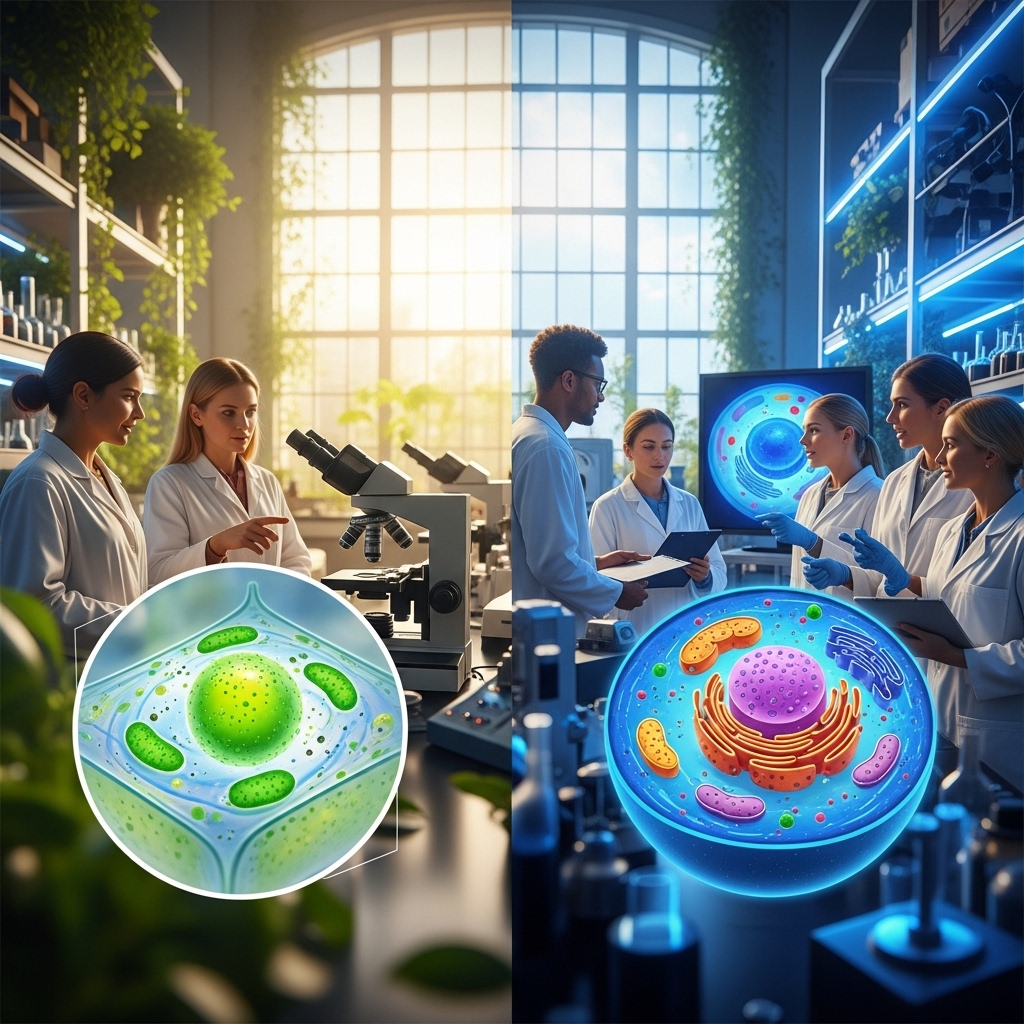
Importance of Cells in Living Organisms
Cells play an essential role in the growth, development, and reproduction of organisms. They help in maintaining homeostasis, which is the balance of internal conditions. For me, understanding cells was like unlocking the secret code of life. Each cell has specific functions that contribute to the overall health and survival of the organism. Without cells, life as we know it would not exist.
Types of Cells
Prokaryotic Cells
Before diving into plant and animal cells, it’s important to understand the two main categories of cells: prokaryotic and eukaryotic. Prokaryotic cells, which include bacteria and archaea, are simpler and do not have a nucleus or membrane-bound organelles. I used to find it amazing how these tiny organisms can thrive in such diverse environments, despite their simplicity.
Eukaryotic Cells
Eukaryotic cells are more complex and include all plant and animal cells. They contain a nucleus that houses genetic material and various organelles that perform specific functions. I remember studying how these organelles work together, almost like a well-coordinated team, to keep the cell functioning properly. This teamwork is crucial for the survival of multicellular organisms.
Overview of Plant and Animal Cells
When it comes to eukaryotic cells, plant and animal cells stand out due to their unique characteristics. Plant cells contain structures that enable them to create their own food through photosynthesis, while animal cells rely on other organisms for energy. I’ve always found it fascinating that plant cells are like little factories, combining sunlight, carbon dioxide, and water to produce food, while animal cells are more like consumers in the grand cycle of life. To learn more about the unique characteristics of plant cells, you can read Do Plant Cells Have Lysosomes? Explained Simply.
Structural Differences Between Plant and Animal Cells
Cell Wall
One of the most notable differences between plant and animal cells is the presence of a cell wall in plant cells. The cell wall provides structural support and protection, giving plants their rigidity. I can still recall the feeling of wonder when I learned that this tough outer layer allows plants to stand upright and grow toward the sun. On the other hand, animal cells only have a flexible cell membrane without a cell wall, which allows for a greater range of shape and movement.
Cell Membrane
Both plant and animal cells have a cell membrane, but the composition and function can differ slightly. The cell membrane acts as a barrier, controlling what enters and exits the cell. I remember being amazed by how this selective permeability is crucial for maintaining the cell’s internal environment. In plant cells, the cell membrane lies just beneath the cell wall, while in animal cells, it forms the outer layer. This difference is a reflection of their various lifestyles and needs.
Chloroplasts
Chloroplasts are another significant distinction between plant and animal cells. These organelles are responsible for photosynthesis, the process that allows plants to convert sunlight into energy. I often think about how chloroplasts are like tiny solar panels, harnessing light to fuel the plant’s growth. Animal cells, however, do not have chloroplasts since they obtain energy from consuming other organisms, which I find fascinating in its own way.
Vacuoles
Plant cells typically have a large central vacuole that stores nutrients, waste products, and helps maintain turgor pressure, which keeps the plant upright. I remember learning how this vacuole can take up to 90% of the cell’s volume! Animal cells, in contrast, have smaller vacuoles that serve more varied functions. This difference illustrates how each cell type adapts to its environment and lifestyle.
Shape and Size
When it comes to shape and size, plant and animal cells also differ. Plant cells generally have a more fixed, rectangular shape due to their rigid cell walls. In contrast, animal cells tend to be more irregular and flexible. I found it interesting how these shapes enable plants to grow tall and strong while allowing animals to have a more dynamic movement. Size can also vary, but plant cells are often larger than animal cells, reflecting their storage needs and structural requirements.
Overall, the structural differences between plant and animal cells reveal so much about their functions and roles in the ecosystem. Understanding these differences has deepened my appreciation for the incredible diversity of life on Earth. Each cell type has evolved to meet specific challenges, and exploring these adaptations is like embarking on a journey through the fascinating world of biology.
Organelles Unique to Plant and Animal Cells
Plant Cell Organelles
Plant cells have some unique organelles that contribute to their special functions. One of the most remarkable is the chloroplast, which I’ve already touched on. But beyond that, plant cells also have structures like plasmodesmata. These are tiny channels that connect plant cells to each other, allowing them to communicate and share resources efficiently. I find it incredible to think about how plants can coordinate their activities through these connections. Another distinguishing feature is the presence of cell sap, a nutrient-rich fluid found in the large central vacuole. This sap not only stores essential nutrients but also plays a role in maintaining the plant’s structure. I remember being amazed that a single organelle could serve so many purposes!
Animal Cell Organelles
On the flip side, animal cells boast their own set of unique organelles, like lysosomes. These organelles act as the cell’s waste disposal system, breaking down unwanted materials and recycling cellular components. I once watched a documentary that highlighted how lysosomes remind us of a cleanup crew, tirelessly working to keep the cell healthy. Additionally, animal cells have centrioles, which play a crucial role during cell division. I was fascinated to learn that these structures help organize the spindle fibers that separate chromosomes, ensuring that each new cell gets the correct number of chromosomes. It’s like having a well-organized team ready to ensure everything runs smoothly when it’s time for the cell to divide.
Functional Differences
Photosynthesis in Plant Cells
Photosynthesis is perhaps the most significant functional difference between plant and animal cells. In my high school biology class, I remember learning about how plant cells harness sunlight to create their own food. This process not only provides energy for the plant but also produces oxygen as a byproduct, which is essential for life on Earth. I’ve often thought about how plants are nature’s little powerhouses, taking sunlight and transforming it into energy. It’s a brilliant system that showcases the interconnectedness of life; without plants producing oxygen, many organisms, including us, would struggle to survive.
Cellular Respiration in Animal Cells
In contrast, animal cells rely on cellular respiration to convert the food we consume into energy. This process occurs in the mitochondria, often referred to as the “powerhouses” of the cell. I think it’s pretty amazing that while plants absorb sunlight, we animals take in nutrients from our environment to fuel our bodies. I remember feeling a sense of awe when I realized how our bodies break down complex carbohydrates into simpler sugars and use them to produce ATP, the energy currency of the cell. This process allows us to perform all our daily functions, from running to thinking.
Storage and Nutrient Management
When it comes to storage, plant and animal cells also have different strategies. Plant cells, with their large central vacuole, can store not only nutrients but also waste products and other substances. This storage capability is vital for their survival, especially in varying environmental conditions. For me, it’s fascinating to think that this single organelle can play such a key role in the plant’s overall health. On the other hand, animal cells utilize their smaller vacuoles and various organelles like lysosomes to manage storage and waste disposal. This difference reflects their distinct lifestyles; while plants must be self-sufficient, animals often have to adapt to their environments by scavenging and consuming resources.
Comparison of Plant and Animal Cell Processes
Cell Division: Mitosis and Meiosis
Cell division is a vital process in both plant and animal cells, but there are some differences in how it occurs. I remember being quite fascinated by mitosis and meiosis, two types of cell division. In animal cells, the process is typically more straightforward, involving the formation of a cleavage furrow that pinches the cell into two. In contrast, plant cells undergo a unique method called cytokinesis, where a cell plate forms down the middle before dividing. This process makes sense, considering the rigid cell walls that plant cells have. Learning about these differences highlighted the adaptability of each cell type to its environment—it’s as if nature has designed each process to best suit the needs of the organism.
Protein Synthesis and Function
Protein synthesis is another area where plant and animal cells show differences. In both types of cells, ribosomes play a crucial role in translating genetic information into proteins. However, I’ve learned that plant cells often have ribosomes that are free-floating in the cytoplasm as well as those attached to the endoplasmic reticulum. This dual setup allows for efficient protein production, which is essential for the plant’s growth and functioning. In animal cells, ribosomes are also found in both places, but the process can vary based on the cell’s needs. I find it fascinating how cells prioritize and adapt their protein synthesis processes to meet their unique demands.
Cell Communication and Signaling
Lastly, cell communication and signaling processes differ between the two cell types. Plant cells communicate through plasmodesmata and signaling molecules, while animal cells rely heavily on direct contact and hormonal signals. I remember being intrigued by how plant cells can send signals through their connections to coordinate responses to environmental changes, such as drought or pests. In animal cells, we use a range of signaling pathways that can be quite complex. This complexity is necessary due to our more mobile and dynamic nature, where rapid responses to external stimuli are crucial for survival.
Visual Representation
Diagrams of Plant and Animal Cells
Visual aids can be incredibly helpful in understanding the differences between plant and animal cells. I remember the first time I saw diagrams comparing the two; it was like a light bulb went off in my head! These diagrams typically highlight the unique structures of each cell type, such as the cell wall and chloroplasts in plant cells, contrasted with the lysosomes and centrioles in animal cells. I often recommend looking for labeled diagrams in textbooks or online resources. They can make all the difference in grasping how each organelle fits into the bigger picture of cell functionality.
Microscope Images
Seeing actual microscope images of plant and animal cells can be a real game-changer. I was fortunate enough to have access to a microscope in high school, and peering at these cells up close brought my learning to life. In my experience, observing the rectangular shape of plant cells compared to the more rounded and varied shapes of animal cells made the differences even more apparent. Many educational websites and resources provide high-quality microscope images that allow us to explore the fascinating details of cell structures. I think it’s amazing how such tiny components can form the fabric of life!
Common Misconceptions
Are All Cells the Same?
One misconception I often encounter is the idea that all cells are fundamentally the same. While it’s true that all cells share basic features, like a cell membrane and genetic material, there are significant differences that I’ve come to appreciate through my studies. For instance, plant cells are designed for photosynthesis, while animal cells are optimized for mobility and interaction with their environment. I believe that understanding these distinctions can enhance our appreciation for the diversity of life. Each cell type has evolved to perform specific functions, and recognizing this diversity is key to understanding biology.
Do Plant Cells Have Mitochondria?
Another common misconception is that plant cells do not have mitochondria. I was surprised to learn that plant cells do indeed contain these organelles! While chloroplasts are responsible for photosynthesis, mitochondria play a crucial role in cellular respiration, allowing plants to convert the sugars they create into usable energy. This dual energy production system is fascinating, as it highlights the versatility of plant cells. I remember feeling a sense of awe when I realized that plants, like us, rely on mitochondria to fuel their cellular activities, especially during the night when photosynthesis isn’t occurring.
Applications and Implications
Biotechnology and Genetic Engineering
The differences between plant and animal cells have significant implications in the fields of biotechnology and genetic engineering. I’ve always found it interesting how scientists use these differences to develop new technologies and improve crops. For instance, genetic engineering can enhance a plant’s ability to withstand drought or pests, which is crucial for food security. I remember reading about genetically modified organisms (GMOs) and how they can potentially revolutionize agriculture. Understanding the unique structures and functions of these cells allows researchers to target specific pathways for modification, making advancements in sustainable farming practices more attainable.
Understanding Diseases
Another important area where our knowledge of cell differences comes into play is in medicine. The distinct characteristics of animal cells can provide insights into human health and disease. For example, studying how animal cells respond to pathogens helps researchers develop vaccines and treatments. I’ve often pondered how our understanding of cellular function has led to breakthroughs in treating diseases like cancer, where the uncontrolled division of cells is a major issue. Learning about these processes can be both empowering and enlightening, as it reveals the potential for scientific advancements that can improve and save lives.
Environmental Impact and Conservation
Lastly, the differences between plant and animal cells have important implications for environmental conservation. Understanding how plant cells function helps us appreciate their role in ecosystems, such as their ability to sequester carbon and produce oxygen. I feel that this knowledge is crucial as we face global challenges like climate change. By focusing on preserving plant biodiversity and understanding the cellular mechanisms behind their survival, we can better develop strategies for conservation. I find it inspiring to think that our understanding of cell biology can play a part in protecting our planet for future generations.
Further Reading and Resources
Books on Cell Biology
If you’re interested in diving deeper into the world of cell biology, I highly recommend a few books that have enriched my understanding. “Molecular Biology of the Cell” by Alberts et al. is a classic that covers a wide range of topics in depth. Another great read is “The Cell: A Molecular Approach” by Geoffrey M. Cooper, which offers a clear and accessible introduction to cell biology concepts. These texts have been invaluable in providing a solid foundation for understanding the complexities of cells.
Online Courses and Lectures
For those who prefer a more interactive approach, online courses and lectures can be a fantastic way to learn. Platforms like Coursera and edX offer courses on cell biology that can fit into your schedule. I found that these courses often include video lectures, quizzes, and community discussions that make the learning experience more engaging. It’s a wonderful opportunity to connect with other learners and experts in the field.
Research Articles and Journals
Finally, if you’re looking for cutting-edge information, I recommend checking out research articles and journals like “Cell” and “The Journal of Cell Biology.” These publications showcase the latest discoveries and advancements in cell research. I’ve often been inspired by reading about new findings that push the boundaries of what we know about cells and their functions. Staying updated with current research can ignite a passion for exploration and discovery in the field of biology.
Frequently Asked Questions
What are the main differences between plant and animal cells?
Plant cells have a cell wall and chloroplasts, while animal cells do not. Plant cells are involved in photosynthesis to create their own food, whereas animal cells rely on consuming other organisms for energy.
What is the role of chloroplasts in plant cells?
Chloroplasts are organelles in plant cells responsible for photosynthesis, allowing plants to convert sunlight into energy, which is essential for their growth and provides oxygen as a byproduct.
Do plant cells have mitochondria?
Yes, plant cells contain mitochondria, which play a crucial role in cellular respiration, allowing plants to convert the sugars they produce into usable energy, especially when photosynthesis is not occurring.
How do plant and animal cells differ in their vacuoles?
Plant cells typically have a large central vacuole that stores nutrients and waste products, helping maintain turgor pressure. In contrast, animal cells have smaller vacuoles that serve varied functions.
What are lysosomes, and what is their function in animal cells?
Lysosomes are organelles in animal cells that act as the cell’s waste disposal system, breaking down unwanted materials and recycling cellular components to maintain cell health.
What is the process of photosynthesis, and why is it important?
Photosynthesis is the process by which plant cells use sunlight to create food and produce oxygen. This process is vital for life on Earth as it provides energy for plants and oxygen for other organisms.
How do plant and animal cells handle cell division?
In animal cells, cell division typically involves the formation of a cleavage furrow that pinches the cell into two. Plant cells undergo a unique method called cytokinesis, where a cell plate forms before dividing, due to their rigid cell walls.
What is the significance of plasmodesmata in plant cells?
Plasmodesmata are tiny channels that connect plant cells, allowing them to communicate and share resources efficiently, which is crucial for coordinating their activities.
How do plant and animal cells manage nutrient storage differently?
Plant cells use their large central vacuole for storing nutrients and waste products, which is vital for their survival in varying environments. Animal cells, on the other hand, utilize smaller vacuoles and organelles like lysosomes for storage and waste management.
Why is understanding the differences between plant and animal cells important in biotechnology?
Understanding the differences between plant and animal cells allows scientists to develop new technologies and improve crops through genetic engineering, which can enhance plants’ abilities to withstand environmental challenges and contribute to food security.