
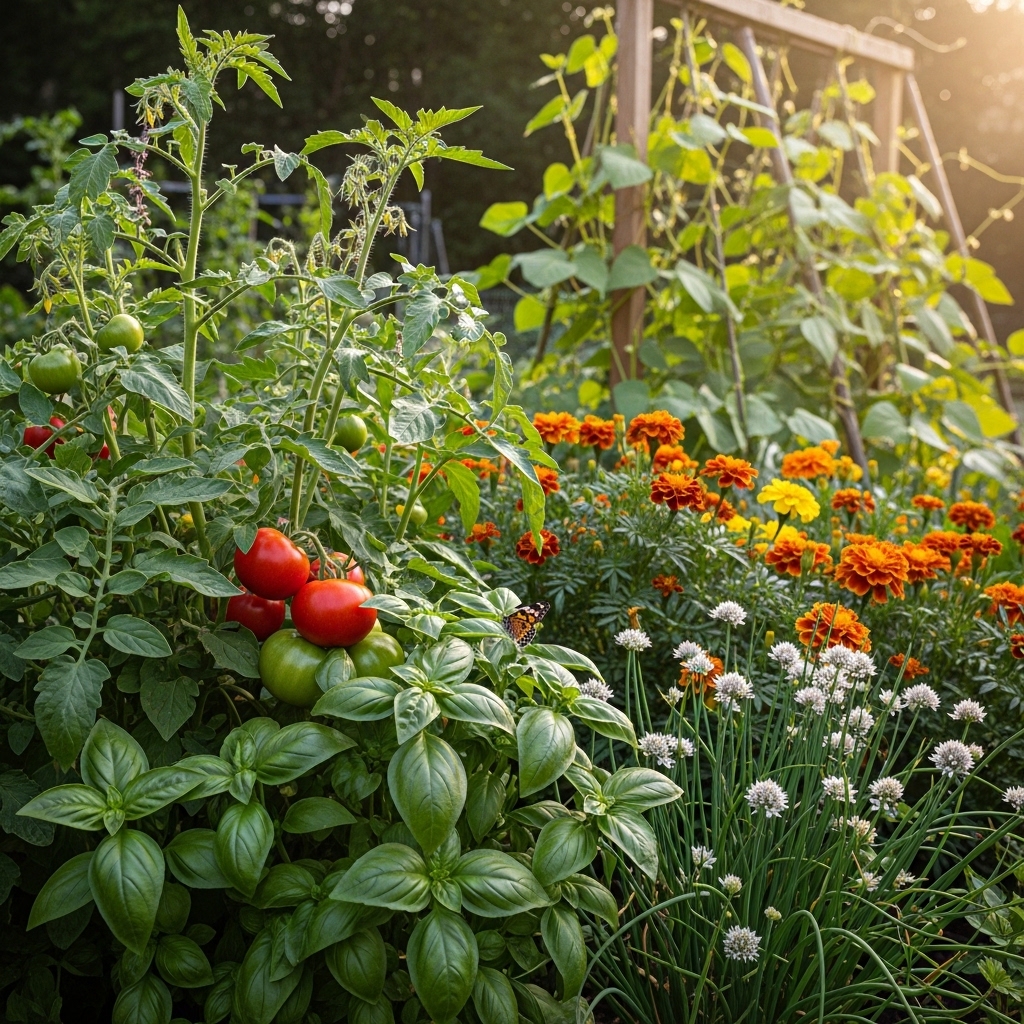
The best companions to plant next to tomatoes include basil, marigolds, carrots, and onions, which enhance growth, deter pests, and improve flavor. I’ve found that the right companions can make a world of difference in a garden, transforming a simple tomato patch into a thriving ecosystem.
Understanding Tomato Companion Planting
What is Companion Planting?
Companion planting is an age-old gardening practice where different plant species are grown together for mutual benefit. It’s fascinating to me how plants can support each other in ways that enhance growth, repel pests, and even improve flavor. This approach is not just about aesthetics; it’s about creating a thriving garden environment. For example, when I first started gardening, I learned that certain plants actually release specific chemicals into the soil or air that can either help or hinder the growth of nearby plants. It’s like a secret language of plants working together for a common goal.
Benefits of Companion Planting with Tomatoes
When it comes to tomatoes, companion planting offers several advantages. Firstly, some plants can deter pests that commonly invade tomato plants. I remember my battle with aphids and whiteflies in my earlier gardening days. After researching, I discovered that planting marigolds nearby could significantly reduce these pests. Secondly, certain companions can improve the overall health and yield of tomatoes. For instance, basil not only sweetens the taste of tomatoes but also attracts pollinators, which is a win-win situation! Furthermore, companion plants can help optimize space and resources, allowing for a more diverse and productive garden.
Common Misconceptions about Tomato Companions
There are many myths surrounding companion planting, especially when it comes to tomatoes. One common misconception I encountered was the belief that all herbs can grow well alongside tomatoes. While this is somewhat true, not all herbs are beneficial. For instance, planting sage too close to tomatoes can actually stunt their growth. I learned this the hard way during my early gardening attempts. Additionally, some believe that companion planting is a guaranteed way to eliminate all garden pests, which isn’t entirely true. While it can significantly reduce issues, maintaining a healthy garden requires ongoing attention and care.
Top Companion Plants for Tomatoes
Basil
Basil stands out as one of the best companions for tomatoes. I’ve always felt that basil and tomatoes were meant to be together, and my taste buds agree! Growing them side by side not only enhances their flavors but also helps repel pests. The scent of basil can confuse insects like aphids and whiteflies, keeping your tomato plants safe. Plus, the combination of fresh tomato and basil in a salad or pasta is a delightful summer treat that makes the effort worthwhile.
Marigolds
Marigolds are another fantastic companion for tomatoes. I personally love their vibrant colors, which add beauty to my garden. Beyond aesthetics, marigolds are known for their pest-repelling properties. They release a compound called pyrethrum, which is toxic to nematodes and various harmful insects. I’ve planted marigolds in my tomato beds, and I’ve noticed a significant decrease in pest activity. They are also easy to grow and require minimal care, making them a great choice for any gardener.
Carrots
Carrots might not be the first plant that comes to mind when thinking about tomato companions, but they are surprisingly beneficial. When I began intercropping carrots with my tomatoes, I realized that the deep roots of carrots help aerate the soil, which is great for tomatoes. Additionally, carrots’ foliage can provide some shade for young tomato plants. I’ve found that growing them together maximizes my garden space and provides a delicious harvest of both crops!
Onions
Onions are another excellent choice for companion planting with tomatoes. They need similar growing conditions, which makes them easy to plant together. I’ve always appreciated how onions can help deter pests like aphids and spider mites. Their potent scent seems to keep these unwanted guests at bay. Plus, if you enjoy cooking, having fresh onions on hand adds flavor to my tomato dishes!
Garlic
Garlic shares many benefits with onions when planted near tomatoes. I remember the first time I tried growing garlic next to my tomatoes; it was a game-changer. Garlic has strong antifungal and antibacterial properties, which help protect tomatoes from diseases. Its pungent aroma can also deter pests. Plus, who doesn’t love the taste of fresh garlic in their cooking? It’s a staple ingredient that pairs perfectly with tomatoes in countless recipes.
Spinach
Spinach is a great leafy green that can thrive alongside tomatoes. I’ve enjoyed the versatility of spinach in my garden, where it can be harvested in the spring before the tomatoes fully mature. This way, I can take advantage of the early growing season. Spinach also provides ground cover, which helps retain moisture and suppress weeds, benefiting my tomatoes in the long run.
Peppers
Growing peppers alongside tomatoes is another excellent option. They share similar growing conditions and can thrive in the same environment. I’ve noticed that both plants benefit from similar watering and sunlight requirements, making them perfect companions in my garden. Plus, the combination of fresh tomatoes and peppers adds a delightful kick to my summer dishes!
Parsley
Finally, parsley makes a wonderful companion for tomatoes. This herb is known for attracting beneficial insects, such as ladybugs, which help control aphid populations. I’ve found that parsley grows well in the shade of taller tomato plants, making it an excellent choice for using vertical space in the garden. Having fresh parsley on hand is also a bonus for my cooking endeavors!
Plants to Avoid Planting Next to Tomatoes
Cabbage Family (Brassicas)
While it’s great to think about plants that enhance our tomatoes, it’s equally important to consider those that can hinder their growth. I learned early on that the cabbage family, including crops like cabbage, broccoli, and cauliflower, should be avoided near tomatoes. These plants can compete for nutrients and water, which can stunt the growth of my tomato plants. I remember one year trying to grow both in close proximity, and my tomatoes just didn’t thrive the way I hoped. It was a lesson learned: some plants are just not meant to be garden buddies!
Potatoes
Potatoes are another plant to steer clear of when planning my tomato patch. Both tomatoes and potatoes belong to the nightshade family, which means they can be prone to similar pests and diseases, like blight. I recall a gardening friend who lost both her tomato and potato crops to blight because they were planted too close together. Keeping these two apart has been a simple way for me to reduce the risk of disease in my garden. It’s always a good idea to give them some space!
Fennel
Fennel is a beautiful plant, but I’ve found it doesn’t play well with tomatoes or many other garden plants. It can release allelochemicals that inhibit the growth of nearby plants, including tomatoes. I’ve tried to plant fennel in a corner of my garden, thinking it would add to the variety, but it ended up overshadowing my tomatoes. Now, I admire fennel from a distance and keep it far from my tomato beds. It’s a perfect example of how some plants can be a bit selfish in a garden setting!
Walnut Trees
If you have walnut trees nearby, you’ll want to keep tomatoes far away from them. Walnut trees produce a chemical called juglone, which is toxic to many plants, including tomatoes. I experienced this firsthand when I planted tomatoes near a walnut tree, and they just didn’t grow well at all. They wilted and never produced fruit. Now, whenever I see a walnut tree, I remember to stay clear when planning my garden layout. It’s just not worth the risk!
How to Plan Your Vegetable Garden Layout
Spacing Considerations
One of the most crucial aspects of gardening is spacing. I’ve learned that giving each plant enough room to grow can make a significant difference in their overall health. For tomatoes, I typically allow about 18 to 24 inches between each plant. This spacing not only helps with air circulation but also minimizes the competition for nutrients. I remember the first time I overcrowded my tomato plants; they ended up spindly and weak. Now, I always take spacing into account when planning my layout.
Sunlight Requirements
Sunlight is another vital consideration. Tomatoes thrive in full sun, so I make sure to position them where they can soak up as much sunlight as possible. I’ve noticed that when I plant tomatoes in areas that receive at least six to eight hours of sunlight a day, they flourish! However, I also keep in mind the height of neighboring plants. Taller plants can cast shadows on my tomatoes, which I found out the hard way. I’ve since adjusted my layout to ensure my tomatoes get the light they need and deserve.
Soil Health and Nutrient Management
Healthy soil is the foundation of a successful garden. I’ve spent time improving my soil by adding organic matter, like compost, to provide essential nutrients for my tomato plants. I’ve also learned about the importance of soil pH and ensuring my garden soil is slightly acidic, which tomatoes love. Regular soil testing has become part of my gardening routine. When I first started, I didn’t pay much attention to soil health, but I quickly realized it’s the secret to a bountiful harvest. With good soil, my tomatoes not only grow larger but also taste better!
Seasonal Considerations for Planting
Best Time to Plant Tomatoes and Companions
Timing is everything in gardening. I’ve found that planting tomatoes after the last frost is crucial for their success. In my area, I typically aim for late spring to early summer, but I always check the local frost dates. Along with tomatoes, I try to plant their companions at the same time to ensure they can establish themselves together. It’s a wonderful feeling to see my garden come alive in the spring, with all the plants growing and thriving together.
Climate Impact on Companion Plants
Every gardener knows that climate plays a huge role in what we can successfully grow. I’ve experienced how different weather conditions can affect my companion plants’ growth. For example, in hotter climates, some companion plants may struggle, while others thrive. I’ve adjusted my choices based on the seasons here, opting for heat-tolerant companions during the summer. Understanding the climate impact has helped me optimize my garden layout and ensure that every plant has the best chance of flourishing.
Maintaining a Healthy Companion Garden
Watering and Fertilization Tips
Keeping my garden well-watered and nourished has been a game-changer for the health of my tomato plants and their companions. I’ve learned that tomatoes need consistent moisture, especially during their growing season. I generally aim to water deeply but infrequently, allowing the soil to dry out a bit between waterings. This encourages the roots to grow deeper, which is beneficial for both tomatoes and their neighboring plants. I remember once overwatering my tomato patch, thinking I was being helpful, only to see the plants struggling with root rot. Now, I always check the soil moisture before watering.
As for fertilization, I’ve found that using organic compost works wonders. It not only provides essential nutrients but also improves soil structure. I typically add a layer of compost in the spring before planting my tomatoes and their companions. This practice has made a noticeable difference in the growth and flavor of my vegetables. I also avoid over-fertilizing, which can lead to lush foliage but fewer fruits. Balance is key!
Pest Management Strategies
Pest control is an ongoing battle I’ve faced in my garden. I’ve learned that planting companion plants plays a significant role in naturally deterring pests. For example, the marigolds in my tomato patch have been my little soldiers, fighting off unwanted insects. However, I also keep a close eye on my plants. If I spot any pests, I take immediate action. I’ve found that introducing beneficial insects, like ladybugs, can be incredibly effective. These little helpers feed on aphids and other pests, providing a natural form of pest control.
Another strategy I’ve adopted is using insecticidal soap or neem oil when necessary. I remember a time when aphids invaded my garden, and I was worried. A few applications of neem oil made a significant difference, and I was relieved to see my plants bounce back. I always try to stick to organic methods whenever possible because I want to maintain a healthy ecosystem in my garden.
Crop Rotation Practices
Crop rotation has become an essential part of my gardening strategy. Each year, I plan where to plant my tomatoes and their companions based on the previous year’s layout. I’ve discovered that rotating crops helps prevent soil-borne diseases and nutrient depletion. For example, after growing tomatoes, I will often plant legumes, which help fix nitrogen in the soil. This practice has not only increased my yields but also keeps my soil healthy.
In my experience, keeping a gardening journal has been incredibly helpful. I jot down where I plant each crop, the health of the plants, and any pest issues I encounter. This way, when it’s time to plan for the next season, I have a clear record to guide my decisions. Knowing which plants did well together and which didn’t helps me create a more successful layout each year.
Frequently Asked Questions about Tomato Companions
Can I plant herbs with tomatoes?
Absolutely! In my experience, many herbs make great companions for tomatoes. Herbs like basil, parsley, and oregano not only enhance the flavor of your tomatoes but can also attract beneficial insects. Just remember to pay attention to which herbs can coexist peacefully with tomatoes, as not all herbs are compatible.
What is the best companion plant for tomato pest control?
Marigolds have been my go-to for pest control in my tomato garden. They are known for their pest-repelling properties, particularly against nematodes and aphids. I always make sure to plant them alongside my tomatoes, and I’ve noticed a significant drop in pest activity since I started this practice.
How do companion plants affect tomato flavor?
I believe companion plants can enhance the flavor of tomatoes. For instance, basil is known to improve the taste of tomatoes when grown nearby. I’ve experienced firsthand how the combination of fresh basil and tomatoes creates a harmonious flavor profile that elevates any dish. It’s one of the simple joys of gardening—growing plants that work together to enhance each other’s attributes.
Can I grow tomatoes with flowers?
Yes, you can grow tomatoes with flowers! Many gardeners, including myself, enjoy the beauty of flowers alongside vegetables. However, it’s essential to consider the compatibility of the flowers with tomatoes. Some flowers can attract beneficial insects, while others may compete for resources. I recommend selecting flowers that are known to be beneficial for tomatoes, such as nasturtiums or borage, which can enhance the overall health of your garden.
Frequently Asked Questions
What are the best companions to plant next to tomatoes?
The best companions to plant next to tomatoes include basil, marigolds, carrots, onions, garlic, spinach, peppers, and parsley. These plants enhance growth, deter pests, and improve flavor.
What is companion planting?
Companion planting is an age-old gardening practice where different plant species are grown together for mutual benefit, enhancing growth, repelling pests, and improving flavor.
How do marigolds benefit tomato plants?
Marigolds are known for their pest-repelling properties, particularly against nematodes and aphids, and they release a compound called pyrethrum that helps protect tomato plants.
Can I plant carrots alongside tomatoes?
Yes, carrots are beneficial companions for tomatoes. Their deep roots help aerate the soil and their foliage can provide shade for young tomato plants.
What should I avoid planting next to tomatoes?
You should avoid planting members of the cabbage family (like broccoli and cauliflower), potatoes, fennel, and walnut trees next to tomatoes, as they can hinder their growth and lead to pest issues.
How much space should I allow between tomato plants?
It is recommended to allow about 18 to 24 inches between each tomato plant to ensure adequate air circulation and minimize competition for nutrients.
What are the ideal sunlight requirements for tomatoes?
Tomatoes thrive in full sun, requiring at least six to eight hours of sunlight a day to flourish.
How can I naturally manage pests in my tomato garden?
Planting companion plants like marigolds can help deter pests. Additionally, introducing beneficial insects such as ladybugs and using organic methods like insecticidal soap or neem oil can be effective strategies.
What role does soil health play in growing tomatoes?
Healthy soil is crucial for successful tomato growth. Adding organic matter, like compost, improves soil health and provides essential nutrients, contributing to larger and better-tasting tomatoes.
When is the best time to plant tomatoes and their companions?
The best time to plant tomatoes is after the last frost, typically in late spring to early summer, along with their companion plants to ensure they establish together.
Read Interesting article: What Plants Need to Grow? Essential Checklist