
Cucumbers thrive alongside a variety of companion plants that enhance their growth and flavor, with legumes, herbs, and leafy greens being some of the best choices. I’ve discovered that these pairings not only improve the health of cucumbers but also create a vibrant garden ecosystem.
Understanding Companion Planting
What is Companion Planting?
Companion planting is the practice of growing different plants in proximity for mutual benefit. I remember when I first learned about this technique; it felt like uncovering a hidden secret of gardening. The idea is that certain plants can help each other grow better, deter pests, or even enhance flavors when planted together. It’s fascinating how nature works in harmony if we just pay attention. Read Interesting article: What Are Annual Plants? Meaning + Examples
Benefits of Companion Planting
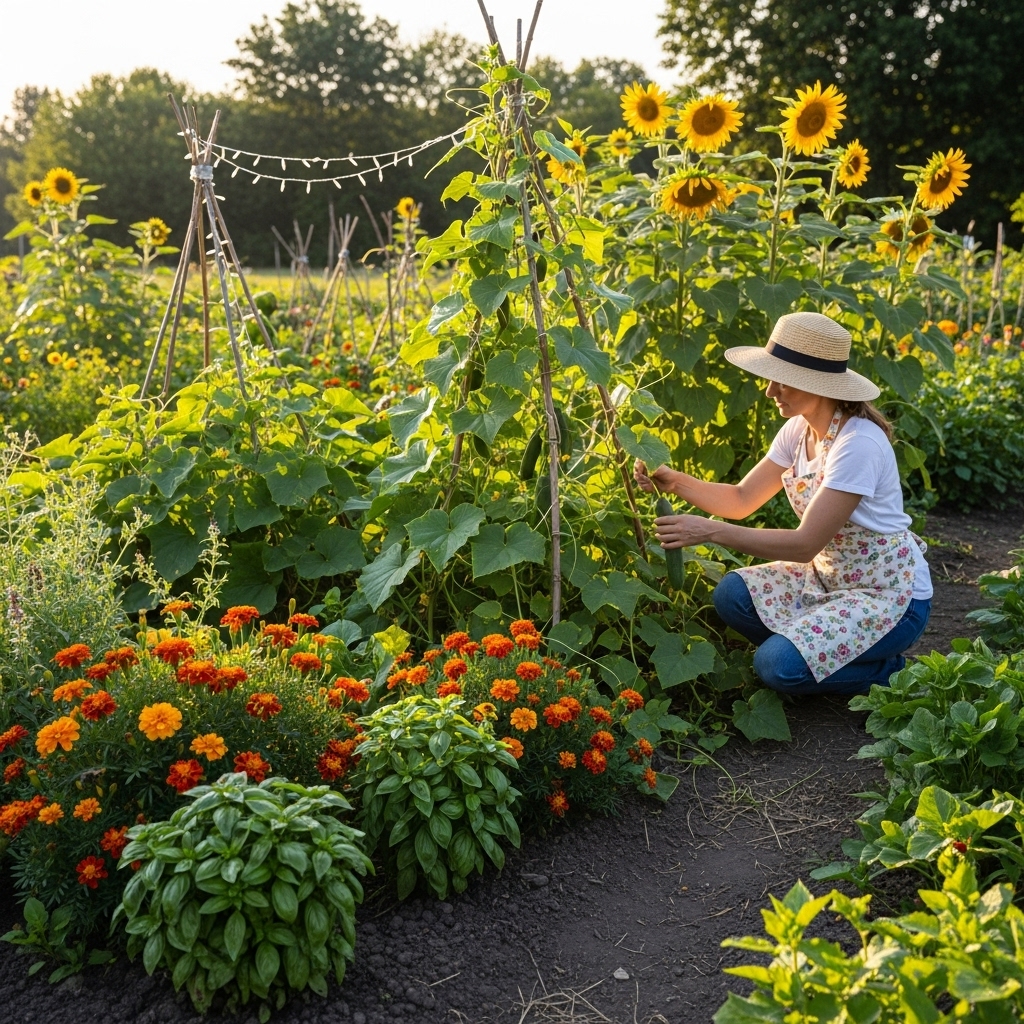
There are numerous benefits to companion planting. First, it can lead to healthier plants. For instance, some plants can repel harmful insects that might otherwise attack your cucumbers. I’ve noticed that when I plant marigolds near my cucumbers, I see far fewer pests. Additionally, companion planting can enhance soil health by improving nutrient availability. This means that my cucumbers not only grow bigger but also taste better! Another benefit is maximizing space; growing different plants can help you use your garden more efficiently, allowing you to cultivate a diverse range of vegetables and herbs in a smaller area. Furthermore, understanding the timing for planting companions can greatly improve your yield, as discussed in When to Plant Cucumbers for Best Yield.
How Companion Planting Works
Companion planting works on several levels. Some plants, like legumes, fix nitrogen in the soil, which is crucial for the growth of cucumbers. I often plant beans alongside my cucumbers because I know that they contribute nutrients back into the soil. Others can create a physical barrier against pests or attract beneficial insects that prey on harmful ones. In my experience, planting dill near cucumbers attracts ladybugs, which are wonderful for keeping aphid populations in check. Understanding these relationships can help us create a thriving garden that supports all its inhabitants.
Best Companion Plants for Cucumbers
Legumes
Legumes are fantastic companions for cucumbers. They enrich the soil and support strong growth in cucumbers. Here are my favorites:
Beans
Beans are one of the best companions for cucumbers. They grow rapidly and can create a living trellis for cucumbers to climb. This not only saves space but also keeps cucumbers off the ground, reducing the risk of rot. When I planted bush beans alongside my cucumbers, I noticed that the cucumbers flourished and produced a bountiful harvest. Plus, the beans fix nitrogen in the soil, which cucumbers love!
Peas
Similarly, peas are excellent companions. They offer the same nitrogen-fixing benefits as beans, and their growth patterns complement cucumbers well. I’ve found that planting peas early in the season allows the cucumbers to take over as the peas finish their cycle. This staggered growth helps utilize garden space effectively while benefiting both plants.
Herbs
Herbs not only enhance our meals but also make great companions for cucumbers. They can repel pests and even attract beneficial insects. Here are a few herbs I recommend:
Dill
Dill is a superstar companion for cucumbers. I love how the tall, feathery dill plants attract ladybugs and other beneficial insects. They help keep pests away from my cucumber plants. Plus, the flavor combination is delightful in salads! I always plant dill near cucumbers, and the results are consistently satisfying.
Basil
Basil is another herb that works well with cucumbers. I’ve noticed that the aroma of basil can deter cucumber beetles and other pests. Growing basil nearby not only helps protect cucumbers but also gives me a fresh supply for my favorite dishes. There’s something special about picking fresh basil to use in a homemade tomato sauce, knowing it grew alongside my cucumbers.
Mint
Mint can be a bit aggressive in the garden, but when managed correctly, it benefits cucumbers. It repels pests like aphids and spider mites. I’ve had success planting mint in pots near my cucumbers to control its spread while still enjoying its pest-repelling properties. The refreshing scent of mint wafting through the garden is an added bonus!
Flowers
Flowers can add beauty to your garden while also serving as companions for cucumbers. They attract pollinators and beneficial insects. Here are two flowers that I find especially helpful:
Nasturtiums
Nasturtiums are a delightful choice for companion planting. They attract aphids away from cucumbers, acting as a trap crop. I’ve planted them around my cucumber patch, and they not only look beautiful but also keep pests distracted. Plus, I can harvest the lovely edible flowers for salads!
Marigolds
Marigolds are famous for their pest-repelling abilities. I’ve always included marigolds in my garden because they help deter nematodes and other pesky insects. Watching them bloom while they protect my cucumbers gives me a sense of satisfaction. Their bright colors also make my garden more inviting!
Leafy Greens
Leafy greens can also be great companions for cucumbers. They tend to grow quickly and can be harvested before cucumbers take over the space. Here are a couple of greens I enjoy sharing space with cucumbers:
Lettuce
Lettuce grows quickly and can be harvested early, which gives cucumbers plenty of room as they grow. I often plant lettuce in the same bed as cucumbers, knowing I can enjoy crisp salads while the cucumbers are still maturing. It’s a win-win situation!
Spinach
Similar to lettuce, spinach thrives in the same conditions as cucumbers. I like to plant spinach in the spring, and by the time the cucumbers are ready to take up more space in the garden, the spinach is usually ready to be harvested. This careful planning allows me to maximize my garden output while enjoying fresh greens.
Plants to Avoid Near Cucumbers
Melons
While melons may seem like a natural companion for cucumbers due to their similar growing conditions, I’ve learned that they can actually compete for nutrients and space. When I planted melons near my cucumbers, I noticed that both plants struggled to thrive. It’s as if they were in a race, and neither wanted to give in. The result was smaller fruits and less overall yield. So, I recommend keeping melons at a distance if you want your cucumbers to flourish.
Potatoes
Potatoes and cucumbers are not the best buddies in the garden. I remember the time I planted them too close together, thinking that they could share the space. Unfortunately, potatoes can attract pests that also love cucumbers. I found that this led to an increase in aphids and other unwanted guests. Since then, I’ve made it a point to keep potatoes far away from my cucumber patch. I believe that both plants benefit when they have their own space to grow without competition or pest issues.
Cabbage Family
This includes plants like broccoli, cabbage, and cauliflower, which are known for their strong chemical properties. When I tried planting these alongside cucumbers, I noticed a decline in cucumber growth. The cabbage family can inhibit the growth of cucumbers by competing for nutrients and even attracting pests that target cucumbers. Now, I always plan my garden layout to keep these plants separate, ensuring that my cucumbers can grow strong and healthy.
Strongly Scented Herbs
While some herbs can be beneficial for cucumbers, I’ve found that strongly scented herbs like rosemary and sage can be too overpowering. They can mask the scent of cucumbers, making it harder for pollinators to find them. I once planted rosemary next to my cucumbers, thinking it would repel pests, but I noticed the pollinator activity drop. Since then, I’ve chosen to plant these herbs in a separate area of my garden, allowing my cucumbers to attract all the friendly bees and butterflies they need.
Planting Techniques and Tips
Spacing and Layout
Getting the spacing and layout right can make a huge difference in how well cucumbers and their companions grow together. I like to give my cucumbers plenty of room to spread out, as they can get quite sprawling. Typically, I space them about 36 inches apart. When planting companions, I consider their growth habits. For example, I often plant the shorter leafy greens like lettuce and spinach in front of my cucumbers to utilize vertical space efficiently. This way, I maximize my garden’s productivity while keeping it visually appealing.
Timing for Planting Companions
Timing is crucial when it comes to planting companions. I’ve learned that planting cucumbers too early or too late can really affect their growth and the growth of their companion plants. I usually start my cucumbers indoors and transplant them after the last frost. Meanwhile, I plant my legumes and leafy greens a few weeks earlier. This staggered planting gives them a head start, ensuring that they complement each other as they grow. By the time my cucumbers start sprawling, the early crops are often ready for harvest. For more guidance on this, check out How to Use Neem Oil on Plants (Safe & Effective).
Soil Requirements
Cucumbers thrive in well-draining, nutrient-rich soil. I’ve found that mixing in compost before planting not only helps cucumbers but also benefits their companion plants. I usually aim for a slightly acidic to neutral pH (around 6.0 to 7.0). When planting legumes, I’ve noticed that they help improve the nitrogen content in the soil, which makes it even better for cucumbers. So, I try to rotate my crops every season, ensuring I maintain healthy soil and a vibrant garden ecosystem.
Watering Practices
Cucumbers love water, and I’ve learned that consistent watering is key to keeping them healthy. I usually water deeply, about once a week, ensuring that the soil remains moist but not waterlogged. When I plant companions like lettuce and spinach, I adjust my watering schedule slightly since they require more frequent watering. I tend to water in the morning, allowing the plants to absorb moisture before the heat of the day. This practice has worked well for me, keeping both cucumbers and their companions thriving.
Harvesting and Maintenance
Signs of Cucumber Readiness
Knowing when to harvest cucumbers can be a bit tricky, but I’ve picked up some helpful signs along the way. Cucumbers are usually ready to be picked when they reach about 6 to 8 inches in length and have a firm, glossy appearance. I often check my cucumbers every couple of days once they start to grow, since they can go from perfect to overripe in a matter of hours. I’ve learned that harvesting regularly encourages more fruit production, so I make it a habit to keep an eye on them!
Companion Plant Care During Harvest
During the harvest season, I pay special attention to my companion plants. I’ve found that some companions, like dill and basil, can be harvested continuously without harming the overall plant. This means I can enjoy fresh herbs while still allowing them to support my cucumbers. However, I always make sure to handle them gently to avoid disrupting their growth. It’s a nice way to keep the harmony in my garden while enjoying the bounty it produces!
Pest Management with Companion Plants
I’ve discovered that companion plants can play a crucial role in pest management. For instance, when I see aphids on my cucumbers, I often look to my companion plants for solutions. The ladybugs attracted by my dill do a fantastic job of keeping those pesky aphids in check. Plus, I regularly check my marigolds and nasturtiums for signs of pests. If I notice any infestations, I can use those plants as trap crops, drawing pests away from my cucumbers. It’s a beautiful cycle of support in my garden that makes pest control feel less daunting.
FAQs About Companion Planting with Cucumbers
Can I plant cucumbers with tomatoes?
I’ve often wondered about this pairing. While it’s not strictly forbidden, cucumbers and tomatoes can compete for nutrients and space. I’ve had mixed results when planting them together, so I usually keep them apart to avoid any issues.
How do companion plants affect cucumber growth?
Companion plants can enhance cucumber growth by improving soil health, attracting beneficial insects, and repelling pests. I’ve seen firsthand how a well-planned companion planting strategy can lead to healthier, more productive cucumber plants.
What are the best companion plants for container gardening with cucumbers?
If you’re working with limited space, I recommend growing herbs like basil and dill, along with compact leafy greens like lettuce. I’ve found that these plants thrive well in containers alongside cucumbers, making for a beautiful and functional garden space.
Frequently Asked Questions
What is companion planting?
Companion planting is the practice of growing different plants in proximity for mutual benefit. Certain plants can help each other grow better, deter pests, or enhance flavors when planted together.
What are the benefits of companion planting?
Companion planting can lead to healthier plants, enhance soil health, maximize space, and improve pest management. It can lead to bigger cucumbers that taste better and help utilize garden space more efficiently.
Which legumes are good companions for cucumbers?
Beans and peas are excellent companions for cucumbers. They fix nitrogen in the soil, which is beneficial for cucumber growth, and their growth patterns complement those of cucumbers.
What herbs can be planted alongside cucumbers?
Herbs such as dill, basil, and mint are great companions for cucumbers. They can repel pests and attract beneficial insects, enhancing the health of cucumber plants.
What flowers are beneficial for cucumbers?
Nasturtiums and marigolds are beneficial flowers for cucumbers. They attract pollinators and beneficial insects, while also repelling pests and acting as trap crops.
What leafy greens can grow well with cucumbers?
Lettuce and spinach are great leafy greens that can be planted with cucumbers. They grow quickly and can be harvested before cucumbers take over the space.
Which plants should be avoided near cucumbers?
Plants to avoid near cucumbers include melons, potatoes, the cabbage family (broccoli, cabbage, cauliflower), and strongly scented herbs like rosemary and sage, as they can compete for nutrients and attract pests.
What spacing should be maintained when planting cucumbers?
Cucumbers should typically be spaced about 36 inches apart to allow for their sprawling growth. Companion plants should be arranged considering their growth habits to maximize garden productivity.
How does watering need to be adjusted for cucumbers and their companions?
Cucumbers require consistent deep watering about once a week. Companion plants like lettuce and spinach may need more frequent watering, so adjustments should be made according to their requirements.
When is the right time to harvest cucumbers?
Cucumbers are usually ready to be harvested when they reach about 6 to 8 inches in length and have a firm, glossy appearance. Regular harvesting encourages more fruit production.