
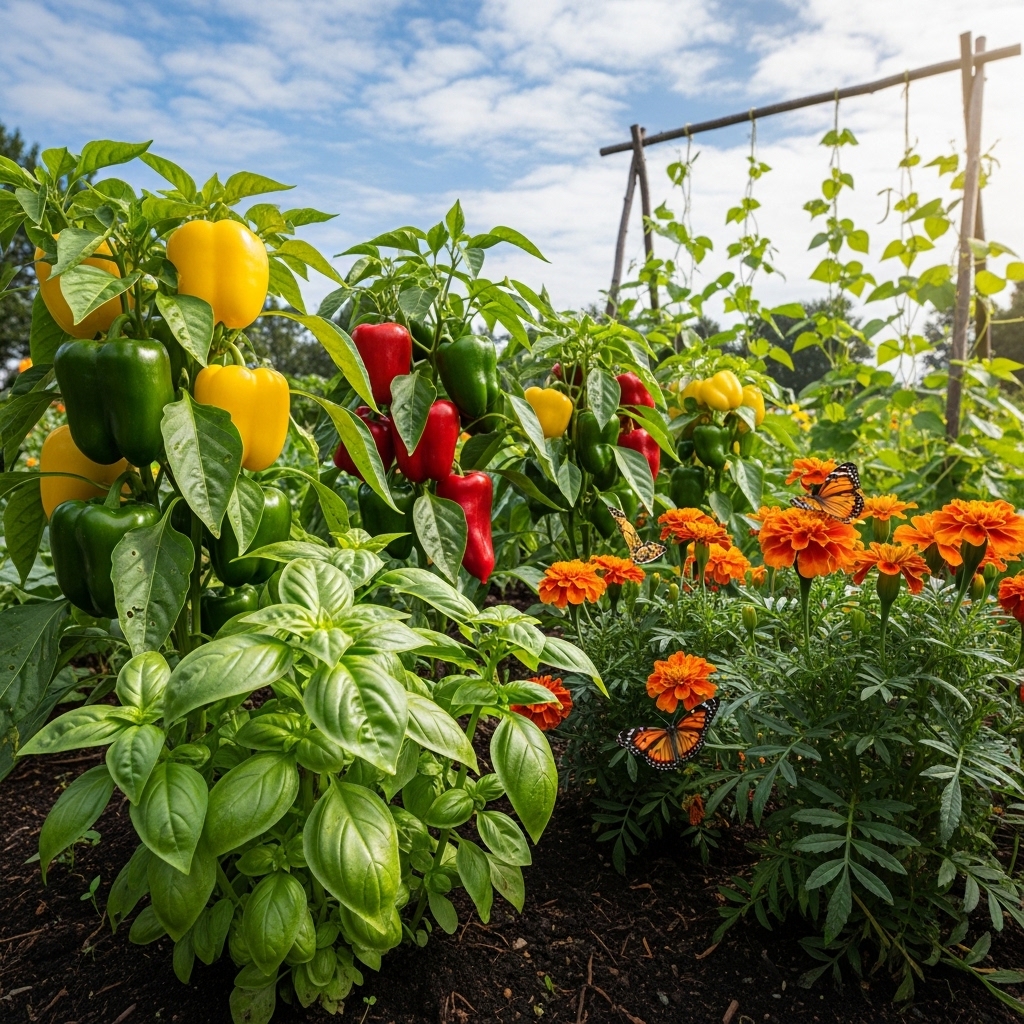
When planting peppers, some of the best companion plants include basil, tomatoes, onions, carrots, and marigolds. These companions not only enhance the growth of peppers but also protect them from pests and diseases.
Understanding Companion Planting
What is Companion Planting?
Companion planting is the practice of growing different plants close together for mutual benefits. It’s like creating a community in your garden where plants support each other’s growth. For instance, some plants can deter pests, while others can enhance flavor or nutrient uptake. I’ve always found it fascinating how nature has its way of balancing things out.
Benefits of Companion Planting
There are many benefits to companion planting that I’ve personally experienced. Firstly, it can improve plant health. By planting certain crops together, we can help them thrive by providing natural pest control and reducing competition for nutrients. For example, marigolds are known to repel harmful nematodes, which can damage our precious pepper plants. Additionally, companion planting can maximize space; it allows us to grow more plants in a smaller area and increases biodiversity, making our gardens more resilient.
I’ve also noticed that companion plants can help enhance flavors. Basil, when planted alongside peppers, can actually improve their taste. Furthermore, companion planting can lead to a more vibrant garden overall, attracting beneficial insects like bees and butterflies. This not only boosts pollination but also adds to the beauty of our outdoor spaces.
How Companion Planting Works with Peppers
When it comes to peppers, I’ve seen firsthand how well they do when paired with the right companions. Peppers are part of the nightshade family, which means certain plants can either support their growth or hinder it. For example, when I planted basil next to my peppers, I noticed that not only did the peppers flourish, but the basil thrived too, creating a lovely aromatic garden space. This is because basil can help repel pests like aphids and spider mites that tend to bother peppers.
Another interesting observation is that some companion plants can help improve soil conditions. Plants like onions, for instance, can deter certain pests while also helping to aerate the soil with their root systems. I’ve found that when I cultivate a diverse mix of plants, my garden feels more alive and balanced. Each plant plays its role, contributing to the overall health of the garden ecosystem.
In addition to improving pest resistance and soil conditions, companion planting can also assist with pollination. Having flowering plants nearby can attract pollinators, which is essential for the development of pepper fruits. I often make sure to include flowering companions that bloom at the same time as my peppers to create a buzzing, lively atmosphere in my garden.
Ultimately, I believe that companion planting is not just about what works best on paper; it’s about observing and interacting with the garden itself. Each planting season becomes a new opportunity to experiment and learn what combinations yield the best results. With peppers, I’ve found that the right companions can make all the difference, creating a flourishing garden that’s not only productive but also full of life.
Best Companion Plants for Peppers
1. Basil
Basil is often considered one of the best companions for peppers. I’ve noticed that their aromatic leaves can help to repel pests that might otherwise target our beloved peppers. Not only that, but basil and peppers also enhance each other’s flavor, making it a win-win for both plants. When I grow them together, I love knowing that I’m creating a delicious synergy right in my garden.
2. Tomatoes
Tomatoes are another fantastic companion for peppers. Both species thrive in similar conditions, which makes them great neighbors. I have grown them side by side and watched them flourish together, creating a lush, colorful patch. Plus, having tomatoes nearby can attract pollinators, further benefiting my pepper plants.
3. Onions
Onions are a sturdy companion plant for peppers. I’ve found that their strong scent can deter pests like aphids and caterpillars. They also don’t take up too much space, which is ideal for maximizing the garden area. When I plant onions with my peppers, I feel a sense of security, knowing that they’re working together to protect one another.
4. Carrots
Carrots can also be beneficial when planted alongside peppers. I’ve experienced that carrots do well in the cooler ground below pepper plants. This underground growth helps maximize space, and as the carrots develop, they loosen the soil, benefiting the root systems of nearby plants. It’s a beautiful example of how plants can complement each other in unexpected ways.
5. Spinach
Spinach is another great companion for peppers. They grow well together, as spinach can thrive in the cooler weather that peppers enjoy in early spring. I’ve found that planting them together creates a lush, green garden while offering a variety of harvest times. Plus, the leafy greens help provide some shade for younger pepper plants, promoting better growth overall.
6. Marigolds
Marigolds are often celebrated for their pest-repelling properties. I always include these vibrant flowers in my pepper garden because they attract beneficial insects and keep harmful ones at bay. Their bright colors also add a cheerful touch to my garden, making it visually appealing. When marigolds are close to my peppers, I feel like I’m creating a protective barrier around them.
7. Nasturtiums
Nasturtiums are not only beautiful but also incredibly useful companions. They attract aphids away from peppers, serving as a sacrificial plant. I’ve planted nasturtiums nearby and noticed they draw the pests away, allowing my peppers to thrive without interference. Plus, nasturtiums are edible and can add a peppery flavor to my salads, making them a delightful addition to my garden.
Plants to Avoid Near Peppers
1. Fennel
I’ve learned through my gardening experiences that fennel is a plant to steer clear of when planting peppers. While fennel is a beautiful plant with its feathery leaves and yellow flowers, it has a reputation for being a poor companion. I remember the first time I planted fennel near my peppers, thinking the contrast would look lovely. Unfortunately, fennel can inhibit the growth of nearby plants, especially peppers, by releasing allelopathic chemicals into the soil. After that, I decided to keep fennel far away from my pepper patch and focus on combinations that promote growth instead.
2. Kohlrabi
Kohlrabi is another plant that doesn’t play well with peppers. I used to think that all brassicas would be fine together, but kohlrabi can compete for nutrients, potentially stunting the growth of our beloved peppers. I remember seeing my peppers not thriving as they usually do, and after some research, I discovered that kohlrabi had likely been a factor. Now, I make a point to avoid planting kohlrabi in close quarters with my peppers, opting instead for more compatible companions that foster a healthier environment.
3. Eggplant
Eggplant is also a member of the nightshade family like peppers, but I’ve found that planting them together isn’t always the best idea. Both plants share similar nutrient needs and can attract the same pests. When I tried planting them side by side, I noticed that they both struggled with pests like spider mites and aphids, and it became a battle to keep them healthy. Since then, I’ve kept eggplants and peppers apart, allowing each to flourish in their own space without competing for resources.
4. Potatoes
Potatoes are another crop I learned to avoid when planting near peppers. While they are both nightshades, potatoes can harbor pests and diseases that can easily spread to peppers. In my early gardening days, I planted them too close together, and it became a headache trying to manage the pest situation. Now, I plan my garden layout carefully, ensuring that my potatoes are stationed far away from my peppers, giving both the room they need to thrive without interference.
Planting Techniques for Peppers and Their Companions
Intercropping
Intercropping has become one of my favorite techniques for planting peppers alongside their companions. This method involves growing two or more crops in proximity for mutual benefit. I’ve found that when I intermingle my peppers with plants like basil and marigolds, it not only maximizes my garden space but also enhances the flavor of my peppers. The close planting creates a diverse environment that can confuse pests while also improving pollination. I love walking through my garden and seeing the vibrant bursts of color and life that come from intercropping.
Row Planting
Row planting is another effective strategy that I’ve used to organize my garden. By planting my peppers in rows with companion plants alongside or within the same row, I can maintain an orderly look while still reaping the benefits of companion planting. I often alternate rows of peppers with rows of basil or marigolds, allowing for easy access when it comes time to harvest or tend to the plants. This method not only looks tidy but also makes it simple to keep an eye on the health of each plant.
Vertical Gardening
Vertical gardening has also been a game-changer for me, especially when space is limited. I’ve found that using trellises or cages for my peppers allows me to grow them upward, freeing up ground space for companion plants like spinach or nasturtiums. This technique not only helps maximize sunlight exposure for all plants but also creates a more diverse habitat that attracts beneficial insects. I remember the first year I tried vertical gardening with my peppers; it was exciting to see how much more I could grow in a small area. The combination of height and variety made my garden feel lush and productive.
Soil and Nutritional Considerations
Soil Requirements for Peppers
Understanding the soil requirements for peppers has been crucial in my gardening journey. I’ve realized that they thrive in well-draining soil that is rich in organic matter. My go-to method is to amend the soil with compost or well-rotted manure before planting. This not only provides the essential nutrients that peppers need but also helps with moisture retention. I remember when I first planted peppers without properly prepping the soil; their growth was stunted, and they didn’t produce well. Now, I make it a point to test my soil’s drainage and nutrient levels, ensuring my peppers have the best possible foundation.
Nutrient Needs of Companion Plants
Each companion plant I choose has specific nutrient needs that can influence the health of my peppers. I’ve learned that pairing plants with similar nutrient requirements helps minimize competition. For instance, since both basil and peppers enjoy nutrient-rich soil, planting them together means they can support each other’s growth. I find it fascinating how different plants can complement each other’s needs, creating a more balanced ecosystem in my garden.
pH Levels and Soil Amendments
Maintaining the right pH levels in the soil is another key factor I’ve discovered when growing peppers. They prefer a slightly acidic to neutral pH, around 6.0 to 7.0. I often test my soil’s pH before planting, and if I find it’s too high or too low, I’ll amend it accordingly with lime or sulfur. This attention to detail has made a noticeable difference in the health of my plants. I remember a year when I neglected to check the pH, and my peppers struggled to flourish. Now, I never skip this step, ensuring my garden is a place where plants can thrive together.
Watering and Care Tips
Watering Frequency for Peppers and Companions
Watering is an essential part of growing healthy peppers and their companions. I’ve found that peppers prefer consistent moisture but can suffer from overwatering. I usually check the soil moisture by sticking my finger about an inch deep; if it feels dry, it’s time to water. In my experience, providing deep watering a couple of times a week is sufficient, especially during hot weather. I also ensure that my companion plants are getting the right amount of water since they can impact each other’s health. I remember when I overwatered my garden one year; it was a learning moment about balance and careful monitoring.
Pest Management Strategies
Managing pests is another area where companion planting shines. I often rely on the natural pest-repelling properties of plants like marigolds and nasturtiums to keep harmful insects at bay. Additionally, I practice crop rotation and introduce beneficial insects like ladybugs into my garden to help manage populations. I’ve noticed that maintaining a diverse garden leads to healthier plants that can withstand pest pressure better. It’s rewarding to see how the right combinations can create a self-sustaining environment.
Supporting Growth with Fertilizers
Fertilizers play a vital role in supporting the growth of my peppers and their companions. I’ve learned to use organic fertilizers, such as fish emulsion or compost tea, which provide the nutrients without the risk of chemical buildup. I typically apply fertilizer at the beginning of the planting season and again during the growing phase when I notice my plants need an extra boost. This approach has dramatically improved my yields over the years, making my garden a much more productive space.
Frequently Asked Questions
What are some of the best companion plants for peppers?
Some of the best companion plants for peppers include basil, tomatoes, onions, carrots, and marigolds. These companions enhance the growth of peppers and protect them from pests and diseases.
What is companion planting?
Companion planting is the practice of growing different plants close together for mutual benefits, such as natural pest control and improved nutrient uptake.
How does companion planting benefit peppers?
Companion planting can improve pepper health by providing natural pest control, reducing competition for nutrients, and enhancing flavors. It can also maximize space and increase biodiversity in the garden.
Which companion plant is known to repel harmful nematodes?
Marigolds are known to repel harmful nematodes, which can damage pepper plants.
Why should I avoid planting fennel near peppers?
Fennel should be avoided near peppers because it releases allelopathic chemicals into the soil that can inhibit the growth of nearby plants, including peppers.
What planting technique can help maximize garden space for peppers?
Intercropping is an effective technique that involves growing two or more crops in proximity for mutual benefit, which can maximize garden space and enhance plant health.
What are the soil requirements for growing peppers?
Peppers thrive in well-draining soil that is rich in organic matter. Amending the soil with compost or well-rotted manure before planting is recommended.
How often should I water peppers and their companions?
Peppers prefer consistent moisture but can suffer from overwatering. It’s best to check the soil moisture and provide deep watering a couple of times a week, especially during hot weather.
What role do companion plants play in pest management?
Companion plants like marigolds and nasturtiums help keep harmful insects at bay with their natural pest-repelling properties, contributing to a healthier garden ecosystem.
What type of fertilizers are recommended for peppers?
Organic fertilizers, such as fish emulsion or compost tea, are recommended for peppers, as they provide essential nutrients without the risk of chemical buildup.