
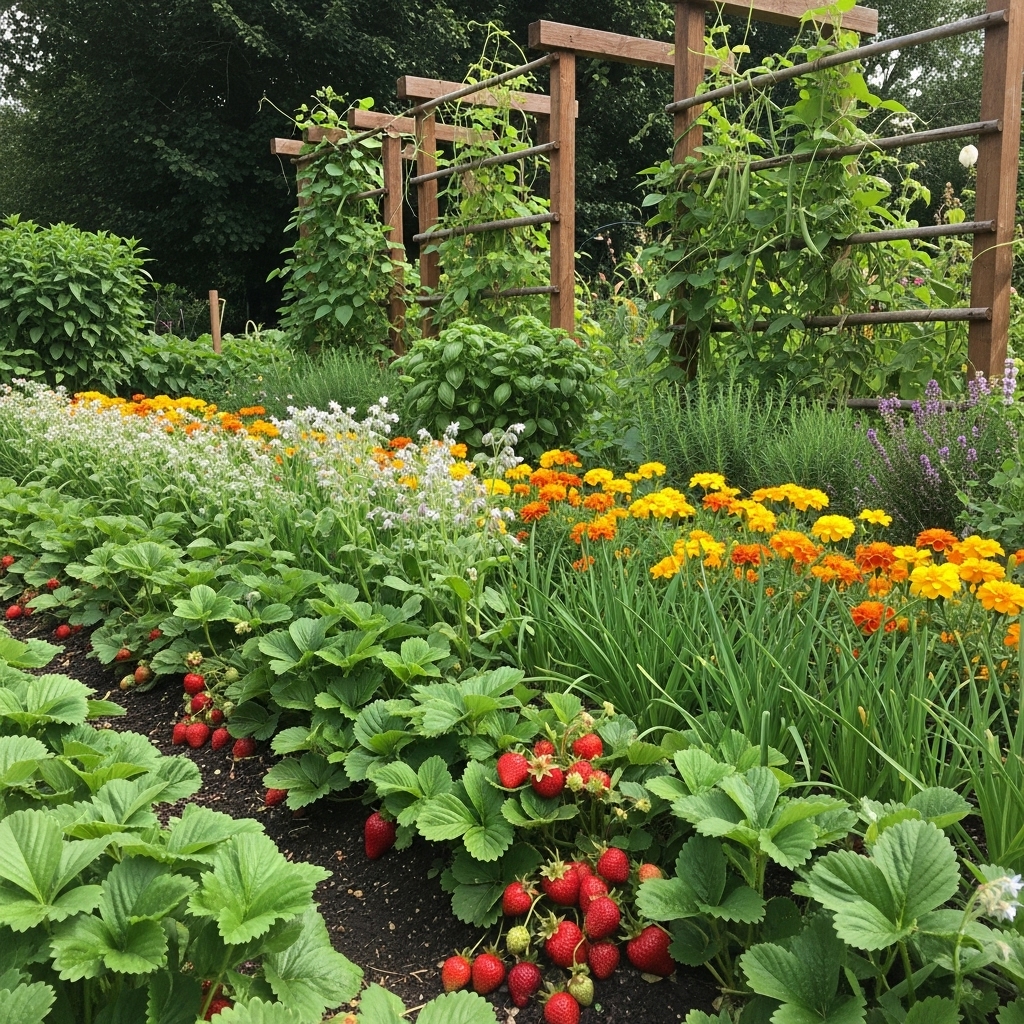
Strawberries thrive alongside several companion plants that can enhance their growth, yield, and flavor. Some of the best companions include herbs like basil and mint, vegetables like spinach and lettuce, and flowers such as nasturtiums and marigolds. Read Interesting article: Unlock the Secrets of Companion Planting for a Healthier, Bigger Harvest
Understanding Strawberry Plants
Types of Strawberries
When I first started growing strawberries, I quickly learned that not all strawberries are created equal. There are three main types: June-bearing, everbearing, and day-neutral. June-bearing strawberries produce a large crop in late spring to early summer. I remember harvesting buckets full of juicy berries during this time! Everbearing strawberries, on the other hand, give two to three harvests from spring to fall. Day-neutral varieties flower and produce fruit continuously throughout the growing season, which is perfect for those who want fresh strawberries for a longer time. Each type has its own unique characteristics, which can affect what you choose to plant alongside them.
Growing Conditions for Strawberries
Strawberries prefer well-drained soil enriched with organic matter. I often mix compost into my planting beds to give them a nutrient boost. They thrive in full sun, needing at least six hours of sunlight each day. I’ve found that planting them in a spot that gets morning sun but is sheltered from the harsh afternoon heat works wonders. Additionally, strawberries like slightly acidic soil with a pH between 5.5 and 6.5, so I always test my soil before planting. These conditions are crucial for strong growth and delicious fruit.
Benefits of Companion Planting
Improved Growth and Yield
One of the biggest surprises for me in gardening was discovering how companion planting can lead to improved growth and yield. When I started planting herbs like basil near my strawberries, I noticed that the strawberries seemed to thrive. Companion plants can create a beneficial environment, providing shade, support, or even nutrients that help strawberries grow more robustly. I believe that planting compatible plants together can create a mini-ecosystem that promotes health and productivity.
Pest and Disease Management
Another fantastic benefit of companion planting is pest and disease control. I remember dealing with aphids on my strawberry plants one year, and it was a nightmare! However, I learned that certain companion plants can deter pests naturally. For example, planting marigolds can help keep nematodes and aphids at bay, while herbs like mint can repel ants and other pests. By incorporating these plants, I felt like I had a natural defense system in my garden.
Soil Health and Nutrient Management
Companion planting also plays a significant role in maintaining soil health. I’ve noticed that various plants can contribute different nutrients to the soil. For instance, legumes can fix nitrogen, which benefits nearby plants, including strawberries. Planting a variety of companions helps keep the soil balanced and rich in nutrients. I often rotate plants in my garden beds to avoid nutrient depletion and to keep the soil lively and productive. This practice not only benefits my strawberries but also enhances the overall health of my garden.
Best Companion Plants for Strawberries
Herbs That Pair Well with Strawberries
When it comes to herbs, I’ve found several that work wonders alongside strawberries. They not only enhance flavor profiles but also help with pest control and attract beneficial insects.
Basil
Basil is one of my favorite herbs to plant with strawberries. Not only does it smell amazing, but it also helps repel certain pests. I love snipping fresh basil leaves for salads, and it complements strawberries beautifully. Plus, the two plants enjoy similar growing conditions, making them perfect companions.
Mint
Mint is another herb I recommend, but with a word of caution! Mint can spread aggressively, so I always plant it in a container. The aroma of mint can deter pests like aphids and cabbage moths, which is a huge plus. I’ve also used mint in refreshing smoothies with strawberries, creating a delightful summer treat.
Thyme
Thyme is a hardy herb that pairs well with strawberries. It grows low to the ground, which can help shade the roots of strawberries and retain moisture in the soil. I’ve noticed that thyme attracts beneficial insects like ladybugs, which help keep pest populations in check. Plus, the earthy flavor of thyme works wonderfully in both savory and sweet dishes.
Vegetables That Complement Strawberries
In addition to herbs, planting vegetables can also be beneficial. Here are some that I’ve had success with:
Spinach
Spinach is a great companion because it matures quickly and can be harvested before strawberries reach full size. I often plant spinach in the cooler months alongside my strawberry plants. The shade from the strawberry leaves helps keep the spinach cool during warmer periods, and I enjoy fresh spinach salads all spring long! Read Interesting article: Brown Leaves on Strawberry Plants: Understanding the Causes and Solutions
Lettuce
Lettuce is another fast-growing vegetable that works well with strawberries. I like to plant lettuce in rows around my strawberries, which can help suppress weeds and provide some shade. Plus, there’s nothing like a fresh salad with strawberries tossed in for a hint of sweetness!
Radishes
Radishes are a fun vegetable to grow alongside strawberries. They germinate quickly and can be harvested in as little as a month. Planting radishes can deter pests like cucumber beetles, which is a bonus. I love the crunch of fresh radishes in my salads, especially when they come straight from my garden.
Flowers That Attract Beneficial Insects
Flowers can play a key role in attracting beneficial insects, which help with pollination and pest control. Here are a few I’ve found to be particularly effective:
Nasturtiums
Nasturtiums are not only beautiful but also a fantastic companion for strawberries. They attract pollinators and beneficial insects while deterring pests like aphids. I often use their vibrant flowers in salads for a pop of color and a peppery flavor.
Marigolds
Marigolds are one of my go-to flowers in the garden. Their bright blooms are visually appealing, and they can help repel nematodes and other pests. I’ve planted them in between my strawberry rows and noticed a significant decrease in pest activity. Plus, they’re easy to grow!
Pansies
Pansies are another lovely flower that can accompany strawberries. They attract pollinators and can provide some ground cover. I enjoy their cheerful colors in my garden, and their edible flowers add a nice touch to salads and desserts.
Plants to Avoid Near Strawberries
Common Incompatible Plants
As much as I love growing strawberries and their companions, I’ve learned the hard way that not all plants get along. Some can actually hinder strawberry growth or even attract pests. It’s important to be mindful of these incompatible plants to ensure a healthy garden.
Cabbage Family
If you’ve ever grown cabbage, kale, or broccoli, you might have noticed they don’t mix well with strawberries. I once planted strawberries near some cabbage, hoping to maximize space, but soon realized it was a mistake. The cabbage family can attract pests like aphids, which then made their way to my strawberries. I found that keeping these plants separated helped reduce pest issues and allowed my strawberries to thrive.
Potatoes
I used to think that planting potatoes and strawberries in close proximity would be fine, but I discovered otherwise. Potatoes are susceptible to diseases like blight, which can easily spread to strawberries. I remember a season where I lost both my potatoes and strawberries due to this nasty disease. Now, I always keep these two plants at a good distance to protect my strawberry patch.
Tomatoes
Tomatoes, while they are a garden favorite for many, don’t make the best neighbors for strawberries. They share similar pest issues, such as aphids and spider mites, which can create a double whammy in your garden. In my experience, I’ve noticed that when tomatoes are planted too close to strawberries, both plants seem to struggle. To maintain a healthy garden, I recommend planting them in separate areas and avoiding the temptation to put them next to each other.
Planting Strategies for Companion Plants
Spacing and Layout Tips
When I first started companion planting with strawberries, I didn’t pay much attention to spacing. I quickly learned that proper layout can make a significant difference. For strawberries, I usually plant them about 12 to 18 inches apart to give them room to spread and breathe. This spacing also allows for companion plants to thrive without overcrowding.
For herbs, I tend to plant them in clusters around my strawberries. For example, basil and thyme can be grouped together close to the strawberries without competing for space. I often use a staggered layout, where I place taller plants, like tomatoes, further back and shorter plants, like lettuce or pansies, in the front. This way, every plant gets adequate sunlight and airflow, which is essential for preventing disease.
Timing of Planting
Timing is another key factor that I’ve found to be crucial in companion planting. I usually start my strawberries early in the spring, right after the last frost. This is when I also begin putting in my fast-growing companions, like spinach and radishes. They can be harvested before the strawberries need all the space. I’ve learned to stagger my planting times so that I can maximize the yield from my garden throughout the growing season. Read Interesting article: When to Plant Strawberries for Maximum Fruit
For example, I often wait until my strawberries are established before adding in herbs like basil and thyme. This gives the strawberries a chance to get a good foothold and reduces competition for nutrients and space. I’ve found that planting these companions a few weeks later helps keep everything healthier in the long run.
Maintenance Tips for Companion Planting with Strawberries
Watering Practices
Watering has always been a bit of a balancing act for me. Strawberries require consistent moisture, but I’ve learned that companion plants can have different water needs. I usually water my strawberries thoroughly once a week, ensuring the soil stays moist but not soggy. When I have companion plants like lettuce and spinach, I keep an eye on them because they can dry out faster. I often use mulch around my strawberries to help retain moisture and suppress weeds, which benefits all the plants in the area.
Fertilization Needs
Fertilization is another area where I’ve had to adapt my approach. Strawberries like nutrient-rich soil, so I typically add organic fertilizers or compost in early spring and again after the first harvest. However, I’ve learned to be cautious about how much I apply around my companion plants. Some, like spinach, can be sensitive to excess nitrogen. I’ve started to monitor the specific needs of each plant to ensure they all get what they need without overdoing it.
Pest Control Methods
With pest control, I often rely on a combination of natural methods and companion planting strategies. I’ve found that keeping a diverse planting scheme helps confuse pests and deter them from targeting my strawberries. I regularly check for signs of pests and diseases, but I also make sure to have companion plants that attract beneficial insects. For example, planting flowers like marigolds not only brightens my garden but also brings in ladybugs and other pollinators. I’ve seen a noticeable difference in pest populations since I started using these natural methods.
Harvesting and Enjoying Strawberries
When to Harvest Strawberries
Harvesting strawberries is one of the most rewarding experiences for me as a gardener. I remember the excitement I felt the first time I picked a ripe berry straight from the plant. Knowing when to harvest is key to getting the best flavor. Strawberries are typically ready to pick when they are bright red all over, with no green patches. I’ve learned that the best time to harvest is in the morning after the dew has dried, which helps keep the berries fresh and firm.
It’s important to gently twist the berry while pulling it from the stem to avoid damaging the plant. I usually check my strawberry plants every few days during the peak season. This regular harvesting not only ensures I get the ripest fruit but also encourages the plants to produce more berries. I’ve found that leaving overripe berries on the plant can attract pests, so it’s best to keep up with the picking.
Recipes Featuring Strawberries and Companion Plants
After all that hard work in the garden, it’s time to enjoy the fruits of our labor! Strawberries are incredibly versatile, and I’ve discovered so many delicious ways to incorporate them into meals, especially when paired with other companion plants. Here are a few of my favorite recipes that highlight strawberries and their companions.
Strawberry Basil Salad
This refreshing salad has become a staple in my kitchen. I combine fresh strawberries with basil, mixed greens, and a homemade vinaigrette. The sweet strawberries paired with the fragrant basil create a delightful flavor profile that’s perfect for summer. Sometimes, I even toss in some crumbled feta for an extra kick!
Mint Strawberry Smoothie
On hot days, I love whipping up a mint strawberry smoothie. I blend fresh strawberries with a handful of mint leaves, yogurt, and a splash of milk or juice. It’s incredibly refreshing and a great way to cool down. I remember serving this at a family gathering, and it was a hit with both kids and adults!
Spinach and Strawberry Salad
Another favorite of mine is a spinach and strawberry salad. I mix fresh spinach with sliced strawberries, nuts, and a simple balsamic dressing. The combination of flavors is delightful, and it’s a nutritious option that I often bring to potlucks. Adding some grilled chicken or tofu can turn this salad into a complete meal.
Strawberry Radish Salsa
For something a bit different, I enjoy making strawberry radish salsa. I chop up strawberries, radishes, red onion, and cilantro, then mix them with lime juice and a pinch of salt. This salsa is fantastic with tortilla chips or as a topping for grilled fish or chicken. It adds a bright, zesty flavor that complements so many dishes.
Strawberry Lemonade with a Twist
Lastly, I can’t forget about drinks! I love to make homemade strawberry lemonade. I blend fresh strawberries with lemon juice and a bit of honey, then mix it with water. Sometimes, I infuse it with mint for an extra refreshing twist. It’s a perfect drink for summer parties, and the vibrant color is always a crowd-pleaser.
With all these delicious recipes at my fingertips, I feel grateful for the strawberries and their companion plants. They not only enhance my garden but also enrich my meals with flavor and nutrition. I encourage everyone to explore the endless possibilities of using fresh strawberries in the kitchen. Whether you’re tossing them in salads or blending them into smoothies, you’ll find that these little gems from the garden can elevate any dish!
Frequently Asked Questions
What are the three main types of strawberries?
The three main types of strawberries are June-bearing, everbearing, and day-neutral. June-bearing strawberries produce a large crop in late spring to early summer, everbearing strawberries provide two to three harvests from spring to fall, and day-neutral varieties flower and produce fruit continuously throughout the growing season.
What soil conditions do strawberries prefer?
Strawberries prefer well-drained soil enriched with organic matter, slightly acidic soil with a pH between 5.5 and 6.5, and they thrive in full sun, needing at least six hours of sunlight each day.
What are some benefits of companion planting with strawberries?
Companion planting can lead to improved growth and yield, pest and disease management, and enhanced soil health and nutrient management for strawberries.
Which herbs are recommended as companions for strawberries?
Herbs that pair well with strawberries include basil, mint, and thyme. Basil helps repel pests, mint can deter ants and aphids, and thyme attracts beneficial insects while providing ground cover.
What vegetables can be planted alongside strawberries?
Vegetables that complement strawberries include spinach, lettuce, and radishes. Spinach matures quickly, lettuce suppresses weeds, and radishes can deter pests like cucumber beetles.
What flowers are beneficial when planted near strawberries?
Flowers such as nasturtiums, marigolds, and pansies attract beneficial insects, help with pollination, and can deter pests like aphids and nematodes.
Which plants should be avoided near strawberries?
Plants to avoid near strawberries include members of the cabbage family (like cabbage, kale, and broccoli), potatoes, and tomatoes, as these can attract pests or spread diseases.
What spacing is recommended when planting strawberries and their companions?
Strawberries should be planted about 12 to 18 inches apart to allow for growth and airflow, while companion plants can be clustered around them without overcrowding.
When is the best time to harvest strawberries?
Strawberries are typically ready to harvest when they are bright red all over, with no green patches. The best time to harvest is in the morning after the dew has dried.
Can you give an example of a recipe that features strawberries and companion plants?
One example is a Strawberry Basil Salad, which combines fresh strawberries with basil, mixed greens, and a homemade vinaigrette for a refreshing summer dish.