
The best time to plant blueberry bushes for optimal growth is in the spring or fall, depending on your climate. I’ve found that planting during these seasons gives the bushes a better chance to establish strong roots before the heat of summer or the cold of winter arrives. Read Interesting article: How to Plant Blueberries for High Yield
Understanding Blueberry Bushes
Growing blueberries can be one of the most rewarding gardening experiences, not just for the delicious fruit they yield but also for the rich, vibrant foliage they provide. When I first decided to grow blueberries, I was amazed by how much I learned about these bushes. Understanding the different types of blueberry bushes, their growth requirements, and the benefits they offer can set you on the right path for a fruitful gardening adventure.
Types of Blueberry Bushes
There are three main types of blueberry bushes: highbush, lowbush, and rabbitsfoot. Highbush blueberries are the most commonly cultivated variety, growing up to 6 feet tall and producing large, sweet berries. These are the ones I typically recommend for home gardens, especially since they thrive in most areas across the U.S. Lowbush blueberries are shorter, typically around 1 to 2 feet tall, and often produce smaller, more intensely flavored berries. They’re excellent for ground cover or in containers, but they do require specific conditions to thrive. Lastly, rabbitsfoot blueberries are a lesser-known variety, mainly found in the south, and they adapt well to warmer climates.
Growth Requirements
Blueberries have specific growth requirements that I didn’t fully appreciate until I started growing them myself. They thrive in acidic soil, ideally with a pH between 4.5 and 5.5. If you’ve ever tried to grow something in less-than-ideal soil, you know how frustrating it can be. I started by testing my soil and, when necessary, amending it with sulfur or organic matter to lower the pH. They also need good drainage because blueberries don’t like to sit in waterlogged soil. I remember the first time I planted them without proper drainage; I lost a few bushes due to root rot. It’s a mistake I won’t make again!
Benefits of Growing Blueberries
The benefits of growing blueberries extend beyond just enjoying their delicious fruits. For me, one of the biggest perks is that they are perennial plants, meaning they come back year after year. This makes them a fantastic investment for any garden. Besides the fruit, blueberries offer beautiful blooms in the spring and stunning fall foliage. They also attract beneficial wildlife, like bees, to the garden, which can help with pollination for other plants. Plus, they are packed with antioxidants and vitamins, making them a healthy addition to my diet. I often find myself snacking on them right off the bush!
Optimal Planting Seasons
Choosing the right time to plant blueberries is crucial for their success. I’ve experimented with both spring and fall plantings, and each has its benefits. Understanding the seasonal nuances can help you decide when to get your hands dirty in the garden.
Spring Planting
Spring is often seen as the ideal time to plant blueberries, especially in regions with harsh winters. When I planted my bushes in April, they had the entire growing season to establish strong root systems. This timing allows them to soak up the warming soil and longer days, which encourages healthy growth. Just be cautious of late frosts; I learned this the hard way when a sudden cold snap caught my newly planted bushes off guard. Always check your local frost dates to avoid this situation!
Fall Planting
On the other hand, fall planting can also be very effective. I tried this once in late September, and it worked wonders. Planting in the fall gives the bushes a chance to establish roots while the soil is still warm, and they can benefit from winter’s moisture as they settle in. This method works particularly well in milder climates where winters aren’t too severe. The key is to plant early enough so that the bushes can establish before the ground freezes. I remember being so excited to see new buds in early spring after my fall planting!
Climate Considerations
Of course, your local climate plays a significant role in deciding when to plant. If you live in a warm area, spring might be the best bet to avoid scorching heat in summer. Conversely, if you’re in a cooler region, fall could be preferable. I’ve seen friends in different states have varied experiences based on their climate. Always keep in mind local weather patterns, as they can greatly influence the success of your blueberries. It’s something I’ve learned to factor into my planting calendar every year.
Overall, understanding when to plant blueberry bushes can set you up for a thriving garden. I’ve shared my journey, and I encourage you to explore the timing that works best for your specific conditions. The joy of growing blueberries is just around the corner if you plant them right! Read Interesting article: How to Plant Blueberries for Maximum Fruit
Ideal Growing Conditions
Soil Requirements
When I first started my blueberry journey, I quickly realized that the type of soil I used played a massive role in my success. Blueberries thrive in acidic soil, ideally with a pH level between 4.5 and 5.5. I remember testing my soil with a simple kit I picked up at the garden center. It was an eye-opener! If your soil is too alkaline, blueberries can struggle to absorb essential nutrients, which can stunt their growth. I found that adding peat moss and sulfur was a great way to lower the pH. It’s a bit of an investment upfront, but trust me, it pays off in the long run when you’re harvesting those delicious berries!
Sunlight Needs
Another essential factor to consider is sunlight. Blueberries are sun lovers. They need at least 6 to 8 hours of direct sunlight each day to produce sweet, juicy fruit. I learned this the hard way when I planted a few bushes in a partially shaded area, thinking they’d be fine. They struggled to grow, and I ended up with fewer berries than expected. Since then, I ensure my bushes are in a sunny spot, where they can soak up all that glorious light. I like to observe how the sun moves across my garden throughout the day, making sure my blueberry bushes are getting their fair share!
Watering Guidelines
Watering is another critical aspect that I had to get right. Blueberries prefer consistently moist soil, but they absolutely despise being waterlogged. I remember my first year, I was so excited about my new plants that I overwatered them, thinking they needed as much moisture as possible. Unfortunately, I lost a few bushes to root rot. Now, I stick to a routine: I check the soil moisture regularly and only water when the top inch feels dry. Using mulch around the bushes has also helped retain moisture without overdoing it. It’s a balancing act, but once you find that rhythm, your plants will thank you!
Site Selection for Blueberry Bushes
Choosing the Right Location
Choosing the right location is a crucial step in the blueberry planting process. I found that a well-drained area with plenty of sunlight was ideal for my bushes. In my garden, I had a spot that gets morning sun but is shaded in the afternoon. This setup has worked wonderfully because it protects the plants from the scorching midday heat while still allowing them to bask in the sun early on. Pay attention to your own garden layout to find that perfect spot where your blueberries can thrive!
Spacing Between Bushes
When planting multiple blueberry bushes, spacing is essential. I initially planted them too close together, and it became a hassle when it was time to prune or harvest. Now I space mine about 4 to 5 feet apart. This not only allows for good air circulation—helping to prevent disease—but also gives each bush enough room to grow and spread out. I love watching them flourish without crowding each other; it’s like giving them their own little space to shine.
Protection from Wind and Pests
Another thing I learned was the importance of protecting my blueberry bushes from wind and pests. Blueberries can be delicate, and strong winds can damage the branches or even uproot smaller plants. I decided to plant mine near a natural windbreak, like a row of trees, which has provided some great protection. Additionally, I’ve encountered pests like birds and squirrels that love to munch on my blueberries. I found that using netting helped keep them at bay, ensuring I could enjoy the fruits of my labor without sharing too much with the wildlife!
Preparing for Planting
Soil Testing and Amendments
Before I even think about planting, I always conduct a thorough soil test. This has become a crucial part of my gardening routine. I remember the first time I skipped this step and ended up with bushes that just wouldn’t thrive. Now, armed with my soil test results, I know exactly what amendments to add. If the pH is too high, I’ll add sulfur or peat moss to lower it. Sometimes I’ll even mix in compost to boost nutrients. This preparation makes a world of difference!
Choosing Healthy Plants
When it comes to selecting plants, I make sure to choose the healthiest bushes possible. I’ve visited local nurseries and carefully inspected the roots and leaves. Healthy roots should be white and firm, while leaves should be vibrant and free of spots. I learned the hard way that picking up a less-than-ideal plant can set back your gardening efforts. It’s worth spending a little extra time finding quality plants!
Planting Techniques
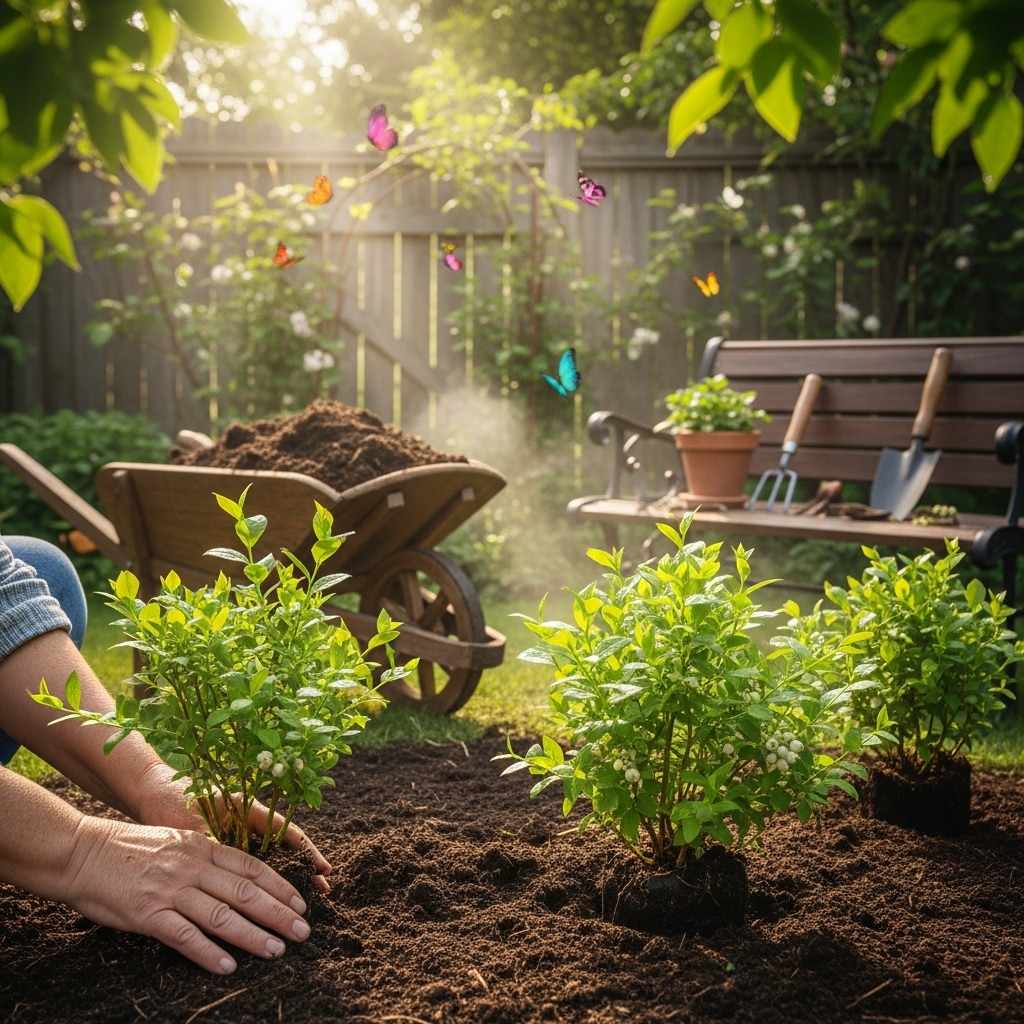
Finally, I’ve refined my planting technique over the years. I dig a hole that’s twice as wide as the root ball but no deeper than the plant itself. This way, I avoid burying the stem, which can lead to rot. I often mix some compost into the soil I backfill with, giving the roots a nutrient boost right from the start. After planting, I give them a good soak and add a layer of mulch to retain moisture. It’s a simple process, but it’s made all the difference in how my blueberries grow!
Common Mistakes to Avoid
Overwatering and Underwatering
I can’t stress enough how crucial it is to find the right balance when it comes to watering your blueberry bushes. When I first started, I had a real struggle with this. I either overwatered or underwatered, often flipping back and forth between the two extremes. Overwatering can lead to root rot, while underwatering leaves the plants stressed and less productive. I remember one summer when I thought my bushes looked thirsty, so I poured extra water on them, only to find they started wilting. It was a tough lesson! Now, I stick to my routine of checking the soil moisture regularly, making sure to only water when the top inch feels dry. I learned that using a moisture meter can also be a game-changer—it takes the guesswork out of the equation!
Improper Pruning
Pruning is another area where I made mistakes early on. I used to think that the more I pruned, the better my bushes would do. However, I quickly learned that improper pruning could harm their growth. Blueberries should be pruned in late winter or early spring while they’re still dormant. I’ve noticed that cutting back too much or at the wrong time can lead to reduced fruit production and stunted growth. Now, I take a more thoughtful approach, focusing on removing dead or weak branches and allowing space for healthy growth. It’s like giving my bushes a fresh start each year!
Neglecting Fertilization
I used to underestimate the importance of fertilizing my blueberry bushes. I thought that as long as they were in good soil, they would take care of themselves. But I quickly discovered that they need specific nutrients to thrive. I remember the first time I neglected fertilization; my bushes produced fewer berries than I expected. Now, I make it a point to use a fertilizer designed for acid-loving plants, applying it in early spring and again in late summer. This has become part of my routine, and I can see the difference in the health and yield of my blueberries!
Maintenance After Planting
Fertilization Schedule
Once my blueberry bushes are planted, staying on top of their fertilization needs is key. I’ve learned that a consistent schedule helps keep my plants healthy and productive. I usually start with a balanced fertilizer in early spring, which gives them a boost as they begin to grow. Then, I switch to a fertilizer higher in potassium during the summer, as this helps improve fruit quality. I remember the first time I didn’t follow a schedule; my bushes looked weak and produced tiny berries. Now, I keep a calendar reminder for fertilization—it’s that important!
Mulching Benefits
Mulching has become one of my favorite maintenance techniques. I discovered the benefits of mulch during my second year of blueberry gardening. By adding a layer of organic mulch around my bushes, I noticed significant improvements in moisture retention and weed control. Plus, it helps maintain that acidic soil pH that blueberries love! I typically use pine bark or wood chips, which break down over time and add nutrients back into the soil. I remember how easy it was to manage weeds once I started mulching—it’s like giving my bushes a cozy blanket that keeps them happy and healthy.
Regular Pest and Disease Management
Pest and disease management is another area that requires vigilance. I’ve faced my fair share of challenges, from pesky birds snatching berries to fungal diseases that can threaten the health of the bushes. I’ve found that regularly inspecting my plants for signs of pests or disease makes a huge difference. When I notice something off, I act quickly, whether it’s using organic pesticides or simple home remedies like neem oil. I also make it a point to keep the surrounding area clean and free of debris to minimize disease risks. It’s all about creating a healthy environment for my blueberries to flourish!
Signs of Healthy Growth
Leaf Color and Texture
One of the best parts of gardening is admiring the signs of healthy growth. I’ve learned to pay close attention to the leaves of my blueberry bushes. Healthy leaves are usually vibrant green, firm, and free from spots or discoloration. I remember when I first noticed my bushes showing signs of stress—yellowing leaves were a clear indicator that something was off. Now, I make it a habit to monitor their color and texture regularly. If I see any changes, I investigate further to address any potential issues before they escalate.
Fruit Development Stages
Watching the fruit development stages is always exciting for me. From the tiny green berries to the plump, juicy ones ready for harvest, it’s a real joy! I’ve learned to be patient during this process, understanding that each stage has its importance. If I see my berries starting to shrivel or drop, I know they need immediate attention, whether it’s more water or protection from pests. Timing is everything when it comes to harvesting, and I love keeping an eye on those little changes as they grow!
Root Health Indicators
Root health is something I didn’t consider much at first, but I quickly learned how vital it is. I’ve found that checking the roots is essential, especially when I’m replanting or transplanting. Healthy roots should be firm and white, while any signs of darkness or mushiness indicate trouble. I’ve had to dig up a few bushes in the past to check their roots, and it was often a wake-up call. Now, I understand that taking care of the roots is just as important as caring for the leaves and fruit, ensuring a well-rounded approach to my blueberry gardening.
Frequently Asked Questions
What is the best time to plant blueberry bushes?
The best time to plant blueberry bushes for optimal growth is in the spring or fall, depending on your climate.
What are the main types of blueberry bushes?
There are three main types of blueberry bushes: highbush, lowbush, and rabbitsfoot. Highbush blueberries are the most commonly cultivated variety, while lowbush blueberries are shorter and often used for ground cover. Rabbitsfoot blueberries are mainly found in the south and adapt well to warmer climates.
What soil conditions do blueberry bushes require?
Blueberries thrive in acidic soil, ideally with a pH between 4.5 and 5.5. They also need good drainage as they do not like to sit in waterlogged soil.
What sunlight requirements do blueberry bushes have?
Blueberries require at least 6 to 8 hours of direct sunlight each day to produce sweet, juicy fruit.
What watering guidelines should be followed for blueberry bushes?
Blueberries prefer consistently moist soil but should not be waterlogged. It’s important to check the soil moisture regularly and only water when the top inch feels dry.
How should blueberry bushes be spaced when planting?
When planting multiple blueberry bushes, they should be spaced about 4 to 5 feet apart to allow for good air circulation and give each bush enough room to grow.
What are some common mistakes to avoid when growing blueberries?
Common mistakes include overwatering or underwatering, improper pruning, and neglecting fertilization, which can all negatively affect the health and yield of the bushes.
What is the importance of mulching for blueberry bushes?
Mulching helps with moisture retention, weed control, and maintaining the acidic soil pH that blueberries love, making it a beneficial practice for their growth.
How can I tell if my blueberry bushes are healthy?
Healthy blueberry bushes typically have vibrant green leaves free from spots or discoloration. Monitoring the leaves, fruit development, and root health are essential indicators of their overall well-being.
What should be done after planting blueberry bushes?
After planting, it’s important to follow a fertilization schedule, regularly manage pests and diseases, and observe the plants for signs of healthy growth. Read Interesting article: Florida’s Hidden Gem: Japanese Blueberry Trees in Landscaping