
The best time to plant carrots for the best harvest is in early spring or late summer to early fall, depending on your climate. I’ve found that timing is crucial because it directly impacts the flavor and texture of the carrots, as well as their overall yield. Read Interesting article: How to Plant Carrots for Bigger Roots
Understanding Carrot Varieties
Types of Carrots (Nantes, Imperator, Danvers)
When I first started gardening, I was surprised by the variety of carrots available. Each type has unique characteristics that can affect both growth and taste. For instance, Nantes carrots are known for their sweet flavor and smooth texture, making them a favorite for fresh eating. They typically grow to about 6-7 inches long and have a cylindrical shape. Imperator carrots, on the other hand, are longer and taper more significantly, reaching lengths of up to 10-14 inches. These are often found in grocery stores because they produce a larger yield. Lastly, the Danvers variety is quite versatile, known for its robust nature and ability to thrive in various soil types. I recommend trying a mix of these types to see which ones you enjoy the most.
Choosing the Right Variety for Your Climate
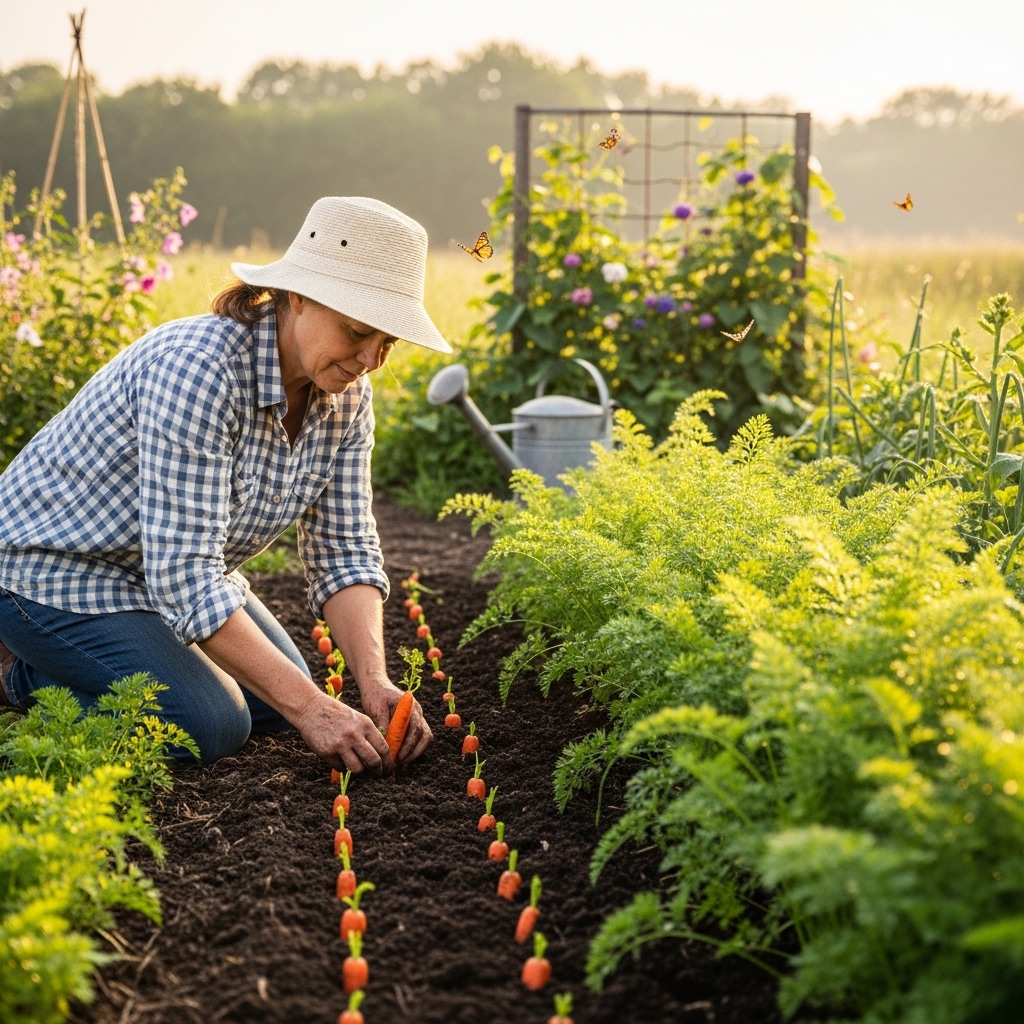
Choosing the right carrot variety for your climate can make all the difference in your gardening success. In my experience, understanding your local growing conditions is essential. For instance, if you live in a warmer climate, you might prefer heat-tolerant varieties like Danvers. If you’re in a cooler region, Nantes carrots may be a better choice as they tend to thrive in cooler soils. I learned that checking with local gardening groups or extension services can provide insight into which varieties are best suited for specific climates. Additionally, consider how long you want to grow your carrots. Some varieties mature faster than others, so if you want a quick harvest, go for a variety with a shorter growing season. Read Interesting article: What to Plant Next to Tomatoes (Best Companions)
Optimal Planting Times
Understanding the Growing Season
Understanding the growing season is vital for successful carrot cultivation. Carrots are cool-season crops, and they thrive in temperatures between 50°F and 85°F. I’ve noticed that planting them too early in the spring can expose seedlings to frost, while planting too late can lead to harsh summer heat, affecting growth. I learned to pay attention to my last frost date in the spring and the first frost date in the fall to determine the best planting windows. Typically, this means planting seeds about 2 to 4 weeks before the last expected frost in spring and again about 10 to 12 weeks before the first expected frost in the fall.
Spring Planting: Timing and Conditions
Spring planting is where I’ve found the most success. I like to start sowing seeds around mid-April to early May in my region. The soil should be workable, meaning it’s not too wet or clumpy. I often test this by grabbing a handful of soil and squeezing it; if it holds together but crumbles easily, it’s just right. One thing I’ve learned is to ensure that the soil temperature is at least 45°F before planting. This encourages faster germination, which usually occurs in 14 to 21 days. I also like to keep a close eye on the weather to avoid any late frosts that could damage young plants. Mulching can help retain soil moisture and regulate temperature, which is something I always do in spring.
Fall Planting: Timing and Conditions
Fall planting can be a bit different, but I’ve found it to be rewarding. I typically aim to plant my fall carrots between late July and early August. This allows them to mature as the weather cools down. What I love about fall planting is that the cooler temperatures enhance the sweetness of the carrots. Just like in spring, I monitor soil conditions closely. If the soil is too warm, germination may be slow, so starting early in the fall season is crucial. I’ve found that planting a bit deeper in the soil can help shield the seeds from warmer temperatures. And don’t forget to keep the soil moist as the seeds germinate!
Regional Variations in Planting Times
Regional variations really impact when I plant carrots. For example, in warmer areas like the southern U.S., I’ve seen gardeners planting carrots almost year-round, while in the northern U.S., the growing period is much shorter. I’ve learned that it’s essential to adapt my planting schedule based on my local climate. In colder regions, I often hear about “winter carrots,” which are planted in late summer and harvested after the first frost. The frost actually improves their flavor! It’s fascinating to see how different climates affect the timing and variety of carrots, and I encourage everyone to connect with local gardening communities to share and learn about these experiences.
Soil Preparation and Conditions
Soil Type and Texture Preferences
Soil preparation is something I’ve come to realize is just as important as planting the seeds themselves. Carrots thrive best in loose, well-aerated soil that allows their roots to grow freely. Heavy clay or compacted soils can lead to forked or stunted carrots, which I learned the hard way. I remember my first attempt with carrots; I didn’t think much about the soil, and my harvest was a bit of a disaster. Now, I make sure to use sandy loam or a mix that includes compost, as this combination promotes good drainage and prevents the soil from becoming too dense. It’s also worth mentioning that I try to avoid adding too much nitrogen, as it can lead to lush foliage but poor root development.
Testing and Amending Soil pH
Another key factor I’ve discovered is the importance of pH levels in the soil. Carrots prefer a pH between 6.0 and 6.8. I’ve found that testing my soil can give me a clearer picture of what I’m working with. These soil test kits are easy to use and can be found at most garden centers. If the pH isn’t quite right, there are amendments I can add. For instance, if my soil is too acidic, I sprinkle lime to raise the pH, while sulfur can help lower it if it’s too alkaline. I remember one year, my carrots tasted a bit off, and after testing, I realized my pH was all wrong. Making those adjustments made a world of difference for my next harvest.
Importance of Well-Drained Soil
Well-drained soil is crucial for carrot cultivation. I’ve had experiences where overwatering or heavy rain led to waterlogged soil, causing my carrots to rot before they even had a chance to grow. I learned that creating raised beds can really help with drainage. They allow excess water to run off and keep the soil from becoming too saturated. If I’m planting in a low-lying area, I make sure to mix in plenty of organic matter, like compost, to improve drainage. The right soil conditions not only promote healthy growth but also help enhance the flavor of the carrots. I can truly say that a little extra effort in soil preparation pays off in the long run.
Planting Techniques
Seed Depth and Spacing Recommendations
When it comes to planting carrots, I’ve found that the depth and spacing of seeds play a significant role in their success. I aim to plant my carrot seeds around ¼ to ½ inch deep. This depth helps them germinate well while keeping them safe from birds and other pests. I often use a dibber or my finger to make small holes in the soil. For spacing, I try to keep about 1 to 2 inches between each seed. This gives the carrots enough room to grow without crowding each other. I learned the hard way that overcrowded carrots can lead to smaller, less flavorful roots. Thin them out once they’ve sprouted if necessary; I usually do this a couple of weeks after they emerge.
Direct Sowing vs. Transplanting
For carrots, I always go with direct sowing instead of transplanting. I’ve found that carrots dislike having their roots disturbed, which can happen during the transplanting process. Sowing seeds directly into the garden bed allows them to grow in place, resulting in better root development. I remember trying to start seedlings indoors once, thinking I could jumpstart the process. It didn’t turn out well at all! The seedlings were spindly and weak once I tried to move them. Now, I stick to direct sowing, and it’s made a big difference in my harvests.
Using Row Covers for Protection
One technique that I’ve adopted for my carrot planting is using row covers. These lightweight fabric covers help protect young seedlings from pests and harsh weather. I often set them up right after planting my seeds. They create a mini greenhouse effect, which can help with germination, especially in cooler temperatures. I’ve noticed that carrots grow faster and healthier when they’re sheltered from pests like carrot flies, which I learned can devastate a crop if left unchecked. I usually keep the covers on until the seedlings are established, then I can remove them and let the carrots enjoy the sunlight. It’s been a game-changer for me!
Watering and Care Post-Planting
Irrigation Needs and Schedules
After planting my carrots, I quickly learned that proper watering is crucial for their growth. Carrots need consistent moisture, especially during germination. I usually try to keep the soil evenly moist but not soggy. I’ve found that watering deeply and less frequently encourages deeper root growth. In my garden, I typically water every few days, depending on the weather. If it’s particularly hot or windy, I might need to water daily to prevent the soil from drying out. Using a soaker hose has been a fantastic way to deliver water directly to the soil without wetting the foliage too much, which can sometimes lead to fungal issues. I also check the soil moisture by sticking my finger in the ground; if it feels dry an inch down, it’s time to water!
Weed Management Strategies
Weeds can be quite a nuisance in the garden, and I quickly discovered that they compete with my carrots for nutrients and water. To manage weeds, I practice a few strategies. First, after planting my seeds, I make sure to mulch the area with organic materials like straw or grass clippings. This not only helps retain moisture but also suppresses weed growth. I’ve noticed that mulch keeps the soil temperature stable, which is beneficial for my carrots. Additionally, I try to hand-pull weeds as soon as I see them, being careful not to disturb the carrot seedlings. I find that regular weeding, especially during the first few weeks after planting, makes a significant difference in the health of my carrot crop.
Fertilization Best Practices
Fertilizing can be tricky, but I’ve learned that carrots don’t need as much fertilizer as some other vegetables. In fact, I’ve read that too much nitrogen can lead to lush tops but small roots. I usually apply a balanced fertilizer, like a 5-10-10 formulation, at planting time and again a month later. This gives my carrots the nutrients they need without overdoing it. Another tip I’ve adopted is to work some compost into the soil before planting. This adds organic matter and gradually provides nutrients as it breaks down. I remember one year when I got a little too excited with the fertilizer, and my carrots didn’t develop well. Since then, I’ve been more cautious and focused on quality over quantity.
Signs of Healthy Carrots
Leaf Growth and Color Indicators
Observing the health of my carrot tops has become an essential part of my gardening routine. Healthy carrot leaves should be vibrant green and bushy, signaling that the plants are thriving. I’ve noticed that if the leaves begin to yellow, it might indicate that the carrots are stressed or that they’re not getting enough nutrients. I often take the time to examine the leaves for any signs of pests or disease. A good rule of thumb is to ensure that the foliage is robust; it usually translates to healthy roots underground. I’ve learned to appreciate that the tops can reveal a lot about what’s happening below the soil.
Common Pests and Diseases to Watch For
Over the years, I’ve faced my share of pest issues when growing carrots. One of the most common pests is the carrot fly, which can be devastating if left unchecked. I’ve found that using row covers, as I mentioned earlier, is an effective way to protect my young plants from these pesky insects. Another pest to watch for is aphids, which can suck the life out of carrot leaves. I’ve learned that introducing beneficial insects, like ladybugs, can help keep aphid populations under control. Additionally, I keep an eye out for diseases such as downy mildew or root rot, which can occur if the soil is too wet. Maintaining good air circulation and practicing crop rotation in my garden has helped minimize these issues significantly.
Harvesting Carrots
When to Know Carrots Are Ready to Harvest
One of the most exciting parts of growing carrots is the harvest! I’ve found that knowing when to pull them up can be tricky, but I’ve learned to look for a few key signs. Usually, I can tell they’re ready when the tops are about 6 inches tall, and I can see the carrot shoulders just peeking out of the soil. I often gently brush away some soil to check the size of the roots. For me, the best flavor tends to come from carrots harvested young, around 2-3 months after planting. However, letting them grow a bit longer can yield larger carrots. I’ve had some surprise harvests where I waited a little too long, and the roots became woody, so I’ve learned to keep an eye on their size.
Best Practices for Harvesting Carrots
Harvesting carrots is a careful process. I typically use a garden fork to loosen the soil around the roots, being cautious not to damage them. Once the soil is loose, I gently pull the carrots from the ground by their tops. I’ve found that twisting them out works well too. It’s always a joy to see those bright orange roots emerge! After harvest, I rinse them off to remove any dirt and cut off the greens to prevent them from drawing moisture from the roots in storage. I remember my first carrot harvest when I was overly excited and just yanked them out of the ground. A few broke, and that was a lesson learned!
Storing Carrots for Longevity
Once I have my carrots harvested, proper storage is key to enjoying them for weeks to come. I typically store them in a cool, dark place. I’ve found that keeping them in a perforated plastic bag in the refrigerator works well. This helps maintain humidity and keeps them crisp. If I have a large harvest, I’ve also tried storing them in sand in a box in the garage, which helps prevent them from drying out. I remember one year getting a bit too casual and leaving them out in the kitchen. They wilted quickly, and I learned that storing them properly makes all the difference in how long I can enjoy my harvest.
Common FAQs About Carrot Planting
Can Carrots Be Planted in Containers?
Yes, carrots can absolutely be grown in containers! I’ve had a great experience growing shorter varieties in pots. Just ensure the container is deep enough for the carrots to develop properly, ideally at least 12 inches. Using a loose, well-draining soil mix is essential. I’ve found that container gardening gives me the flexibility to grow carrots even when I have limited garden space. It’s been a great way to continue my love for gardening on my balcony!
What to Do If Carrots Don’t Germinate?
If my carrot seeds don’t germinate, I’ve learned to check a few things. First, I ensure that the soil was kept moist enough during the germination period, as dryness can hinder sprouting. I also take note of the soil temperature; if it’s too cold, the seeds might sit idle. I’ve had success by re-sowing seeds if I don’t see any action after a couple of weeks. Sometimes, simply giving them a little more time or adjusting my watering schedule can make all the difference.
How to Grow Carrots in Different Climates?
Growing carrots in different climates is all about understanding your local conditions. I’ve adapted my planting schedule based on whether I’m in a cooler or warmer climate. For example, in a hot climate, I aim to plant during the cooler months of fall or early spring. In contrast, in cooler areas, I might take advantage of summer to plant heat-resistant varieties. I’ve also learned that adjusting the depth of planting, using shade cloth, or mulching can help carrots thrive in varying conditions. Listening to local gardening tips has enriched my experience!
Frequently Asked Questions
What is the best time to plant carrots for optimal harvest?
The best time to plant carrots is in early spring or late summer to early fall, depending on your climate.
What are the different types of carrots mentioned in the article?
The article mentions three types of carrots: Nantes, Imperator, and Danvers. Nantes carrots are sweet and smooth, Imperator carrots are longer and taper more, and Danvers carrots are versatile and robust.
How does climate affect the choice of carrot variety?
Choosing the right carrot variety for your climate is crucial. For warmer climates, heat-tolerant varieties like Danvers are recommended, while cooler regions may benefit from Nantes carrots.
What soil conditions are best for growing carrots?
Carrots thrive best in loose, well-aerated soil that allows for free root growth. Heavy clay or compacted soils can lead to poor root development.
What is the recommended seed depth and spacing for planting carrots?
Carrot seeds should be planted about ¼ to ½ inch deep, with spacing of about 1 to 2 inches between each seed to prevent overcrowding.
What watering techniques should be used after planting carrots?
Carrots require consistent moisture, particularly during germination. It’s best to keep the soil evenly moist but not soggy, watering deeply and less frequently.
What are common pests that can affect carrot plants?
Common pests include carrot flies and aphids. Using row covers can help protect young seedlings from these pests.
When is the best time to harvest carrots?
Carrots are typically ready to harvest when the tops are about 6 inches tall and the carrot shoulders are peeking out of the soil, usually around 2-3 months after planting.
How should carrots be stored after harvesting for longevity?
Carrots should be stored in a cool, dark place, ideally in a perforated plastic bag in the refrigerator to maintain humidity and keep them crisp.
Can carrots be grown in containers?
Yes, carrots can be grown in containers, provided the container is deep enough (at least 12 inches) and filled with loose, well-draining soil.