
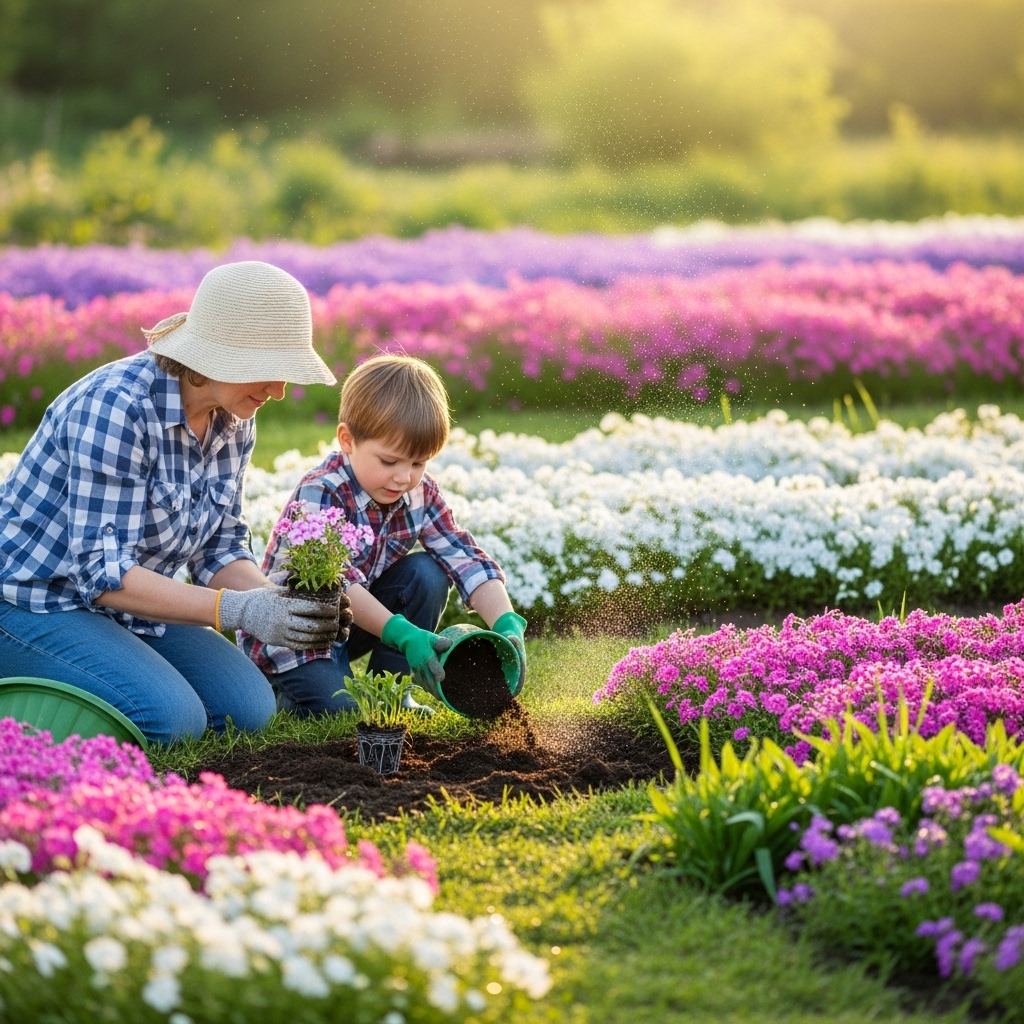
The best time to plant creeping phlox is in the spring or early fall, depending on your local climate. I’ve found that planting during these times helps the plants establish roots before extreme temperatures set in. Additionally, planting under trees can be a fantastic way to create a layered garden effect.
Understanding Creeping Phlox
What is Creeping Phlox?
Creeping phlox, scientifically known as Phlox subulata, is a low-growing perennial flower that spreads beautifully across gardens. This plant is valued for its vibrant blooms that can range in colors from soft pastels to bright, eye-catching hues. As the name suggests, creeping phlox forms a dense mat and is often used as ground cover, making it an excellent choice for filling in gaps between rocks or around other plants. It’s a favorite of gardeners like myself who appreciate low-maintenance, colorful options for landscaping.
Types of Creeping Phlox
There are several varieties of creeping phlox, each offering unique colors and growth habits. The most common types include:
- Phlox subulata ‘Emerald Blue’: This variety boasts stunning blue flowers that create a beautiful contrast against the dark green foliage.
- Phlox subulata ‘Candy Striped’: Known for its charming white flowers with pink stripes, this type adds a playful touch to any garden.
- Phlox subulata ‘Pink Wave’: With vibrant pink blooms, this variety is perfect for creating a cheerful spring display.
- Phlox subulata ‘Fort Hill’: A robust and hardy selection, ‘Fort Hill’ produces a rich blanket of bright pink flowers and is highly resistant to diseases.
From my experience, choosing the right type can really enhance the beauty of your garden, so I recommend thinking about your color schemes and the overall aesthetic you want to achieve. You might also consider looking into other plants like candytuft, as discussed in the article Does Candytuft Plant Spread?.
Benefits of Growing Creeping Phlox
Growing creeping phlox comes with a multitude of benefits. First and foremost, it’s incredibly easy to care for. Once established, it requires minimal maintenance, making it perfect for busy gardeners or those who prefer a more hands-off approach. I’ve noticed that creeping phlox draws in pollinators like bees and butterflies, adding life to my garden and helping to support local ecosystems. Additionally, its ability to thrive in poor soil conditions means you don’t have to worry too much about soil quality.
Another advantage is its adaptability; creeping phlox can flourish in various environments, whether it’s in full sun or partial shade. This versatility ensures that you can find the perfect spot for it in your garden. Plus, the flowers bloom in spring, providing one of the first bursts of color after winter—an uplifting sight that I always look forward to each year.
Optimal Planting Times for Creeping Phlox
Spring Planting
Spring is often hailed as the prime time for planting creeping phlox. As the frost begins to thaw and the air warms up, the soil becomes more hospitable for planting. I usually aim to plant my creeping phlox after the last frost date in my area, which is typically around mid-April. This timing allows the plants to establish their roots while temperatures are still mild. I’ve found that planting in spring leads to robust growth as the days lengthen and the weather becomes more favorable.
When I plant in the spring, I make sure to keep an eye on the weather. A sudden late frost can be harmful, so I’ve learned to protect my young plants with frost cloth or burlap if a chilly night is forecasted. It’s all about giving them the best chance to thrive!
Fall Planting
Fall is another excellent time to plant creeping phlox, especially in regions with milder winters. Planting in early fall, around September to early October, allows the plants to establish their roots before the ground freezes. I’ve personally had success with fall planting because it gives the phlox a head start come spring. There’s nothing quite like seeing the first blooms appear after a long winter.
When planting in the fall, it’s crucial to be mindful of the timing. The soil should be warm enough for the roots to grow, but you need to complete planting before the ground freezes. I usually check the weather and try to get my plants in the ground at least six weeks before the first expected frost. This way, they have ample time to settle in.
Regional Variations in Planting Times
Planting times for creeping phlox can vary based on your region. For instance, in warmer southern climates, you might find that both spring and fall planting seasons are viable, while northern regions may need to stick to spring planting to avoid frost. I’ve learned that checking local gardening resources can provide valuable insights into the best planting times specific to my area. For example, in the Midwest, I typically plant in late April, whereas in the Pacific Northwest, I might have more flexibility with fall planting due to milder conditions.
Climate Considerations
Understanding your local climate is essential when deciding when to plant creeping phlox. I’ve noticed that in areas with hot summers, it’s often better to plant in the spring to avoid the stress of high temperatures during the establishment phase. Conversely, if you live in a cooler climate, planting in the fall can be advantageous, as the plants can use the cooler temperatures to develop strong roots without the heat stress that comes with summer. I always keep an eye on the forecast and consult gardening guides specific to my region to ensure optimal growth conditions.
Ideal Growing Conditions for Creeping Phlox
Soil Requirements
When it comes to soil, creeping phlox is pretty forgiving, but I’ve found that it thrives best in well-draining, sandy to loamy soil. I remember when I first started planting, I had some trouble because my soil was too heavy, which led to water pooling and ultimately rotting the roots. To avoid this, I recommend testing your soil for drainage. If it doesn’t drain well, consider amending it with compost or sand to improve texture. A pH level between 6.0 and 7.0 is ideal, but I’ve had decent results even if it strayed slightly from that range. Just make sure the soil isn’t too compacted, as creeping phlox loves to spread its roots.
Sunlight Needs
Creeping phlox loves the sun! I typically plant mine in areas that get at least six hours of full sunlight each day. When I tried planting some in partial shade, I noticed the growth was not as vigorous, and the blooms weren’t as plentiful. Full sun not only helps the plant thrive but also encourages those vibrant colors to pop. If you’re in a hotter climate, some afternoon shade is beneficial to prevent the plants from getting scorched. Finding that balance can be key to a flourishing bed of creeping phlox.
Watering Guidelines
Watering is another crucial factor I’ve learned over the years. After planting creeping phlox, I ensure to keep the soil consistently moist, especially during the initial establishment phase. I remember how I felt nervous about overwatering, so I started by checking the top inch of soil—if it felt dry, I’d give it a good soak. Once established, creeping phlox is relatively drought-tolerant, but I still water it during dry spells, especially in the summer. I’ve found that deep watering helps encourage the roots to grow downwards, making them more resilient.
Fertilization Tips
While creeping phlox doesn’t require a lot of fertilization, I do like to give it a little boost in the spring, right before the blooming season kicks in. A balanced, slow-release fertilizer works wonders. I typically apply a layer of compost or a balanced fertilizer early in the season, which I’ve noticed helps the plants put out more blooms. Just be careful not to over-fertilize, as this can lead to lush foliage but fewer flowers. I’ve learned that a little goes a long way with these beauties!
Preparing for Planting
Choosing the Right Location
Choosing the right spot for your creeping phlox can make all the difference. I’ve spent a fair amount of time relocating my plants because I didn’t consider their needs beforehand. Look for an area that receives good sunlight and has decent drainage. I also like to consider visibility; I’ve found that putting them in places where I can easily admire their blooms is worth the extra thought. Additionally, if you have any slopes or bank areas in your garden, creeping phlox can do a fantastic job of cascading down, which adds a lovely aesthetic.
Soil Preparation Techniques
Preparing the soil is one of my favorite parts of gardening. I usually start by clearing the area of weeds and debris, which can compete with the new plants. Then, I dig down about 12 inches to loosen the soil and mix in compost or other organic matter. This step not only enriches the soil but also improves drainage. I remember a time when I skipped this part, and my plants struggled. Now, I always see this as an essential step to ensure the health of my creeping phlox.
Spacing and Layout
When planting creeping phlox, spacing is key. I generally space them about 12 to 18 inches apart to allow for their spreading habit. This distance gives them room to grow while also helping to prevent overcrowding, which can lead to disease issues. I like to lay them out before planting to visualize how they will fill in the space. Sometimes, I even use a garden hose to create a mock outline of where I want them to go, which has been a helpful trick for me.
Post-Planting Care for Best Growth
Watering Schedule
After planting, I stick to a regular watering schedule to make sure the plants establish well. I typically water deeply once or twice a week, depending on the weather. If it’s been particularly hot, I increase the frequency. I’ve found that it’s better to water less often but more deeply, encouraging the roots to grow deeper into the soil. This strategy has really helped my creeping phlox thrive.
Mulching Benefits
Applying a layer of mulch around the base of creeping phlox has been a game-changer for my garden. I usually use organic mulch, like shredded bark or straw, which helps retain moisture and suppress weeds. Plus, it adds a nice finishing touch to the garden’s appearance. I remember when I first mulched my plants; I was surprised at how much more vibrant they looked and how much less I had to worry about weeds.
Pest and Disease Management
While creeping phlox is generally hardy, I’ve learned to keep an eye out for pests like aphids or slugs. I’ve found that a strong jet of water can usually dislodge any pests quickly. If I notice any disease symptoms, like powdery mildew, I make sure to improve airflow by trimming back any overcrowded areas. Regular monitoring has helped me catch issues early, allowing my creeping phlox to stay healthy and beautiful.
Common Questions About Creeping Phlox Planting
Can Creeping Phlox be Grown in Containers?
I often get asked whether creeping phlox can thrive in containers, and my answer is a resounding yes! I’ve had a wonderful experience growing these charming plants in pots, and they add a splash of color to patios and balconies. When choosing a container, make sure it has good drainage holes to prevent waterlogging. I usually go for pots that are at least 12 inches deep, allowing enough room for the roots to spread out.
When growing in containers, it’s essential to use well-draining potting soil. I love mixing in some perlite or sand to improve drainage further. I’ve noticed that creeping phlox in pots may need more frequent watering than those in the ground, as the soil tends to dry out quicker. But honestly, seeing those vibrant blooms right outside my door makes all the extra care worth it!
How to Propagate Creeping Phlox?
Propagation is one of the exciting aspects of growing creeping phlox. I’ve successfully propagated it through division and cuttings. Dividing established plants every few years helps maintain their vigor, and it’s a great way to expand my garden without spending a dime! I typically do this in early spring or after the blooms fade, carefully lifting the plant and using a spade to separate the root clumps. Each division should have some roots and healthy foliage.
For those interested in taking cuttings, I recommend doing this in late spring or early summer when the plants are actively growing. I cut a healthy stem about 4-6 inches long and remove the lower leaves, then place it in a small pot filled with a mix of potting soil and perlite. Keeping the soil moist and covering the pot with a plastic bag to maintain humidity has worked well for me. I usually see roots developing within a few weeks, and then I can pot them up and watch them flourish!
Signs of Healthy vs. Unhealthy Growth
Being able to recognize the signs of healthy growth in creeping phlox has really helped me in my gardening journey. Healthy plants usually exhibit lush, vibrant foliage and an abundance of colorful blooms. I look for deep green leaves and a uniform growth pattern, which tells me they’re thriving in their environment.
On the flip side, unhealthy creeping phlox might show signs like yellowing leaves or sparse blooms. I remember a time when my plants looked lackluster, and I realized they were struggling due to insufficient sunlight. They perked right up once I relocated them to a sunnier spot! Another red flag is wilting or drooping, which can indicate either overwatering or underwatering. I’ve learned that checking the soil moisture level can clear up which issue I’m facing.
Regularly inspecting my plants has been a crucial part of ensuring they stay vibrant. If I notice any signs of pests or diseases, I act quickly to address the issue, ensuring my creeping phlox remains the star of the garden.
Frequently Asked Questions
What is Creeping Phlox?
Creeping phlox, scientifically known as Phlox subulata, is a low-growing perennial flower that spreads beautifully across gardens. It is valued for its vibrant blooms in various colors and is often used as ground cover.
When is the best time to plant Creeping Phlox?
The best time to plant creeping phlox is in the spring or early fall, depending on your local climate. Spring planting is typically done after the last frost date, while fall planting should be completed before the ground freezes.
What are the soil requirements for Creeping Phlox?
Creeping phlox thrives best in well-draining, sandy to loamy soil. A pH level between 6.0 and 7.0 is ideal, and the soil should not be too compacted to allow root spreading.
How much sunlight does Creeping Phlox need?
Creeping phlox loves full sun and typically requires at least six hours of sunlight each day. It can tolerate some afternoon shade, especially in hotter climates.
How often should I water Creeping Phlox?
After planting, it is important to keep the soil consistently moist, especially during the establishment phase. Once established, creeping phlox is relatively drought-tolerant but should be watered during dry spells.
Can Creeping Phlox be grown in containers?
Yes, creeping phlox can thrive in containers as long as the pot has good drainage holes and is at least 12 inches deep. It typically requires well-draining potting soil and may need more frequent watering than those planted in the ground.
How can I propagate Creeping Phlox?
Creeping phlox can be propagated through division or cuttings. Dividing established plants every few years helps maintain vigor, while cuttings can be taken in late spring or early summer to develop roots.
What are the signs of healthy Creeping Phlox growth?
Healthy creeping phlox exhibits lush, vibrant foliage and an abundance of colorful blooms, with deep green leaves and a uniform growth pattern. Unhealthy plants may show yellowing leaves, sparse blooms, or wilting.
What are the common pests and diseases affecting Creeping Phlox?
Creeping phlox can be affected by pests such as aphids or slugs. Regular monitoring and maintaining good airflow can help prevent disease symptoms like powdery mildew.
What spacing is recommended when planting Creeping Phlox?
When planting creeping phlox, it is recommended to space them about 12 to 18 inches apart to allow for their spreading habit and to prevent overcrowding, which can lead to disease issues.