
The best time to plant gladiolus bulbs is in the spring, typically between late April and early June, when the soil temperature has warmed sufficiently. I’ve always found that timing is crucial for achieving those stunning blooms that gladiolus are known for.
Understanding Gladiolus: Overview and Characteristics
What are Gladiolus Bulbs?
Gladiolus bulbs, often referred to as corms, are the underground storage organs of the plant that store nutrients and energy for growth. These corms are unique because they can produce multiple shoots, leading to tall, striking flower spikes that can reach heights of up to four feet. I remember the first time I planted them; I was amazed at how such a small bulb could yield such grand flowers. Gladiolus are perennial in warmer climates but are usually treated as annuals in colder regions, where they need to be dug up and stored after the growing season. Read Interesting article: Do Gladiolus Spread? – My Plant Care
Common Varieties of Gladiolus
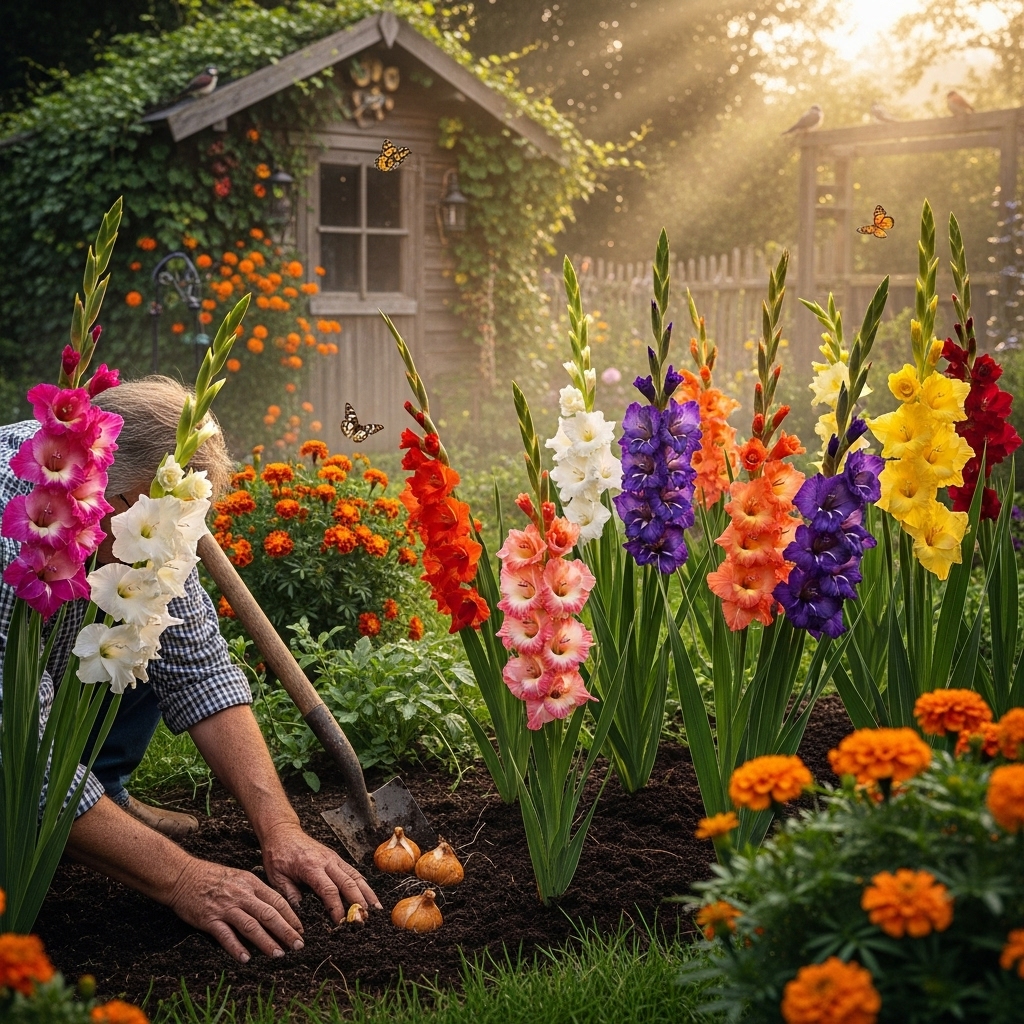
There are over 250 species of gladiolus, and countless hybrids, which means there’s a variety to suit every garden style. Some popular choices include the classic Gladiolus hortulanus, known for its bright, trumpet-shaped blooms, and the majestic Gladiolus primulinus, which is appreciated for its unique color palette. Personally, I love the deep reds and vibrant pinks, which really stand out against the green backdrop of my garden. These flowers can be found in nearly every color of the rainbow, making them a versatile choice for floral arrangements and garden displays alike.
Growth Habits and Blooming Cycle
Gladiolus plants are characterized by their sword-like leaves and tall flower spikes, which are often laden with multiple blossoms that open gradually from the bottom to the top. Typically, these bulbs take about 70 to 90 days from planting to bloom, depending on the variety and local growing conditions. I’ve learned that staggering the planting of different varieties can lead to a continuous display of blooms throughout the summer. This way, your garden remains vibrant and colorful for a longer period, which is something I always strive for in my landscaping.
Ideal Planting Times for Gladiolus
Spring Planting: Timing and Conditions
When I think about planting gladiolus, spring is the season that comes to mind. As the frost begins to fade and the soil warms up, it’s the perfect time to get those corms in the ground. For most regions, this means planting from late April to early June. I remember one year, I got a bit impatient and planted a little too early. The frost nipped at my young plants, and I learned the hard way that patience pays off. Ensuring that the soil temperature is consistently above 60°F (15°C) is crucial for healthy growth. This is when the corms begin to sprout, and the danger of frost has passed, which gives them the best chance of thriving.
Regional Differences in Planting Times
One of the things I’ve noticed over the years is how regional differences can affect planting times. For instance, gardeners in the southern states can start planting gladiolus as early as March, while those in northern areas might wait until mid-May. I remember chatting with a friend from a colder climate who shared her struggles with late frosts, which prompted me to consider how lucky I was to start my planting earlier. Understanding your local climate and frost dates is essential for successful gladiolus cultivation.
Factors Influencing Planting Time (Frost Dates, Soil Temperature)
When I plan my planting schedule, I always check the local weather patterns and soil temperature. Frost dates are crucial; if there’s a chance of frost after planting, it can jeopardize your efforts. I’ve found that using a soil thermometer can really help in assessing when the ground is warm enough. Alongside the temperature, soil moisture levels also play a role; if the soil is too wet, it can lead to rot, so allowing it to dry out a bit can be beneficial. I’ve learned that being attentive to these factors makes all the difference in achieving those splendid gladiolus blooms that we all love.
Preparing for Planting Gladiolus Bulbs
Choosing the Right Location
Finding the perfect spot for gladiolus in your garden is one of the most important steps. I’ve learned that these beauties thrive in full sun, so I always aim for a location that receives at least six to eight hours of direct sunlight each day. I remember initially planting them in a partially shaded area, and while they still grew, the blooms were nowhere near as vibrant as those planted in full sun. Also, it’s essential to choose a location with good air circulation to help prevent diseases, especially in humid climates, where I’ve noticed issues like rot can occur.
Soil Preparation and Amendments
Soil quality can make or break your gladiolus garden. I’ve discovered that they prefer well-drained soil that is rich in organic matter. Before planting, I take the time to amend my garden bed with compost or well-rotted manure. This not only enhances soil structure but also provides the nutrients that the corms need to grow strong. If your soil is heavy clay or too sandy, adding organic matter can help balance it out. I often conduct a simple soil test to check pH levels, aiming for a range between 6.0 and 7.0, which is ideal for gladiolus. In my experience, taking these steps ensures that the corms have a healthy start.
Spacing and Depth for Optimal Growth
When it comes to planting gladiolus, spacing and depth are critical. I’ve found that planting the corms about 4 to 6 inches apart allows each plant enough room to grow without crowding one another. This spacing also helps with air circulation, which I’ve learned is vital for preventing disease. As for depth, I plant the corms about 3 to 5 inches deep, depending on the size of the corm. I remember one year I planted them too shallow, and a heavy rain washed some away! So, I always make sure they are securely buried. After planting, I give them a gentle pat and water them lightly to settle the soil around the corms.
Care and Maintenance Post-Planting
Watering Guidelines for Gladiolus
Watering is another area where I’ve picked up a few tricks over the years. After planting, I make sure to keep the soil consistently moist but not soggy. Gladiolus prefer well-drained soil, so I often water them once a week unless the weather is particularly dry. I’ve learned to check the top inch of soil—if it feels dry, it’s time to water. During the blooming period, I increase my watering slightly because those blooms need hydration to stay strong and vibrant. However, I also keep an eye out for signs of overwatering, like yellowing leaves, which I’ve experienced firsthand.
Fertilization Tips for Enhanced Blooms
To get the best blooms out of my gladiolus, I’ve found that fertilizing them properly is key. I usually start with a balanced fertilizer when I plant the corms. Once the plants reach about a foot in height, I switch to a fertilizer that’s higher in phosphorus, which is crucial for flowering. I’ve personally seen a difference in the size and color of blooms when I remember to fertilize regularly. I tend to fertilize every four to six weeks during the growing season, and I make sure to follow the package instructions to avoid burning the plants. Additionally, I often refer to guides like the Red Flower Meaning, Colors And Giving Guide Explained for tips on maximizing my blooms.
Pest and Disease Management
Pest control is something I’ve had to address to keep my gladiolus healthy. I’ve noticed that aphids and thrips can be common culprits, and I often inspect my plants weekly for any signs of infestation. If I spot pests, I use a gentle spray of insecticidal soap, which has worked well for me without harming beneficial insects. Additionally, I keep an eye out for fungal issues like rust or leaf spot, especially in humid conditions. Good air circulation, as I mentioned before, helps, but if disease does strike, I’ve learned to remove affected leaves promptly to prevent it from spreading. Staying vigilant has definitely paid off in the health of my gladiolus plants.
Harvesting and Using Gladiolus Blooms
When and How to Cut Gladiolus Flowers
Harvesting gladiolus blooms is one of my favorite parts of gardening with them. I usually wait until the bottom flowers on a spike are fully open before cutting. It’s often recommended to cut early in the morning or late in the afternoon when the temperature is cooler, which I’ve found helps preserve their freshness. I use sharp shears and cut the stem diagonally, usually leaving a good length (about 12 to 18 inches) for arranging later. I remember my first attempts at cutting—some flowers didn’t last long because I cut them too soon, so patience really is key!
Arranging Gladiolus in Bouquets
When it comes to arranging gladiolus, I love how versatile they are. Their tall, elegant spikes add height to any arrangement, and I often pair them with shorter flowers like daisies or sunflowers. I’ve discovered that placing them in the center of the bouquet works best, allowing the other blooms to create a full, lush look around them. Additionally, I always trim the stems again before placing them in water to help them drink better. Adding a floral preservative also makes a noticeable difference in how long the arrangement lasts.
Longevity of Cut Flowers
One of the most rewarding aspects of growing gladiolus is the longevity of their cut flowers. I’ve often had them last a week or more with proper care. I always change the water every couple of days and trim the stems again to keep them fresh. It’s fascinating to watch as the blooms open gradually from the bottom to the top. In my experience, keeping them out of direct sunlight and away from heat sources helps extend their life as well. It’s such a joy to bring a piece of my garden indoors and enjoy those stunning colors and shapes for as long as possible.
Common Questions About Gladiolus Planting
Can Gladiolus Bulbs Be Planted in Pots?
What to Do If Bulbs Don’t Bloom?
How to Store Gladiolus Bulbs After Blooming?
Common Questions About Gladiolus Planting
Can Gladiolus Bulbs Be Planted in Pots?
Absolutely! I’ve had great success growing gladiolus in pots, which is a fantastic option if you have limited garden space or want to add some color to your patio or balcony. When I first tried this, I used large containers that were at least 12 inches deep to ensure enough room for the corms to develop. It’s important to choose pots with drainage holes, as gladiolus dislike sitting in water, which can lead to rot. I typically fill the pot with a well-draining potting mix and add some organic matter for nutrients. This setup has worked wonders for me, and I love being able to move the pots around to find the best sunlight throughout the day. Just like in the garden, I make sure to plant the corms about 3 to 5 inches deep and give them adequate space to grow.
What to Do If Bulbs Don’t Bloom?
We’ve all been there – you’ve planted your gladiolus bulbs, nurtured them, and then… no blooms! When I faced this issue, I took a closer look at what might be wrong. One common reason for non-blooming is that the corms might not have received enough sunlight. Gladiolus thrive in full sun, and if they’re not getting at least six hours of direct light, it can impact their flowering. Another possibility is that the corms were planted too deeply. I learned to check the depth, ensuring they were about 3 to 5 inches deep, depending on their size. Additionally, if the bulbs were too young or small, they might not bloom during their first year. Fertilizing properly, particularly with a phosphorus-rich fertilizer, can help, too. If all else fails, I’ve found that patience is key; sometimes, they just need a bit more time to settle in before they show off their beauty.
How to Store Gladiolus Bulbs After Blooming
Once your gladiolus have finished blooming, it’s time to think about storage if you live in a cooler climate. I remember my first year, I left the corms in the ground and regretted it when frost hit! Now, I always dig them up after the foliage has turned yellow and begins to die back, usually in late summer or early fall. This is a sign that the corms are ready for dormancy. I gently lift them from the soil with a garden fork, being careful not to damage them. After harvesting, I let them dry in a shaded area for a few days, which helps prevent rot during storage.
Once they’re dry, I brush off any excess soil and trim the roots. I store them in a cool, dark, and dry place, such as a basemínkat or garage. I’ve found that using paper bags or cardboard boxes allows the corms to breathe, which is crucial for preventing mold. It’s essential to keep them away from moisture and extreme temperatures; I aim for a storage temperature of around 50°F (10°C). The following spring, when the weather is right, I pull them out and plant them again, ready for another season of stunning blooms!
Frequently Asked Questions
What is the best time to plant gladiolus bulbs?
The best time to plant gladiolus bulbs is in the spring, typically between late April and early June, when the soil temperature has warmed sufficiently.
What are gladiolus bulbs?
Gladiolus bulbs, often referred to as corms, are the underground storage organs of the plant that store nutrients and energy for growth. They can produce multiple shoots, leading to tall flower spikes that can reach heights of up to four feet.
How long does it take for gladiolus to bloom after planting?
Gladiolus bulbs typically take about 70 to 90 days from planting to bloom, depending on the variety and local growing conditions.
What factors influence the timing of planting gladiolus bulbs?
Factors that influence planting time include frost dates, soil temperature, and local climate conditions. Ensuring the soil temperature is consistently above 60°F (15°C) is crucial for healthy growth.
What type of sunlight do gladiolus need for optimal growth?
Gladiolus thrive in full sun and should receive at least six to eight hours of direct sunlight each day for vibrant blooms.
What is the ideal soil type for planting gladiolus?
Gladiolus prefer well-drained soil that is rich in organic matter. Amending the soil with compost or well-rotted manure before planting is recommended.
How should gladiolus bulbs be spaced when planting?
Gladiolus bulbs should be planted about 4 to 6 inches apart to allow enough room for growth and to promote good air circulation.
How often should gladiolus be watered after planting?
After planting, the soil should be kept consistently moist but not soggy, with watering typically once a week, or more during dry periods.
What should you do if your gladiolus bulbs do not bloom?
If gladiolus bulbs do not bloom, it may be due to insufficient sunlight, incorrect planting depth, or the bulbs being too young. Ensuring they receive at least six hours of direct sunlight and proper fertilization can help.
How should gladiolus bulbs be stored after blooming?
After blooming, gladiolus corms should be dug up once the foliage has turned yellow and dried back. They should be dried in a shaded area, brushed free of excess soil, and stored in a cool, dark, and dry place.