
Taking care of a snake plant is relatively easy, as they are resilient and low-maintenance. With the right light, watering, and potting conditions, you can enjoy this beautiful plant for years. Read Interesting article: How to Care for a Snake Plant (Ultimate Guide)
Overview of Snake Plants
What is a Snake Plant?
A snake plant, also known as Sansevieria or mother-in-law’s tongue, is a hardy houseplant admired for its unique, sword-like leaves that can grow upright and reach impressive heights. I first encountered a snake plant at a friend’s house, and I was instantly captivated by its striking appearance. This plant is not only visually appealing but also boasts air-purifying qualities, making it a popular choice among plant enthusiasts. I remember my excitement when I decided to add one to my collection!
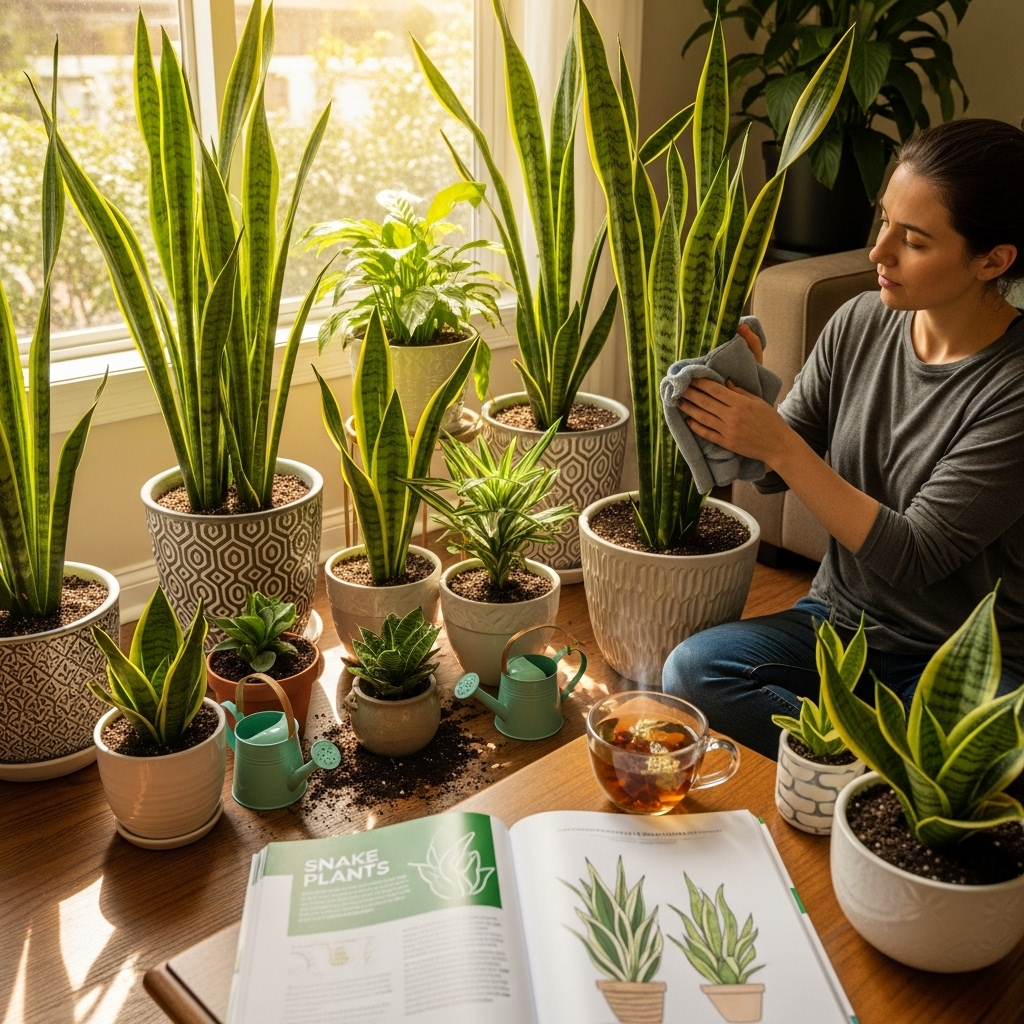
Common Varieties of Snake Plants
There are several varieties of snake plants, each with its own unique characteristics. Some of the most common include:
- Sansevieria trifasciata: Known for its tall, stiff leaves with dark green and light green bands, this is the most widely recognized type.
- Sansevieria cylindrica: This variety has round, cylindrical leaves that can grow tall and are often braided for an interesting look.
- Sansevieria laurentii: Featuring yellow margins on its leaves, this variety adds a pop of color and is often chosen for its ornamental appeal.
I’ve found that each variety has its charm, and it’s fun to mix and match them in your indoor garden. They all share similar care needs, which makes it easy to care for them together.
Native Habitat and Growth Conditions
Snake plants are native to West Africa, where they thrive in dry, rocky environments. They are accustomed to low light and infrequent watering, which is why they do so well indoors. I’ve noticed that understanding their natural habitat has helped me replicate the conditions they need to thrive at home. In their native setting, snake plants are often found in areas with poor soil, and they have adapted to store water in their thick leaves. This trait is one of the reasons why they are so forgiving when it comes to care.
Ideal Growing Conditions
Light Requirements
When it comes to light, snake plants are incredibly flexible. They can thrive in a range of lighting conditions, from low light to bright indirect sunlight. In my experience, placing them near a window where they receive filtered light seems to keep them happiest. However, too much direct sunlight can scorch their leaves, so it’s essential to find that balance. I recommend observing your plant for a week or two after moving it to a new location to see how it responds to the light levels. If the leaves start to look pale or brown, it may be time to adjust its position.
Temperature Preferences
Snake plants are quite tolerant of temperature fluctuations, but they prefer temperatures between 60°F to 80°F (15°C to 27°C). I learned the hard way that exposing them to temperatures below 50°F (10°C) can stress them out. It’s best to keep them away from cold drafts, heaters, or air conditioning vents. When the weather changes, I like to move my snake plants to a more suitable spot to ensure they stay comfortable.
Humidity Levels
Humidity is another aspect where snake plants excel. They thrive in dry air and do not require high humidity levels to thrive. In fact, I’ve often noticed that my snake plants do better in lower humidity environments. If you live in a particularly humid area, just ensure there’s adequate air circulation around your plants. I sometimes find that during the winter months, when indoor heating can dry out the air, giving them a little misting can help, but it’s not essential.
In my experience, understanding the ideal growing conditions for my snake plants has made all the difference in their growth and health. With the right light, temperature, and humidity, these plants can flourish and become a beautiful addition to any indoor space. As I continue to care for my snake plants, I find joy in observing their growth and resilience, which inspires me to learn more about plant care. With this guide, I hope you feel empowered to take care of your own snake plant and enjoy the benefits it brings to your home! Read Interesting article: Is Snake Plant Toxic to Cats? Warning Signs & Care
Soil and Potting Requirements
Best Soil Type for Snake Plants
Choosing the right soil for my snake plants has been a game changer. I found that they thrive best in a well-draining potting mix that prevents water from sitting around the roots. A cactus or succulent mix works wonders because it’s designed to drain quickly. I’ve also mixed regular potting soil with sand or perlite to enhance drainage, which has really helped my plants flourish. The key is to ensure that the soil retains some moisture without becoming soggy—this balance is vital for healthy growth.
Potting Techniques and Container Choice
When it comes to potting my snake plants, I prefer using containers with drainage holes. I once made the mistake of using a decorative pot without any holes, and it led to root rot, which was heartbreaking. The right pot not only allows excess water to escape but also gives the roots room to grow. For snake plants, I recommend using pots that are slightly larger than their root ball; they don’t mind being slightly root-bound. I’ve also noticed that terracotta pots are great because they help absorb excess moisture, which can be perfect for these drought-tolerant plants.
Repotting Frequency and Signs
Repotting snake plants isn’t something I need to do very often, which is another reason I love them. Generally, I find that repotting every 2 to 3 years is sufficient. The signs that it’s time for a new pot include roots growing out of the drainage holes or the plant becoming top-heavy and wobbling. I remember my first snake plant got so big that it tipped over! It was a clear sign it needed a bigger home. When repotting, I always take care to gently loosen the roots and remove any dead or damaged ones to encourage healthy growth.
Watering Guidelines
How Often to Water Snake Plants
Watering my snake plants has been a learning journey. I initially overwatered them, thinking they needed more moisture. Now, I’ve learned that it’s best to let the soil dry out completely between waterings. Typically, I water every 2 to 6 weeks, depending on the season. In the warmer months, I find they need a bit more water, while in the winter, I cut back significantly. I’ve developed a habit of checking the soil by sticking my finger in it; if it feels dry an inch down, it’s time for a drink.
Signs of Overwatering and Underwatering
Understanding the signs of overwatering and underwatering has been crucial in my care routine. Overwatered snake plants may show yellowing leaves, mushy stems, or a foul smell from the roots, which signals root rot. On the other hand, if my plant starts to droop or the leaves become wrinkled, it usually means it’s thirsty. I’ve experienced both situations, and now I feel more confident in adjusting my watering routine based on how my plants look and feel.
Water Quality Considerations
Water quality matters more than I initially thought. I’ve noticed that tap water with high chlorine or fluoride levels can affect my plants negatively. Now, I prefer using distilled water or letting tap water sit out overnight before using it. This allows the chemicals to dissipate. I’ve found that my snake plants respond better with this little extra care. It’s just one more way I’ve learned to keep them happy and healthy!
Fertilization and Nutrient Needs
Best Fertilizers for Snake Plants
Fertilizing my snake plants is pretty straightforward, and I’ve discovered that less is more. I use a diluted, balanced liquid fertilizer during the growing season, which is typically from spring to early fall. My favorite is a 10-10-10 NPK formula, but I’ve also used organic options with great results. I’ve noticed that my plants thrive when I fertilize them every 4 to 6 weeks during this period. Just remember, fertilizing too much can lead to salt buildup, which can harm the roots.
Fertilization Schedule
I’ve learned that keeping a fertilization schedule helps me stay organized. I mark it on my calendar as a reminder. During the winter months, I cut back completely since the plants go dormant and don’t need extra nutrients. It’s amazing how understanding their cycles helps me provide the right care at the right time.
Signs of Nutrient Deficiency
Identifying nutrient deficiency in my snake plants has been a useful skill. If I notice slow growth, pale leaves, or brown leaf tips, it often indicates they might need some nutrients. In these cases, I’ll give them a light feeding and monitor how they respond. It’s rewarding to see them perk up after a dose of fertilizer, reminding me how responsive they can be with just a little extra care!
Pest and Disease Management
Common Pests Affecting Snake Plants
Even though snake plants are hardy, they can occasionally attract pests. I’ve had my share of encounters, and it’s taught me a lot about how to manage these little invaders effectively. The most common pests I’ve dealt with are spider mites, mealybugs, and aphids. Spider mites tend to thrive in dry conditions, so if you notice tiny webs or speckled leaves, it’s time to take action. Mealybugs look like small, white cottony masses on the leaves, while aphids are small and can be green, black, or brown. They hang out on the new growth and can cause stunted development.
Identifying Diseases
Along with pests, I’ve learned that diseases can also affect snake plants, mainly due to improper care. The most common issues are root rot and fungal infections. Root rot typically occurs when the plant is overwatered, leading to mushy roots and yellowing leaves. I remember being devastated when I realized my first snake plant was suffering from this. Fungal infections can present as dark spots or mold on the leaves. Keeping an eye on your plant’s leaves and soil can help catch these problems early.
Preventive Measures and Treatments
When it comes to keeping my snake plants healthy, prevention is key. I always inspect new plants thoroughly before bringing them home. If I spot any pests, I usually quarantine the new plant for a couple of weeks to avoid transferring them to my other plants. For pest control, I often use insecticidal soap or neem oil, which are both effective and safe options. I’ve found that regularly wiping the leaves with a damp cloth helps keep dust at bay and makes it harder for pests to settle in. If I do notice an infestation, I act quickly, treating the affected plant and monitoring the others for any signs of trouble.
Propagation Techniques
Leaf Cuttings Method
Propagation has been one of my favorite adventures with snake plants. I remember the first time I tried propagating a snake plant using leaf cuttings. It felt like a little experiment! To do this, I carefully cut a healthy leaf into several sections, making sure each piece is at least a few inches long. I let the cuttings sit for a day or two to callous over, which helps prevent rot. After that, I place them in a well-draining soil mix, and I keep the soil slightly moist while they root. I’ve found that patience is essential because it can take a few weeks for new roots to develop.
Division Method
The division method is another easy way to propagate snake plants. I’ve done this a couple of times when repotting. It involves removing the entire plant from its pot, gently separating the root ball into smaller sections, and then replanting them in their own pots. This method is not only great for propagation but also helps rejuvenate older plants. I always make sure each division has a healthy set of roots and a few leaves to ensure a successful start.
Timing and Care for New Plants
The best time for propagation, in my experience, is during the growing season—usually in spring or early summer. During this time, snake plants are more likely to root and grow quickly. After propagating, I keep the new plants in a warm, bright location but out of direct sunlight. I water them sparingly until they establish strong roots, as too much moisture can lead to rot. Watching those little cuttings thrive has become a rewarding part of my plant care journey! Read Interesting article: How to Care for a Snake Plant (Beginner Friendly)
Seasonal Care Tips
Caring for Snake Plants in Winter
Winter care for my snake plants has become a routine I look forward to. These plants are pretty resilient, but I’ve learned that they do need a little extra attention during the colder months. I make sure to keep them away from cold drafts and heaters, as extreme temperature fluctuations can stress them out. During this time, I reduce my watering frequency since they go into a sort of dormancy. I’ve noticed that the less I water, the happier they seem to be!
Summer Care Adjustments
Summer is a time when my snake plants really thrive. With longer days and warmer temperatures, I find they enjoy a little more light. I often rotate them to ensure all sides get equal exposure, which helps them grow evenly. I also check the soil moisture more regularly, as they tend to drink more during this season. It’s amazing to see them flourish under the right summer conditions!
Signs of Seasonal Stress
Understanding the signs of seasonal stress has been crucial for me. In winter, if I notice my snake plants getting leggy or the leaves turning yellow, it’s usually a sign they’re not getting enough light or are being overwatered. In the summer, if the leaves start to curl or look crispy, I know they might be getting too much sunlight or not enough water. Paying attention to these signs helps me adjust my care routine accordingly, keeping my plants happy and healthy throughout the year.
Frequently Asked Questions
What is a snake plant?
A snake plant, also known as Sansevieria or mother-in-law’s tongue, is a hardy houseplant recognized for its unique, sword-like leaves that can grow upright and reach impressive heights. It is also admired for its air-purifying qualities.
What are some common varieties of snake plants?
Some common varieties of snake plants include Sansevieria trifasciata, known for its tall, stiff leaves with dark green and light green bands; Sansevieria cylindrica, which has round, cylindrical leaves; and Sansevieria laurentii, featuring yellow margins on its leaves.
What are the ideal light conditions for snake plants?
Snake plants thrive in a range of lighting conditions, from low light to bright indirect sunlight. It’s important to avoid direct sunlight as it can scorch their leaves.
What temperature do snake plants prefer?
Snake plants prefer temperatures between 60°F to 80°F (15°C to 27°C). They can become stressed if exposed to temperatures below 50°F (10°C).
How often should snake plants be watered?
Snake plants should be watered every 2 to 6 weeks, allowing the soil to dry out completely between waterings. Watering frequency may increase in warmer months and decrease in winter.
What are signs of overwatering and underwatering in snake plants?
Signs of overwatering include yellowing leaves, mushy stems, and a foul smell from the roots, indicating root rot. Underwatering may cause drooping or wrinkled leaves.
What type of soil is best for snake plants?
Snake plants thrive best in a well-draining potting mix, such as a cactus or succulent mix. Regular potting soil mixed with sand or perlite can also enhance drainage.
How often should snake plants be repotted?
Snake plants generally need to be repotted every 2 to 3 years. Signs that it’s time to repot include roots growing out of the drainage holes or the plant becoming top-heavy.
What common pests affect snake plants?
Common pests affecting snake plants include spider mites, mealybugs, and aphids. Each of these pests can cause various issues such as stunted growth or visible damage to the leaves.
How can snake plants be propagated?
Snake plants can be propagated using leaf cuttings or the division method. Leaf cuttings involve cutting healthy leaves into sections and placing them in soil, while the division method involves separating the root ball into smaller sections and replanting them.