
The best time to plant peonies is in the fall, specifically from late September to early November, or in the spring, from late March to early May. I’ve found that planting in these periods ensures strong root development and vibrant blooms. Read Interesting article: What Is a Perennial Plant? Meaning + Examples
Understanding Peonies: Types and Characteristics
Peonies are among my favorite flowers, not just for their stunning beauty but also for their delightful fragrance. They come in a variety of types, and each has its own unique characteristics. Understanding these can help us appreciate them more and make informed decisions when planting.
Common Types of Peonies
There are several types of peonies, but the most common are herbaceous, tree, and intersectional peonies.
– **Herbaceous Peonies:** These are the ones most people are familiar with. They die back to the ground every winter and re-emerge in spring. With their lush, full blooms and a variety of colors, they are often the stars of gardens. I remember planting a few herbaceous varieties, and watching them grow from tiny shoots to magnificent flowers was a joy.
– **Tree Peonies:** These have woody stems and can grow quite large. Unlike herbaceous types, they do not die back in winter. I think their sturdiness adds a unique charm to any garden. They bloom a bit earlier than herbaceous peonies and can have stunning, large flowers that often make a striking statement.
– **Intersectional Peonies:** These are hybrids between herbaceous and tree peonies. They offer the best of both worlds: the hardiness of tree peonies and the lush blooms of herbaceous ones. I was pleasantly surprised to learn that they also have a longer blooming period.
Each type has its unique growing habits, so it’s crucial to choose the right one for your garden and climate.
Growth Habits and Lifespan
Peonies are perennial plants, meaning they come back year after year, which is one of the reasons I love them. Once planted, they can live for decades, often blooming beautifully for 50 years or more. I’ve seen some peony plants that have been in families for generations, and they continue to be a source of beauty and nostalgia.
Their growth habits can vary based on the type. Herbaceous peonies typically grow 2 to 4 feet tall and wide, while tree peonies can reach 6 feet in height. I’ve noticed that the environment they are in can greatly influence their growth. They thrive in well-drained soil with ample sunlight, and I’ve found that giving them the right conditions really encourages robust growth.
The secret to their longevity lies in their root structure. Peony roots are thick and fleshy, often needing space to grow. I remember the first time I tried to transplant an old peony. It was a challenge because the roots had anchored themselves deeply, providing stability and nourishment. This robust root system is key to their ability to withstand various weather conditions and pests, contributing to their resilience.
When to Plant Peonies
Timing is essential when it comes to planting peonies. I’ve learned through experience that getting the timing just right can significantly influence the success of your blooms.
Best Planting Seasons
As mentioned earlier, the ideal planting seasons for peonies are fall and spring. I’ve had the best results planting in fall because it allows the roots to establish before winter. By spring, the plants are ready to burst forth with new growth.
In the fall, I aim to plant peonies about six weeks before the first frost. This timing helps them settle into their new home. Spring planting is also viable, but I’ve noticed that fall-planted peonies tend to bloom more vigorously in their first season.
Climate Considerations
Climate plays a significant role in determining when to plant peonies. I’ve found that peonies thrive in USDA hardiness zones 3 to 8. In colder regions, fall planting is ideal, while in warmer areas, spring planting might be a better option to prevent early growth that could be damaged by frost.
I remember a friend in a warmer climate who planted his peonies in the fall. He was disappointed when an unexpected warm spell encouraged them to sprout too early, only to be hit by a late frost. It’s important to consider your local climate and adjust your planting schedule accordingly.
Soil Temperature Requirements
Peonies prefer cool soil temperatures for successful root development. Soil temperatures between 50°F and 60°F (10°C to 15.5°C) are ideal. I used to measure the soil temperature with a simple thermometer when I was unsure. Planting when the soil is cool but not frozen helps them establish strong roots.
If you plant too early in the spring when the soil is still cool, or too late in the fall when it’s too cold, you risk hindering their growth. I’ve learned that observing the soil temperature can help ensure I plant at just the right moment for optimal growth.
Understanding these factors has helped me become a more confident gardener. Peonies, with their rich history and vibrant blooms, can bring joy to any garden when planted at the right time. As we dive deeper into preparing for planting and nurturing these beautiful flowers, I can’t wait to share more of my experiences and tips!
Preparing to Plant Peonies
Getting ready to plant peonies is an exciting step, and I always feel a sense of anticipation as I prepare my garden. There’s something special about the thought of nurturing them from the very start. Here are a few essential aspects I’ve learned when it comes to preparing for planting these wonderful flowers.
Choosing the Right Location
Finding the perfect spot for peonies is crucial. I always look for a location that gets plenty of sunlight. Peonies thrive in full sun, so I aim for at least six hours of direct sunlight each day. I’ve found that the more sun they get, the more vibrant their blooms will be.
In my garden, I noticed that the peonies planted in the sunniest spots always outperformed those in partial shade. I also make sure to consider the airflow around the plants. Good air circulation helps prevent diseases, so I try not to plant them too close to other flowers or shrubs.
Another thing I keep in mind is the visibility of the blooms. I love seeing my peonies from various angles in my garden, so I usually choose a spot that’s not only sunny but also allows me to appreciate their beauty from pathways or windows.
Soil Preparation and Amendments
Preparing the soil is one of the most important steps before planting. Peonies prefer well-drained soil, so I often start by testing the soil to see if it’s too compacted. If I notice that it doesn’t drain well, I’ll amend it with organic matter like compost or well-rotted manure.
I remember the first time I planted peonies without properly preparing the soil; the roots struggled to grow, and the plants didn’t thrive. Since then, I’ve made it a point to enrich the soil before planting. The key is to mix in the amendments deeply, ideally to a depth of about 12 inches. This way, the peonies have plenty of nutrients to draw from as they establish themselves.
If my soil is particularly heavy, I’ll even consider creating a raised bed to improve drainage further. This has worked wonders in my garden and has led to healthier plants overall.
Site Drainage and Sunlight Needs
Drainage is crucial for peony health. I’ve learned the hard way that sitting water can lead to root rot and other issues. If I notice that the soil tends to hold water after rain, I make sure to create a slight mound or raised area for planting. This allows excess water to flow away from the roots.
I also take a moment to observe how sunlight hits the chosen location throughout the day. Sometimes, I’ll watch the area at different times to see how the light shifts. This little bit of patience pays off, as it ensures I’m selecting the best spot for the peonies to flourish.
If I have existing plants nearby, I assess how they may cast shadows later in the season. I’ve discovered that even a little bit of shade can significantly impact the blooming of peonies, so I try to keep them in as much sun as possible.
Being thorough in preparing the right location, nourishing the soil, and ensuring proper drainage has made a world of difference in my gardening experience. I can’t wait to share the next steps in the planting process and how to ensure the best care for our beautiful peonies!
Planting Peonies: Step-by-Step Guide
Now that we’ve prepared the perfect spot for our peonies, it’s time to dive into the actual planting process. Each step is vital to ensure that our peonies can thrive in their new home.
Digging the Right Hole
When it comes to digging the hole, I’ve learned that size matters. For peonies, I typically dig a hole that’s about 12 inches deep and wide. This gives the roots enough space to spread out and establish themselves. I remember my first time planting peonies; I was so eager that I dug a hole that was too shallow. The peonies struggled to grow, and it was a lesson learned.
I also make sure to loosen the soil at the bottom of the hole. This helps encourage the roots to grow deep into the earth rather than circling back up, which can lead to stunted growth.
Spacing and Depth Considerations
Spacing is another important consideration. I usually space my herbaceous peonies about 3 to 4 feet apart to give them room to grow without crowding each other. For tree peonies, I’ve learned to allow even more space since they can grow larger. This way, each plant has ample access to sunlight and nutrients.
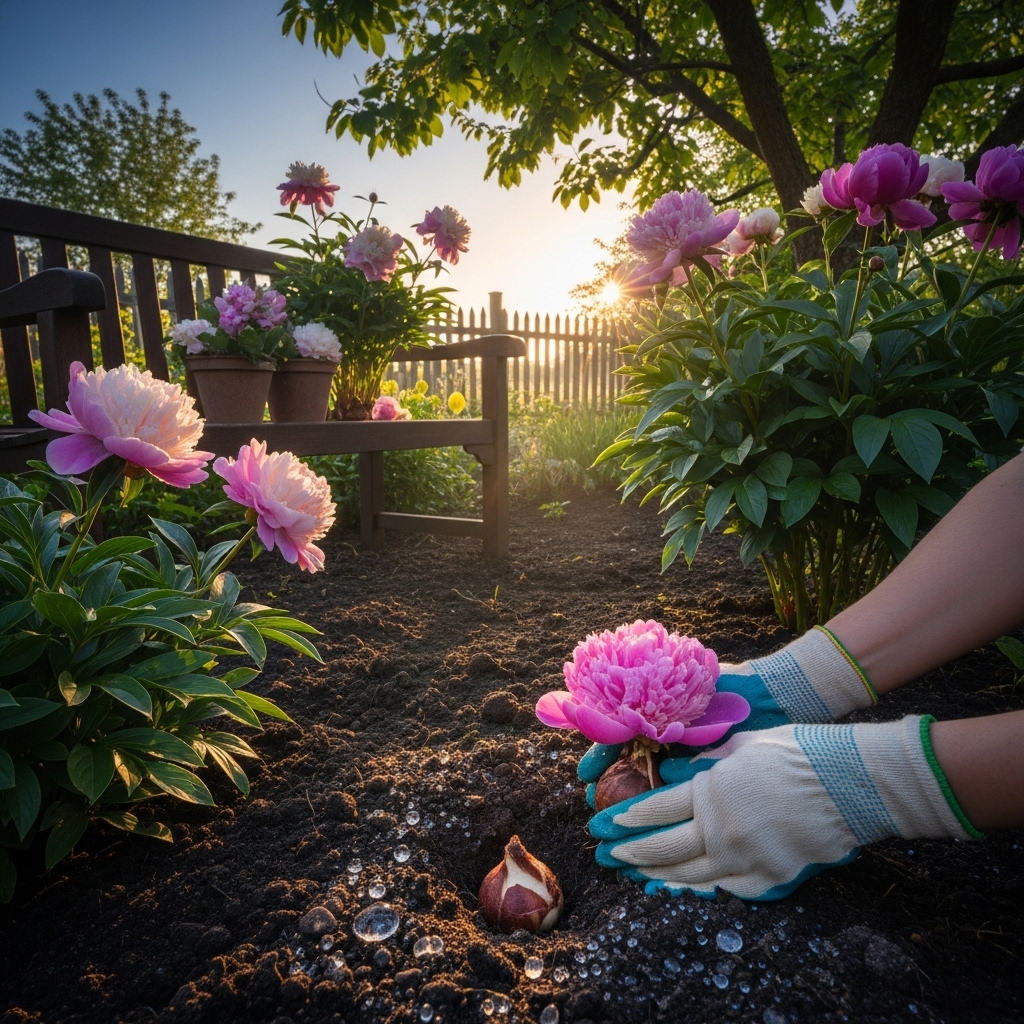
As for planting depth, I place the eyes (the little pink growth buds) of the peony roots no more than 2 inches below the soil surface. If they’re planted too deep, they might not bloom well. I’ve had some delightful experiences where I carefully planted them at just the right depth and was rewarded with beautiful blooms.
Watering After Planting
Once the peonies are in the ground, I always give them a good soak. This helps settle the soil around the roots and eliminates any air pockets. I’ve learned that keeping the soil consistently moist, especially during the first few weeks, encourages healthy root establishment. However, I’m careful not to overwater; peonies don’t like soggy soil.
I usually check the soil moisture regularly, and if it feels dry to the touch an inch or two below the surface, I’ll give them another drink. It’s such a rewarding feeling to watch them establish themselves, knowing that I’ve helped create the right conditions for their growth.
With the planting process in place, we’re on our way to nurturing beautiful peonies. I’m excited to share how to care for them after planting in the next section!
Care for Peonies After Planting
Once our peonies are planted, the journey doesn’t stop there. Caring for them properly after planting is essential for ensuring healthy growth and stunning blooms. I’ve learned that consistent attention can make all the difference in a peony’s development.
Fertilization Tips
Fertilizing peonies is a topic I’ve come to appreciate over the years. After they are planted, I typically wait until they start to show new growth in the spring before applying any fertilizer. I find that a balanced, slow-release fertilizer works wonders. It’s important to choose one that’s low in nitrogen. High nitrogen fertilizers can lead to lush foliage but fewer blooms, which is not what I want for my peonies.
I usually sprinkle the fertilizer around the base of the plant, being careful not to let it touch the stems directly. Then, I give it a light watering to help the nutrients soak into the soil. I’ve noticed that doing this encourages strong root growth and helps the plants establish themselves better. After the initial fertilization in spring, I often give them another light dose in mid-summer to support blooming.
Mulching Techniques
Mulching has become one of my favorite practices when it comes to caring for peonies. I always apply a layer of mulch around the base of the plants after planting. This serves multiple purposes. First, it helps retain moisture in the soil, which is crucial, especially during the summer heat when peonies can get thirsty.
I prefer using organic mulch, like shredded bark or straw, as it not only helps with moisture retention but also breaks down over time, enriching the soil. I typically apply a layer of about 2 to 3 inches thick, making sure to keep it a few inches away from the stems to prevent rot. I’ve found that mulching also helps suppress weeds, which can compete with my peonies for nutrients and water.
Additionally, come winter, I often add another layer of mulch to protect the roots from extreme cold. This extra insulation can be a lifesaver in harsh winters, ensuring that my peonies come back strong in the spring.
Pest and Disease Management
Pest and disease management is something I wish I had paid more attention to when I first started gardening. Peonies are generally resilient, but they can encounter a few issues. I’ve faced pests like aphids and thrips in my garden. When I notice these little critters, I often spray the plants with a gentle soap solution, which helps keep them at bay without harming the plant.
Preventing diseases, especially fungal issues, is another critical aspect of care. Good airflow is paramount for peonies, so I always make sure to space them adequately and avoid overcrowding. I’ve learned to remove any dead or diseased leaves promptly, which not only helps maintain plant health but also improves the overall appearance of my garden.
When it comes to diseases like botrytis blight, I’ve found that keeping the garden clean and ensuring proper watering practices can go a long way in prevention. Watering at the base of the plant rather than from above helps keep the foliage dry, reducing the chances of fungal infections.
I also pay attention to the peony stems. If I notice any wilting or discoloration, I investigate and, if necessary, remove any affected parts. This proactive approach has truly saved my plants from more severe issues down the line.
Taking the time to care for my peonies after planting has been incredibly rewarding. With the right fertilization, mulching, and pest management techniques, I can enjoy their beauty year after year. I’m looking forward to sharing some common mistakes I’ve made along the way, so you can avoid the pitfalls I encountered!
Frequently Asked Questions
When is the best time to plant peonies?
The best time to plant peonies is in the fall, specifically from late September to early November, or in the spring, from late March to early May.
What are the common types of peonies?
The most common types of peonies are herbaceous, tree, and intersectional peonies. Each type has unique characteristics and growth habits.
How tall do peonies typically grow?
Herbaceous peonies typically grow 2 to 4 feet tall and wide, while tree peonies can reach heights of up to 6 feet.
What conditions do peonies need for optimal growth?
Peonies thrive in well-drained soil with ample sunlight, ideally receiving at least six hours of direct sunlight each day.
What are the ideal soil temperature requirements for planting peonies?
Peonies prefer soil temperatures between 50°F and 60°F (10°C to 15.5°C) for successful root development.
How should I prepare the soil before planting peonies?
Preparing the soil involves testing for drainage and amending it with organic matter like compost or well-rotted manure to ensure it is well-drained and nutrient-rich.
How deep should I plant peony roots?
Peony roots should be planted with the eyes (the little pink growth buds) no more than 2 inches below the soil surface to ensure proper blooming.
What type of fertilizer is best for peonies?
A balanced, slow-release fertilizer that is low in nitrogen is recommended for peonies, applied in spring when they start to show new growth.
What mulching techniques can help peonies thrive?
Applying a layer of organic mulch around the base of the plants helps retain moisture, suppress weeds, and enrich the soil as it breaks down over time.
How can I manage pests and diseases in peonies?
Good airflow, proper spacing, and timely removal of dead or diseased leaves are essential for pest and disease management. Using a gentle soap solution can help control pests like aphids and thrips.
How can I divide and transplant peonies?
If you’re looking to propagate your peonies, read this guide on how to divide and transplant peonies to ensure successful growth.