
Moving a monarch chrysalis requires careful handling to ensure the butterfly’s safe emergence. This guide outlines five essential steps for relocating a chrysalis effectively while addressing key considerations like timing and care [1].
Understand the Importance of Relocating a Monarch Chrysalis
Relocating a monarch chrysalis is a delicate undertaking that can significantly impact the butterfly’s survival. Understanding the reasons for relocation, the role of the silk pad, and the importance of timing is crucial for a successful transition.
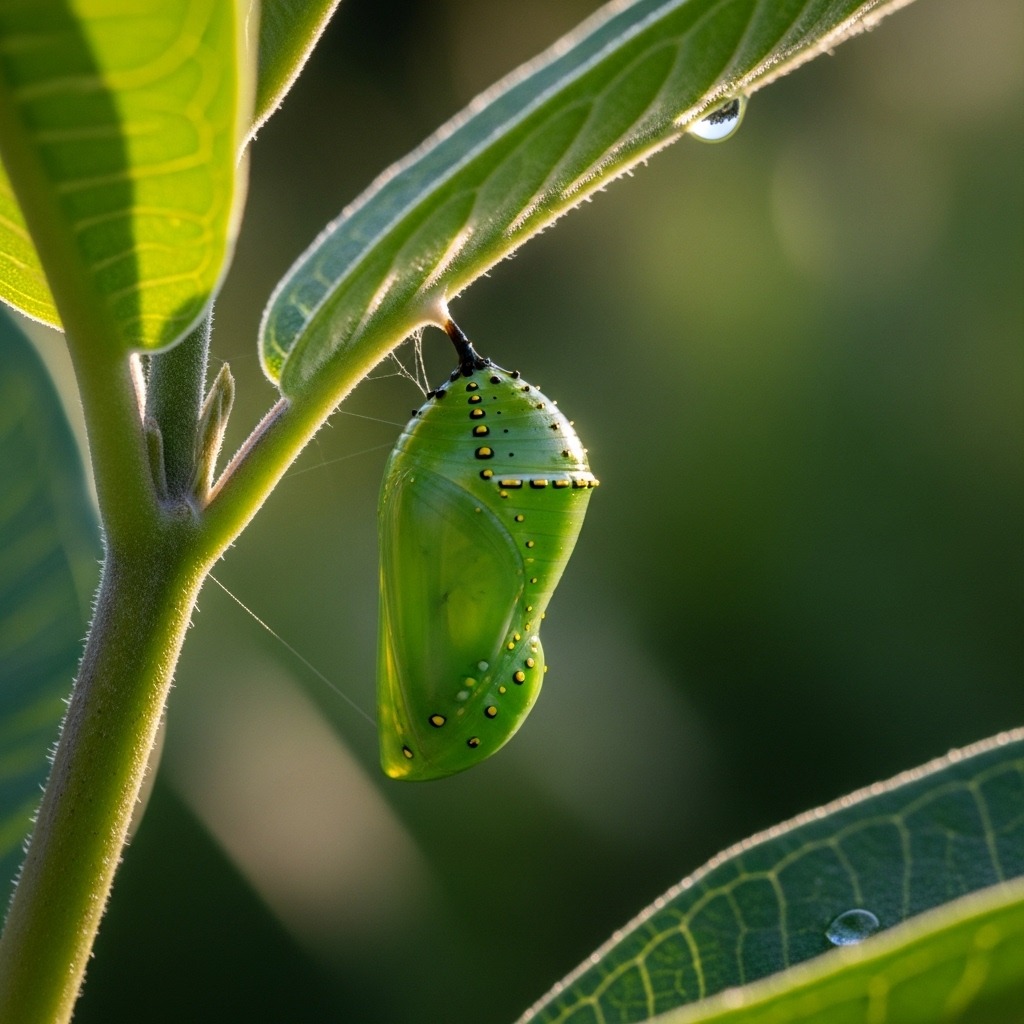
Reasons for Relocation
1. Safety from Predators: A chrysalis can be vulnerable to various threats, including insects and birds. Relocating it to a less exposed area can enhance its chances of survival.
2. Environmental Threats: Factors such as extreme weather conditions, heavy rain, or human activity can jeopardize the chrysalis. Moving it to a more suitable habitat can mitigate these risks.
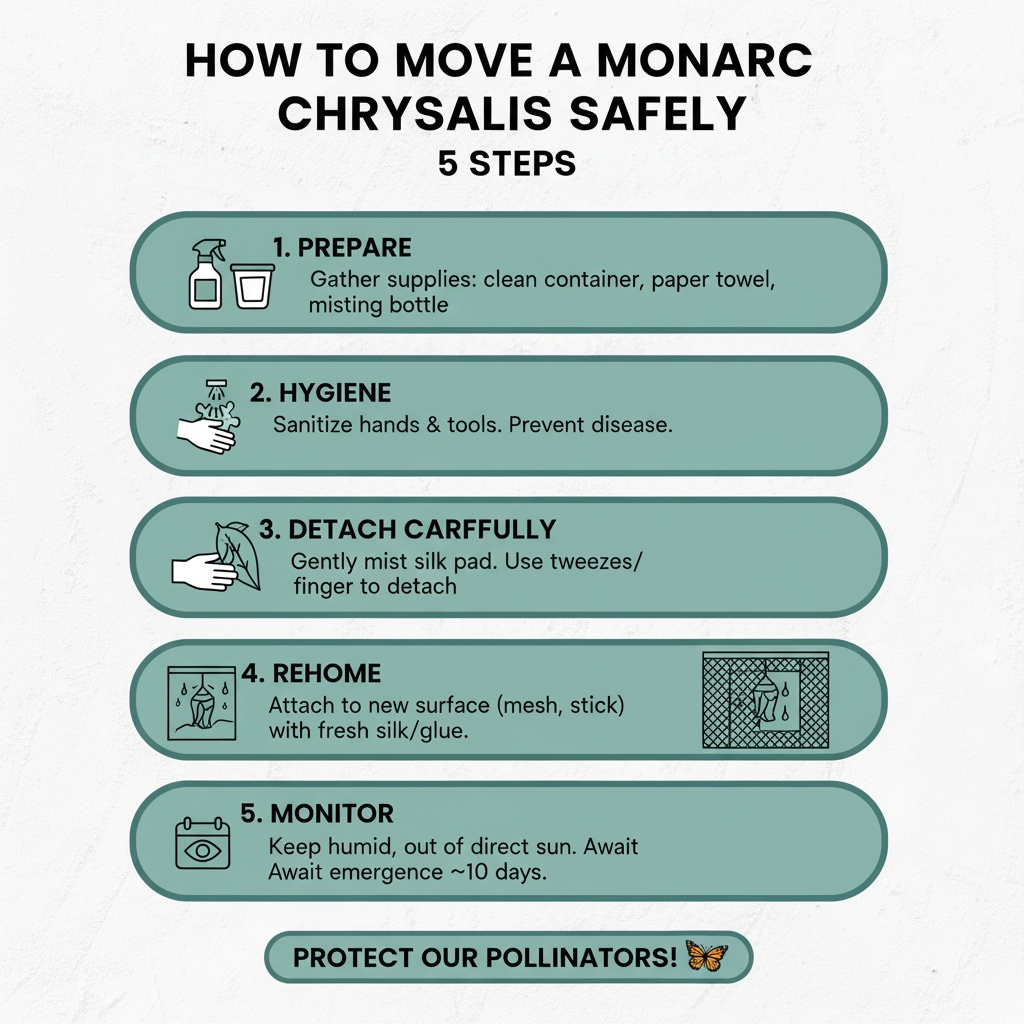
3. Maintaining Optimal Conditions: The ideal location should provide adequate light, temperature, and humidity to support the chrysalis’s development.
The Role of the Silk Pad
The silk pad is critical for the chrysalis’s stability. This structure, created by the caterpillar, allows the chrysalis to anchor securely during its metamorphosis. Understanding its anatomy is essential:
- Cremaster: The small black tip that attaches to the silk pad.
- Silk Button: The central part of the silk pad that supports the chrysalis.
When relocating, it is vital to preserve the silk pad intact to ensure the chrysalis remains secure in its new location. Damage to this pad can lead to detachment and potential failure of the metamorphosis process.
Table of Contents
When to Move a Chrysalis
Timing is paramount when considering chrysalis relocation. A real-life scenario illustrates this: A carefully timed move saved a chrysalis hanging on a branch that was about to be trimmed. If relocation had been delayed, the chrysalis would have been destroyed, preventing the butterfly from emerging altogether.
Key Timing Considerations
- Monitor Environmental Changes: Always assess the surroundings. If you anticipate threats like storms or maintenance work, immediate action is necessary.
- Assess Development Stage: Ensure the chrysalis is not too close to emergence, as it may be less stable during this period.
| Ideal Chrysalis Habitat | Characteristics |
|---|---|
| Protection from elements | Under leaves or sheltered areas |
| Moderate temperature | Avoid direct sunlight |
| Low predator presence | Away from known threats |
By prioritizing these factors, you enhance the likelihood of a successful relocation and eventual emergence of the butterfly. If you’re interested in creating a safe environment for butterflies, consider a Butterfly Habitat Kit for your garden. Check Price on Amazon.
Gather Essential Tools and Supplies for Chrysalis Movement
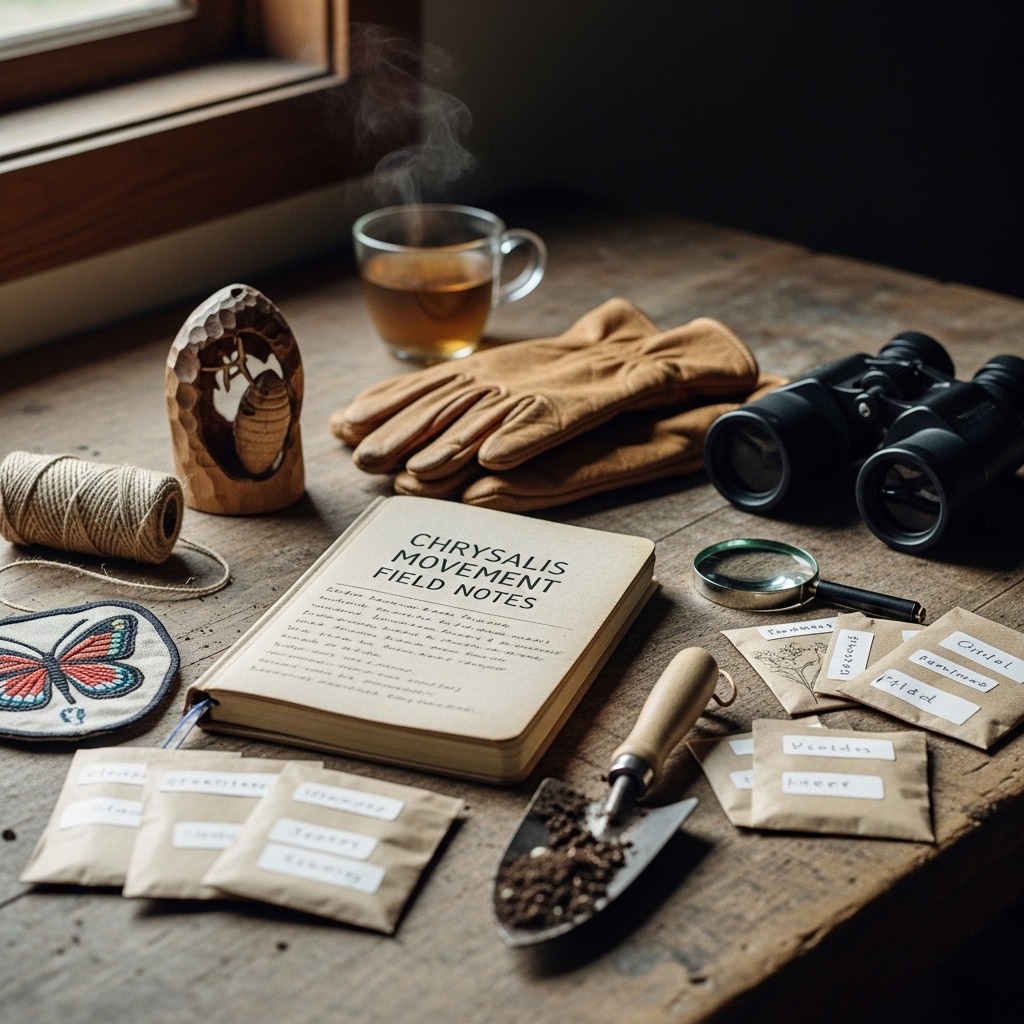
To safely relocate a monarch chrysalis, gather the right tools and supplies. The correct equipment ensures minimal disturbance and maximizes the chances of successful emergence.
Essential Supplies Needed
- Dental Floss: A strong, waxed floss provides stability and is easy to manipulate. It prevents slippage when securing the chrysalis to a support structure [4].
- Scissors: Use sharp scissors to make clean cuts when detaching the chrysalis from its original location [5].
- Supportive Structures: Options include small branches, sticks, or mesh tents. These provide a safe hanging environment post-relocation, allowing the butterfly ample space to emerge [6].
- Butterfly Habitat Kit: This kit offers all necessary components for creating a secure environment for your chrysalis and emerging butterfly. Check Price on Amazon.
Creating a Safe Hanging Structure
When preparing the relocation site, choose a structure that mimics the chrysalis’s natural environment. The structure should be:
- Stable: Ensure the structure can withstand wind and vibrations.
- Accessible: Place it where you can easily monitor the chrysalis.
- Protected: Shield it from predators and harsh weather.
Preparation Before Moving
Prior to the actual move, follow these steps:
1. Assess the Chrysalis Condition: Check for any signs of damage or distress.
2. Select the Right Time: Move the chrysalis during cooler parts of the day to reduce stress.
3. Have Everything Ready: Ensure all tools are at hand before initiating the move.
Comparison of Hanging Methods
| Method | Pros | Cons |
|---|---|---|
| Dental Floss | Strong, non-slip | Requires skill to tie properly |
| Tape | Easy to apply | Risk of adhesive damage to chrysalis |
| String | Flexible and adaptable | May not provide enough grip |
| Branches/Sticks | Mimics natural environment | Needs to be sturdy and secure |
Understanding these tools and methods enhances your ability to safely relocate a monarch chrysalis, ensuring a successful transformation into a butterfly.
Step-by-Step Guide to Moving the Chrysalis Safely
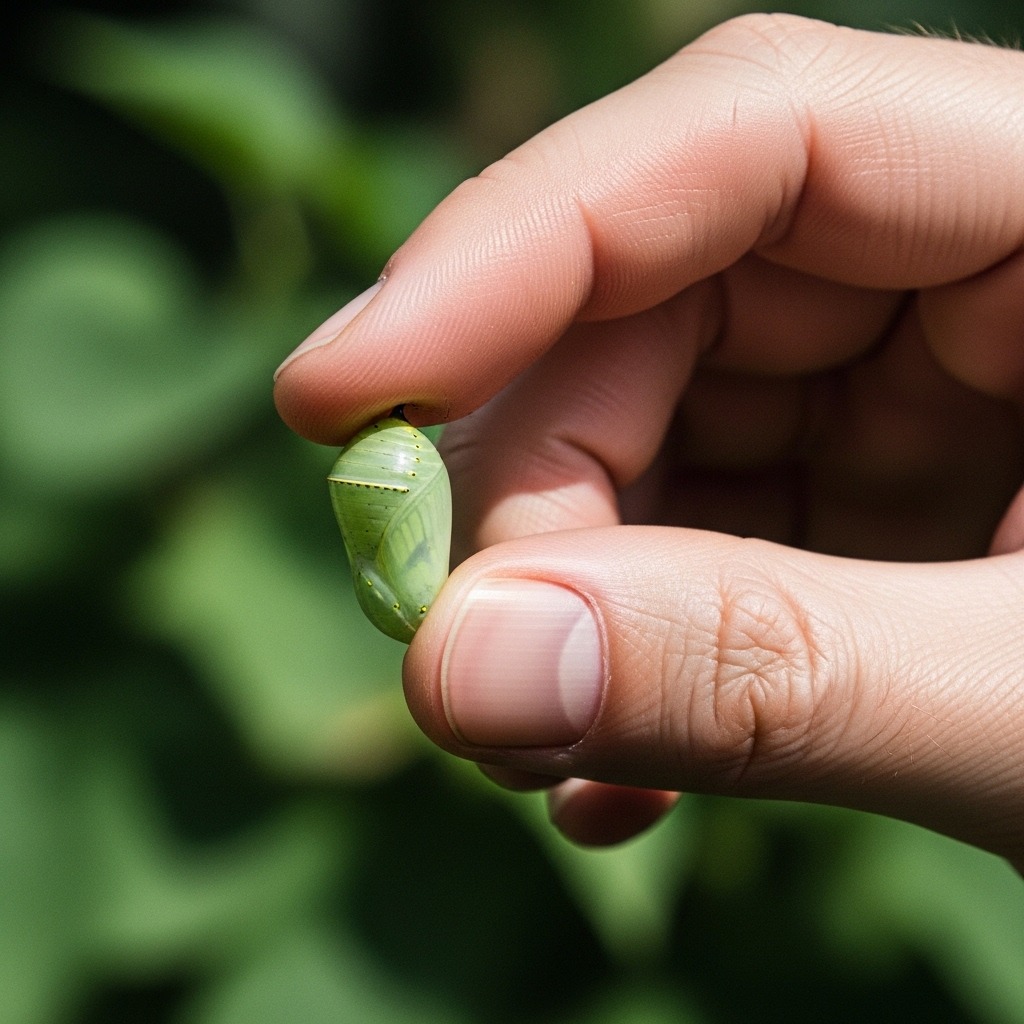
Relocating a monarch chrysalis is a delicate process that requires precision and care. Follow these steps to ensure a safe transition for the chrysalis to its new environment.
Step 1: Assess the Chrysalis
Begin by observing the chrysalis closely. Identify where it attaches to the surface. Look for the cremaster—the small black tip anchoring it in place. The chrysalis is secured by a silk pad, which can range in size from a dime to a silver dollar. Ensure the chrysalis is in a safe position to be moved; if it’s in a precarious location, proceed with the next steps.
Step 2: Loosen the Silk Pad
To detach the chrysalis, gently insert a pin or a fine tool between the cremaster and the silk pad. Carefully wiggle it to loosen the silk without damaging the chrysalis itself. Work slowly, ensuring you separate the silk, not the cremaster from the chrysalis. Once enough slack is available, you should be able to grip the silk pad and the cremaster together gently. This is crucial, as improper handling can harm the chrysalis [7].
Step 3: Secure the Chrysalis to New Location
After detaching the chrysalis, it’s vital to secure it in its new location. Use a piece of dental floss, about 8 inches long, to create a loose loop around the silk pad. Do not tighten the loop too much; it should merely support the silk without placing pressure on the chrysalis itself. Once secured, hang it in a location that mimics its natural habitat, ensuring it is sheltered from direct sunlight and predators [8].
Common Relocation Mistakes
- Not assessing the environment: Ensure that the new location is safe from threats like birds and harsh weather.
- Using adhesive materials: Avoid tape or glue; these can damage the chrysalis.
- Forgetting to monitor: After relocation, check on the chrysalis daily to ensure it remains secure and healthy.
Ideal Habitat Checklist
| Habitat Factor | Ideal Condition |
|---|---|
| Temperature | 70-85°F (21-29°C) |
| Humidity | Moderate, avoid excess moisture |
| Sunlight Exposure | Indirect sunlight |
| Protection from Predators | Natural cover or enclosure |
For those looking to enhance their butterfly gardening experience, consider investing in a Butterfly Habitat Kit to create an ideal environment for your newly emerged butterflies.
Care and Monitoring After Relocation

After relocating a monarch chrysalis, careful monitoring is crucial to ensure a successful emergence. Observing environmental conditions and identifying signs of stress can significantly impact the butterfly’s development.
Post-Relocation Observation
Once you’ve moved the chrysalis, establish a routine to check on its condition daily. Here are key elements to monitor:
- Stability: Ensure the chrysalis is securely attached to its new surface.
- Color Change: Look for gradual transparency, indicating wing development inside.
- Movement: Slight wiggling is normal; however, excessive movement may signal distress.
Ideal Environmental Conditions
Creating an optimal environment for the chrysalis is essential. Refer to the ideal habitat checklist below:
| Habitat Factor | Ideal Condition |
|---|---|
| Temperature | 70-85°F (21-29°C) |
| Humidity | Moderate, avoid excess moisture |
| Sunlight Exposure | Indirect sunlight |
| Protection from Predators | Natural cover or enclosure |
Signs of a Healthy Chrysalis
Recognizing signs of a healthy chrysalis will aid in ensuring its successful transformation. Here are common indicators:
- Rich Color: A vibrant green hue without brown spots indicates good health.
- Firmness: The chrysalis should feel solid and intact.
- Minimal Stress Signs: Look out for signs such as excessive movement, which might indicate discomfort or environmental stress.
Common Mistakes and Consequences
Mistakes during chrysalis relocation can lead to failure in emergence. Here’s an example:
- Moving Too Soon: If a chrysalis is relocated before it has fully hardened, it risks cracking. This can result in irreversible damage and prevent emergence.
By diligently observing these factors and remaining vigilant, you can support the monarch’s metamorphosis and enhance its chances of successful emergence.
Common Mistakes and How to Avoid Them
Moving a monarch chrysalis requires precision and care. Common mistakes can jeopardize the butterfly’s safe emergence. Understanding these pitfalls ensures successful relocation and metamorphosis.
Mistake 1: Moving Too Soon
Timing is crucial. Relocating a chrysalis before it has fully hardened can lead to severe damage. An unripe chrysalis is fragile; it may crack during the move, preventing the butterfly from emerging successfully. Always check if the chrysalis has developed its firm texture and solid color.
Decision Rule: Wait until the chrysalis has been in its pupal stage for at least 24 hours before considering relocation.
Mistake 2: Incorrect Handling Techniques
Handling the chrysalis improperly can lead to physical harm. Avoid touching the chrysalis directly. Use a soft tool, like a long stick or a small container, to support it during the move. This reduces the risk of damaging the silk pad that anchors it.
Best Practices:
- Use a gentle, sliding motion when transferring.
- Make sure to support the chrysalis from beneath.
- Limit contact with the chrysalis surface to avoid stress [12].
Mistake 3: Ignoring Environmental Needs
Chrysalises are sensitive to their surroundings. Relocating to an unsuitable habitat can disrupt their development. Ensure the new location provides adequate shelter from predators and environmental stressors like wind or rain.
Ideal Habitat Checklist:
- Shelter: Natural cover from birds and lizards.
- Temperature: Stable temperatures, avoiding extreme heat or cold.
- Accessibility: Ensure the area is free from disturbances.
Common Relocation Scenario
Imagine finding a chrysalis on a milkweed leaf at risk of being trampled. If you decide to move it, assess the following:
- Is it fully developed? If not, wait.
- Can I support it adequately? Use a soft tool for transfer.
- Does the new location meet environmental needs? Check for shelter and temperature stability.
By avoiding these common mistakes, you greatly enhance the chances of a successful butterfly emergence.
Frequently Asked Questions
These quick answers cover the most common questions about this topic, including key details, practical tips, and common concerns.
Can you relocate a monarch chrysalis?
Yes, you can relocate a monarch chrysalis if necessary, but it must be done carefully. The best time is when the chrysalis has hardened and the butterfly inside is not close to emerging. Handling it gently and supporting the silk pad helps prevent damage. Proper timing and technique are essential to ensure the butterfly’s safe emergence [8].
How to move chrysalis to habitat?
To move a chrysalis to a suitable habitat, gently detach it from its original surface using a fine tool or pin. Support it with a piece of dental floss or soft material, and hang it in a sheltered, stable location that mimics natural conditions—away from direct sunlight, predators, and harsh weather. Monitor the environment to keep it safe during development [8].
Can a butterfly chrysalis feel pain?
No, butterflies and their chrysalises do not have a nervous system capable of feeling pain. Their development is a biological process driven by hormonal changes, not sensory perception. However, physical damage during handling can harm the chrysalis and prevent successful emergence [13].
Should you spray butterfly chrysalis with water at night?
Generally, it’s not necessary to spray a chrysalis with water. Excess moisture can cause mold or fungal issues, especially if humidity is high. If the environment is dry, a light mist can help maintain humidity, but it should be done carefully and sparingly. Avoid spraying directly onto the chrysalis to prevent damage [9].
What to do if a chrysalis falls?
If a chrysalis falls, assess its condition. If it is intact and the silk pad is undamaged, you can try to reattach it to a support structure using gentle support like dental floss. Place it in a protected, stable environment to prevent further harm. If the chrysalis is broken or damaged, the butterfly may not survive, and you should monitor it closely for signs of failure [8].
How long does it take for a chrysalis to emerge?
The emergence process typically takes about 10 to 14 days, depending on temperature and environmental conditions. Warmer temperatures accelerate development, while cooler conditions slow it down. During this time, the chrysalis may change color, becoming more transparent as the butterfly prepares to emerge [10].
What environmental conditions are best for a chrysalis?
A chrysalis thrives in stable, moderate conditions. Ideal temperature ranges from 70-85°F (21-29°C), with moderate humidity. The location should offer indirect sunlight, protection from wind and rain, and safety from predators. Maintaining these conditions supports healthy development and successful emergence [10].
How to move a chrysalis to a habitat?
Support the chrysalis with a soft material like dental floss or a small support structure. Transfer it gently, avoiding direct contact with the surface. Hang it in a sheltered, shaded area that mimics natural habitat, ensuring it is stable and protected. Regularly check environmental conditions to prevent stress or damage [8].
What should readers know about detailed monitoring techniques?
Monitoring involves daily visual checks for color changes, firmness, and signs of stress. Use a magnifying glass if needed to observe wing development. Keep the environment stable, clean, and free from disturbances. Early detection of issues allows timely intervention, improving the chances of successful emergence [9].
What should readers know about step-by-step habitat creation tips?
Create a habitat that offers shelter from wind, rain, and predators. Use natural elements like leaves, branches, or mesh covers. Ensure the area has indirect sunlight, moderate temperature, and appropriate humidity. Providing a safe, undisturbed environment encourages healthy development and successful butterfly emergence. Regularly maintain and observe the habitat for optimal conditions [10].
References
1. Criminal Division | Keeping Children Safe Online
2. Environmental Health Threats Found at Schools | US EPA
3. Silk Fibroin and Pomegranate By-Products to Develop … – PMC
4. Efficacy of an experimental toothpaste containing sodium …
5. Major Concepts in Biology II Laboratory Manual
6. Monarch Butterfly Frequently Asked Questions (FAQs)
7. Clinical study on the effectiveness and safety of loose … – PMC
8. How to Safely Move & Hang a Monarch Butterfly Chrysalis
10. Monarch (Danaus plexippus) | U.S. Fish & Wildlife Service
12. Browntail Moth – Euproctis chrysorrhoea (L.)
13. Human handling stresses young monarch butterflies
14. Pollinator Quick Guide: What You Can Do to Help Monarchs