
Tracking monarch butterflies has become more advanced with the latest technologies, enabling researchers and enthusiasts to follow their migratory paths like never before. This guide explores various methods for tracking these iconic insects, the technology behind them, and their importance in conservation efforts.
Understanding Monarch Butterfly Migration
Monarch butterflies are famous for their incredible migrations. They travel thousands of miles between their breeding grounds and winter habitats. Understanding their migration helps us appreciate their journey and the technology used to track them.

Migration Routes and Distances
Monarchs migrate primarily between North America and central Mexico. Here’s a quick look at their routes:
- Eastern Population: Starting from the eastern U.S. and Canada, they travel to central Mexico, covering up to 3,000 miles.
- Western Population: This group migrates from the western U.S. and Canada to California, traveling about 1,000 miles.
These long distances require precise navigation, which is where technology comes into play.
Seasonal Timing of Migration
The migration occurs in two main phases:
- Fall Migration: Typically, this starts in late summer to early fall (August to October). Monarchs need to reach their wintering grounds before the cold sets in.
- Spring Migration: In spring (March to June), they return to their breeding grounds. This journey is essential for laying eggs and continuing their life cycle.
This seasonal timing is crucial for their survival and reproduction.
Importance of Migration for Monarchs
Migration is vital for monarchs for several reasons:
Table of Contents
- Survival: It allows them to escape harsh winter conditions and find suitable habitats.
- Reproduction: Returning to breeding grounds ensures they can lay eggs on milkweed, their primary food source for caterpillars.
- Genetic Diversity: Migration promotes interbreeding, which helps maintain a healthy population.
Tracking these migrations provides valuable data. For example, using radio tags, researchers can gather real-time information about monarchs’ routes and behaviors. This data is essential for conservation efforts, especially as climate change impacts their journey.
Latest Technologies for Tracking Monarch Butterflies
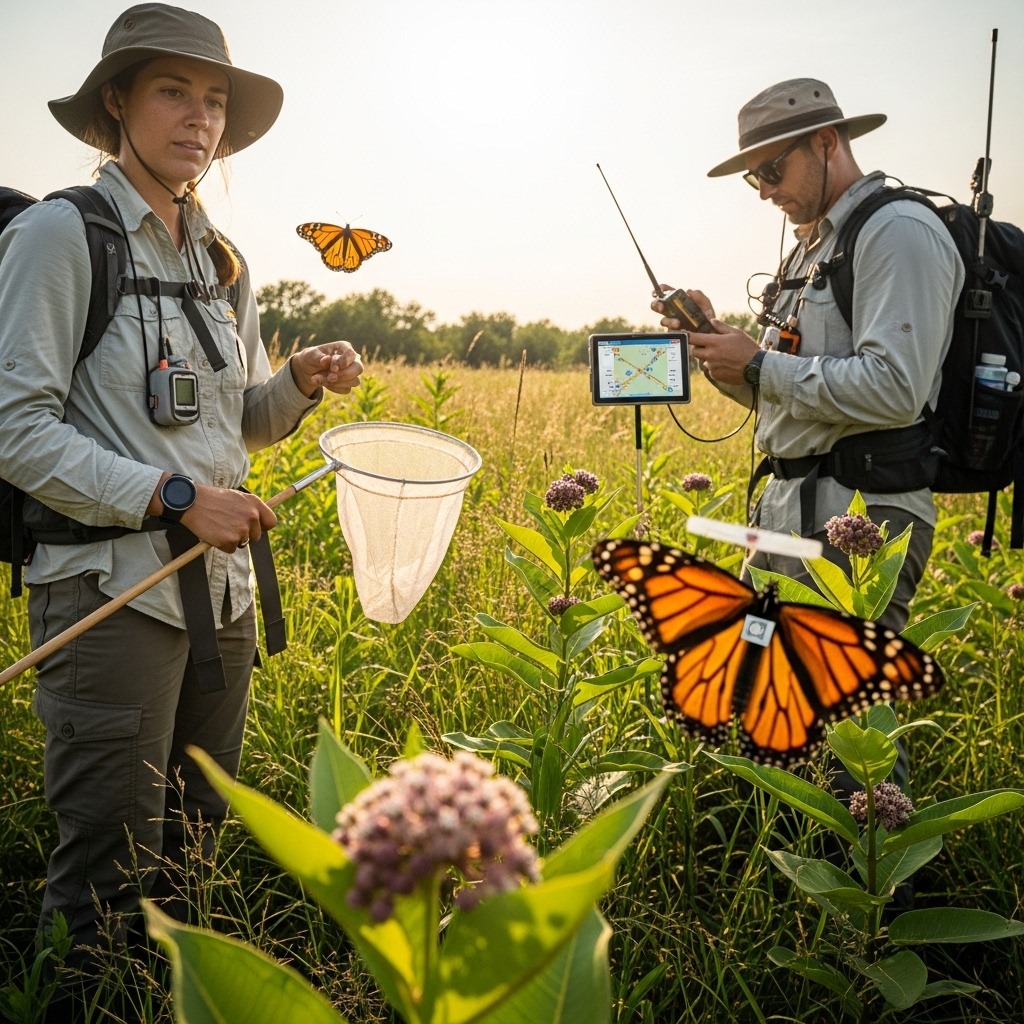
Tracking monarch butterflies has never been easier thanks to the latest technologies. From radio tags to mobile apps, researchers and enthusiasts are now equipped to monitor these amazing creatures more effectively than ever.
Radio Tags and Their Functionality
Radio tags are a game-changer in butterfly tracking. They allow researchers to follow individual monarchs on their long migrations. Here’s how they work:
- Real-Time Data: Radio tags send signals that help track the butterfly’s location.
- Durability: These tags are designed to withstand various weather conditions.
- Long Range: Some tags can transmit over several miles, giving researchers a wide coverage area.
For instance, the BlūMorpho tags have been used successfully to monitor monarchs migrating from Kansas to Mexico. This technology lets scientists gather crucial data about migration patterns and challenges faced along the way.
Bluetooth Tracking Networks
Bluetooth technology is also making waves in butterfly tracking. It uses crowd-sourced networks to enhance detection rates. Here’s what you need to know:
- Crowd-Sourced Locations: Bluetooth tags connect with nearby devices, increasing the chances of detection.
- Community Engagement: Local butterfly watchers can contribute by using their devices to help track these butterflies.
- Efficiency: This method can gather data quickly and cover large areas without needing extensive fieldwork.
The combination of Bluetooth and radio tags offers a more comprehensive understanding of monarch migration.
Mobile Apps for Tracking Monarchs
Mobile apps are essential for citizen scientists wanting to get involved. They allow users to report sightings and track tagged butterflies. Some key features include:
- User-Friendly Interface: Most apps are easy to navigate, making it accessible to everyone.
- Data Sharing: Users can share their findings with researchers, contributing to a larger database.
- Real-Time Updates: Get the latest information on where tagged monarchs are located.
One popular app is the Project Monarch Science app. It provides detailed information about tagged monarchs and allows users to track their movements on an interactive map.
Comparison of Tracking Technologies
Here’s a quick comparison of the main tracking technologies:
| Technology | Pros | Cons |
|---|---|---|
| Radio Tags | Real-time tracking, durable | More expensive, requires equipment |
| Bluetooth Tags | Community engagement, efficient | Limited range, depends on crowd density |
| Mobile Apps | User-friendly, real-time updates | Data accuracy can vary based on user input |
By understanding the strengths and weaknesses of each method, you can choose the best way to participate in monarch tracking efforts. Whether you’re a researcher or a butterfly enthusiast, these technologies make tracking monarchs more accessible and effective than ever.
The Role of Tracking in Conservation Efforts

Tracking monarch butterflies is crucial for understanding their behavior and protecting their habitats. As their populations decline, knowing where they go and how they migrate helps us create effective conservation strategies.
Understanding Population Declines
Monarch butterflies are facing serious threats. Their numbers have dropped dramatically over the years. This decline results from habitat loss, climate change, and pesticide use. Tracking helps researchers pinpoint where these butterflies are struggling the most. By knowing their migration routes and breeding grounds, conservationists can focus efforts on preserving these vital habitats.
- Habitat Loss: Urban development and agriculture reduce milkweed, the main food source for caterpillars.
- Climate Change: Changing weather patterns disrupt migration and breeding cycles.
- Pesticide Use: Chemicals harm butterflies and their food sources.
How Tracking Data Informs Conservation Strategies
The data gathered from tracking technologies informs conservation efforts in real time. For instance, researchers can see how environmental changes impact migration patterns. This information allows for quicker, more effective responses to threats.
- Case Study: In 2021, a study using radio tags revealed that monarchs were migrating later due to warmer temperatures. This prompted conservationists to advocate for changes in agricultural practices to protect milkweed during critical growth periods.
- Community Engagement: Tracking efforts involve local communities. Citizen scientists can report sightings, contributing valuable data. This engagement fosters a sense of responsibility and awareness among the public.
Engaging Communities in Conservation Efforts
Community involvement is key to successful conservation. When people understand the importance of tracking monarchs, they are more likely to help. Educational programs and mobile apps make it easy for anyone to get involved.
- Local Workshops: Teaching people how to tag butterflies helps spread awareness.
- Mobile Apps: Apps like Journey North let users report sightings, contributing to a larger database.
- Citizen Projects: Groups can organize local tagging events. This not only helps with tracking but also builds community spirit.
By tracking monarch butterflies, we gain insight into their challenges and how to address them. This effort is vital for ensuring their survival and protecting their habitats for future generations.
Challenges and Limitations of Tracking Technologies

Tracking monarch butterflies is exciting, but it comes with its own set of challenges. Researchers face obstacles that can impact the effectiveness of tracking technologies. Let’s dive into some of these issues.
Technical Limitations of Current Technologies
Tracking tech has come a long way, but it’s not perfect. Here are some key limitations:
- Battery Life: Some tracking devices, like radio tags, have limited battery life. This can cut short the monitoring period.
- Signal Range: Bluetooth technology relies on proximity. If a tagged butterfly isn’t close enough to a receiver, data won’t be collected.
- Data Overload: The amount of data generated can be overwhelming. Researchers need systems to manage and analyze this information effectively.
Environmental Factors Affecting Tracking
Mother Nature can be unpredictable. Environmental factors can complicate tracking efforts:
- Weather Conditions: High winds and storms can alter migration patterns. This makes it hard to predict where butterflies will be.
- Habitat Changes: Urban development and climate change can impact the habitats that monarchs depend on. These changes can lead to fewer sightings and tracking data.
- Seasonal Variability: Migration timing can shift due to climate factors. This variability can affect when and where researchers can collect data.
Ethical Considerations in Tracking
Tracking technologies raise ethical questions that are worth considering:
- Animal Welfare: Some tags can be heavy for monarchs. It’s vital to ensure that the tracking devices do not hinder their movement or health.
- Invasive Methods: Researchers must balance the need for data with the potential stress on the butterflies. Non-invasive methods are preferred when possible.
- Privacy Concerns: With the rise of data collection, there are concerns about how this information is used and shared.
By understanding these challenges, researchers and conservationists can work towards better solutions. For example, community engagement can help gather more data while educating the public about the importance of monitoring monarchs.
Future Trends in Monarch Butterfly Tracking
Exciting advancements are on the horizon for tracking monarch butterflies. New technologies and methods promise to boost our understanding of their migration patterns and conservation needs. Let’s dive into what’s coming up!
Innovations in Tracking Devices
Researchers are constantly developing better tools for tracking monarchs. Some of the latest innovations include:
- Solar-Powered Tags: These tags harness solar energy, providing longer tracking durations without the need for battery replacements.
- Bluetooth Tracking: This method uses crowd-sourced data to pinpoint the location of tagged monarchs more accurately.
- Drones: Equipped with cameras, drones offer a bird’s-eye view of migration routes. They can cover large areas quickly, gathering data that ground methods can’t.
These innovations aim to minimize the impact on the butterflies while maximizing data collection.
The Future of Data Collection and Analysis
Data collection is evolving! Here’s how:
- Mobile Apps: User-friendly apps allow citizen scientists to report sightings and track tagged monarchs. These apps can integrate real-time data, making it easier to analyze migration trends.
- Artificial Intelligence: AI can help sift through massive amounts of data, identifying patterns and predicting migration routes based on environmental changes.
- Remote Sensing Technology: This can provide insights into habitat conditions and how they affect butterfly populations.
Researchers are excited about these tools. They promise to enhance our understanding of monarchs and their migratory challenges.
Collaborations and Global Tracking Initiatives
Tracking monarchs isn’t just a solo effort. Collaborative initiatives are key to their conservation:
- Project Monarch Collaboration: This initiative combines efforts from various organizations to share data and resources. It enhances our ability to track individual butterflies over long distances.
- International Partnerships: Working with global entities allows for a broader understanding of migration patterns, which often cross borders. These partnerships are crucial for habitat protection.
By fostering collaborations, we can ensure that tracking efforts are comprehensive and effective.
These trends in technology and collaboration will play a significant role in the future of monarch butterfly tracking, helping us protect these amazing creatures for generations to come.
Frequently Asked Questions
These quick answers cover the most common questions about this topic, including key details, practical tips, and common concerns.
Where are the monarchs migrating right now?
Migration timing varies by region and season. Typically, monarchs migrate southward from the U.S. and Canada to Mexico in late summer and fall (August to October). In spring, they return northward from Mexico to their breeding grounds. Real-time tracking data can show their current locations, especially during peak migration periods.
What is a butterfly’s biggest enemy?
The biggest threats to monarch butterflies include habitat loss, pesticide use, and climate change. Predators like birds and certain insects can also impact individual butterflies, but human activities pose the greatest risk to their populations and migration routes.
Can we now track monarch butterflies?
Yes, advances in tracking technology have made it possible. Researchers use radio tags, Bluetooth devices, and citizen science apps to monitor their migration. These tools enable real-time tracking and help gather valuable data about their routes and behaviors.
Is there an app that tracks monarch butterflies?
Yes, several mobile apps allow users to report sightings and track tagged monarchs. Apps like Project Monarch Science provide maps of migration routes and enable citizen scientists to contribute data. These apps foster community involvement and enhance tracking efforts.
How do radio tags work for tracking?
Radio tags are small devices attached to butterflies that emit radio signals. Researchers use receivers to detect these signals and determine the butterfly’s location. Radio tags provide real-time data over long distances but are more costly and require specialized equipment.
Why is tracking monarch butterflies important for conservation?
Tracking provides insights into migration routes, breeding sites, and population declines. This information helps conservationists identify critical habitats and threats, enabling targeted efforts to protect and restore monarch populations.
When do monarchs migrate?
Monarchs typically migrate south in late summer to early fall (August to October) and return north in spring (March to June). The timing can vary based on climate and regional conditions, making timely tracking essential for understanding their patterns.
What challenges do researchers face in tracking monarchs?
Challenges include limited battery life of tracking devices, environmental factors like weather, and the small size of butterflies making attachment difficult. Ethical considerations and ensuring minimal impact on the insects are also important concerns.