
The Purple Finch (Haemorhous purpureus) is a North American songbird recognized for its unique raspberry coloration and melodious song. This guide explores essential facts about their habitat, diet, sounds, and more, enriching your understanding of this fascinating bird.
Identification and Appearance of Purple Finches
Identifying a Purple Finch is all about recognizing their unique features. These birds have distinct characteristics that set them apart from similar species like the House Finch. Let’s dive into what makes them stand out!
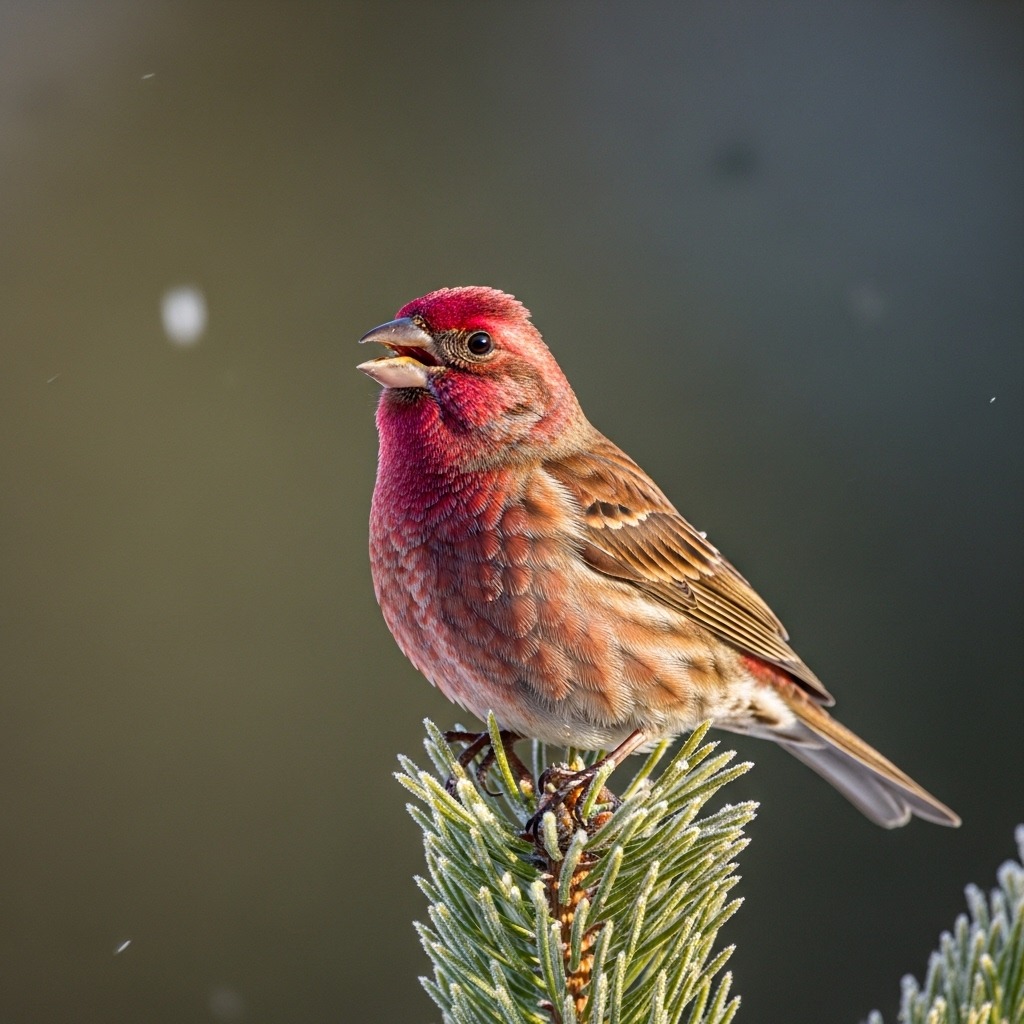
Male Purple Finch Features
Male Purple Finches are known for their striking coloration. Here are some key features:
- Color: They boast a rich raspberry-red hue, especially on their head, throat, and chest. This vibrant color often resembles being “dipped in berry juice.”
- Body: The rest of their body is mostly brown, creating a beautiful contrast with the red.
- Size: They are medium-sized finches, typically around 6 to 7 inches long.
- Beak: Their chunky beak is perfect for cracking seeds and nuts.
Female and Juvenile Differences
Female and juvenile Purple Finches look quite different from the males. Here’s how to tell them apart:
- Coloration: Females are primarily brown and white, lacking the bright red of the males. They have streaked underparts for better camouflage.
- Facial Markings: Look for a bold facial pattern with a white eyebrow stripe and dark cheek markings.
- Juveniles: Young finches resemble females but may show some subtle reddish tinges as they mature.
Key Identification Characteristics
To help you identify Purple Finches easily, here’s a quick comparison with House Finches:
| Feature | Purple Finch | House Finch |
|---|---|---|
| Male Coloration | Raspberry-red body | Red mostly on head and chest |
| Female Coloration | Brown and streaked | Brown, less streaking |
| Beak | Chunky and strong | More slender |
| Size | 6-7 inches | Similar, but often stockier |
Keep these features in mind when you’re out birdwatching! Recognizing these small details will help you distinguish Purple Finches from their close relatives.
Habitat and Range of the Purple Finch
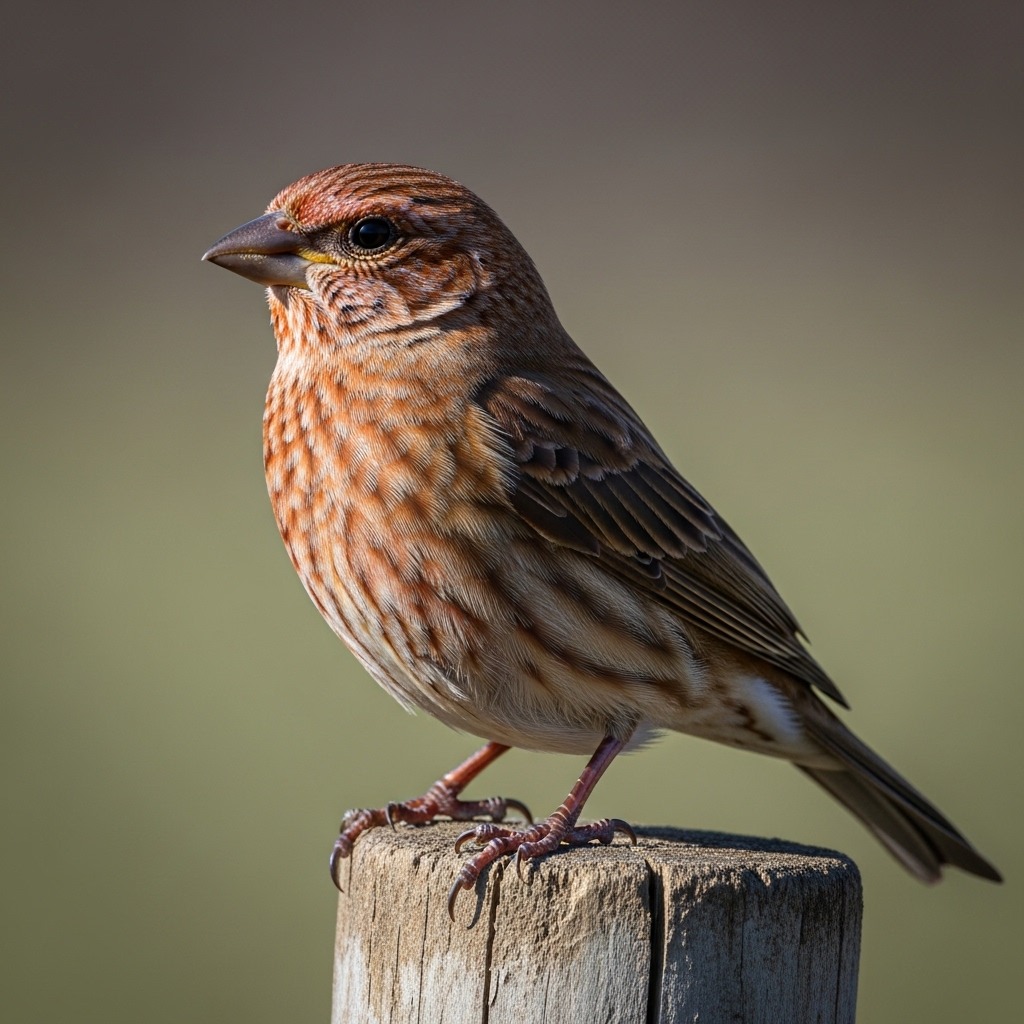
Purple Finches are versatile birds. They thrive in various habitats across North America. Understanding where they live helps birdwatchers know when and where to spot them.
Table of Contents
Preferred Habitat Types
Purple Finches prefer coniferous and mixed forests. These areas provide plenty of food and shelter. They are often found in:
- Boreal forests
- Deciduous woodlands
- Urban parks and gardens
These birds enjoy habitats rich in seeds and berries. They seek out areas with plenty of fruit-bearing plants, especially during migration.
Geographic Range and Migration Patterns
Purple Finches have a wide range. They breed mainly in southern Canada and the northeastern United States. Their wintering range extends into the eastern and central U.S.
- Breeding Range: Southern Canada, northeastern U.S.
- Wintering Range: Eastern and central U.S.
When cold weather hits, Purple Finches can be nomadic. They don’t follow strict migration routes. Instead, they move based on food availability. This means they might shift a few miles or travel hundreds of miles south.
Understanding their seasonal habits is key. During breeding season, look for them in forests. In winter, they may appear in backyards, searching for food.
Diet and Feeding Behavior of Purple Finches
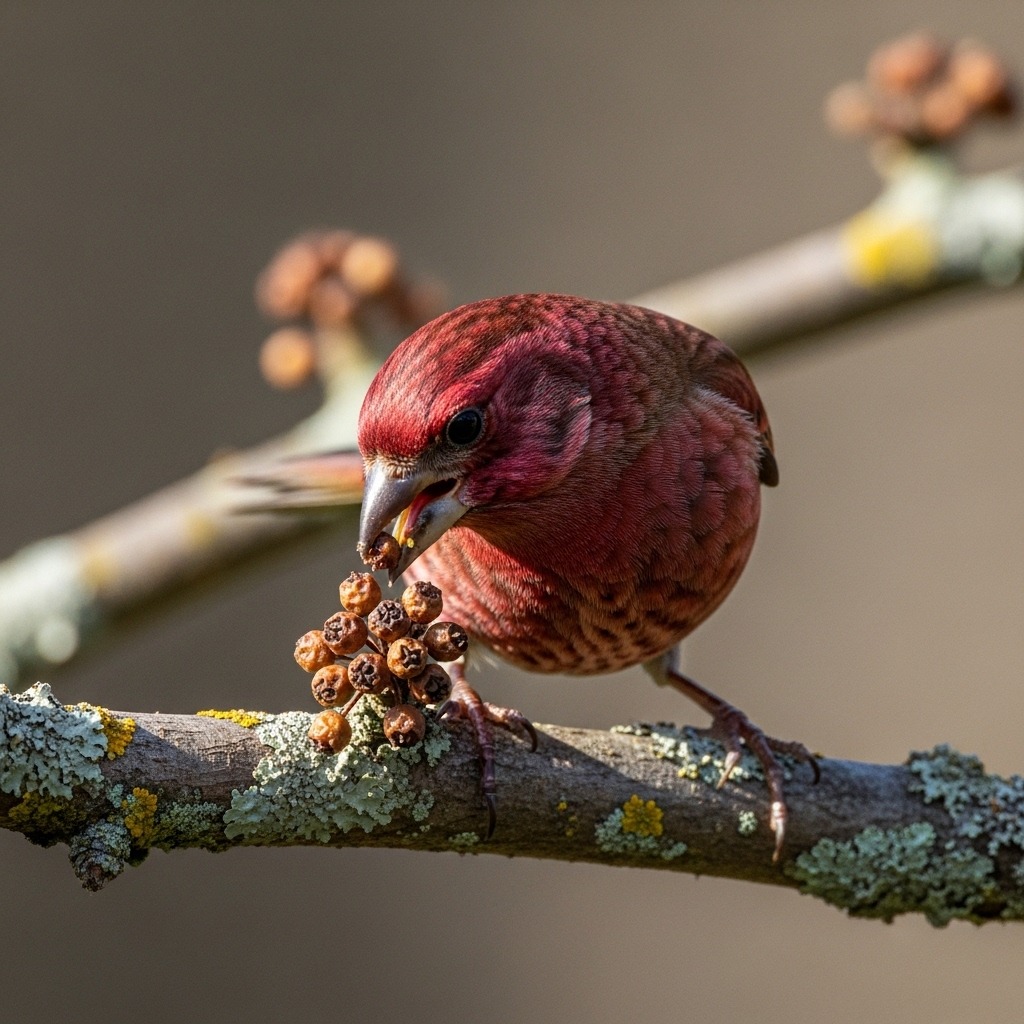
Purple Finches are not just pretty to look at; they have a diverse diet that changes with the seasons. Understanding what they eat and how they feed can help you attract these charming birds to your backyard.
Common Foods in Their Diet
Purple Finches enjoy a variety of foods. Here’s a quick rundown of their favorites:
- Seeds: They love black oil sunflower seeds and thistle seeds.
- Fruits: Berries, especially from dogwoods and serviceberries, are a treat.
- Insects: Caterpillars and beetles are part of their diet, especially during breeding season.
- Nectar: They also sip nectar from flowering plants.
This diet helps them thrive in different environments.
Feeding Behavior and Backyard Attractants
When it comes to feeding, Purple Finches are clever foragers. They often hop around trees and shrubs, looking for seeds and insects. Here are some tips to attract them:
- Feeder Placement: Set up platform feeders 5 to 8 feet from cover. This gives them safety while they eat.
- Seed Preferences: Offer black oil sunflower seeds for energy. They’re easy for Purple Finches to crack open.
- Seasonal Feeding Chart:
| Season | Preferred Foods |
|---|---|
| Spring | Seeds, buds, and insects |
| Summer | Berries and nectar |
| Fall | Seeds, especially from trees |
| Winter | Sunflower seeds and dried fruits |
By providing the right foods at the right time, you can create a welcoming space for Purple Finches in your yard. Their vibrant colors and cheerful songs will surely be a delight!
Vocalizations and Sounds of Purple Finches
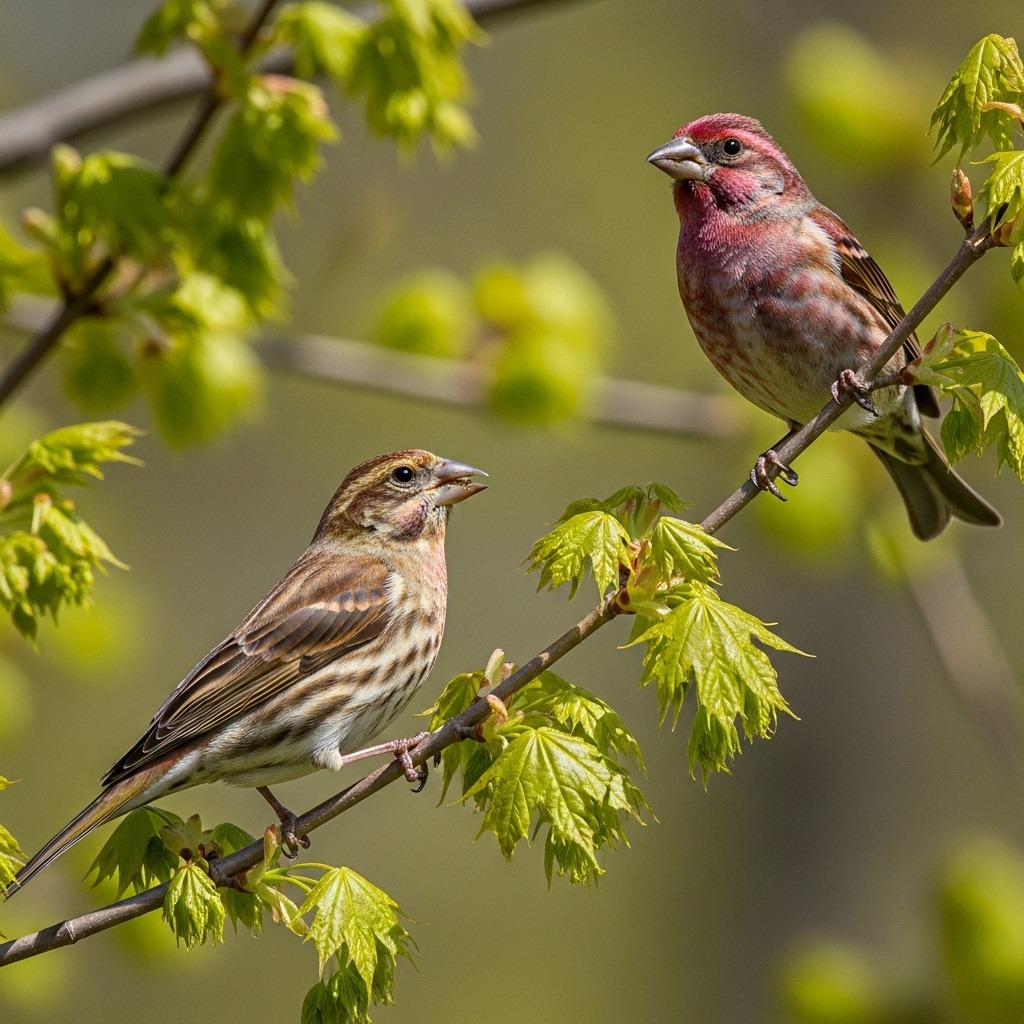
Purple Finches are known for their delightful songs and calls. These vocalizations play a key role in their communication, helping them establish territory and attract mates.
Common Calls and Songs
Purple Finches have a variety of sounds. Here are some of their most common vocalizations:
- Song: A sweet, warbling tune often described as “cheery, cheery, cheery.” This song is usually sung by males during the breeding season.
- Contact Call: A sharp “chip” or “cheep” sound used to communicate with other finches.
- Chatter: A series of quick, high-pitched notes used during social interactions.
To get a real sense of their vocalizations, listen to recordings of Purple Finch songs. You’ll notice how their melodies can brighten any garden!
Significance of Vocalizations in Behavior
Vocalizations serve several important purposes for Purple Finches:
- Mating Calls: Males use their melodic songs to attract females. A strong, clear song signals fitness and good genes.
- Territorial Defense: Songs help establish territory. A male singing in his area warns others to stay away.
- Social Interaction: Calls facilitate communication within flocks. Finches use sounds to stay connected, especially in dense habitats.
By paying attention to their sounds, birdwatchers can gain insights into the behavior and social dynamics of Purple Finches.
Interesting Facts about Purple Finches
Purple Finches are more than just pretty birds; they play a vital role in our ecosystem and have some fascinating behaviors! Let’s dive into what makes them unique.
Unique Behavioral Traits
- Social Creatures: Purple Finches often form flocks, especially during winter. This helps them find food and stay safe from predators.
- Nesting Habits: They prefer to nest in coniferous trees. Males are very protective during nesting season, ensuring the safety of their young.
- Feeding Preferences: These birds are known to eat seeds, berries, and insects. Their diet can change with the seasons, as they adapt to what’s available.
Ecological Importance
Purple Finches contribute significantly to their environment. Here’s how:
- Seed Dispersers: By eating various seeds, they help in plant reproduction. As they move, they spread seeds, which is crucial for forest regeneration.
- Pest Control: They consume insects and pests, naturally controlling their populations. This balance is essential for maintaining healthy ecosystems.
- Biodiversity Indicators: The presence of Purple Finches can indicate the health of forest habitats. If their populations decline, it may signal environmental changes.
Purple Finches are not just beautiful to watch; they’re essential for the ecosystems they inhabit. By attracting them to your backyard, you can enjoy their songs while supporting local biodiversity.
Comparison: Purple Finch vs House Finch
Purple Finches and House Finches may look similar at first glance, but they have distinct differences that make identifying them easier. Let’s break down their characteristics to help you spot the difference!
Physical Differences
| Feature | Purple Finch | House Finch |
|---|---|---|
| Coloration | Raspberry-red on head, throat, and chest | Red on head and chest, brown body |
| Size | Slightly larger, about 6-7 inches long | Smaller, around 5-6 inches long |
| Bill | Chunky and conical | Thinner and more pointed |
| Wing and Tail Color | Brown with red wash | Mostly brown |
Quick Tip: If you see a finch that looks like it’s been dipped in berry juice, it’s likely a Purple Finch!
Behavioral Contrasts
- Singing Style: Purple Finches have a sweet, melodic song, often compared to a warble. House Finches, on the other hand, have a more raspy and varied song.
- Feeding Habits: Purple Finches prefer to forage for seeds and berries in trees, while House Finches are more likely to be found eating seeds on the ground or at feeders.
- Social Behavior: House Finches are often seen in larger flocks, especially around urban areas. Purple Finches tend to be more solitary or in smaller groups.
Observation Insight: When trying to identify these finches, listen to their songs. The Purple Finch’s melody can help you distinguish it from the House Finch’s choppy tune.
By knowing these key differences, you can become a pro at spotting Purple Finches in your backyard!
Frequently Asked Questions
These quick answers cover the most common questions about this topic, including key details, practical tips, and common concerns.
What is the Purple Finch’s habitat?
Purple Finches primarily inhabit coniferous and mixed forests across North America. They prefer boreal forests, deciduous woodlands, and urban parks with abundant trees and shrubs. During migration and winter, they can be found in backyard feeders, especially where berry-producing plants and seeds are available.
What sound does the Purple Finch make?
Purple Finches are known for their cheerful, warbling song that sounds like “cheery, cheery, cheery.” Males sing this melodious tune during the breeding season to attract mates and defend territory. They also produce sharp “chip” calls for communication within flocks.
What kind of food do Purple Finches eat?
Purple Finches have a varied diet that includes black oil sunflower seeds, thistle seeds, berries from plants like dogwoods and serviceberries, and insects such as caterpillars. Their diet shifts seasonally, with seeds and berries in fall and winter, and insects during breeding.
When is the best time to see Purple Finches?
The best time to observe Purple Finches is during their migration periods in spring and fall. They breed in late spring and early summer, typically from May to July. In winter, they may visit backyard feeders, especially in eastern and central U.S. regions.
How can I attract Purple Finches to my garden?
To attract Purple Finches, provide high-quality seed feeders with black oil sunflower seeds and thistle. Place feeders near cover like shrubs or trees, and include berry-producing plants in your yard. Maintaining a mix of trees and shrubs creates an inviting habitat year-round.
What are the differences between Purple Finches and House Finches?
Purple Finches have a raspberry-red coloration on their heads and chests, with a more robust beak and larger size. House Finches display red mainly on their head and chest, with brown streaked bodies and a thinner bill. Their songs differ, with Purple Finches singing melodious warbles and House Finches producing choppier calls.
What is the breeding behavior of Purple Finches?
Purple Finches breed in late spring to early summer, building nests in coniferous or deciduous trees. Males sing to attract females and defend nesting sites. Females lay 3-5 eggs, which they incubate for about two weeks. Both parents feed the hatchlings until fledging.
How do Purple Finches contribute to their ecosystem?
Purple Finches aid in seed dispersal through their consumption of berries and seeds. They help control insect populations by feeding on caterpillars and beetles. Their presence indicates healthy forest habitats and promotes biodiversity by supporting plant and insect populations.